Loading...
Henry IV vs King Gojong of Goryeo
Henry IV leads by 8.8 pts · 2 figures compared
…

Henry IV
Emperor · Medieval
54.1Total
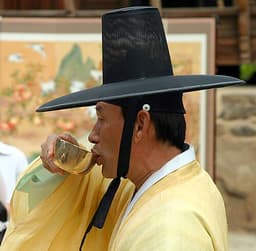
King Gojong of Goryeo
Emperor · Medieval
45.3Total
Basic Information
Born
1050
1192
Died
1106
1259
Era
Medieval
Medieval
Nationality
Holy Roman Empire
Korea
Occupation
Emperor
Emperor
Civilization
Western
Eastern
Score Comparison
Military (10%)
10.0
25.9
Political (20%)
68.0
37.9
Influence (20%)
62.0
53.3
Legacy (20%)
52.0
45.0
Leadership (15%)
67.0
58.8
Strategy (15%)
43.3
36.8
TOTAL
54.1
45.3
Henry IV — Complete Timeline
1056 AD
Election as King of GermanyPolitical Action◆ Major
Henry IV was elected King of Germany in 1056 at the age of six following the death of his father Henry III. His minority led to a regency by his mother Agnes of Poitou, which weakened royal authority.
SuccessionMinority
Impact: regional
1075 AD
Battle of LangensalzaWar
Henry IV defeated Saxon rebels at the Battle of Langensalza on June 9, 1075. This victory temporarily suppressed the Saxon uprising and strengthened Henry's position before the Investiture Controversy escalated.
Saxon RebellionBattle
Impact: regional
1076 AD
Excommunication by Pope Gregory VIIPolitical Action◆ Major
Pope Gregory VII excommunicated Henry IV in February 1076 after Henry attempted to depose the Pope. The excommunication freed Henry's subjects from their oaths of loyalty, leading to a rebellion by German princes.
Investiture ControversyExcommunication
Impact: regionaldestructive
1077 AD
Walk to CanossaPolitical Action
In January 1077, Henry IV traveled to Canossa Castle in northern Italy to seek absolution from Pope Gregory VII after being excommunicated. He stood barefoot in the snow for three days before the Pope lifted the ban, a dramatic act of penance.
Investiture ControversyPapal ConflictPenance
Impact: regionaltragic
1081 AD
Siege of RomeWar◆ Major
Henry IV besieged Rome three times between 1081 and 1084 to force Pope Gregory VII to recognize his authority. He captured the city in 1084 and was crowned emperor by Antipope Clement III, but Gregory VII fled to Salerno.
Investiture ControversySiege
Impact: regionaldestructive
King Gojong of Goryeo — Complete Timeline
1231 AD
First Mongol Invasion of GoryeoWar
The Mongol Empire under
Mongol InvasionFlight to GanghwaTribute
Impact: regionaldestructive
1232 AD
Second Mongol InvasionWar◆ Major
After the murder of Mongol overseers, the Mongols launched a second invasion. General Saritai led the attack. Goryeo forces resisted fiercely, but the Mongols devastated the countryside. The invasion ended when Saritai was killed by a Buddhist monk.
Mongol InvasionSaritaiResistance
Impact: regionaldestructive
Relocation of Capital to Ganghwa IslandPolitical Action◆ Major
King Gojong moved the royal court and government to Ganghwa Island, a fortified location in the Han River estuary. This relocation was intended to resist Mongol demands and protect the monarchy. The court remained there for nearly 30 years.
Capital MoveResistanceGanghwa Island
Impact: national
1235 AD
Third Mongol Invasion and Peace NegotiationsWar◆ Major
The Mongols launched a third invasion, focusing on destroying Goryeo's ability to resist. They ravaged the mainland while the court remained on Ganghwa. After years of war, King Gojong agreed to peace terms in 1238, including sending a prince as hostage.
Mongol InvasionDevastationPeace Terms
Impact: regionaldestructive
1251 AD
Completion of the Tripitaka Koreana (Second Edition)Cultural
To invoke Buddhist protection against the Mongol invasions, King Gojong ordered the carving of a new set of the Tripitaka Koreana woodblocks. This massive project was completed in 1251, creating a cultural treasure that survives to this day.
Buddhist ScripturesWoodblocksCultural Heritage
Impact: regionalconstructive
1259 AD
Submission to Mongol SuzeraintyPolitical Action
After decades of war, King Gojong finally submitted to Mongol suzerainty. He sent his son, the future King Wonjong, to the Mongol court as a hostage. This ended the military resistance and made Goryeo a vassal state of the Mongol Empire.
SubmissionVassalageMongol Empire
Impact: regionaltragic
Expert Analysis
Origins
Henry IV was born in 1050 into the Salian dynasty of the Holy Roman Empire. His father, Henry III, died in 1056, leaving the six-year-old as King of Germany. His mother, Agnes of Poitou, served as regent until 1062, when a coup by Archbishop Anno II of Cologne seized control. Henry's early years were marked by political manipulation and a struggle to assert his authority, shaping his combative relationship with the papacy.
King Gojong of Goryeo (reigned 1213–1259) was born in 1192 as the son of King Gangjong. He ascended the throne at age 21 during a period of internal strife and external threat from the Mongol Empire. The Goryeo court was divided between the military officials and civil bureaucrats, and Gojong's early reign was dominated by the Ch'oe family's military dictatorship, limiting his direct power.
Rise to Power
Henry IV assumed personal rule in 1065 at age 15, but his early reign was challenged by Saxon nobles. In 1073, the Saxon Rebellion erupted, and Henry defeated them at the Battle of Langensalza on June 9, 1075, scoring a military victory (10.0) that temporarily consolidated his power. However, his conflict with Pope Gregory VII over lay investiture escalated. In 1076, Henry attempted to depose the pope, leading to his excommunication in February 1076. To regain standing, Henry performed the Walk to Canossa in January 1077, standing barefoot in the snow for three days seeking absolution. This political move (political score 68.0) temporarily lifted the ban but did not resolve the power struggle.
King Gojong's rise was constrained by the Ch'oe military regime. In 1231, the Mongol Empire under Ögedei Khan launched the First Mongol Invasion. The Mongols captured major cities, forcing Gojong to flee to Ganghwa Island in 1232, where he established a fortified court. This relocation allowed the Goryeo government to resist for decades. During the invasion, Gojong ordered the carving of the Tripitaka Koreana (second edition) in 1236, a massive project involving 81,258 woodblocks, completed in 1251, to invoke Buddhist protection. His political score (37.9) reflects his limited autonomy under military rule.
Leadership & Governance
Henry IV's leadership (67.0) was characterized by aggressive assertion of royal authority against both the papacy and German princes. He continued the Investiture Controversy, appointing bishops and abbots despite papal prohibitions. In 1081, he besieged Rome, capturing it in 1084 and installing the antipope Clement III, who crowned him Holy Roman Emperor. However, his governance alienated many nobles, leading to repeated rebellions. His son, Henry V, eventually forced him to abdicate in 1105.
Gojong's leadership (58.8) was more defensive and pragmatic. He maintained Goryeo's identity through cultural projects like the Tripitaka Koreana while avoiding total destruction. He submitted to Mongol suzerainty in 1259 after decades of war, sending his son Wonjong as hostage. This decision spared Goryeo from further devastation but reduced its sovereignty. His strategy score (36.8) reflects reactive rather than proactive policies.
Triumph & Tragedy
Henry IV's greatest triumph was surviving the Investiture Controversy and being crowned emperor, affirming the supremacy of royal power. His tragedy was his eventual deposition by his own son and the lasting damage to the empire's unity. The Walk to Canossa, while a political maneuver, highlighted his vulnerability.
Gojong's triumph was the completion of the Tripitaka Koreana, a cultural treasure that endures as a UNESCO World Heritage. His tragedy was the loss of Goryeo's independence; the Mongol invasions left the kingdom devastated, and his submission led to a century of foreign domination. His military score (25.9) reflects limited battlefield success.
Character & Destiny
Henry IV was stubborn and confrontational, traits that fueled his conflict with the papacy but also his downfall. His inability to compromise led to perpetual rebellion. Historians note his resilience but also his poor judgment in alienating allies.
Gojong was cautious and resilient, prioritizing survival over glory. His decision to relocate to Ganghwa Island prolonged resistance but also isolated him from his people. His character was shaped by the constraints of military rule and external threats.
Legacy
Henry IV's legacy (52.0) is tied to the Investiture Controversy, which ultimately weakened imperial power and strengthened the papacy. His conflict set a precedent for church-state relations in medieval Europe. The Walk to Canossa remains a symbol of political submission.
Gojong's legacy (45.0) is dominated by the Tripitaka Koreana, a masterpiece of Buddhist scripture printing. His submission to the Mongols integrated Goryeo into the Mongol sphere, influencing later Korean dynasties. However, his reign is seen as a period of national humiliation.
Conclusion
Henry IV scored higher overall (54.1 vs 45.3), driven by superior political and leadership scores. While Gojong's cultural contribution is significant, Henry's impact on European political structures was more profound. The Investiture Controversy shaped medieval governance, whereas Gojong's submission marked the end of Goryeo's independence. Henry IV had greater impact on the historical trajectory of his region.
Rankings
🥇
Henry IVLeader
Mil: 10.0Pol: 68.0Inf: 62.0
54.1
🥈
King Gojong of Goryeo
Mil: 25.9Pol: 37.9Inf: 53.3
45.3
+8.8 behind
How This Comparison Works
Algorithm
Each figure is scored on 6 dimensions (0—100 scale) based on structured historical data: Military (10%), Political (20%), Influence (20%), Legacy (20%), Leadership (15%), Strategy (15%). The weighted total produces the final ranking.
Data Sources
Scores are computed from structured sub-indicators in the database. Scale factors adjust for era (Ancient ×0.85, Modern ×1.0) and civilization size (Eastern ×1.05, Other ×0.80) to account for differences in population and military scale.
Maximum 3 Figures
Comparisons are limited to 2—3 figures to ensure readability and statistical meaningfulness.
Error Margins
±5 points per dimension — Sub-scores are derived from historical records with inherent uncertainty. Two figures within 5 points on a dimension should be considered roughly equivalent in that area.
Total Score Accuracy
±3 points overall — The weighted combination of 6 dimensions produces a total score with approximately ±3 points of uncertainty. Differences of less than 3 points are not statistically significant— the figures are effectively tied.
Known Limitations
- Historical records are incomplete and uneven across civilizations
- Figures from oral-tradition societies may be underrepresented
- Occupation labels can misclassify multi-role figures
- Scores measure capability and impact, not moral character
- Quantitative scoring is a comparison tool, not absolute truth
Capability Radar
Military (10%) — Battles & Warfare
Battles
45
20
Win Rate
40
15
Expansion
35
5
Political (20%) — Governance & Reform
Reform
55
20
Diplomacy
65
55
Economy
50
25
Influence (20%) — Cultural & Global Reach
Cultural
55
30
Global
55
20
Legacy (20%) — Historical Impact
Historical
70
40
Longevity
60
30
Leadership (15%) — Power & Stability
Tenure
60
60
Stability
30
15
Strategy (15%) — Tactics & Innovation
Strategy
40
15
Tactics
35
10
Reform
30
5
Similar Comparisons
Comments & Discussion
No comments yet. Be the first to share your thoughts!