Loading...
Henry IV vs Tardu
Tardu leads by 7.5 pts · 2 figures compared
…

Henry IV
Emperor · Medieval
54.1Total
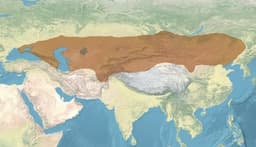
Tardu
Emperor · Medieval
61.6Total
Basic Information
Born
1050
550
Died
1106
603
Era
Medieval
Medieval
Nationality
Holy Roman Empire
Gokturk Khaganate
Occupation
Emperor
Emperor
Civilization
Western
Eastern
Score Comparison
Military (10%)
10.0
80.0
Political (20%)
68.0
68.0
Influence (20%)
62.0
57.2
Legacy (20%)
52.0
47.5
Leadership (15%)
67.0
74.0
Strategy (15%)
43.3
61.2
TOTAL
54.1
61.6
Henry IV — Complete Timeline
1056 AD
Election as King of GermanyPolitical Action◆ Major
Henry IV was elected King of Germany in 1056 at the age of six following the death of his father Henry III. His minority led to a regency by his mother Agnes of Poitou, which weakened royal authority.
SuccessionMinority
Impact: regional
1075 AD
Battle of LangensalzaWar
Henry IV defeated Saxon rebels at the Battle of Langensalza on June 9, 1075. This victory temporarily suppressed the Saxon uprising and strengthened Henry's position before the Investiture Controversy escalated.
Saxon RebellionBattle
Impact: regional
1076 AD
Excommunication by Pope Gregory VIIPolitical Action◆ Major
Pope Gregory VII excommunicated Henry IV in February 1076 after Henry attempted to depose the Pope. The excommunication freed Henry's subjects from their oaths of loyalty, leading to a rebellion by German princes.
Investiture ControversyExcommunication
Impact: regionaldestructive
1077 AD
Walk to CanossaPolitical Action
In January 1077, Henry IV traveled to Canossa Castle in northern Italy to seek absolution from Pope Gregory VII after being excommunicated. He stood barefoot in the snow for three days before the Pope lifted the ban, a dramatic act of penance.
Investiture ControversyPapal ConflictPenance
Impact: regionaltragic
1081 AD
Siege of RomeWar◆ Major
Henry IV besieged Rome three times between 1081 and 1084 to force Pope Gregory VII to recognize his authority. He captured the city in 1084 and was crowned emperor by Antipope Clement III, but Gregory VII fled to Salerno.
Investiture ControversySiege
Impact: regionaldestructive
Tardu — Complete Timeline
576 AD
Appointment as Yabghu of the Western Turkic KhaganatePolitical Action◆ Major
Tardu was appointed Yabghu (viceroy) of the western part of the First Turkic Khaganate by his father Ist
AppointmentWestern Turkic KhaganateSilk Road
Impact: regional
581 AD
Rebellion against the Eastern Turkic KhaganateWar◆ Major
After the death of Taspar Qaghan, Tardu rebelled against the Eastern Turkic Khaganate, seeking to reunite the khaganate under his rule. This led to a prolonged civil war that devastated the steppe and weakened both sides.
RebellionCivil WarTurkic Khaganates
Impact: regionaldestructive
601 AD
Siege of Chang'anWar◆ Major
Tardu led a major invasion of Sui China, besieging the capital Chang'an. The Sui emperor Yang Jian organized a successful defense, and Tardu was forced to retreat after suffering heavy losses, ending his threat to China.
InvasionSui DynastySiege
Impact: regionaldestructive
603 AD
Death and failure to reunite the khaganatePolitical Action
Tardu died in exile after his failed campaign against China. His death ended the attempt to reunite the Turkic Khaganate, and the Western Khaganate fell into decline, eventually being absorbed by the Eastern Khaganate.
DeathFailureTurkic Khaganate
Impact: regionaltragic
Expert Analysis
Origins
Henry IV was born in 1050 into the Salian dynasty of the Holy Roman Empire. His father, Henry III, died in 1056, leaving the six-year-old as king. His mother, Agnes of Poitou, served as regent, but her rule was contested by powerful nobles. Henry's upbringing was marked by political instability and the influence of the Church.
Tardu was born around 584 CE into the Ashina clan, the ruling family of the First Turkic Khaganate. His father, Istämi, was the yabghu (viceroy) of the western territories. Tardu grew up in a steppe warrior culture, learning horse archery and tribal diplomacy from an early age.
Rise to Power
Henry IV came of age in 1065 and assumed full rule. He faced a rebellion in Saxony, which he crushed at the Battle of Langensalza in 1075. However, his conflict with Pope Gregory VII escalated after Henry attempted to depose the pope. The pope excommunicated Henry in 1076, freeing his subjects from allegiance. To lift the ban, Henry performed the Walk to Canossa in January 1077, standing barefoot in the snow for three days. This act of penance temporarily restored his position but weakened his authority.
Tardu was appointed yabghu of the Western Turkic Khaganate by his father. After his father's death, he consolidated control over the western tribes. Following the death of Taspar Qaghan in 581, the eastern khaganate fell into succession disputes. Tardu rebelled, seeking to reunite the entire khaganate under his rule. He led campaigns against the eastern khans and invaded Sui China, besieging the capital Chang'an in 582. The Sui emperor Yang Jian organized a successful defense, forcing Tardu to retreat.
Leadership & Governance
Henry IV's leadership score is 67.0, reflecting his ability to navigate treacherous politics but his military score is only 10.0. He relied on diplomacy and church relations, but his confrontational style with the papacy led to repeated excommunications. He attempted to centralize power but faced constant rebellions from Saxons and rival nobles.
Tardu's leadership score is 74.0, and his military score is 80.0. He was a charismatic steppe ruler who commanded loyalty from diverse tribes. His strategy score of 61.2 indicates effective military planning, but his political score of 68.0 matches Henry's. Tardu's governance relied on tribal alliances and tribute systems, but he lacked the institutional infrastructure of the Holy Roman Empire.
Triumph & Tragedy
Henry IV's greatest success was surviving the Investiture Controversy and maintaining his throne despite papal opposition. He besieged Rome three times, capturing it in 1084 and having himself crowned emperor by an antipope. However, his greatest failure was the ongoing conflict with the papacy, which weakened imperial authority and led to his eventual excommunication again in 1080. His later years were marked by rebellion from his own sons.
Tardu's greatest success was nearly reuniting the Turkic Khaganate, controlling vast territories from the Caspian to the Altai. His siege of Chang'an demonstrated the power of the steppe nomads. However, his failure to capture the Sui capital and subsequent retreat led to the fragmentation of the khaganate. He died in exile, his dream of unity unfulfilled.
Character & Destiny
Henry IV was stubborn and pious, but his rigidity alienated allies. He saw himself as God's chosen ruler, clashing with the pope's claims. His character led to a cycle of conflict and penance, earning him a legacy of humiliation at Canossa.
Tardu was ambitious and warlike, driven by a vision of a unified Turkic empire. His aggressive campaigns against China and eastern Turks overextended his resources. His death in exile marked the end of the First Turkic Khaganate's golden age.
Legacy
Henry IV's legacy is tied to the Investiture Controversy, which reshaped church-state relations in medieval Europe. His walk to Canossa became a symbol of the power struggle between secular and religious authority. His reign weakened the Holy Roman Empire's central power, contributing to its fragmentation.
Tardu's legacy is more limited: he is remembered as a key figure in Turkic history who nearly reunited the khaganate. His failure allowed the Sui dynasty to strengthen, and the Western Khaganate fell into decline. Modern Turkic nationalists view him as a unifier, but his historical impact is less than Henry's.
Conclusion
Henry IV had a greater long-term impact on world history due to his role in the Investiture Controversy, which defined medieval European politics. Tardu's military achievements (score 80.0) were impressive, but his failure to reunite the khaganate limited his influence. Henry's political score of 68.0 matches Tardu's, but his legacy score of 52.0 vs Tardu's 47.5 reflects a more enduring mark. While Tardu's total score (61.6) exceeds Henry's (54.1), the scale and duration of Henry's impact on church-state relations outweigh Tardu's regional significance.
Rankings
🥇
TarduLeader
Mil: 80.0Pol: 68.0Inf: 57.2
61.6
🥈
Henry IV
Mil: 10.0Pol: 68.0Inf: 62.0
54.1
+7.5 behind
How This Comparison Works
Algorithm
Each figure is scored on 6 dimensions (0—100 scale) based on structured historical data: Military (10%), Political (20%), Influence (20%), Legacy (20%), Leadership (15%), Strategy (15%). The weighted total produces the final ranking.
Data Sources
Scores are computed from structured sub-indicators in the database. Scale factors adjust for era (Ancient ×0.85, Modern ×1.0) and civilization size (Eastern ×1.05, Other ×0.80) to account for differences in population and military scale.
Maximum 3 Figures
Comparisons are limited to 2—3 figures to ensure readability and statistical meaningfulness.
Error Margins
±5 points per dimension — Sub-scores are derived from historical records with inherent uncertainty. Two figures within 5 points on a dimension should be considered roughly equivalent in that area.
Total Score Accuracy
±3 points overall — The weighted combination of 6 dimensions produces a total score with approximately ±3 points of uncertainty. Differences of less than 3 points are not statistically significant— the figures are effectively tied.
Known Limitations
- Historical records are incomplete and uneven across civilizations
- Figures from oral-tradition societies may be underrepresented
- Occupation labels can misclassify multi-role figures
- Scores measure capability and impact, not moral character
- Quantitative scoring is a comparison tool, not absolute truth
Capability Radar
Military (10%) — Battles & Warfare
Battles
45
75
Win Rate
40
70
Expansion
35
85
Political (20%) — Governance & Reform
Reform
55
55
Diplomacy
65
70
Economy
50
50
Influence (20%) — Cultural & Global Reach
Cultural
55
40
Global
55
45
Legacy (20%) — Historical Impact
Historical
70
55
Longevity
60
30
Leadership (15%) — Power & Stability
Tenure
60
60
Stability
30
45
Strategy (15%) — Tactics & Innovation
Strategy
40
80
Tactics
35
65
Reform
30
60
Similar Comparisons
Comments & Discussion
No comments yet. Be the first to share your thoughts!