Loading...
Tardu vs William the Lion
Tardu leads by 10.8 pts · 2 figures compared
…
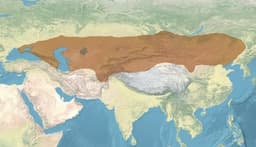
Tardu
Emperor · Medieval
61.6Total
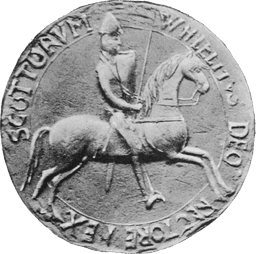
William the Lion
Emperor · Medieval
50.8Total
Basic Information
Born
550
1143
Died
603
1214
Era
Medieval
Medieval
Nationality
Gokturk Khaganate
Scotland
Occupation
Emperor
Emperor
Civilization
Eastern
Western
Score Comparison
Military (10%)
80.0
45.0
Political (20%)
68.0
45.1
Influence (20%)
57.2
54.9
Legacy (20%)
47.5
47.5
Leadership (15%)
74.0
67.0
Strategy (15%)
61.2
38.6
TOTAL
61.6
50.8
Tardu — Complete Timeline
576 AD
Appointment as Yabghu of the Western Turkic KhaganatePolitical Action◆ Major
Tardu was appointed Yabghu (viceroy) of the western part of the First Turkic Khaganate by his father Ist
AppointmentWestern Turkic KhaganateSilk Road
Impact: regional
581 AD
Rebellion against the Eastern Turkic KhaganateWar◆ Major
After the death of Taspar Qaghan, Tardu rebelled against the Eastern Turkic Khaganate, seeking to reunite the khaganate under his rule. This led to a prolonged civil war that devastated the steppe and weakened both sides.
RebellionCivil WarTurkic Khaganates
Impact: regionaldestructive
601 AD
Siege of Chang'anWar◆ Major
Tardu led a major invasion of Sui China, besieging the capital Chang'an. The Sui emperor Yang Jian organized a successful defense, and Tardu was forced to retreat after suffering heavy losses, ending his threat to China.
InvasionSui DynastySiege
Impact: regionaldestructive
603 AD
Death and failure to reunite the khaganatePolitical Action
Tardu died in exile after his failed campaign against China. His death ended the attempt to reunite the Turkic Khaganate, and the Western Khaganate fell into decline, eventually being absorbed by the Eastern Khaganate.
DeathFailureTurkic Khaganate
Impact: regionaltragic
William the Lion — Complete Timeline
1174 AD
Capture at AlnwickWar
William the Lion was captured by English forces near Alnwick Castle during an invasion of Northumberland. He was taken prisoner to England, leading to the Treaty of Falaise where Scotland became a vassal state of England.
CaptureAnglo-Scottish WarVassalage
Impact: nationaldestructive
Treaty of FalaisePolitical Action◆ Major
William the Lion signed the Treaty of Falaise, acknowledging Henry II of England as his feudal overlord. Scotland's castles were garrisoned by English troops, and William paid homage to the English king.
TreatyVassalageAnglo-Scottish Relations
Impact: nationaldestructive
1178 AD
Foundation of Arbroath AbbeyCultural
William the Lion founded Arbroath Abbey in Angus, dedicated to St. Thomas Becket. The abbey became a major religious center and later the site where the Declaration of Arbroath was drafted in 1320.
FoundationReligionArchitecture
Impact: nationalconstructive
1189 AD
Purchase of Quitclaim of CanterburyPolitical Action
William the Lion paid 10,000 marks to Richard I of England to annul the Treaty of Falaise. This purchase restored Scotland's independence and ended English overlordship, with all English garrisons withdrawn from Scottish castles.
IndependenceTreatyDiplomacy
Impact: nationalconstructive
Expert Analysis
Origins
Tardu (born c. 540 AD) was the son of Istämi, the Yabghu of the Western Turkic Khaganate. He was appointed Yabghu (viceroy) of the western territories by his father, governing the region from the Caspian Sea to the Altai Mountains. His early life was shaped by the nomadic traditions of the Gokturk confederation and the expanding power of the Turkic Khaganate.
William the Lion (born c. 1143) was the grandson of David I of Scotland and brother of Malcolm IV. He became King of Scots in 1165 after his brother's death. His early life was marked by the ongoing struggles between Scotland and England over northern territories, particularly Northumberland.
Rise to Power
Tardu's rise came through inheritance and ambition. Upon Istämi's death in 576, Tardu became Yabghu of the Western Khaganate. He initially accepted the authority of the Eastern Khagan, but after the death of Taspar Qaghan in 581, Tardu rebelled, seeking to reunite the entire khaganate under his rule. His rebellion triggered a civil war that lasted from 581 to 593.
William the Lion succeeded to the throne in 1165 at age 22. His early reign focused on reclaiming territories lost to England. In 1173, he joined the rebellion of Henry the Young King against Henry II of England, invading Northumberland in support. This led to his capture at Alnwick on July 13, 1174, a turning point that nearly ended his reign.
Leadership & Governance
Tardu's leadership was characterized by military aggression and strategic ambition. He scored 74.0 in leadership, reflecting his ability to command nomadic armies. His governance of the Western Khaganate maintained the traditional Turkic administrative structure, with local rulers under his authority. However, his political score of 68.0 was limited by his inability to forge lasting alliances.
William the Lion scored 67.0 in leadership, showing competent governance within Scotland. He founded Arbroath Abbey in 1178, dedicated to St. Thomas Becket, which became a center of Scottish identity. He also reformed Scottish coinage and administration, but his political score of 45.1 reflects his disastrous foreign policy.
Triumph & Tragedy
Tardu's greatest triumph was his invasion of Sui China in 601, when he besieged the capital Chang'an. The Sui emperor Yang Jian organized a successful defense, and Tardu was forced to retreat. His greatest failure was his inability to reunite the khaganate; he died in exile after his campaign failed, and the Western Khaganate fragmented.
William the Lion's greatest triumph was the Quitclaim of Canterbury in 1189, when he paid Richard I of England 10,000 marks to annul the Treaty of Falaise, restoring Scotland's independence. His greatest failure was the Treaty of Falaise itself in 1174, where he acknowledged Henry II as his feudal overlord, forcing Scotland into vassalage.
Character & Destiny
Tardu was a determined but overambitious ruler. His military score of 80.0 shows his skill, but his strategy score of 61.2 indicates flaws in planning. His rebellion against the Eastern Khaganate was bold but ultimately failed due to lack of sustained support. His death in exile marked the end of the reunification attempt.
William the Lion's character was marked by stubbornness and poor strategic judgment. His capture at Alnwick demonstrated his tactical weakness (strategy score 38.6). However, his perseverance after captivity led to the eventual recovery of independence. His legacy was shaped more by his failures than his successes.
Legacy
Tardu's legacy is mixed. He is remembered as a Yabghu who nearly reunited the Turkic Khaganate but died in failure. His influence score of 57.2 reflects his role in the fragmentation of the khaganate, which eventually led to the rise of the Western Turkic Khaganate as a separate entity. His siege of Chang'an is noted in Chinese histories.
William the Lion's legacy is more enduring. His purchase of independence in 1189 is a key moment in Scottish history. Arbroath Abbey became the site of the Declaration of Arbroath in 1320, a foundational document for Scottish sovereignty. His legacy score of 47.5 is modest, but his actions shaped Scotland's relationship with England for centuries.
Conclusion
Tardu had a greater impact on history than William the Lion, with a total score of 61.6 compared to 50.8. Tardu's military campaigns and political ambitions affected the course of the Turkic Khaganates and their relations with China, while William's reign primarily influenced Scotland's independence. Tardu's failure to reunite the khaganate had lasting consequences for Central Asia, whereas William's achievements were largely reactive. Although William's legacy is more visible in Scottish national identity, Tardu's actions shaped the geopolitics of a larger region. Therefore, Tardu is the more significant historical figure.
Rankings
🥇
TarduLeader
Mil: 80.0Pol: 68.0Inf: 57.2
61.6
🥈
William the Lion
Mil: 45.0Pol: 45.1Inf: 54.9
50.8
+10.8 behind
How This Comparison Works
Algorithm
Each figure is scored on 6 dimensions (0—100 scale) based on structured historical data: Military (10%), Political (20%), Influence (20%), Legacy (20%), Leadership (15%), Strategy (15%). The weighted total produces the final ranking.
Data Sources
Scores are computed from structured sub-indicators in the database. Scale factors adjust for era (Ancient ×0.85, Modern ×1.0) and civilization size (Eastern ×1.05, Other ×0.80) to account for differences in population and military scale.
Maximum 3 Figures
Comparisons are limited to 2—3 figures to ensure readability and statistical meaningfulness.
Error Margins
±5 points per dimension — Sub-scores are derived from historical records with inherent uncertainty. Two figures within 5 points on a dimension should be considered roughly equivalent in that area.
Total Score Accuracy
±3 points overall — The weighted combination of 6 dimensions produces a total score with approximately ±3 points of uncertainty. Differences of less than 3 points are not statistically significant— the figures are effectively tied.
Known Limitations
- Historical records are incomplete and uneven across civilizations
- Figures from oral-tradition societies may be underrepresented
- Occupation labels can misclassify multi-role figures
- Scores measure capability and impact, not moral character
- Quantitative scoring is a comparison tool, not absolute truth
Capability Radar
Military (10%) — Battles & Warfare
Battles
75
30
Win Rate
70
25
Expansion
85
20
Political (20%) — Governance & Reform
Reform
55
40
Diplomacy
70
50
Economy
50
35
Influence (20%) — Cultural & Global Reach
Cultural
40
30
Global
45
20
Legacy (20%) — Historical Impact
Historical
55
40
Longevity
30
35
Leadership (15%) — Power & Stability
Tenure
60
60
Stability
45
30
Strategy (15%) — Tactics & Innovation
Strategy
80
25
Tactics
65
20
Reform
60
15
Similar Comparisons
Comments & Discussion
No comments yet. Be the first to share your thoughts!