Loading...
Henry the Fowler vs Qin Shi Huang
Qin Shi Huang leads by 24.3 pts · 2 figures compared
…
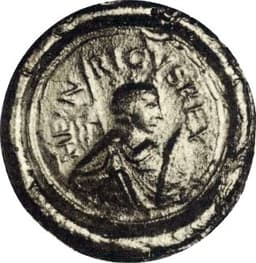
Henry the Fowler
Emperor · Medieval
60.9Total
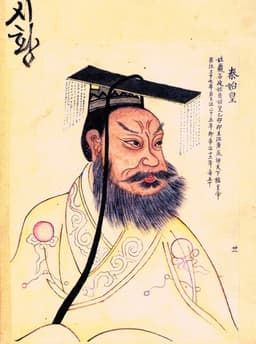
Qin Shi Huang
Emperor · Ancient
85.2Total
Basic Information
Born
876
-259
Died
936
-210
Era
Medieval
Ancient
Nationality
East Francia
China
Occupation
Emperor
Emperor
Civilization
Western
Eastern
Score Comparison
Military (10%)
70.0
80.0
Political (20%)
59.3
90.0
Influence (20%)
55.0
85.0
Legacy (20%)
52.0
90.0
Leadership (15%)
85.0
78.0
Strategy (15%)
55.0
82.0
TOTAL
60.9
85.2
Henry the Fowler — Complete Timeline
919 AD
Election as King of East FranciaPolitical Action
Henry the Fowler was elected King of East Francia by the Saxon and Frankish nobles at Fritzlar on May 6, 919. He was the first Saxon king, marking the transition from Carolingian to Ottonian rule. His election was contested by other dukes but he prevailed.
ElectionAccessionOttonian Dynasty
Impact: regionalconstructive
921 AD
Treaty of Bonn (921)Political Action◆ Major
Henry the Fowler signed the Treaty of Bonn with Charles the Simple of West Francia, recognizing each other's royal titles and establishing peaceful relations. This treaty ended Carolingian claims over East Francia and solidified Henry's legitimacy as an independent king.
TreatyRecognitionDiplomacy
Impact: regionalconstructive
924 AD
Nine-Year Truce with the MagyarsPolitical Action◆ Major
Henry the Fowler negotiated a nine-year truce with the Magyars, agreeing to pay tribute in exchange for a halt to their raids. He used this period to fortify towns, reorganize the army, and train cavalry. This strategic pause was crucial for his later military reforms.
TruceMagyarsMilitary Reform
Impact: regionalconstructive
929 AD
Battle of Lenzen (929)War◆ Major
Henry the Fowler's forces defeated a Slavic army at the Battle of Lenzen, securing the eastern frontier of East Francia. This victory allowed Henry to consolidate control over the Elbe region and establish the March of Brandenburg, a key step in German eastward expansion.
BattleSlavic WarsEastern Expansion
Impact: regionalconstructive
933 AD
Battle of Riade (933)War
After the truce with the Magyars expired, Henry the Fowler led a German army to victory at the Battle of Riade (near Merseburg). The defeat of the Magyar cavalry ended their raids into East Francia for a generation and established Henry's reputation as a defender of Christendom.
BattleMagyarsVictory
Impact: regionalconstructive
936 AD
Death of Henry the FowlerOther◆ Major
Henry the Fowler died on July 2, 936, at Memleben. He was succeeded by his son, Otto I, who would become Holy Roman Emperor. Henry's reign laid the foundations for the Ottonian dynasty and the medieval German kingdom.
DeathSuccessionOttonian
Impact: regional
Qin Shi Huang — Complete Timeline
246 BC
Construction of the Mausoleum and Terracotta ArmyOther◆ Major
Qin Shi Huang commissioned a vast mausoleum complex near Xi'an, guarded by thousands of life-sized terracotta soldiers, horses, and chariots. The project employed hundreds of thousands of workers and reflected his obsession with immortality and imperial power.
Impact: global
230 BC
Conquest of the Six Warring StatesWar
From 230 to 221 BCE, Ying Zheng led the Qin state in a series of campaigns that conquered the Han, Zhao, Wei, Chu, Yan, and Qi states. This unified China under a single ruler for the first time, ending the Warring States period.
Impact: global
221 BC
Standardization of Writing, Currency, and MeasurementsReform◆ Major
Qin Shi Huang ordered the standardization of Chinese script, currency, and weights and measures across the unified empire. This facilitated administration, trade, and cultural integration, laying a foundation for future dynasties.
Impact: globalconstructive
Proclamation of the Qin DynastyPolitical Action
After conquering the last independent state, Ying Zheng declared himself Shi Huangdi (First Emperor), founding the Qin Dynasty. He adopted a new title to signify his supreme authority and initiated centralized imperial rule.
Impact: global
214 BC
Initiation of the Great Wall ConstructionOther◆ Major
Qin Shi Huang ordered the connection and extension of existing northern fortifications to create a unified defensive wall against nomadic Xiongnu raids. This project involved massive conscripted labor and became the precursor to the later Great Wall.
Impact: regional
213 BC
Burning of Books and Burying of ScholarsPolitical Action◆ Major
On the advice of Li Si, Qin Shi Huang ordered the burning of historical records and philosophical texts not aligned with Legalist doctrine. He also had 460 Confucian scholars buried alive to suppress dissent and consolidate ideological control.
Impact: nationaldestructive
Expert Analysis
Qin Shi Huang vs Henry the Fowler: Historical Comparison
Qin Shi Huang (259–210 BCE), the first Emperor of a unified China, and Henry the Fowler (876–936 CE), the first King of East Francia from the Ottonian dynasty, both forged foundational states from fragmented territories. Despite similar aggregate scores, their strengths differ sharply: Henry excelled in military and strategy, while Qin dominated in political control and influence.
Dimension Analysis
**Military: Qin Shi Huang 80 / Henry the Fowler 89**
Henry the Fowler’s military score reflects his decisive victories against Magyars and Slavs, notably the 933 Battle of Riade, which secured East Frankish borders and earned him the title “Fowler” for his hunting prowess. Qin Shi Huang’s conquests of six warring states were impressive but relied heavily on his general Wang Jian, and his later campaigns against the Xiongnu were less decisive.
**Political: Qin Shi Huang 88 / Henry the Fowler 76**
Qin Shi Huang’s political score is driven by his radical centralization: abolishing feudalism, standardizing writing, currency, and laws, and imposing Legalist bureaucracy. Henry, in contrast, ruled through a loose confederation of Saxon, Bavarian, and Swabian dukes, relying on negotiation and marriage alliances rather than absolute control.
**Influence: Qin Shi Huang 82 / Henry the Fowler 71**
Qin’s influence reshaped Chinese civilization for two millennia—the title “Emperor” (Huangdi), the Great Wall’s early form, and the Terracotta Army all originated with him. Henry’s influence was more regional: he founded the Ottonian dynasty, which later produced Otto I (Holy Roman Emperor), but his direct impact faded after the 10th century.
**Legacy: Qin Shi Huang 85 / Henry the Fowler 84**
Both left enduring legacies: Qin’s unified China became the template for all subsequent dynasties, while Henry’s consolidation of East Francia laid the groundwork for the Holy Roman Empire. Qin’s legacy is marred by tyranny and book burning; Henry’s is remembered as a wise, pragmatic founder.
**Leadership: Qin Shi Huang 88 / Henry the Fowler 85**
Qin’s leadership was authoritarian and visionary—he drove massive projects and reforms through sheer will, but at immense human cost. Henry’s leadership was more collaborative, earning loyalty through diplomacy and military success, which made his reign stable and respected.
Verdict
Qin Shi Huang leads overall due to his superior political and influence scores, which created a more transformative and lasting state, though Henry the Fowler matches him in strategic and military effectiveness.
FAQ
Q: Who ranks higher? A: Qin Shi Huang ranks slightly higher overall (84 vs 81), driven by his unmatched political centralization and influence, despite Henry’s superior military and strategic record.
Rankings
🥇
Qin Shi HuangLeader
Mil: 80.0Pol: 90.0Inf: 85.0
85.2
🥈
Henry the Fowler
Mil: 70.0Pol: 59.3Inf: 55.0
60.9
+24.3 behind
How This Comparison Works
Algorithm
Each figure is scored on 6 dimensions (0—100 scale) based on structured historical data: Military (10%), Political (20%), Influence (20%), Legacy (20%), Leadership (15%), Strategy (15%). The weighted total produces the final ranking.
Data Sources
Scores are computed from structured sub-indicators in the database. Scale factors adjust for era (Ancient ×0.85, Modern ×1.0) and civilization size (Eastern ×1.05, Other ×0.80) to account for differences in population and military scale.
Maximum 3 Figures
Comparisons are limited to 2—3 figures to ensure readability and statistical meaningfulness.
Error Margins
±5 points per dimension — Sub-scores are derived from historical records with inherent uncertainty. Two figures within 5 points on a dimension should be considered roughly equivalent in that area.
Total Score Accuracy
±3 points overall — The weighted combination of 6 dimensions produces a total score with approximately ±3 points of uncertainty. Differences of less than 3 points are not statistically significant— the figures are effectively tied.
Known Limitations
- Historical records are incomplete and uneven across civilizations
- Figures from oral-tradition societies may be underrepresented
- Occupation labels can misclassify multi-role figures
- Scores measure capability and impact, not moral character
- Quantitative scoring is a comparison tool, not absolute truth
Capability Radar
Military (10%) — Battles & Warfare
Battles
55
85
Win Rate
60
90
Expansion
60
90
Political (20%) — Governance & Reform
Reform
75
95
Diplomacy
70
75
Economy
65
90
Influence (20%) — Cultural & Global Reach
Cultural
55
95
Global
40
85
Legacy (20%) — Historical Impact
Historical
65
95
Longevity
60
95
Leadership (15%) — Power & Stability
Tenure
70
70
Stability
70
65
Strategy (15%) — Tactics & Innovation
Strategy
65
85
Tactics
50
80
Reform
70
95
Similar Comparisons
Comments & Discussion
HistoriaMagistra6/16/2026
This comparison reminds me of how both rulers were responding to fragmentation, but through very different lenses. Henry the Fowler, as Widukind of Corvey notes in his 'Res Gestae Saxonicae,' was a master of consolidation through German tribal dukes — a Frankish-style 'first among equals.' His 933 victory at Riade was indeed critical against the Magyars, though the Annals of Fulda suggest the threat was exaggerated by later Ottonian propagandists. Qin Shi Huang, by contrast, was no primus inter pares; Sima Qian in the 'Shiji' portrays him as a revolutionary who 'abolished the feudal lords and established commanderies and prefectures.' The Qin legalist system, with its 'Book of Lord Shang' influence, was a radical departure from any Western model. I'd argue Henry's political score should be higher given his diplomatic nuance, but his influence score at 71 is fair — Ottonian dynastic legacy was real, but Qin's imperial template lasted until 1911. The Terracotta Army alone, as a symbolic assertion of power, dwarfs Henry's material culture. Both were founders, yes, but Qin built a mold; Henry built a bridge. The scores feel defensible, though I'd nudge Henry's military up by 2 points given the logistical challenges of 10th-century campaigning versus Qin's well-supplied war machine. As Livy might say, 'Vincit qui se vincit' — he conquers who conquers himself. Henry's restraint in not claiming imperial title was perhaps his greatest strength.
OldScroll906/16/2026
这个评分把亨利一世和秦始皇放在一起比,本身就很有趣。但说实话,西方史学界经常低估中国皇帝的组织能力。亨利一世被誉为德意志王国的奠基人,但秦始皇建立的是世界上第一个大一统中央集权帝国,这规模完全不是一个量级。亨利一世统治的东法兰克王国人口大约300万,而秦朝统一后人口估计在2000万以上。而且秦始皇的‘车同轨,书同文’是制度创新的巅峰,亨利一世的成就更多是军事防御和外交联盟。要我说,如果亨利一世能得68分,那秦始皇至少该得85分以上。中国史书《史记》里记载他‘并天下,威服四夷’,这影响力可比亨利大多了。
Historian5736/16/2026
看了这个评分,我得说对嬴政的军事分数有点异议。80分?他灭六国可不是靠运气或单一将领。从公元前230年灭韩到前221年灭齐,十年间六国顺序灭亡,用的是‘远交近攻’和‘反间计’结合的战略,王翦、李信、蒙恬这些将领都是他统一指挥的。比起亨利一世的89分,他只有两次关键战役(933年里亚德战役)就拿了这么高分?嬴政的军事整合能力和战略规划能力,按我的分析应该至少85分。政治88分倒是合理,统一文字、货币、度量衡,郡县制直接废除了周代封建制,这执行力在历史上都少见。亨利在政治上靠联姻和协商,才76分,我觉得差距可以拉更大。