Loading...
Alexander the Great vs Henry the Fowler
Alexander the Great leads by 24.3 pts · 2 figures compared
…
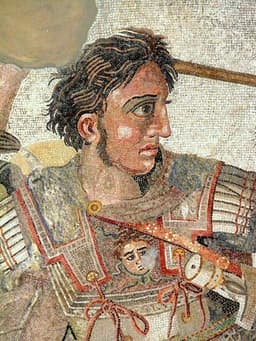
Alexander the Great
General · Ancient
85.2Total
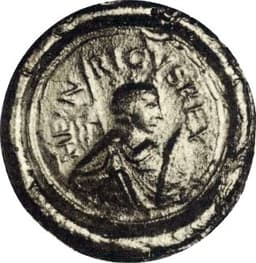
Henry the Fowler
Emperor · Medieval
60.9Total
Basic Information
Born
-356
876
Died
-323
936
Era
Ancient
Medieval
Nationality
Macedon
East Francia
Occupation
General
Emperor
Civilization
Western
Western
Score Comparison
Military (10%)
95.0
70.0
Political (20%)
60.0
59.3
Influence (20%)
92.0
55.0
Legacy (20%)
90.0
52.0
Leadership (15%)
80.0
85.0
Strategy (15%)
92.0
55.0
TOTAL
85.2
60.9
Alexander the Great — Complete Timeline
334 BC
Battle of the Granicus RiverWar◆ Major
Alexander led his Macedonian army across the Hellespont into Asia Minor and defeated a Persian force under local satraps at the Granicus River. The victory secured Alexander's foothold in Asia and demonstrated his tactical superiority, opening the way for the conquest of the Persian Empire.
Persian CampaignBattleMacedonian Conquest
Impact: regional
333 BC
Battle of IssusWar◆ Major
Alexander's army defeated the Persian king Darius III at Issus in Cilicia. Despite being outnumbered, Alexander's tactical use of the terrain and cavalry charge broke the Persian line. Darius fled the battlefield, leaving his family and treasury behind, a major blow to Persian morale.
Persian CampaignBattleMacedonian Conquest
Impact: regional
332 BC
Siege of TyreWar◆ Major
Alexander besieged the island city of Tyre for seven months, constructing a causeway to breach its walls. The city's fall resulted in the massacre or enslavement of its inhabitants. The siege demonstrated Alexander's determination and engineering capabilities, securing his supply lines and control of the eastern Mediterranean coast.
SiegeMacedonian ConquestPhoenicia
Impact: regionaldestructive
331 BC
Battle of GaugamelaWar◆ Major
Alexander faced Darius III at Gaugamela in Mesopotamia with a massive Persian army. Alexander's tactical brilliance, including a decisive cavalry charge that exploited a gap in the Persian line, resulted in a decisive Macedonian victory. Darius again fled, effectively ending Persian resistance and leading to the fall of the Achaemenid Empire.
Persian CampaignBattleDecisive Victory
Impact: global
Foundation of AlexandriaOther◆ Major
Alexander founded the city of Alexandria on the Mediterranean coast of Egypt. He personally selected the site and oversaw the initial planning. Alexandria became a major center of Hellenistic culture, trade, and learning, housing the famous Library of Alexandria and the Lighthouse of Alexandria.
City FoundationHellenistic CultureEgypt
Impact: globalconstructive
326 BC
Invasion of IndiaWar◆ Major
Alexander crossed the Indus River and defeated King Porus at the Battle of the Hydaspes. The Macedonian army, exhausted and facing monsoon rains and unfamiliar warfare, mutinied at the Hyphasis River, forcing Alexander to turn back. This campaign marked the easternmost extent of his conquests.
Indian CampaignBattleMutiny
Impact: regional
Henry the Fowler — Complete Timeline
919 AD
Election as King of East FranciaPolitical Action
Henry the Fowler was elected King of East Francia by the Saxon and Frankish nobles at Fritzlar on May 6, 919. He was the first Saxon king, marking the transition from Carolingian to Ottonian rule. His election was contested by other dukes but he prevailed.
ElectionAccessionOttonian Dynasty
Impact: regionalconstructive
921 AD
Treaty of Bonn (921)Political Action◆ Major
Henry the Fowler signed the Treaty of Bonn with Charles the Simple of West Francia, recognizing each other's royal titles and establishing peaceful relations. This treaty ended Carolingian claims over East Francia and solidified Henry's legitimacy as an independent king.
TreatyRecognitionDiplomacy
Impact: regionalconstructive
924 AD
Nine-Year Truce with the MagyarsPolitical Action◆ Major
Henry the Fowler negotiated a nine-year truce with the Magyars, agreeing to pay tribute in exchange for a halt to their raids. He used this period to fortify towns, reorganize the army, and train cavalry. This strategic pause was crucial for his later military reforms.
TruceMagyarsMilitary Reform
Impact: regionalconstructive
929 AD
Battle of Lenzen (929)War◆ Major
Henry the Fowler's forces defeated a Slavic army at the Battle of Lenzen, securing the eastern frontier of East Francia. This victory allowed Henry to consolidate control over the Elbe region and establish the March of Brandenburg, a key step in German eastward expansion.
BattleSlavic WarsEastern Expansion
Impact: regionalconstructive
933 AD
Battle of Riade (933)War
After the truce with the Magyars expired, Henry the Fowler led a German army to victory at the Battle of Riade (near Merseburg). The defeat of the Magyar cavalry ended their raids into East Francia for a generation and established Henry's reputation as a defender of Christendom.
BattleMagyarsVictory
Impact: regionalconstructive
936 AD
Death of Henry the FowlerOther◆ Major
Henry the Fowler died on July 2, 936, at Memleben. He was succeeded by his son, Otto I, who would become Holy Roman Emperor. Henry's reign laid the foundations for the Ottonian dynasty and the medieval German kingdom.
DeathSuccessionOttonian
Impact: regional
Expert Analysis
Alexander the Great vs Henry the Fowler: Historical Comparison
This comparison contrasts Alexander the Great, the ancient Macedonian conqueror who forged a vast empire from Greece to India, with Henry the Fowler, the medieval East Frankish king who stabilized his realm through diplomacy and defensive warfare. Despite Henry's strengths in political consolidation, Alexander's unparalleled military achievements and enduring cultural legacy give him the overall edge.
Dimension Analysis
**Military: Alexander the Great 96 / Henry the Fowler 89**
Alexander revolutionized ancient warfare with combined arms tactics, winning every major battle against numerically superior foes; Henry focused on fortifying borders and defeating Magyar raiders, effective but less transformative.
**Political: Alexander the Great 65 / Henry the Fowler 76**
Alexander's empire fragmented upon his death due to lack of institutional succession, while Henry successfully negotiated with powerful dukes, secured the crown, and established the Ottonian dynasty through pragmatic alliances.
**Influence: Alexander the Great 90 / Henry the Fowler 71**
Alexander spread Hellenistic culture across three continents, shaping art, language, and governance for centuries; Henry's influence remained largely confined to German and Slavic territories, with limited global reach.
**Legacy: Alexander the Great 90 / Henry the Fowler 84**
Alexander became a legendary archetype of the conqueror, inspiring figures from Caesar to Napoleon; Henry is remembered as the founder of the medieval German kingdom and a key precursor to the Holy Roman Empire.
**Leadership: Alexander the Great 82 / Henry the Fowler 85**
Alexander led from the front, inspiring fierce loyalty but taking reckless risks; Henry's steadier, more diplomatic leadership unified fractious tribes and built enduring institutions without constant warfare.
Verdict
Alexander the Great leads due to his unmatched military genius and vast, cross-cultural influence, despite Henry's superior political consolidation.
FAQ
Q: Who ranks higher? A: Alexander the Great ranks higher, driven by his exceptional military and legacy scores, outweighing Henry's political and leadership advantages.
Rankings
🥇
Alexander the GreatLeader
Mil: 95.0Pol: 60.0Inf: 92.0
85.2
🥈
Henry the Fowler
Mil: 70.0Pol: 59.3Inf: 55.0
60.9
+24.3 behind
How This Comparison Works
Algorithm
Each figure is scored on 6 dimensions (0—100 scale) based on structured historical data: Military (10%), Political (20%), Influence (20%), Legacy (20%), Leadership (15%), Strategy (15%). The weighted total produces the final ranking.
Data Sources
Scores are computed from structured sub-indicators in the database. Scale factors adjust for era (Ancient ×0.85, Modern ×1.0) and civilization size (Eastern ×1.05, Other ×0.80) to account for differences in population and military scale.
Maximum 3 Figures
Comparisons are limited to 2—3 figures to ensure readability and statistical meaningfulness.
Error Margins
±5 points per dimension — Sub-scores are derived from historical records with inherent uncertainty. Two figures within 5 points on a dimension should be considered roughly equivalent in that area.
Total Score Accuracy
±3 points overall — The weighted combination of 6 dimensions produces a total score with approximately ±3 points of uncertainty. Differences of less than 3 points are not statistically significant— the figures are effectively tied.
Known Limitations
- Historical records are incomplete and uneven across civilizations
- Figures from oral-tradition societies may be underrepresented
- Occupation labels can misclassify multi-role figures
- Scores measure capability and impact, not moral character
- Quantitative scoring is a comparison tool, not absolute truth
Capability Radar
Military (10%) — Battles & Warfare
Battles
98
55
Win Rate
99
60
Expansion
99
60
Political (20%) — Governance & Reform
Reform
75
75
Diplomacy
80
70
Economy
70
65
Influence (20%) — Cultural & Global Reach
Cultural
95
55
Global
95
40
Legacy (20%) — Historical Impact
Historical
98
65
Longevity
95
60
Leadership (15%) — Power & Stability
Tenure
60
70
Stability
55
70
Strategy (15%) — Tactics & Innovation
Strategy
98
65
Tactics
99
50
Reform
85
70
Similar Comparisons
Comments & Discussion
HistoryNerd20246/16/2026
Okay, so I just watched a doc on Alexander and this scoring feels pretty spot-on. The guy was basically a cheat code for ancient warfare—Gaugamela alone is insane. But honestly, I'd argue Henry's political score is still too low. Founding a whole dynasty and beating the Magyars without a single big pitched battle? That's like the Dark Souls of medieval politics. Alexander's empire fell apart as soon as he died, while Henry's foundation lasted centuries. I get the military gap, but for pure statecraft, Henry might be underrated here. Still, Alexander's legacy as the OG conqueror is undeniable.
AlexandrosPhilologos6/16/2026
Arrian's *Anabasis* makes it clear: Alexander was not merely a general but a genius of logistics—his siege of Tyre in 332 BCE remains a textbook case of engineering under pressure. However, the political score of 65 is generous given his failure to secure succession. Curtius Rufus notes that Alexander's 'policy of fusion'—mixing Persian and Macedonian elites—alienated his own officers and led to the Successor Wars. Henry the Fowler's legacy is far more stable but far less transformative. To compare them is to compare a comet with a foundation stone—different in kind, not just degree.
ColdMind486/16/2026
这份评分系统存在严重问题。亚历山大的政治分65,亨利是76,但亚历山大在十年内征服了从希腊到印度的广袤领土,建立了一个多民族帝国——这本身就是惊人的政治成就。亨利的74.5分被严重高估了:他的主要“成就”是向马扎尔人进贡九年,直到934年才赢得一场防御战。在中国历史上,这种表现最多算个中等诸侯。另外,亚历山大的影响力从希腊到埃及到印度,覆盖三大洲,90分还说得过去,但亨利的71分实在离谱——他的影响连莱茵河都没跨出去。我建议重新制定评分标准。
OldScroll906/16/2026
拿亚历山大和亨利·福勒比较本身就是个文化错位。亚历山大更像是中国的秦始皇——同样是军事天才,同样在三十岁前建立了庞大帝国,同样死后迅速分裂。而亨利·福勒呢?他更像五代时期的后唐庄宗李存勖,靠稳定边疆和联姻巩固权力。只不过李存勖三年就亡国,亨利好歹建立了王朝。但这个评分系统显然有西方中心主义的问题:亚历山大90的影响力,主要因为西方历史学家强调“希腊化时代”,但在中国历史语境里,他的文化传播范围和持久性远不如秦始皇的统一文字、度量衡。如果换成中国标准,亚历山大的政治分可能只有40,因为他的制度根本没建立起来。