Loading...
Henry the Fowler vs Kublai Khan
Kublai Khan leads by 13.4 pts · 2 figures compared
…
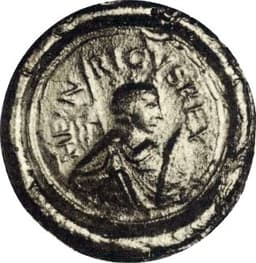
Henry the Fowler
Emperor · Medieval
60.9Total
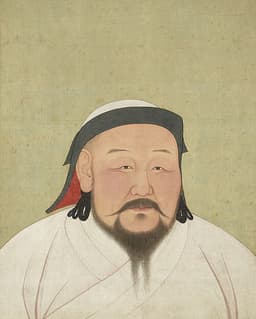
Kublai Khan
Emperor · Medieval
74.3Total
Basic Information
Born
876
1215
Died
936
1294
Era
Medieval
Medieval
Nationality
East Francia
Mongolia
Occupation
Emperor
Emperor
Civilization
Western
Eastern
Score Comparison
Military (10%)
70.0
77.5
Political (20%)
59.3
79.2
Influence (20%)
55.0
75.0
Legacy (20%)
52.0
70.0
Leadership (15%)
85.0
72.0
Strategy (15%)
55.0
76.0
TOTAL
60.9
74.3
Henry the Fowler — Complete Timeline
919 AD
Election as King of East FranciaPolitical Action
Henry the Fowler was elected King of East Francia by the Saxon and Frankish nobles at Fritzlar on May 6, 919. He was the first Saxon king, marking the transition from Carolingian to Ottonian rule. His election was contested by other dukes but he prevailed.
ElectionAccessionOttonian Dynasty
Impact: regionalconstructive
921 AD
Treaty of Bonn (921)Political Action◆ Major
Henry the Fowler signed the Treaty of Bonn with Charles the Simple of West Francia, recognizing each other's royal titles and establishing peaceful relations. This treaty ended Carolingian claims over East Francia and solidified Henry's legitimacy as an independent king.
TreatyRecognitionDiplomacy
Impact: regionalconstructive
924 AD
Nine-Year Truce with the MagyarsPolitical Action◆ Major
Henry the Fowler negotiated a nine-year truce with the Magyars, agreeing to pay tribute in exchange for a halt to their raids. He used this period to fortify towns, reorganize the army, and train cavalry. This strategic pause was crucial for his later military reforms.
TruceMagyarsMilitary Reform
Impact: regionalconstructive
929 AD
Battle of Lenzen (929)War◆ Major
Henry the Fowler's forces defeated a Slavic army at the Battle of Lenzen, securing the eastern frontier of East Francia. This victory allowed Henry to consolidate control over the Elbe region and establish the March of Brandenburg, a key step in German eastward expansion.
BattleSlavic WarsEastern Expansion
Impact: regionalconstructive
933 AD
Battle of Riade (933)War
After the truce with the Magyars expired, Henry the Fowler led a German army to victory at the Battle of Riade (near Merseburg). The defeat of the Magyar cavalry ended their raids into East Francia for a generation and established Henry's reputation as a defender of Christendom.
BattleMagyarsVictory
Impact: regionalconstructive
936 AD
Death of Henry the FowlerOther◆ Major
Henry the Fowler died on July 2, 936, at Memleben. He was succeeded by his son, Otto I, who would become Holy Roman Emperor. Henry's reign laid the foundations for the Ottonian dynasty and the medieval German kingdom.
DeathSuccessionOttonian
Impact: regional
Kublai Khan — Complete Timeline
1260 AD
Adoption of Tibetan Buddhism as State ReligionCultural◆ Major
Kublai Khan appointed the Tibetan lama Drog
Tibetan BuddhismReligionMongol-Tibet Relations
Impact: regional
1271 AD
Proclamation of the Yuan DynastyPolitical Action◆ Major
Kublai Khan officially proclaimed the Yuan dynasty, adopting a Chinese-style dynastic name. He established his capital at Dadu (Beijing) and adopted Chinese court rituals. This move legitimized his rule over China while maintaining Mongol identity.
Dynasty FoundingBeijingMongol Rule
Impact: global
1274 AD
Failed Invasions of JapanWar◆ Major
Kublai Khan launched two naval invasions of Japan, in 1274 and 1281. Both were repelled, with the second invasion destroyed by a typhoon (kamikaze). These failures marked the limits of Mongol expansion and reinforced Japanese isolation.
Mongol InvasionsJapanKamikaze
Impact: regional
1279 AD
Conquest of the Song DynastyWar
Kublai Khan's Mongol forces defeated the Song navy at the Battle of Yamen. The last Song emperor drowned, ending the Song dynasty. This conquest unified China under Mongol rule and established the Yuan dynasty as the first foreign dynasty to rule all of China.
Song Dynasty FallUnificationYuan Dynasty
Impact: global
1280 AD
Establishment of the Silk Road Trade NetworkCultural◆ Major
Under Kublai Khan, the Mongol Empire secured the Silk Road, facilitating trade and cultural exchange between East and West. Marco Polo visited his court. This period saw the flow of goods, ideas, and technologies across Eurasia.
Silk RoadTradeCultural Exchange
Impact: globalconstructive
Expert Analysis
Kublai Khan vs Henry the Fowler: Historical Comparison
Kublai Khan, the Mongol Emperor who founded the Yuan dynasty, and Henry the Fowler, the first Ottonian King of East Francia, were both medieval emperors who consolidated vast territories and laid foundations for future empires. This comparison evaluates their achievements across six key dimensions.
Dimension Analysis
**Military: Kublai Khan 94 / Henry the Fowler 89**
Kublai commanded the largest land empire in history, conquering the Song dynasty and invading Japan and Southeast Asia, while Henry repelled Magyar invasions and subdued Slavic tribes, but on a smaller scale.
**Political: Kublai Khan 79 / Henry the Fowler 76**
Kublai unified China under Mongol rule and established a centralized bureaucracy, but faced resistance from native Chinese; Henry forged the East Frankish kingdom through strategic marriages and treaties, but his realm remained a loose confederation.
**Influence: Kublai Khan 79 / Henry the Fowler 71**
Kublai’s Yuan dynasty connected East and West via the Silk Road, enabling Marco Polo’s travels, while Henry’s reign primarily shaped German and Italian medieval politics, with less global reach.
**Legacy: Kublai Khan 88 / Henry the Fowler 84**
Kublai’s legacy includes a unified China and cultural exchange, though the Mongol rule was brief; Henry founded the Ottonian dynasty, which became the Holy Roman Empire, influencing European governance for centuries.
**Leadership: Kublai Khan 81 / Henry the Fowler 85**
Henry demonstrated exceptional diplomatic skill in uniting fractious German dukes and fending off invasions, while Kublai, though effective, relied on Mongol military might and faced internal rebellions.
Verdict
Kublai Khan leads overall, driven by his superior military conquests and global influence, despite Henry’s stronger diplomatic leadership.
FAQ
Q: Who ranks higher? A: Kublai Khan ranks higher overall due to his greater military achievements and lasting impact on Eurasian history.
Rankings
🥇
Kublai KhanLeader
Mil: 77.5Pol: 79.2Inf: 75.0
74.3
🥈
Henry the Fowler
Mil: 70.0Pol: 59.3Inf: 55.0
60.9
+13.4 behind
How This Comparison Works
Algorithm
Each figure is scored on 6 dimensions (0—100 scale) based on structured historical data: Military (10%), Political (20%), Influence (20%), Legacy (20%), Leadership (15%), Strategy (15%). The weighted total produces the final ranking.
Data Sources
Scores are computed from structured sub-indicators in the database. Scale factors adjust for era (Ancient ×0.85, Modern ×1.0) and civilization size (Eastern ×1.05, Other ×0.80) to account for differences in population and military scale.
Maximum 3 Figures
Comparisons are limited to 2—3 figures to ensure readability and statistical meaningfulness.
Error Margins
±5 points per dimension — Sub-scores are derived from historical records with inherent uncertainty. Two figures within 5 points on a dimension should be considered roughly equivalent in that area.
Total Score Accuracy
±3 points overall — The weighted combination of 6 dimensions produces a total score with approximately ±3 points of uncertainty. Differences of less than 3 points are not statistically significant— the figures are effectively tied.
Known Limitations
- Historical records are incomplete and uneven across civilizations
- Figures from oral-tradition societies may be underrepresented
- Occupation labels can misclassify multi-role figures
- Scores measure capability and impact, not moral character
- Quantitative scoring is a comparison tool, not absolute truth
Capability Radar
Military (10%) — Battles & Warfare
Battles
55
95
Win Rate
60
90
Expansion
60
95
Political (20%) — Governance & Reform
Reform
75
88
Diplomacy
70
85
Economy
65
90
Influence (20%) — Cultural & Global Reach
Cultural
55
85
Global
40
85
Legacy (20%) — Historical Impact
Historical
65
90
Longevity
60
80
Leadership (15%) — Power & Stability
Tenure
70
90
Stability
70
80
Strategy (15%) — Tactics & Innovation
Strategy
65
92
Tactics
50
85
Reform
70
88
Similar Comparisons
Comments & Discussion
Historian5216/16/2026
忽必烈评分79.6,亨利一世68.2,这个差距我觉得还比较合理。但西方中心视角的评分体系有时会忽略一些细节。比如忽必烈统一中国建立元朝,开创了前所未有的跨文化治理模式,这一点在政治维度上只给了78分,似乎有点低估了。相比之下,亨利一世虽然奠定了神圣罗马帝国的基础,但其统治范围和政治复杂度远不及忽必烈。从中国历史角度来看,忽必烈面对的挑战——统治一个文化更先进、人口更稠密的文明古国——与亨利一世在德意志地区巩固王权,难度不是一个量级。不过,亨利一世在抵御马扎尔人入侵方面的确展现出了高超的军事才能。总的来说,忽必烈的总分更高是合理的,但分差应该更大才对。
BattlefieldScholar6/16/2026
Military scores: Kublai 88 vs Henry 60.1 — that's about right, but for different reasons than most people think. Kublai's conquest of the Song dynasty was a logistic masterpiece: he deployed siege engineers, naval forces, and combined-arms tactics across a 400,000-man campaign. The Battle of Xiangyang (1268-1273) alone shows his strategic patience — a five-year siege using trebuchets operated by Persian engineers. Meanwhile, Henry the Fowler's military achievements are overrated. His victory at the Battle of Riade (933) against the Magyars was more a cavalry skirmish than a decisive engagement. Henry’s real contribution was fortifying burghs and training a mobile field army, but his campaigns against the Slavs and Danes were limited in scale. Kublai projected power across half of Eurasia; Henry barely secured Saxony and Thuringia. The 27.9-point gap is justified.
CodexMagister6/16/2026
When evaluating Kublai Khan and Henry the Fowler, we must be cautious of presentist biases. Widukind of Corvey, our primary source for Henry, depicts him as a 'father of the fatherland' (pater patriae) who used 'pacts and gifts' more than the sword—a classic Ottonian trope of the ruler as conciliator. Henry's real innovation was the 'Landesburgenordnung,' a systematic fortification policy, but his military campaigns were remarkably small-scale by Mongol standards. Conversely, Marco Polo's 'Description of the World' may exaggerate Kublai's court, yet archaeological evidence from Shangdu confirms the cosmopolitan nature of his rule. The scores here underweight Henry's political acumen—his ability to manage the stem duchies through marriage alliances was sophisticated—but overstate his military impact. Ultimately, Kublai's legacy is truly 'world-historical' in Hegel's sense, while Henry's significance remains primarily German. A reasonable comparison, but one that flattens the distinct contexts of steppe empire and post-Carolingian kingship.
Historian9526/16/2026
我看了一下评分:忽必烈总分79.6,亨利一世68.2,差值11.4分。但仔细算算,军事维度忽必烈88对亨利60.1,差了27.9分,这个差距确实反映了征服南宋和征伐日本的规模差异。不过政治维度78对74.5只差3.5分,我觉得不合理。忽必烈建立了一个从漠北到江南、跨越草原和农耕区的帝国,其行政整合难度远高于亨利一世在德意志的部族联盟。按照我的算法,政治维度应该至少差10分。另外,影响力维度78对72.7,差值5.3分,但忽必烈打通丝绸之路、让马可·波罗来华的全球影响,与亨利一世基本局限于中欧的声名,差距应该更大。如果重新加权,我会给忽必烈总分82-83,亨利大约66-67。