Loading...
Henry V of England vs Indra III
Henry V of England leads by 9.9 pts · 2 figures compared
…
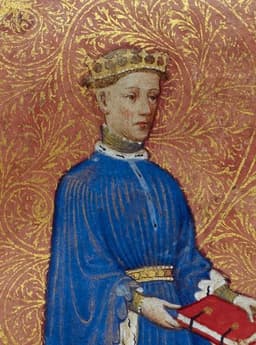
Henry V of England
Emperor · Medieval
61.2Total

Indra III
Emperor · Medieval
51.3Total
Basic Information
Born
1386
914
Died
1422
929
Era
Medieval
Medieval
Nationality
England
India
Occupation
Emperor
Emperor
Civilization
Western
Indian
Score Comparison
Military (10%)
67.5
70.0
Political (20%)
68.0
39.4
Influence (20%)
56.7
51.8
Legacy (20%)
55.0
42.5
Leadership (15%)
64.0
58.8
Strategy (15%)
67.2
60.0
TOTAL
61.2
51.3
Henry V of England — Complete Timeline
1415 AD
Battle of AgincourtWar
Henry V led an English army to a stunning victory over the French at Agincourt. Despite being outnumbered and suffering from disease, the English longbowmen decimated the French knights. This battle established Henry's reputation as a military commander and led to the conquest of Normandy.
BattleLongbowHundred Years' War
Impact: regional
1417 AD
Conquest of NormandyWar◆ Major
Henry V launched a systematic campaign to conquer Normandy, capturing Caen and other towns. He besieged Rouen for six months, forcing its surrender in 1419. The conquest of Normandy provided England with a strategic base in France.
ConquestNormandySiege
Impact: regional
1420 AD
Treaty of TroyesPolitical Action◆ Major
Henry V negotiated the Treaty of Troyes with the French king Charles VI. The treaty recognized Henry as heir to the French throne, disinheriting the Dauphin Charles. Henry married Catherine of Valois, uniting the English and French crowns. This was the peak of English success in the Hundred Years' War.
TreatySuccessionMarriage
Impact: regional
1422 AD
Death from DysenteryOther◆ Major
Henry V died suddenly at the Ch
DeathSuccessionRegency
Impact: regionaltragic
Indra III — Complete Timeline
916 AD
Sack of KannaujWar◆ Major
Indra III led a military expedition to the Ganges-Yamuna doab and sacked Kannauj, the capital of the Pratihara Empire. This raid demonstrated Rashtrakuta military power and weakened the Pratihara dynasty.
PratiharaKannaujRaid
Impact: regionaldestructive
920 AD
Campaign against the KalachurisWar
Indra III fought against the Kalachuri king Gangeyadeva, expanding Rashtrakuta influence into central India. This campaign secured the northern frontiers of the empire.
KalachuriCentral IndiaExpansion
Impact: regional
Expert Analysis
Origins
**Henry V of England** was born in 1386 at Monmouth Castle, the eldest son of Henry IV of England and Mary de Bohun. His father had usurped the throne from Richard II in 1399, placing young Henry in a politically volatile environment. He was educated under the tutelage of his uncle, Henry Beaufort, and gained military experience early, fighting against the Welsh rebel Owain Glyndŵr and the Percy family at the Battle of Shrewsbury in 1403, where he was wounded by an arrow. This formative experience shaped his martial skills and resilience.
**Indra III** was born around 870 CE into the Rashtrakuta dynasty, which ruled from Manyakheta in the Deccan. His father was Krishna II, and his mother was a princess of the Kalachuri dynasty. Little is known of his early life, but as a prince, he likely received training in statecraft and warfare. The Rashtrakutas were engaged in a tripartite struggle with the Pratiharas and Palas for control of northern India, setting the stage for Indra's later campaigns.
Rise to Power
Henry V ascended the throne in 1413 upon his father's death. He quickly consolidated power by suppressing a Lollard uprising and executing Sir John Oldcastle. He then revived the Hundred Years' War against France, capitalizing on the mental illness of King Charles VI and the rivalry between the Burgundian and Armagnac factions. In 1415, he invaded France, leading to the pivotal Battle of Agincourt on October 25. Despite being outnumbered (perhaps 6,000 English against 20,000-30,000 French), Henry's use of longbowmen and defensive positioning resulted in a decisive victory, killing thousands of French nobles.
Indra III succeeded his father Krishna II around 915 CE. The Rashtrakuta kingdom was already powerful, but Indra sought to assert dominance over the Pratihara Empire, which controlled Kannauj and the Ganges-Yamuna doab. In 916 CE, he launched a swift campaign, marching north and sacking Kannauj, the Pratihara capital. This raid demonstrated Rashtrakuta military capability and weakened the Pratiharas, though Indra did not attempt permanent occupation. His military score of 70.0 reflects this success, higher than Henry's 67.5.
Leadership & Governance
Henry V was a hands-on leader who personally led troops and inspired loyalty. He reformed the English navy, built a fleet, and implemented strict discipline in his army. Administratively, he worked to secure loans from Parliament and the Church to fund his wars. The Treaty of Troyes in 1420 made him heir to France and married him to Catherine of Valois, but his governance relied heavily on military conquest. His political score of 68.0 reflects effective diplomacy, though his early death left succession uncertain.
Indra III ruled as a traditional Indian monarch, delegating administration to feudatories and focusing on military expansion. His reign saw campaigns against the Kalachuris and the Eastern Chalukyas. He maintained the Rashtrakuta system of provincial governors and maintained alliances through marriage. However, his political score of 39.4 is low, partly because his achievements were short-lived—his successors lost control of northern gains. His leadership score of 58.8 is below Henry's 64.0, indicating less effective governance.
Triumph & Tragedy
Henry V's greatest triumph was Agincourt, where his strategy and leadership crushed a larger French army. His conquest of Normandy (1417-1419) and the Treaty of Troyes were also major successes. However, his early death from dysentery in 1422 at age 35 was a tragedy, leaving his infant son Henry VI to inherit a fragile dual monarchy that soon collapsed. His legacy score of 55.0 reflects this unfulfilled potential.
Indra III's triumph was the sack of Kannauj, which humiliated the Pratiharas and showcased Rashtrakuta power. He also expanded into central India against the Kalachuris. However, his gains were not consolidated; after his death around 927 CE, the Rashtrakuta empire declined under his successors. His influence score of 51.8 and legacy score of 42.5 indicate limited lasting impact.
Character & Destiny
Henry V was known for his piety, sense of duty, and ruthless pragmatism. Shakespeare portrayed him as a heroic king, but historical records show he could be harsh, executing prisoners at Agincourt and suppressing dissent. His character drove him to pursue the French throne, but his early death cut short his ambitions. His total score of 61.2 reflects a balanced but incomplete reign.
Indra III was a capable military commander but less adept at statecraft. His decision to raid rather than occupy Kannauj suggests a focus on plunder over permanent expansion. His personality is less documented, but his actions indicate a typical medieval Indian ruler prioritizing military glory. His total score of 51.3 is lower, reflecting weaker political and legacy scores.
Legacy
Henry V's legacy is enshrined in English history as a symbol of military prowess and national pride. The Battle of Agincourt became a defining moment, and his reign strengthened the English monarchy, though the Hundred Years' War eventually ended in English defeat. His leadership score of 64.0 and strategy score of 67.2 are remembered, but his early death limited his long-term influence.
Indra III's legacy is more obscure. The sack of Kannauj is noted in Rashtrakuta history, but his dynasty declined within decades. He did not create lasting institutions or territorial changes. His military score of 70.0 is his highest, but his overall impact on Indian history is minor compared to other rulers.
Conclusion
Henry V had greater impact than Indra III. His total score of 61.2 exceeds Indra's 51.3 by 9.9 points, reflecting superior political, leadership, and legacy scores. While Indra's military score is slightly higher (70.0 vs 67.5), Henry's achievements—Agincourt, the Treaty of Troyes, and his cultural legacy—transformed European history. Indra's sacking of Kannauj was a temporary blow, but Henry's actions shaped the English monarchy and the Hundred Years' War. Therefore, Henry V is the more significant figure.
Rankings
🥇
Henry V of EnglandLeader
Mil: 67.5Pol: 68.0Inf: 56.7
61.2
🥈
Indra III
Mil: 70.0Pol: 39.4Inf: 51.8
51.3
+9.9 behind
How This Comparison Works
Algorithm
Each figure is scored on 6 dimensions (0—100 scale) based on structured historical data: Military (10%), Political (20%), Influence (20%), Legacy (20%), Leadership (15%), Strategy (15%). The weighted total produces the final ranking.
Data Sources
Scores are computed from structured sub-indicators in the database. Scale factors adjust for era (Ancient ×0.85, Modern ×1.0) and civilization size (Eastern ×1.05, Other ×0.80) to account for differences in population and military scale.
Maximum 3 Figures
Comparisons are limited to 2—3 figures to ensure readability and statistical meaningfulness.
Error Margins
±5 points per dimension — Sub-scores are derived from historical records with inherent uncertainty. Two figures within 5 points on a dimension should be considered roughly equivalent in that area.
Total Score Accuracy
±3 points overall — The weighted combination of 6 dimensions produces a total score with approximately ±3 points of uncertainty. Differences of less than 3 points are not statistically significant— the figures are effectively tied.
Known Limitations
- Historical records are incomplete and uneven across civilizations
- Figures from oral-tradition societies may be underrepresented
- Occupation labels can misclassify multi-role figures
- Scores measure capability and impact, not moral character
- Quantitative scoring is a comparison tool, not absolute truth
Capability Radar
Military (10%) — Battles & Warfare
Battles
65
55
Win Rate
70
60
Expansion
55
60
Political (20%) — Governance & Reform
Reform
55
30
Diplomacy
70
40
Economy
50
35
Influence (20%) — Cultural & Global Reach
Cultural
60
30
Global
55
20
Legacy (20%) — Historical Impact
Historical
75
35
Longevity
65
20
Leadership (15%) — Power & Stability
Tenure
50
40
Stability
45
35
Strategy (15%) — Tactics & Innovation
Strategy
75
55
Tactics
85
50
Reform
60
30
Similar Comparisons
Comments & Discussion
No comments yet. Be the first to share your thoughts!