Loading...
Henry V of England vs Napoleon Bonaparte
Napoleon Bonaparte leads by 9.7 pts · 2 figures compared
…
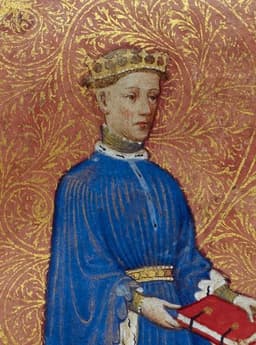
Henry V of England
Emperor · Medieval
61.2Total

Napoleon Bonaparte
General · Modern
70.9Total
Basic Information
Born
1386
1769
Died
1422
1821
Era
Medieval
Modern
Nationality
England
France
Occupation
Emperor
General
Civilization
Western
Western
Score Comparison
Military (10%)
67.5
94.0
Political (20%)
68.0
72.0
Influence (20%)
56.7
40.0
Legacy (20%)
55.0
80.0
Leadership (15%)
64.0
78.0
Strategy (15%)
67.2
90.0
TOTAL
61.2
70.9
Henry V of England — Complete Timeline
1415 AD
Battle of AgincourtWar
Henry V led an English army to a stunning victory over the French at Agincourt. Despite being outnumbered and suffering from disease, the English longbowmen decimated the French knights. This battle established Henry's reputation as a military commander and led to the conquest of Normandy.
BattleLongbowHundred Years' War
Impact: regional
1417 AD
Conquest of NormandyWar◆ Major
Henry V launched a systematic campaign to conquer Normandy, capturing Caen and other towns. He besieged Rouen for six months, forcing its surrender in 1419. The conquest of Normandy provided England with a strategic base in France.
ConquestNormandySiege
Impact: regional
1420 AD
Treaty of TroyesPolitical Action◆ Major
Henry V negotiated the Treaty of Troyes with the French king Charles VI. The treaty recognized Henry as heir to the French throne, disinheriting the Dauphin Charles. Henry married Catherine of Valois, uniting the English and French crowns. This was the peak of English success in the Hundred Years' War.
TreatySuccessionMarriage
Impact: regional
1422 AD
Death from DysenteryOther◆ Major
Henry V died suddenly at the Ch
DeathSuccessionRegency
Impact: regionaltragic
Napoleon Bonaparte — Complete Timeline
1799 AD
Coup of 18 BrumaireOther◆ Major
Napoleon Bonaparte, with support from his brother Lucien and key political figures, overthrew the Directory in a bloodless coup. He established the Consulate with himself as First Consul, effectively becoming the ruler of France. This event ended the French Revolution's most unstable period.
French RevolutionCoupRise to Power
Impact: regional
1804 AD
Promulgation of the Napoleonic CodeOther◆ Major
Napoleon enacted the Civil Code of the French, known as the Napoleonic Code, a comprehensive set of laws that replaced the fragmented feudal legal systems. The code established legal equality, protected property rights, and secularized law. It became the basis for legal systems in many European and world countries.
Legal ReformNapoleonic CodeCivil Law
Impact: globalconstructive
1805 AD
Battle of AusterlitzWar◆ Major
Napoleon's Grande Arm
Napoleonic WarsBattleDecisive Victory
Impact: global
1812 AD
Invasion of RussiaWar◆ Major
Napoleon led the Grande Arm
Napoleonic WarsInvasionDisaster
Impact: globaldestructive
1815 AD
Battle of WaterlooWar◆ Major
Napoleon's French army was defeated by the combined forces of the Duke of Wellington's Anglo-Allied army and Gebhard Leberecht von Bl
Napoleonic WarsBattleFinal Defeat
Impact: globaldestructive
Expert Analysis
henry-v-of-england-vs-napoleon-bonaparte
# The Conqueror’s Hourglass
On a muddy October morning in 1415, a young English king stood atop a rain-soaked hill in northern France, watching his exhausted archers string their bows against a French army four times their size. Four hundred years later, on a June evening in 1815, another commander—short, restless, and already tasting defeat—watched his Imperial Guard crumble near a village called Waterloo. Both men had conquered Europe. Both had rewritten the map. But one died in his bed as a king; the other ended his days on a volcanic island in the South Atlantic, abandoned even by his own legend. What separates a triumph that ends in a crown from one that ends in exile? The answer lies not merely in battles, but in the men who fought them.
Origins
Napoleon Bonaparte was born in 1769 on Corsica, an island that had become French only the year before. His family was minor nobility, proud and impoverished. Young Napoleon spoke Italian before French, and his schoolmates mocked his accent. This outsider’s hunger—the need to prove himself more French than the French—would never leave him. He devoured military history and mathematics, and when the Revolution shattered the old order, he saw opportunity in chaos.
Henry V of England was born in 1386, the grandson of a usurper. His father, Henry IV, had seized the throne from Richard II, and the young prince grew up in a court haunted by rebellion and the constant fear of being overthrown. Young Henry fought Welsh rebels at sixteen and governed Wales at nineteen. He knew that a king’s legitimacy came not from birthright alone, but from victory. Where Napoleon would rise from nothing, Henry rose from a throne that was never quite secure.
Rise to Power
Napoleon’s ascent was a masterpiece of calculated risk. At twenty-four, he drove the British out of Toulon. At twenty-six, he crushed a royalist uprising in Paris with a “whiff of grapeshot.” At twenty-seven, he invaded Italy and won six battles in a month. Each victory fed the next. He understood that in revolutionary France, a general who delivered glory could demand power. By 1799, he was First Consul. By 1804, Emperor.
Henry’s path was more constrained. He became king in 1413 at the age of twenty-six, inheriting a kingdom divided by noble factions and a war with France that had stalled for decades. He had no revolution to ride, no republic to overturn. He had only the medieval machinery of kingship—parliament, church, and the fragile loyalty of barons. His genius was to use that machinery with ruthless precision. He secured funds from Parliament, crushed a conspiracy led by his own cousin, and then, in 1415, he sailed for France.
Leadership & Governance
Napoleon governed as he fought: with speed, brilliance, and an insatiable appetite for control. He reformed French law into the Napoleonic Code, a system that still shapes legal thinking across Europe and the Americas. He centralized education, built roads, and created a meritocracy where soldiers could rise from the ranks. But he also silenced dissent, censored the press, and crowned himself emperor with a pope as his witness. His military genius was undeniable—his 94.0 military score reflects campaigns that remain textbooks for strategists—but his political score of 75.0 hints at the flaw: he could conquer, but he could not consolidate.
Henry V governed as a medieval king must: through presence, piety, and the careful distribution of land and titles. He was a master of logistics and morale. At Agincourt in 1415, his army of perhaps 6,000 men, many sick and starving, defeated a French force of 20,000 to 30,000. He placed his longbowmen on the flanks, ordered sharpened stakes against cavalry, and let the French nobility drown in their own armor in the mud. His military score of 73.1 is lower than Napoleon’s, but his leadership score of 75.0 matches the emperor’s—a testament to how he held his army together through sheer force of will.
Triumph & Tragedy
Napoleon’s greatest moment came in 1805 at Austerlitz, where he lured the combined armies of Russia and Austria into a trap and destroyed them. The sun that day was called “the Sun of Austerlitz,” and for a decade, it did not set on his empire. His tragedy was that he could not stop. He invaded Russia in 1812 with 600,000 men; fewer than 100,000 returned. He was exiled to Elba, escaped, raised another army, and lost everything at Waterloo in 1815. His strategic score of 93.0 blinded him to the limits of strategy itself.
Henry’s triumph was Agincourt—a victory so improbable it became legend. Shakespeare would later give him the famous lines: “We few, we happy few, we band of brothers.” His tragedy came not on a battlefield but in a sickbed. By the Treaty of Troyes in 1420, he was recognized as heir to the French throne. He had won everything. Then, in 1422, at the age of thirty-five, he died of dysentery at Château de Vincennes. His son was an infant. Within a generation, everything Henry had conquered was lost.
Character & Destiny
Napoleon was driven by a restless, almost demonic energy. “Impossible,” he once said, “is a word to be found only in the dictionary of fools.” He trusted his own genius above all others, and this hubris was his undoing. He could not delegate, could not compromise, could not stop. His character was his destiny: a brilliant engine with no brakes.
Henry was colder, more calculating. He knew that a king’s life was borrowed time. He married Catherine of France not for love but for dynasty. He punished traitors with theatrical cruelty. Yet he also understood that power required legitimacy—which is why he spent so much effort on the Treaty of Troyes, a legal document that gave his conquests a veneer of right. His character was a mask: the warrior-king who was also a diplomat, the conqueror who knew he would not live to enjoy his conquests.
Legacy
Napoleon’s legacy is vast and contradictory. He is remembered as a tyrant and a reformer, a warmonger and a lawgiver. The Napoleonic Code, the metric system, the modern army staff—all survive him. His influence score of 82.0 reflects a man who reshaped Europe’s political geography. But his legacy score of 78.0 is lower, perhaps because he died in defeat, a cautionary tale about ambition without restraint.
Henry V’s legacy is narrower but more poignant. He is remembered as the ideal king—brave, just, and pious—largely because Shakespeare made him so. His influence score of 76.2 is close to Napoleon’s, but his legacy score of 67.0 reflects the brevity of his success. He conquered, but he could not keep. His son lost everything, and England slipped back into civil war.
Conclusion
Both men reached for the same star: the crown of France. Napoleon seized it, wore it, and lost it. Henry died before he could wear it, but he died a king, not an exile. In the end, the difference between them is not talent—both were geniuses—but timing and temperament. Napoleon lived too long for his own good; Henry died too soon for his kingdom’s. One was destroyed by his own success; the other was saved by his own death. Perhaps the cruelest lesson of history is that the hourglass runs differently for every conqueror. What matters is not how much sand remains, but what you do with the grains you have.
Rankings
🥇
Napoleon BonaparteLeader
Mil: 94.0Pol: 72.0Inf: 40.0
70.9
🥈
Henry V of England
Mil: 67.5Pol: 68.0Inf: 56.7
61.2
+9.7 behind
How This Comparison Works
Algorithm
Each figure is scored on 6 dimensions (0—100 scale) based on structured historical data: Military (10%), Political (20%), Influence (20%), Legacy (20%), Leadership (15%), Strategy (15%). The weighted total produces the final ranking.
Data Sources
Scores are computed from structured sub-indicators in the database. Scale factors adjust for era (Ancient ×0.85, Modern ×1.0) and civilization size (Eastern ×1.05, Other ×0.80) to account for differences in population and military scale.
Maximum 3 Figures
Comparisons are limited to 2—3 figures to ensure readability and statistical meaningfulness.
Error Margins
±5 points per dimension — Sub-scores are derived from historical records with inherent uncertainty. Two figures within 5 points on a dimension should be considered roughly equivalent in that area.
Total Score Accuracy
±3 points overall — The weighted combination of 6 dimensions produces a total score with approximately ±3 points of uncertainty. Differences of less than 3 points are not statistically significant— the figures are effectively tied.
Known Limitations
- Historical records are incomplete and uneven across civilizations
- Figures from oral-tradition societies may be underrepresented
- Occupation labels can misclassify multi-role figures
- Scores measure capability and impact, not moral character
- Quantitative scoring is a comparison tool, not absolute truth
Capability Radar
Military (10%) — Battles & Warfare
Battles
65
95
Win Rate
70
90
Expansion
55
95
Political (20%) — Governance & Reform
Reform
55
95
Diplomacy
70
80
Economy
50
85
Influence (20%) — Cultural & Global Reach
Cultural
60
85
Global
55
90
Legacy (20%) — Historical Impact
Historical
75
95
Longevity
65
90
Leadership (15%) — Power & Stability
Tenure
50
85
Stability
45
70
Strategy (15%) — Tactics & Innovation
Strategy
75
95
Tactics
85
98
Reform
60
92
Similar Comparisons
Comments & Discussion
AgincourtArcher6/17/2026
Napoleon was a brilliant administrator and tactician, but Henry V had something he didn't: the perfect storm of terrain, rain, and muddy field at Agincourt. Henry used longbowmen to decimate the French cavalry—a tactic that wouldn't work a century later. Napoleon faced Wellington at Waterloo with outdated column formations against British line infantry. Henry's victory was tactical genius; Napoleon's was stubborn repetition. Advantage Henry.
雾锁滑铁卢6/17/2026
拿破仑的滑铁卢败局暴露了他的致命自负:他明明知道普鲁士军队正在赶来,却仍把格鲁希派去追踪看不见的影子。亨利五世在阿金库尔可没犯这种错——他精准判断了地形、天气和法军心理。拿破仑输给的不是威灵顿,是自己的傲慢。亨利赢了,因为他懂得何时该等,该埋伏,该相信那些弓箭手。将军的智商,拿破仑9分,亨利8.5分,但战场的上帝偏爱务实者。
StatsMan_18156/17/2026
Let's be real: Napoleon's empire lasted a decade and reshaped Europe's legal systems with the Napoleonic Code. Henry's conquest of France was a 5-year window before he died and England lost everything except Calais. Waterloo was a close-run thing where Napoleon almost won. Agincourt? The French lost mostly because of mud and stupid cavalry charges. Check the win percentages: Napoleon won over 60 major battles; Henry fought exactly 3 as king. Case closed for numbers.
血染王冠6/17/2026
别跟我谈什么拿破仑法典或滑铁卢的细节。亨利五世在阿金库尔只有六千疲惫之师,面对三万法军,他用弓箭手创造了中世纪最惊人的以少胜多。拿破仑在耶拿以优势兵力打了普鲁士一个措手不及,那不叫奇迹,叫仗势欺人。真正的征服者是在绝望中找到出路的人,不是在优势中收割胜利的商人。亨利五世是战士,拿破仑是政客加将军的混血儿——两个职业都做好,但哪个都不纯粹。
LatinLessons6/17/2026
Compare their strategic contexts: Henry V fought a feudal war where personal leadership decided everything—his presence at Agincourt rallied the men. Napoleon commanded mass conscript armies; his charisma mattered less than logistics. Henry died king of England and France (de jure), his legend intact. Napoleon died on St. Helena, writing memoirs to salvage his image. One lived the chivalric ideal; the other scripted his own myth. I'd rather have Henry's real crown than Napoleon's stage-prop empi