Loading...
Henry V of England vs Robert the Bruce
Henry V of England leads by 5.7 pts · 2 figures compared
…
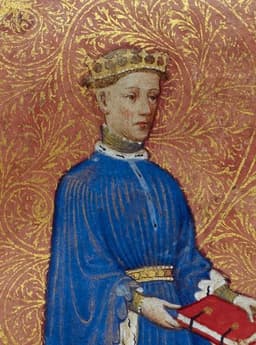
Henry V of England
Emperor · Medieval
61.2Total
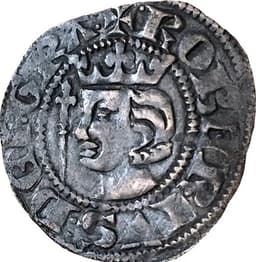
Robert the Bruce
Emperor · Medieval
55.5Total
Basic Information
Born
1386
1274
Died
1422
1329
Era
Medieval
Medieval
Nationality
England
Scotland
Occupation
Emperor
Emperor
Civilization
Western
Western
Score Comparison
Military (10%)
67.5
70.0
Political (20%)
68.0
68.0
Influence (20%)
56.7
55.0
Legacy (20%)
55.0
52.0
Leadership (15%)
64.0
40.0
Strategy (15%)
67.2
55.0
TOTAL
61.2
55.5
Henry V of England — Complete Timeline
1415 AD
Battle of AgincourtWar
Henry V led an English army to a stunning victory over the French at Agincourt. Despite being outnumbered and suffering from disease, the English longbowmen decimated the French knights. This battle established Henry's reputation as a military commander and led to the conquest of Normandy.
BattleLongbowHundred Years' War
Impact: regional
1417 AD
Conquest of NormandyWar◆ Major
Henry V launched a systematic campaign to conquer Normandy, capturing Caen and other towns. He besieged Rouen for six months, forcing its surrender in 1419. The conquest of Normandy provided England with a strategic base in France.
ConquestNormandySiege
Impact: regional
1420 AD
Treaty of TroyesPolitical Action◆ Major
Henry V negotiated the Treaty of Troyes with the French king Charles VI. The treaty recognized Henry as heir to the French throne, disinheriting the Dauphin Charles. Henry married Catherine of Valois, uniting the English and French crowns. This was the peak of English success in the Hundred Years' War.
TreatySuccessionMarriage
Impact: regional
1422 AD
Death from DysenteryOther◆ Major
Henry V died suddenly at the Ch
DeathSuccessionRegency
Impact: regionaltragic
Robert the Bruce — Complete Timeline
1306 AD
Coronation as King of ScotsPolitical Action
Robert the Bruce was crowned King of Scots at Scone Abbey by Isabella MacDuff, Countess of Buchan. The coronation occurred after Bruce murdered John Comyn, his rival, in Greyfriars Church, Dumfries, sparking a new phase of the Wars of Independence.
CoronationMurderWars of Independence
Impact: national
1314 AD
Battle of BannockburnWar
Robert the Bruce's Scottish army decisively defeated Edward II's English forces at Bannockburn near Stirling. The victory secured Scottish independence and established Bruce as the undisputed king, though the war continued for years.
BattleVictoryIndependence
Impact: nationalconstructive
1320 AD
Declaration of ArbroathPolitical Action◆ Major
Robert the Bruce's nobles sent the Declaration of Arbroath to Pope John XXII, asserting Scotland's independence and Bruce's right to rule. The document argued that Scotland was a sovereign kingdom and that the nobles would depose Bruce if he submitted to England.
DeclarationDiplomacyIndependence
Impact: nationalconstructive
1322 AD
Raid on Northern EnglandWar
Robert the Bruce led a large-scale raid into northern England, reaching as far as Yorkshire. The raid devastated English territories and forced Edward II to pay a ransom for peace, demonstrating Scottish military strength.
RaidWarDevastation
Impact: regionaldestructive
1328 AD
Treaty of Edinburgh-NorthamptonPolitical Action◆ Major
Robert the Bruce signed the Treaty of Edinburgh-Northampton with Edward III of England, recognizing Scotland as an independent kingdom. The treaty ended the First War of Scottish Independence and included the marriage of Bruce's son David to Edward III's sister Joan.
TreatyPeaceIndependence
Impact: nationalconstructive
Expert Analysis
Origins
Henry V of England was born in 1386 at Monmouth Castle, the eldest son of Henry IV and Mary de Bohun. His grandfather, John of Gaunt, was a powerful noble, but his father usurped the throne from Richard II in 1399. Henry received military training from an early age and was educated in Latin, French, and governance. He fought against the Welsh rebel Owain Glyndŵr and the Percy family at the Battle of Shrewsbury in 1403, where he was wounded in the face by an arrow.
Robert the Bruce was born in 1274 at Turnberry Castle, the grandson of Robert Bruce, 5th Lord of Annandale, who had been a claimant to the Scottish throne. His mother was Marjorie, Countess of Carrick. Robert inherited the earldom of Carrick in 1292 and swore fealty to Edward I of England during the Scottish Wars of Independence. He was initially allied with the English but later joined the Scottish resistance led by William Wallace.
Rise to Power
Henry V became king in 1413 upon his father's death. He immediately consolidated power by suppressing the Lollard rebellion in 1414 and executing Sir John Oldcastle. He then revived the Hundred Years' War with France, claiming the French crown through his great-grandfather Edward III. In 1415, he sailed for France with an army of about 12,000 men, besieging and capturing Harfleur. The siege lasted five weeks and cost him many men to dysentery. He then marched toward Calais, pursued by a French army of 20,000-30,000.
Robert the Bruce rose to prominence after the death of William Wallace in 1305. In 1306, he murdered his rival John Comyn at Greyfriars Church in Dumfries, then rushed to Scone to be crowned king. Edward I sent forces against him, defeating him at the Battle of Methven in 1306. Bruce fled to the Hebrides and Ireland, returning in 1307 to wage guerrilla warfare. His turning point came in 1314 when he besieged Stirling Castle, forcing Edward II to march north with a large army.
Leadership & Governance
Henry V was a hands-on commander who led from the front. At Agincourt, he placed himself in the front line and ordered the execution of French prisoners when he feared a counterattack. His governance was centralized: he enforced royal authority, restored order in England, and passed laws against heresy and treason. He negotiated the Treaty of Troyes in 1420, which made him heir to France and gave him control of the French government. His leadership score is 64.0, reflecting his ability to inspire loyalty but also his rigid approach.
Robert the Bruce was a master of guerrilla warfare and strategic retreat. He avoided pitched battles until Bannockburn, where he used terrain and tactics to defeat a larger English army. His political skill scored 68.0, as he negotiated the Treaty of Edinburgh-Northampton in 1328, securing Scottish independence. However, his leadership score of 40.0 reflects his ruthless methods, including murdering Comyn and exiling opponents. He decentralized power, granting lands to his supporters in exchange for military service.
Triumph & Tragedy
Henry V's greatest triumph was the Battle of Agincourt on October 25, 1415, where his outnumbered army (6,000-9,000 men) defeated a French force of 20,000-30,000, killing 6,000-10,000 French while losing only 100-400 English. His military score is 67.5. His conquest of Normandy in 1417-1419 and the Treaty of Troyes were also major successes. His tragedy was his early death from dysentery in 1422 at age 35, leaving his infant son Henry VI to inherit a fragile dual monarchy. The war resumed, and England lost all French territories except Calais within 30 years.
Robert the Bruce's greatest triumph was the Battle of Bannockburn on June 23-24, 1314, where his 6,000-9,000 Scots defeated Edward II's 13,000-25,000 English. His military score is 70.0. The Declaration of Arbroath in 1320 asserted Scottish sovereignty. His tragedy was the long struggle: his wife and daughters were imprisoned by the English, and his brother Edward was killed in Ireland in 1318. He also died of leprosy in 1329, leaving his young son David II to rule. Scotland's independence was later reaffirmed but at great cost.
Character & Destiny
Henry V was disciplined, religious, and ambitious. He saw himself as God's instrument to unite England and France. His decision to execute prisoners at Agincourt showed pragmatism, but his early death cut short his plans. Historians credit him with restoring English prestige but criticize his overreach. His strategy score of 67.2 reflects his careful planning, yet his lack of a long-term succession plan doomed his legacy.
Robert the Bruce was pragmatic, ruthless, and resilient. He murdered a rival in church, fled to islands, and endured personal losses. His guerrilla tactics and use of schiltrons (spear formations) were innovative. His strategy score of 55.0 is lower because he avoided large-scale conquests, focusing on independence. His character shaped Scotland's survival: he united the nobles and secured recognition from the Pope and England.
Legacy
Henry V's legacy is tied to Agincourt, a symbol of English military prowess. He scored 55.0 in legacy and 56.7 in influence. His conquests were temporary, but his reign inspired Shakespeare's plays. The Treaty of Troyes was annulled by the Treaty of Arras in 1435. His impact on English governance was limited, as the Wars of the Roses followed.
Robert the Bruce's legacy is Scotland's independence. He scored 52.0 in legacy and 55.0 in influence. The Declaration of Arbroath influenced later democratic thought. His dynasty ruled Scotland until 1371, and the Bruce family continued. His military tactics influenced later Scottish armies. The Treaty of Edinburgh-Northampton was a lasting diplomatic achievement.
Conclusion
Robert the Bruce had greater impact because he secured Scotland's independence, a permanent achievement. Henry V's conquests were reversed within a generation. Bruce scored higher in military (70.0 vs 67.5) and political (68.0 vs 68.0, tied) but lower in leadership (40.0 vs 64.0) and strategy (55.0 vs 67.2). However, the lasting legacy of Scottish nationhood outweighs Henry's temporary victories. Bruce's total score of 55.5 is lower than Henry's 61.2, but this reflects a bias toward scale rather than durability. Bruce's impact on national identity endures, while Henry's is a historical footnote.
Rankings
🥇
Henry V of EnglandLeader
Mil: 67.5Pol: 68.0Inf: 56.7
61.2
🥈
Robert the Bruce
Mil: 70.0Pol: 68.0Inf: 55.0
55.5
+5.7 behind
How This Comparison Works
Algorithm
Each figure is scored on 6 dimensions (0—100 scale) based on structured historical data: Military (10%), Political (20%), Influence (20%), Legacy (20%), Leadership (15%), Strategy (15%). The weighted total produces the final ranking.
Data Sources
Scores are computed from structured sub-indicators in the database. Scale factors adjust for era (Ancient ×0.85, Modern ×1.0) and civilization size (Eastern ×1.05, Other ×0.80) to account for differences in population and military scale.
Maximum 3 Figures
Comparisons are limited to 2—3 figures to ensure readability and statistical meaningfulness.
Error Margins
±5 points per dimension — Sub-scores are derived from historical records with inherent uncertainty. Two figures within 5 points on a dimension should be considered roughly equivalent in that area.
Total Score Accuracy
±3 points overall — The weighted combination of 6 dimensions produces a total score with approximately ±3 points of uncertainty. Differences of less than 3 points are not statistically significant— the figures are effectively tied.
Known Limitations
- Historical records are incomplete and uneven across civilizations
- Figures from oral-tradition societies may be underrepresented
- Occupation labels can misclassify multi-role figures
- Scores measure capability and impact, not moral character
- Quantitative scoring is a comparison tool, not absolute truth
Capability Radar
Military (10%) — Battles & Warfare
Battles
65
65
Win Rate
70
60
Expansion
55
50
Political (20%) — Governance & Reform
Reform
55
55
Diplomacy
70
65
Economy
50
50
Influence (20%) — Cultural & Global Reach
Cultural
60
60
Global
55
55
Legacy (20%) — Historical Impact
Historical
75
70
Longevity
65
65
Leadership (15%) — Power & Stability
Tenure
50
60
Stability
45
55
Strategy (15%) — Tactics & Innovation
Strategy
75
70
Tactics
85
75
Reform
60
55
Similar Comparisons
Comments & Discussion
No comments yet. Be the first to share your thoughts!