Loading...
Henry V vs Julius Caesar
Julius Caesar leads by 26.7 pts · 2 figures compared
…
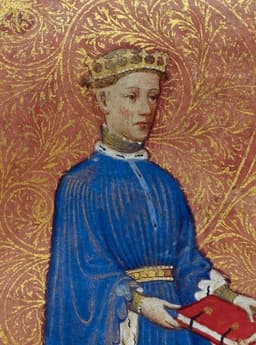
Henry V
Emperor · Medieval
56.1Total

Julius Caesar
General · Ancient
82.8Total
Basic Information
Born
1081
-100
Died
1125
-44
Era
Medieval
Ancient
Nationality
Holy Roman Empire
Roman Republic
Occupation
Emperor
General
Civilization
Western
Western
Score Comparison
Military (10%)
25.0
88.0
Political (20%)
72.0
78.0
Influence (20%)
59.0
85.0
Legacy (20%)
54.0
82.0
Leadership (15%)
68.0
80.0
Strategy (15%)
43.3
85.0
TOTAL
56.1
82.8
Henry V — Complete Timeline
1106 AD
Election as King of GermanyPolitical Action◆ Major
Henry V was elected King of Germany in 1106 after rebelling against his father Henry IV, who died the same year. His accession marked the continuation of the Salian dynasty amid the Investiture Controversy.
SuccessionRebellion
Impact: regional
1110 AD
Campaign in ItalyWar
Henry V led a military campaign to Italy in 1110-1111 to assert imperial claims over the Papal States and secure his coronation. He captured Rome and forced Pope Paschal II to concede investiture rights, but the agreement was later repudiated.
Italian CampaignPapal Conflict
Impact: regional
1111 AD
Coronation as Holy Roman EmperorPolitical Action◆ Major
Pope Paschal II crowned Henry V Holy Roman Emperor in Rome on April 13, 1111, after Henry forced the Pope to grant him the right of investiture. The coronation followed a tense standoff where Henry imprisoned the Pope and cardinals.
CoronationInvestiture Controversy
Impact: regional
1122 AD
Concordat of WormsPolitical Action
Henry V and Pope Callixtus II signed the Concordat of Worms on September 23, 1122, ending the Investiture Controversy. The agreement gave the Church the right to elect bishops but allowed the emperor to invest them with secular authority.
Investiture ControversyTreatyChurch-State Relations
Impact: regionalconstructive
Julius Caesar — Complete Timeline
58 BC
Gallic WarsWar◆ Major
Caesar, as proconsul of Gaul, launched a series of campaigns that conquered all of Gaul (modern France, Belgium, and parts of Switzerland). He fought numerous battles, including against the Helvetii, the Belgae, and the Gallic chieftain Vercingetorix. The wars brought immense wealth and a loyal army to Caesar.
Gallic WarsConquestRoman Expansion
Impact: regional
49 BC
Crossing the RubiconPolitical Action◆ Major
Caesar led Legio XIII across the Rubicon River into Italy, defying the Roman Senate's order to disband his army. This act triggered a civil war against Pompey and the Optimates, ultimately leading to Caesar's dictatorship and the end of the Roman Republic.
Roman Civil WarEnd of RepublicPower Struggle
Impact: global
48 BC
Battle of PharsalusWar◆ Major
Caesar's outnumbered army defeated the larger forces of Pompey the Great at Pharsalus in Greece. Caesar's tactical use of a reserve line to counter Pompey's cavalry charge proved decisive. Pompey fled to Egypt, where he was assassinated, leaving Caesar as the undisputed master of the Roman world.
Roman Civil WarBattleDecisive Victory
Impact: regional
44 BC
Appointment as Dictator for LifePolitical Action◆ Major
The Roman Senate appointed Caesar dictator perpetuo (dictator for life), granting him unprecedented personal power. This move concentrated military, legislative, and judicial authority in one person, effectively ending the Roman Republic's traditional system of checks and balances and alarming many senators.
DictatorshipEnd of RepublicPower Consolidation
Impact: regionaldestructive
Assassination on the Ides of MarchPolitical Action◆ Major
A group of Roman senators, led by Marcus Junius Brutus and Gaius Cassius Longinus, stabbed Caesar to death at a meeting of the Senate in the Theatre of Pompey. The assassination was intended to restore the Republic, but instead triggered another civil war that led to the rise of the Roman Empire.
AssassinationRoman PoliticsEnd of Republic
Impact: globaldestructive
Expert Analysis
henry-v-vs-julius-caesar
**The Crossing and the Compromise: Caesar and Henry V**
On a January morning in 49 BCE, a man in armor halted his horse at the edge of a small, muddy river in northern Italy. The Rubicon was a provincial boundary, a line no Roman general could cross with an army on pain of death. Julius Caesar paused, weighed the abyss before him, and then plunged forward, unleashing a civil war that would shatter the Republic. Nine centuries later, in a chilly German cathedral town, another ruler sat across a table from a weary pope. Henry V, Holy Roman Emperor, dipped a quill into ink and signed his name to the Concordat of Worms, ending a fifty-year war between church and state. One man chose the sword; the other chose the scroll. Their divergent paths reveal how character, circumstance, and the very architecture of their eras shaped not only their fates but the future of the West.
**Origins**
Caesar was born into the chaos of a dying republic. His family, the Julii, claimed descent from the goddess Venus, but their political fortunes had faded. Young Gaius grew up in the shadow of civil wars, Sulla’s proscriptions, and a Senate that had become a theater of ambition. He learned that in Rome, power belonged to those who could command armies, buy votes, and seize the moment. His education was practical: rhetoric in the Forum, military command in Asia Minor, and the brutal lesson that mercy was a weapon and cruelty a tool.
Henry V, by contrast, was born into a throne already creaking under the weight of divine expectation. As the son of Emperor Henry IV, he was raised in the midst of the Investiture Controversy, a conflict that had seen his father stand barefoot in the snow at Canossa, begging Pope Gregory VII for forgiveness. Young Henry learned that emperorship was not about conquest but about legitimacy. His father had been excommunicated, deposed, and humiliated. The lesson was seared into the boy’s mind: a crown could be lost as easily by defying the Church as by losing a battle.
**Rise to Power**
Caesar’s ascent was a masterpiece of calculated risk. He climbed the Roman political ladder—quaestor, aedile, praetor—borrowing fortunes to fund games and bribes, building a network of debtors and allies. His appointment as governor of Gaul in 58 BCE gave him what he craved: a war. Over eight years, he conquered a territory larger than Italy, wrote his own press releases in the form of elegant commentaries, and forged an army that worshipped him. When the Senate ordered him to disband his legions, he chose the Rubicon.
Henry V’s rise was more brutal, but less romantic. In 1104, he rebelled against his own father, Henry IV, imprisoning him and forcing his abdication. It was a cold, pragmatic act of filial betrayal. Elected King of Germany in 1106, Henry inherited a war of attrition. His father had spent decades fighting the papacy; Henry V saw that the old tactics—excommunication, siege, stalemate—led nowhere. He needed a different path.
**Leadership & Governance**
As a ruler, Caesar was a whirlwind. He reformed the calendar, granted citizenship to provincial elites, launched massive building projects, and centralized power in his own hands. His military genius was undeniable: at Alesia, he starved a Gallic army into submission; at Pharsalus, he outmaneuvered Pompey’s larger force. But his governance was a gamble. He pardoned enemies, then appointed them to office. He accepted a dictatorship for life, then laughed at the crown offered by Mark Antony. His strategy was to be so indispensable that no one could replace him—a calculation that ignored the daggers of his friends.
Henry V governed in a world where power was negotiated, not seized. The Holy Roman Empire was a patchwork of princes, bishops, and free cities. To rule, Henry had to bargain. His military score is low—30.5—because he fought few major battles. Instead, he waged campaigns of diplomacy. In 1110, he marched into Italy not to conquer, but to pressure Pope Paschal II into a deal. When the Pope tried to renounce church lands, Henry arrested him and forced his coronation. It was a raw display of power, but Henry knew it could not last. The real victory came in 1122 at Worms, where he and Pope Callixtus II agreed that bishops would be chosen by the church but invested with secular authority by the emperor. It was a compromise, not a triumph—but it ended a war that had torn Europe apart.
**Triumph & Tragedy**
Caesar’s triumph was total—and fleeting. He returned to Rome in 45 BCE as dictator for life, master of the Mediterranean. He planned campaigns against Parthia, reformed law, and dreamed of a new order. His tragedy came on the Ides of March, 44 BCE, when sixty senators stabbed him to death in the Senate chamber. He fell at the foot of Pompey’s statue, bleeding out on the marble floor. His murder did not save the Republic; it drowned it in more civil war.
Henry V’s triumph was the Concordat of Worms itself. It was not a victory of arms but of patience. His tragedy was quieter: he died in 1125 without a legitimate heir, ending the Salian dynasty. The empire he had stabilized passed to the Hohenstaufens, and the peace he had won would fray again. But he had done what his father could not: he had made peace with the Church without surrendering the crown.
**Character & Destiny**
Caesar was driven by an insatiable desire for glory. “I came, I saw, I conquered,” he wrote of a minor victory in Asia—a line that defined his life. He believed that fate favored the bold, and he was right until the moment it did not. His arrogance, his refusal to take a bodyguard, his contempt for the Senate’s dignity—these were not flaws; they were the logical expression of a man who had bet everything on being indispensable.
Henry V was colder, more calculating. He learned from his father’s humiliation that raw power had limits. He was not a great general, but he was a great negotiator. He understood that in the medieval world, authority flowed from legitimacy, and legitimacy required the Church’s blessing. His destiny was to be the emperor who ended a war, not the one who started a new one.
**Legacy**
Caesar’s legacy is written in stone and blood. His name became a title—Kaiser, Tsar—and his reforms laid the foundation for the Roman Empire. He is remembered as the man who crossed the Rubicon, a phrase that still means “point of no return.” But his legacy is also a warning: genius unchecked by institutions becomes tyranny.
Henry V’s legacy is quieter, but no less profound. The Concordat of Worms did not end the struggle between church and state, but it established a framework that would last for centuries. He is remembered not as a conqueror, but as a peacemaker. His name does not echo in battle cries, but it is inscribed in the legal DNA of Europe.
**Conclusion**
Two men, separated by a millennium, faced the same question: how to wield power in a world that feared it. Caesar answered with audacity, crossing rivers and defying gods. Henry answered with patience, signing treaties and building bridges. One died by the sword; the other died in bed. Their stories remind us that history rewards both the conqueror and the compromiser—but only if they understand the age they inhabit. Caesar’s Rome was ready for a revolution; Henry’s Europe was ready for a truce. The difference between them was not genius, but timing. And timing, in the end, is everything.
Rankings
🥇
Julius CaesarLeader
Mil: 88.0Pol: 78.0Inf: 85.0
82.8
🥈
Henry V
Mil: 25.0Pol: 72.0Inf: 59.0
56.1
+26.7 behind
How This Comparison Works
Algorithm
Each figure is scored on 6 dimensions (0—100 scale) based on structured historical data: Military (10%), Political (20%), Influence (20%), Legacy (20%), Leadership (15%), Strategy (15%). The weighted total produces the final ranking.
Data Sources
Scores are computed from structured sub-indicators in the database. Scale factors adjust for era (Ancient ×0.85, Modern ×1.0) and civilization size (Eastern ×1.05, Other ×0.80) to account for differences in population and military scale.
Maximum 3 Figures
Comparisons are limited to 2—3 figures to ensure readability and statistical meaningfulness.
Error Margins
±5 points per dimension — Sub-scores are derived from historical records with inherent uncertainty. Two figures within 5 points on a dimension should be considered roughly equivalent in that area.
Total Score Accuracy
±3 points overall — The weighted combination of 6 dimensions produces a total score with approximately ±3 points of uncertainty. Differences of less than 3 points are not statistically significant— the figures are effectively tied.
Known Limitations
- Historical records are incomplete and uneven across civilizations
- Figures from oral-tradition societies may be underrepresented
- Occupation labels can misclassify multi-role figures
- Scores measure capability and impact, not moral character
- Quantitative scoring is a comparison tool, not absolute truth
Capability Radar
Military (10%) — Battles & Warfare
Battles
40
95
Win Rate
45
92
Expansion
30
97
Political (20%) — Governance & Reform
Reform
70
90
Diplomacy
75
85
Economy
55
82
Influence (20%) — Cultural & Global Reach
Cultural
40
88
Global
45
94
Legacy (20%) — Historical Impact
Historical
65
95
Longevity
50
96
Leadership (15%) — Power & Stability
Tenure
65
75
Stability
60
60
Strategy (15%) — Tactics & Innovation
Strategy
40
94
Tactics
35
96
Reform
30
88
Similar Comparisons
Comments & Discussion
CaesarFanboy996/17/2026
Caesar wins hands down. The Rubicon crossing wasn't just a gambit—it was a masterclass in calculated risk. Compare that to Henry V's Concordat, which was basically a bureaucratic compromise with a pope who had zero leverage by 1122. Caesar reshaped the entire Roman world in a few years of civil war; Henry settled a church-state quarrel that local bishops would keep fighting for centuries. There's no debate: one man made history bleed, the other signed a piece of paper.
数据骑士6/17/2026
把凯撒和亨利五世放一块比?数据呢?跨卢比孔河的时间精确到月,但那只是孤立事件。沃尔姆斯宗教协定结束了整整50年的政教争端,有明确的条款文本留存。凯撒的军事行动没留下系统化的战后国家治理统计,亨利五世至少为神圣罗马帝国留下了可量化的宪政框架。说实话,就历史影响力数据来说,亨利的政策可持续性强多了——凯撒那套拍脑门式的个人冒险,风险高得吓人。
PraetorianScholar6/17/2026
Absolutely ludicrous to compare them as equals. Caesar was a de facto monarch who obliterated a 500-year-old republic in under five years. Henry V? He managed a truce with the Church—that's mid-tier diplomacy, not world-shattering transformation. Caesar wrote his own commentaries, engineered his own myth, and still haunts European military thought today. Henry's best legacy is a treaty most people can't name. Classics 101 stuff: one forged an empire, the other made peace.
历史迷弟6/17/2026
说句公道话,亨利五世的问题在于他面对的时代天花板。12世纪的神圣罗马帝国,王权受制于地方诸侯和教会,他根本没有凯撒那种集权条件。凯撒能跨卢比孔河是因为他有军团和元老院内应;亨利五世要面对的是皇帝、教皇、选帝侯三方博弈。两个人在各自棋局里都是顶尖玩家,只不过棋盘大小差太多。凯撒在革命,亨利在修补——都很牛,但性质完全不同。
CynicHistorian6/17/2026
This reads like puffery for two glorified aristocrats. Caesar crossed a river, Henry signed paper—both were power grabs dressed as principle. Caesar's "mercy as a weapon" line in the summary? Please. He butchered Gaul's population by the hundreds of thousands. Henry's concordat just formalized a stalemate he couldn't win. Let's stop romanticizing: these were men who killed or compromised because they had to. Pure survival strategy, not some grand civilizational pivot.
大宋铁粉6/17/2026
欧洲那点事也配叫「历史转折」?凯撒跨卢比孔河时,汉朝早灭亡两百年了,中国正处于三国纷