Loading...
This comparison has not been analyzed yet.
One-time AI generation (~1 minute). Scores and timeline are already available below.
Herbert Asquith vs Horacio Cartes
Horacio Cartes leads by 3.6 pts · 2 figures compared
…
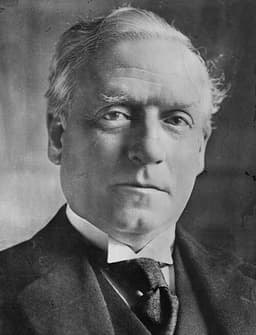
Herbert Asquith
Politician · Modern
49.4Total

Horacio Cartes
Politician · Modern
53.0Total
Basic Information
Born
1852
1956
Died
1928
—
Era
Modern
Modern
Nationality
United Kingdom
Paraguay
Occupation
Politician
Politician
Civilization
Western
Western
Score Comparison
Military (10%)
10.0
50.0
Political (20%)
45.0
68.0
Influence (20%)
57.2
50.2
Legacy (20%)
50.0
40.0
Leadership (15%)
72.0
74.0
Strategy (15%)
41.0
41.3
TOTAL
49.4
53.0
Herbert Asquith — Complete Timeline
1908 AD
Became Prime Minister of the United KingdomPolitical Action◆ Major
Herbert Asquith became Prime Minister after the resignation of Henry Campbell-Bannerman. He led the Liberal government, overseeing major social reforms including the introduction of old-age pensions and national insurance.
Prime MinisterLiberal PartySocial reform
Impact: nationalconstructive
1911 AD
Passed the Parliament Act 1911Political Action◆ Major
Asquith's government passed the Parliament Act, which removed the House of Lords' power to veto money bills and limited its ability to delay other legislation. The act was a major constitutional reform, following the Lords' rejection of the People's Budget.
Parliament ActConstitutional reformHouse of Lords
Impact: nationalconstructive
1914 AD
Led Britain into World War IWar
Asquith led the United Kingdom into World War I after Germany invaded Belgium. His government managed the war effort, including the introduction of conscription and the Defence of the Realm Act. The war dominated his premiership.
World War IWarGovernment
Impact: globaltragic
1915 AD
Formed a coalition governmentPolitical Action◆ Major
Asquith formed a coalition government with the Conservatives and Labour to manage the war effort. The coalition was marked by internal tensions over military strategy, particularly the Gallipoli campaign and conscription.
CoalitionWorld War IGovernment
Impact: national
1916 AD
Resigned as Prime MinisterPolitical Action◆ Major
Asquith resigned as Prime Minister after a political crisis over the conduct of the war. He was replaced by David Lloyd George, who formed a new coalition. Asquith's resignation marked the end of his wartime leadership.
ResignationWorld War IGovernment
Impact: nationaltragic
Horacio Cartes — Complete Timeline
2013 AD
Signed Tax Reform LawReform◆ Major
Cartes signed a tax reform law that increased the value-added tax from 5% to 10% and introduced a 10% income tax on agricultural exports. The reform aimed to increase state revenue for social programs but faced opposition from business sectors.
Tax ReformFiscal PolicySocial Spending
Impact: nationalconstructive
Elected President of ParaguayPolitical Action◆ Major
Horacio Cartes won the 2013 Paraguayan general election as the Colorado Party candidate, defeating the PLRA candidate Efra
ElectionColorado PartyReturn to Power
Impact: national
2017 AD
Faced Impeachment AttemptPolitical Action◆ Major
Opposition parties attempted to impeach President Cartes in March 2017 after he proposed a constitutional amendment to allow presidential re-election. The impeachment effort failed in the Senate, but the re-election proposal sparked violent protests that left one dead.
Impeachment AttemptConstitutional CrisisProtests
Impact: nationaldestructive
2018 AD
Resigned from Presidency EarlyPolitical Action
Cartes resigned from the presidency in June 2018, one month before the end of his term, to take a seat in the Senate. Vice President Alicia Pucheta served as interim president for the remaining month. The move was criticized as a maneuver to gain immunity from prosecution.
ResignationSenate SeatImmunity
Impact: nationaldestructive
This comparison has not been analyzed yet.
One-time AI generation (~1 minute). Scores and timeline are already available below.
Rankings
🥇
Horacio CartesLeader
Mil: 50.0Pol: 68.0Inf: 50.2
53.0
🥈
Herbert Asquith
Mil: 10.0Pol: 45.0Inf: 57.2
49.4
+3.6 behind
How This Comparison Works
Algorithm
Each figure is scored on 6 dimensions (0—100 scale) based on structured historical data: Military (10%), Political (20%), Influence (20%), Legacy (20%), Leadership (15%), Strategy (15%). The weighted total produces the final ranking.
Data Sources
Scores are computed from structured sub-indicators in the database. Scale factors adjust for era (Ancient ×0.85, Modern ×1.0) and civilization size (Eastern ×1.05, Other ×0.80) to account for differences in population and military scale.
Maximum 3 Figures
Comparisons are limited to 2—3 figures to ensure readability and statistical meaningfulness.
Error Margins
±5 points per dimension — Sub-scores are derived from historical records with inherent uncertainty. Two figures within 5 points on a dimension should be considered roughly equivalent in that area.
Total Score Accuracy
±3 points overall — The weighted combination of 6 dimensions produces a total score with approximately ±3 points of uncertainty. Differences of less than 3 points are not statistically significant— the figures are effectively tied.
Known Limitations
- Historical records are incomplete and uneven across civilizations
- Figures from oral-tradition societies may be underrepresented
- Occupation labels can misclassify multi-role figures
- Scores measure capability and impact, not moral character
- Quantitative scoring is a comparison tool, not absolute truth
Capability Radar
Military (10%) — Battles & Warfare
Battles
0
31
Win Rate
0
31
Expansion
0
33
Political (20%) — Governance & Reform
Reform
65
40
Diplomacy
55
45
Economy
60
50
Influence (20%) — Cultural & Global Reach
Cultural
30
20
Global
55
20
Legacy (20%) — Historical Impact
Historical
60
25
Longevity
40
15
Leadership (15%) — Power & Stability
Tenure
70
55
Stability
40
35
Strategy (15%) — Tactics & Innovation
Strategy
10
37
Tactics
0
38
Reform
20
43
Similar Comparisons
Comments & Discussion
No comments yet. Be the first to share your thoughts!