Loading...
Herbert Asquith vs Napoleon Bonaparte
Napoleon Bonaparte leads by 21.5 pts · 2 figures compared
…
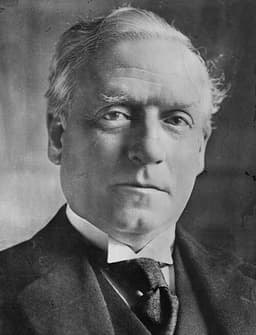
Herbert Asquith
Politician · Modern
49.4Total

Napoleon Bonaparte
General · Modern
70.9Total
Basic Information
Born
1852
1769
Died
1928
1821
Era
Modern
Modern
Nationality
United Kingdom
France
Occupation
Politician
General
Civilization
Western
Western
Score Comparison
Military (10%)
10.0
94.0
Political (20%)
45.0
72.0
Influence (20%)
57.2
40.0
Legacy (20%)
50.0
80.0
Leadership (15%)
72.0
78.0
Strategy (15%)
41.0
90.0
TOTAL
49.4
70.9
Herbert Asquith — Complete Timeline
1908 AD
Became Prime Minister of the United KingdomPolitical Action◆ Major
Herbert Asquith became Prime Minister after the resignation of Henry Campbell-Bannerman. He led the Liberal government, overseeing major social reforms including the introduction of old-age pensions and national insurance.
Prime MinisterLiberal PartySocial reform
Impact: nationalconstructive
1911 AD
Passed the Parliament Act 1911Political Action◆ Major
Asquith's government passed the Parliament Act, which removed the House of Lords' power to veto money bills and limited its ability to delay other legislation. The act was a major constitutional reform, following the Lords' rejection of the People's Budget.
Parliament ActConstitutional reformHouse of Lords
Impact: nationalconstructive
1914 AD
Led Britain into World War IWar
Asquith led the United Kingdom into World War I after Germany invaded Belgium. His government managed the war effort, including the introduction of conscription and the Defence of the Realm Act. The war dominated his premiership.
World War IWarGovernment
Impact: globaltragic
1915 AD
Formed a coalition governmentPolitical Action◆ Major
Asquith formed a coalition government with the Conservatives and Labour to manage the war effort. The coalition was marked by internal tensions over military strategy, particularly the Gallipoli campaign and conscription.
CoalitionWorld War IGovernment
Impact: national
1916 AD
Resigned as Prime MinisterPolitical Action◆ Major
Asquith resigned as Prime Minister after a political crisis over the conduct of the war. He was replaced by David Lloyd George, who formed a new coalition. Asquith's resignation marked the end of his wartime leadership.
ResignationWorld War IGovernment
Impact: nationaltragic
Napoleon Bonaparte — Complete Timeline
1799 AD
Coup of 18 BrumaireOther◆ Major
Napoleon Bonaparte, with support from his brother Lucien and key political figures, overthrew the Directory in a bloodless coup. He established the Consulate with himself as First Consul, effectively becoming the ruler of France. This event ended the French Revolution's most unstable period.
French RevolutionCoupRise to Power
Impact: regional
1804 AD
Promulgation of the Napoleonic CodeOther◆ Major
Napoleon enacted the Civil Code of the French, known as the Napoleonic Code, a comprehensive set of laws that replaced the fragmented feudal legal systems. The code established legal equality, protected property rights, and secularized law. It became the basis for legal systems in many European and world countries.
Legal ReformNapoleonic CodeCivil Law
Impact: globalconstructive
1805 AD
Battle of AusterlitzWar◆ Major
Napoleon's Grande Arm
Napoleonic WarsBattleDecisive Victory
Impact: global
1812 AD
Invasion of RussiaWar◆ Major
Napoleon led the Grande Arm
Napoleonic WarsInvasionDisaster
Impact: globaldestructive
1815 AD
Battle of WaterlooWar◆ Major
Napoleon's French army was defeated by the combined forces of the Duke of Wellington's Anglo-Allied army and Gebhard Leberecht von Bl
Napoleonic WarsBattleFinal Defeat
Impact: globaldestructive
Expert Analysis
herbert-asquith-vs-napoleon-bonaparte
# The Emperor and the Parliamentarian
On a June morning in 1815, Napoleon Bonaparte stood on a muddy ridge near Waterloo, watching his elite Imperial Guard march into the mouths of British cannons. Less than a century later, in August 1914, Herbert Asquith sat in a London cabinet room, his hand trembling as he signed the order that plunged Britain into the greatest war the world had ever seen. Two men, both leading their nations through cataclysms, yet separated by everything that defines power—its nature, its purpose, and its price. Why did one die in exile on a remote Atlantic island, while the other retired to write memoirs in an English country house? The answer lies not in their eras, but in the very different sources of their authority.
Origins
Napoleon Bonaparte was born in 1769 on Corsica, an island that had been French for barely a year. His family were minor nobility with Italian roots, speaking Corsican dialect rather than Parisian French. This outsider’s perspective would shape everything—he saw France not as a birthright but as a stage to be conquered. At the military academy of Brienne, his classmates mocked his accent and poverty. He responded by devouring books on artillery and military history, learning that the world answers to those who understand its mechanics.
Herbert Asquith was born in 1852 in Yorkshire, the son of a wool merchant who died when Herbert was seven. His mother, a strict Congregationalist, scraped together money for his education. At Balliol College, Oxford, Asquith discovered his weapon: not the cannon, but the word. He became a brilliant barrister, known for cross-examinations that dismantled opponents with surgical precision. Where Napoleon learned to command armies, Asquith learned to command arguments.
The difference in their worlds is stark. Napoleon grew up in the chaos of revolution, where a young officer could become a general at twenty-four. Asquith came of age in Victorian Britain, where advancement required patience, connections, and the right accent. Their ages at first major achievement tell the story: Napoleon was thirty when he crowned himself Emperor. Asquith was fifty-six when he finally became Prime Minister.
Rise to Power
Napoleon’s ascent was a series of gambles that paid off. In 1793, he was a twenty-four-year-old artillery captain when he recaptured the port of Toulon from British and royalist forces. The feat made him a brigadier general. In 1795, he dispersed a royalist uprising in Paris with a “whiff of grapeshot,” earning the gratitude of the revolutionary government. By 1796, he commanded the Army of Italy, where his lightning campaigns forced Austria to sue for peace. Each victory was a stepping stone, and each stepping stone was built on the bodies of his enemies.
Asquith’s rise was quieter but no less determined. He entered Parliament in 1886 as a Liberal, serving as Home Secretary under William Gladstone. His reputation grew through careful work on legal reforms. In 1905, he became Chancellor of the Exchequer, where he introduced old-age pensions—a landmark in British social policy. When Prime Minister Henry Campbell-Bannerman resigned in 1908, Asquith was the natural successor. His path was not conquest but consensus, not glory but governance.
The turning points reveal their characters. Napoleon's key moment came in 1799 when he abandoned his army in Egypt to return to France and seize power in the coup of 18 Brumaire. He chose ambition over duty. Asquith's came in 1911, when he pushed through the Parliament Act that stripped the House of Lords of its veto power. He chose reform over tradition, but within the framework of law.
Leadership & Governance
Napoleon ruled as a military genius who happened to govern. His Napoleonic Code, introduced in 1804, standardized French law, established meritocracy, and protected property rights. It was his greatest civilian achievement—a legal framework that spread across Europe. But his governance was always subordinate to his wars. He centralized power, suppressed dissent, and appointed his brothers as puppet kings. His political score of 75 reflects this: competent but authoritarian, visionary but self-serving.
Asquith governed as a politician who was forced to manage war. His Parliament Act of 1911 was a masterstroke of constitutional reform, ensuring that the elected House of Commons could not be blocked by hereditary peers. He introduced national insurance and labor exchanges, building the foundations of the welfare state. Yet his leadership during World War I proved disastrous. He was indecisive, slow to adapt, and unable to control his generals. The Gallipoli campaign of 1915—a plan he approved—became a catastrophe. His military score of 37.5 is brutally honest.
The contrast is painful. Napoleon could win battles but could not build lasting peace. Asquith could build institutions but could not win a war. Each man’s strength was his weakness in disguise.
Triumph & Tragedy
Napoleon’s greatest moment was Austerlitz in 1805, where he destroyed the combined armies of Russia and Austria. It was a masterpiece of deception and timing, cementing his reputation as history’s greatest military mind. His worst was the invasion of Russia in 1812, where he lost 500,000 men not to battle but to winter, starvation, and his own hubris. He refused to retreat, refused to negotiate, refused to accept reality. The tragedy was that he could not stop.
Asquith’s triumph was the Parliament Act of 1911, which broke the power of the aristocracy and made democracy real. His tragedy was the war itself. He led Britain into World War I in August 1914 with the support of nearly the entire nation, but by 1916, the trenches had become graveyards, and his coalition government was collapsing. He was forced to resign in December 1916, replaced by David Lloyd George, a man more suited to total war. Asquith’s tragedy was that he was the wrong man for the moment.
Character & Destiny
Napoleon was driven by an insatiable need for glory. “I am the revolution,” he once said, meaning that he embodied the force that had shattered the old world. His personality was grandiose, paranoid, and magnetic. He demanded absolute loyalty and gave little in return. His destiny was shaped by his refusal to compromise—he could not share power, could not accept defeat, could not imagine a world without his name at its center.
Asquith was driven by duty and a belief in liberal principles. He was known for his calm, his wit, and his love of fine wine and conversation. But he was also detached, almost passive. During the war, he retreated to his country home on weekends, leaving the machinery of government to run itself. His personality was suited to peace, not crisis. His destiny was to be a great peacetime leader who was destroyed by war.
The difference is fundamental. Napoleon saw history as something to be conquered. Asquith saw it as something to be managed. One died in 1821 on Saint Helena, abandoned by his marshals, betrayed by his allies, writing memoirs to justify his life. The other died in 1928 in his own bed, having written his memoirs, respected if not revered.
Legacy
Napoleon’s legacy is immense and contradictory. He spread nationalism across Europe, even as he crushed it in others. His Napoleonic Code remains the basis of civil law in much of the world. His military innovations are still studied. But he also caused the deaths of millions and left France defeated and occupied. His score of 82.4 total reflects this complexity: a genius who failed, a conqueror who fell.
Asquith’s legacy is quieter but real. His Parliament Act transformed British democracy. His welfare reforms laid the groundwork for the modern state. He led Britain through the first two years of a war that would reshape the world. Yet he is remembered as a tragic figure, a man of peace who was consumed by war. His total score of 66.7 is modest, but it is the score of a builder, not a destroyer.
Conclusion
Standing at Waterloo, Napoleon watched his dreams die in the smoke. Standing in his cabinet room, Asquith watched his world change beyond recognition. Both men were prisoners of their times, but they responded in opposite ways. Napoleon tried to bend history to his will and broke. Asquith tried to guide history with reason and was swept aside. The lesson is not that one was better than the other, but that power takes many forms—and that the greatest leaders are those who understand not just their own strengths, but the limits of those strengths. For Napoleon, the limit was his ego. For Asquith, it was his caution. In the end, both were human, and both were defeated by the very qualities that made them great.
Rankings
🥇
Napoleon BonaparteLeader
Mil: 94.0Pol: 72.0Inf: 40.0
70.9
🥈
Herbert Asquith
Mil: 10.0Pol: 45.0Inf: 57.2
49.4
+21.5 behind
How This Comparison Works
Algorithm
Each figure is scored on 6 dimensions (0—100 scale) based on structured historical data: Military (10%), Political (20%), Influence (20%), Legacy (20%), Leadership (15%), Strategy (15%). The weighted total produces the final ranking.
Data Sources
Scores are computed from structured sub-indicators in the database. Scale factors adjust for era (Ancient ×0.85, Modern ×1.0) and civilization size (Eastern ×1.05, Other ×0.80) to account for differences in population and military scale.
Maximum 3 Figures
Comparisons are limited to 2—3 figures to ensure readability and statistical meaningfulness.
Error Margins
±5 points per dimension — Sub-scores are derived from historical records with inherent uncertainty. Two figures within 5 points on a dimension should be considered roughly equivalent in that area.
Total Score Accuracy
±3 points overall — The weighted combination of 6 dimensions produces a total score with approximately ±3 points of uncertainty. Differences of less than 3 points are not statistically significant— the figures are effectively tied.
Known Limitations
- Historical records are incomplete and uneven across civilizations
- Figures from oral-tradition societies may be underrepresented
- Occupation labels can misclassify multi-role figures
- Scores measure capability and impact, not moral character
- Quantitative scoring is a comparison tool, not absolute truth
Capability Radar
Military (10%) — Battles & Warfare
Battles
0
95
Win Rate
0
90
Expansion
0
95
Political (20%) — Governance & Reform
Reform
65
95
Diplomacy
55
80
Economy
60
85
Influence (20%) — Cultural & Global Reach
Cultural
30
85
Global
55
90
Legacy (20%) — Historical Impact
Historical
60
95
Longevity
40
90
Leadership (15%) — Power & Stability
Tenure
70
85
Stability
40
70
Strategy (15%) — Tactics & Innovation
Strategy
10
95
Tactics
0
98
Reform
20
92
Similar Comparisons
Comments & Discussion
No comments yet. Be the first to share your thoughts!