Loading...
This comparison has not been analyzed yet.
One-time AI generation (~1 minute). Scores and timeline are already available below.
Herbert Kitchener vs Vo Nguyen Giap
Vo Nguyen Giap leads by 11.4 pts · 2 figures compared
…

Herbert Kitchener
General · Modern
62.1Total
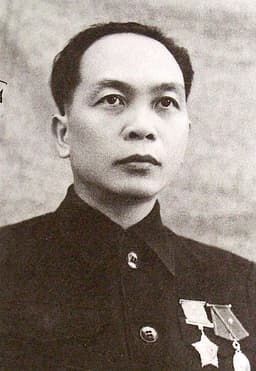
Vo Nguyen Giap
General · Modern
73.5Total
Basic Information
Born
1850
1911
Died
1916
2013
Era
Modern
Modern
Nationality
United Kingdom
Vietnam
Occupation
General
General
Civilization
Western
Eastern
Score Comparison
Military (10%)
72.0
74.0
Political (20%)
72.0
60.0
Influence (20%)
65.0
88.0
Legacy (20%)
55.0
72.0
Leadership (15%)
48.8
68.0
Strategy (15%)
68.0
69.2
TOTAL
62.1
73.5
Herbert Kitchener — Complete Timeline
1898 AD
Battle of OmdurmanWar◆ Major
Kitchener commanded Anglo-Egyptian forces at the Battle of Omdurman, defeating the Mahdist army in Sudan. The victory avenged the death of General Gordon and established British control over Sudan, with Kitchener becoming Governor-General.
SudanMahdist WarBritish Empire
Impact: regional
Fashoda IncidentPolitical Action◆ Major
Kitchener confronted a French expedition at Fashoda in Sudan, leading to a diplomatic crisis between Britain and France. The incident was resolved peacefully with French withdrawal, solidifying British control over the Nile Valley.
Fashoda IncidentColonial RivalryAnglo-French Relations
Impact: global
1902 AD
Appointed Commander-in-Chief in IndiaPolitical Action◆ Major
Kitchener was appointed Commander-in-Chief of the British Indian Army. He implemented major reforms, including reorganizing the army into divisions and improving training, but clashed with Viceroy Curzon over military administration.
Indian ArmyMilitary ReformBritish Raj
Impact: regionalconstructive
1914 AD
Appointed Secretary of State for WarPolitical Action
Kitchener was appointed Secretary of State for War at the outbreak of World War I. He organized the massive expansion of the British Army, raising the 'New Armies' of volunteers, a critical contribution to the war effort.
World War IBritish ArmyMilitary Organization
Impact: globalconstructive
1916 AD
Killed on HMS HampshireOther◆ Major
Kitchener died when HMS Hampshire struck a German mine off the Orkney Islands while en route to Russia. His death was a major shock to the British public and removed a key figure from the war leadership.
World War IDeathNaval Incident
Impact: globaltragic
Vo Nguyen Giap — Complete Timeline
1954 AD
Battle of Dien Bien PhuWar
General Giap commanded Viet Minh forces in a 56-day siege that defeated the French garrison at Dien Bien Phu. This victory ended French colonial rule in Indochina and forced France to negotiate the Geneva Accords.
DecolonizationVietnamMilitary Strategy
Impact: regional
1965 AD
Battle of the Ia Drang ValleyWar◆ Major
Giap's forces engaged US troops in the first major battle of the Vietnam War at Ia Drang. The battle demonstrated the effectiveness of North Vietnamese tactics against US air mobility and set the pattern for future engagements.
Vietnam WarBattleUS Military
Impact: regional
1968 AD
Tet OffensiveWar
Giap planned and executed the Tet Offensive, a coordinated attack on over 100 South Vietnamese cities and US bases. Though a military defeat for North Vietnam, it shocked US public opinion and led to the US withdrawal from Vietnam.
Vietnam WarTet OffensiveUS Public Opinion
Impact: globaldestructive
1972 AD
Easter OffensiveWar◆ Major
Giap launched the Easter Offensive, a large-scale conventional invasion of South Vietnam. The offensive was repelled by US and South Vietnamese forces with heavy losses, but it demonstrated North Vietnam's ability to sustain major operations.
Vietnam WarOffensiveConventional Warfare
Impact: regionaldestructive
1975 AD
Fall of SaigonWar
Giap's forces captured Saigon, ending the Vietnam War. The victory unified Vietnam under communist rule and led to the establishment of the Socialist Republic of Vietnam.
Vietnam WarUnificationCommunist Victory
Impact: national
This comparison has not been analyzed yet.
One-time AI generation (~1 minute). Scores and timeline are already available below.
Rankings
🥇
Vo Nguyen GiapLeader
Mil: 74.0Pol: 60.0Inf: 88.0
73.5
🥈
Herbert Kitchener
Mil: 72.0Pol: 72.0Inf: 65.0
62.1
+11.4 behind
How This Comparison Works
Algorithm
Each figure is scored on 6 dimensions (0—100 scale) based on structured historical data: Military (10%), Political (20%), Influence (20%), Legacy (20%), Leadership (15%), Strategy (15%). The weighted total produces the final ranking.
Data Sources
Scores are computed from structured sub-indicators in the database. Scale factors adjust for era (Ancient ×0.85, Modern ×1.0) and civilization size (Eastern ×1.05, Other ×0.80) to account for differences in population and military scale.
Maximum 3 Figures
Comparisons are limited to 2—3 figures to ensure readability and statistical meaningfulness.
Error Margins
±5 points per dimension — Sub-scores are derived from historical records with inherent uncertainty. Two figures within 5 points on a dimension should be considered roughly equivalent in that area.
Total Score Accuracy
±3 points overall — The weighted combination of 6 dimensions produces a total score with approximately ±3 points of uncertainty. Differences of less than 3 points are not statistically significant— the figures are effectively tied.
Known Limitations
- Historical records are incomplete and uneven across civilizations
- Figures from oral-tradition societies may be underrepresented
- Occupation labels can misclassify multi-role figures
- Scores measure capability and impact, not moral character
- Quantitative scoring is a comparison tool, not absolute truth
Capability Radar
Military (10%) — Battles & Warfare
Battles
75
85
Win Rate
80
80
Expansion
85
70
Political (20%) — Governance & Reform
Reform
70
60
Diplomacy
55
70
Economy
50
50
Influence (20%) — Cultural & Global Reach
Cultural
55
65
Global
70
70
Legacy (20%) — Historical Impact
Historical
75
80
Longevity
60
60
Leadership (15%) — Power & Stability
Tenure
60
65
Stability
45
55
Strategy (15%) — Tactics & Innovation
Strategy
85
88
Tactics
65
90
Reform
90
75
Similar Comparisons
Comments & Discussion
No comments yet. Be the first to share your thoughts!