Loading...
Napoleon Bonaparte vs Vo Nguyen Giap
Vo Nguyen Giap leads by 2.6 pts · 2 figures compared
…

Napoleon Bonaparte
General · Modern
70.9Total
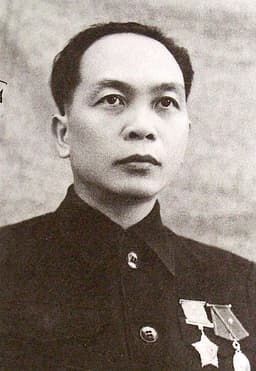
Vo Nguyen Giap
General · Modern
73.5Total
Basic Information
Born
1769
1911
Died
1821
2013
Era
Modern
Modern
Nationality
France
Vietnam
Occupation
General
General
Civilization
Western
Eastern
Score Comparison
Military (10%)
94.0
74.0
Political (20%)
72.0
60.0
Influence (20%)
40.0
88.0
Legacy (20%)
80.0
72.0
Leadership (15%)
78.0
68.0
Strategy (15%)
90.0
69.2
TOTAL
70.9
73.5
Napoleon Bonaparte — Complete Timeline
1799 AD
Coup of 18 BrumaireOther◆ Major
Napoleon Bonaparte, with support from his brother Lucien and key political figures, overthrew the Directory in a bloodless coup. He established the Consulate with himself as First Consul, effectively becoming the ruler of France. This event ended the French Revolution's most unstable period.
French RevolutionCoupRise to Power
Impact: regional
1804 AD
Promulgation of the Napoleonic CodeOther◆ Major
Napoleon enacted the Civil Code of the French, known as the Napoleonic Code, a comprehensive set of laws that replaced the fragmented feudal legal systems. The code established legal equality, protected property rights, and secularized law. It became the basis for legal systems in many European and world countries.
Legal ReformNapoleonic CodeCivil Law
Impact: globalconstructive
1805 AD
Battle of AusterlitzWar◆ Major
Napoleon's Grande Arm
Napoleonic WarsBattleDecisive Victory
Impact: global
1812 AD
Invasion of RussiaWar◆ Major
Napoleon led the Grande Arm
Napoleonic WarsInvasionDisaster
Impact: globaldestructive
1815 AD
Battle of WaterlooWar◆ Major
Napoleon's French army was defeated by the combined forces of the Duke of Wellington's Anglo-Allied army and Gebhard Leberecht von Bl
Napoleonic WarsBattleFinal Defeat
Impact: globaldestructive
Vo Nguyen Giap — Complete Timeline
1954 AD
Battle of Dien Bien PhuWar
General Giap commanded Viet Minh forces in a 56-day siege that defeated the French garrison at Dien Bien Phu. This victory ended French colonial rule in Indochina and forced France to negotiate the Geneva Accords.
DecolonizationVietnamMilitary Strategy
Impact: regional
1965 AD
Battle of the Ia Drang ValleyWar◆ Major
Giap's forces engaged US troops in the first major battle of the Vietnam War at Ia Drang. The battle demonstrated the effectiveness of North Vietnamese tactics against US air mobility and set the pattern for future engagements.
Vietnam WarBattleUS Military
Impact: regional
1968 AD
Tet OffensiveWar
Giap planned and executed the Tet Offensive, a coordinated attack on over 100 South Vietnamese cities and US bases. Though a military defeat for North Vietnam, it shocked US public opinion and led to the US withdrawal from Vietnam.
Vietnam WarTet OffensiveUS Public Opinion
Impact: globaldestructive
1972 AD
Easter OffensiveWar◆ Major
Giap launched the Easter Offensive, a large-scale conventional invasion of South Vietnam. The offensive was repelled by US and South Vietnamese forces with heavy losses, but it demonstrated North Vietnam's ability to sustain major operations.
Vietnam WarOffensiveConventional Warfare
Impact: regionaldestructive
1975 AD
Fall of SaigonWar
Giap's forces captured Saigon, ending the Vietnam War. The victory unified Vietnam under communist rule and led to the establishment of the Socialist Republic of Vietnam.
Vietnam WarUnificationCommunist Victory
Impact: national
Expert Analysis
napoleon-bonaparte-vs-vo-nguyen-giap
### The General and the Emperor
On a humid spring day in 1954, a slight, bespectacled man in a khaki uniform watched from a hillside as his artillery pounded a French garrison into submission. Half a world away and a century and a half earlier, a short, stocky Corsican in a bicorne hat had stood on another hill, watching his Grand Battery smash the Austrian lines at Austerlitz. Both men were generals. Both fought against overwhelming odds. Both changed the course of history. Yet one built an empire that crumbled in a decade, while the other defeated two Western powers and lived to see a unified nation. Why did Napoleon fall while Giap triumphed? The answer lies not in their brilliance—both were prodigies—but in the nature of their wars and the limits of their ambition.
### Origins
Napoleon Bonaparte (1769-1821) was a child of the Enlightenment and the Revolution. Born into minor Corsican nobility, he was a foreigner in France, speaking Italian-accented French. The Revolution, however, was a great leveler. It offered a young artillery officer a ladder of merit unknown under the old monarchy. Giap, born in 1911 in Quang Binh province, was a child of colonialism. His father, a nationalist scholar, was beaten to death by French police. From his youth, Giap absorbed two truths: that Vietnam was a nation, and that the French must leave. He studied law, taught history, and joined the Communist Party. While Napoleon was forged in the fires of revolution, Giap was forged in the crucible of occupation. One sought to remake Europe; the other sought to reclaim his home.
### Rise to Power
Napoleon’s ascent was meteoric. At 24, he drove the British out of Toulon. At 26, he suppressed a royalist uprising with a “whiff of grapeshot.” At 27, he conquered Italy. By 30, he was First Consul. By 35, Emperor. Each victory was a stepping stone, each campaign a chapter in a personal epic. Giap’s rise was slower, more deliberate. He was a schoolteacher and journalist before becoming a general. He did not win a single decisive battle until he was 43, at Dien Bien Phu in 1954. That 56-day siege, which ended French rule in Indochina, was not a stroke of genius but a masterpiece of logistics and patience. Giap moved his heavy artillery through jungle mountains, piece by piece, then placed them in hidden positions facing the French. The French commander, General de Castries, had dismissed the possibility. Napoleon, by contrast, relied on speed and shock. He believed fortune favored the bold. Giap believed fortune favored the prepared.
### Leadership & Governance
As a ruler, Napoleon was a titan. He centralized the state, reformed education, and created the Napoleonic Code, a legal system that influenced civil law across Europe and the world. He was a political genius, but also a control freak. He appointed his brothers as kings, suppressed dissent, and sought to dominate the continent. His score in political wisdom (75.0) reflects his administrative brilliance but also his fatal overreach. Giap’s political score (79.2) is higher, not because he was a better administrator, but because he understood the limits of power. He never sought to rule Vietnam; he fought for it. As Minister of Defense and commander of the People’s Army, he was a loyal servant of the Communist Party, not its master. He knew that in a war of national liberation, politics and war are one. “Every minute, thousands of people die,” he once said. “But we must not waste a single life.”
Militarily, the contrast is sharp. Napoleon’s strategic score (93.0) is legendary. He mastered the art of the decisive battle, splitting enemy armies and destroying them piecemeal. His campaigns in Italy, Egypt, and Germany are still studied in war colleges. Giap’s strategic score (86.0) is lower, but he fought a different kind of war. He did not seek to destroy the American or French armies in a single clash. He sought to wear them down, to make the war so costly that the enemy’s will would break. At the Battle of the Ia Drang Valley in 1965, his forces engaged US troops for the first time. They were outgunned but not outfought. The Tet Offensive in 1968 was a military failure—the Viet Cong were decimated—but a psychological victory. It turned American public opinion against the war. Giap understood that in a war of attrition, the side with the greater resolve wins. Napoleon never understood that his enemies’ resolve would only harden as he pushed deeper into Russia and Spain.
### Triumph & Tragedy
Napoleon’s greatest moment was Austerlitz in 1805, where he crushed the Russian and Austrian empires in a single day. His greatest tragedy was the invasion of Russia in 1812. He marched 600,000 men into the snow; fewer than 100,000 returned. He was exiled to Elba, returned, and was finally defeated at Waterloo in 1815. Giap’s greatest moment was Dien Bien Phu, a victory that sent shockwaves through the colonial world. His greatest tragedy was the Easter Offensive of 1972, a conventional invasion of South Vietnam that was repelled by American air power. He learned from it. In 1975, he launched a final, decisive campaign. The Fall of Saigon that April ended the war. Giap lived to see his nation unified, a victory Napoleon never achieved.
### Character & Destiny
Napoleon was driven by ambition and ego. He once said, “I am not a man, but a thing.” He saw himself as an instrument of destiny. This made him fearless but also reckless. He could not stop. Giap was driven by duty and patience. He wrote, “We must fight with all our heart, but also with all our head.” He knew when to attack and when to retreat. Napoleon’s character led him to overreach. Giap’s character led him to endure.
### Legacy
Napoleon left a legal code, a legend, and a Europe scarred by war. He is remembered as a military genius, a reformer, and a tyrant. His legacy score (78.0) reflects his enduring influence but also his ultimate failure. Giap left a unified Vietnam, a model for anti-colonial struggles, and a reputation as one of the great guerrilla strategists. His legacy score (77.4) is similar, but his achievement was more lasting. Napoleon conquered Europe; Giap liberated his country.
### Conclusion
In the end, both men were products of their time. Napoleon was a son of the Revolution who became its emperor. Giap was a son of the colony who became its liberator. One sought to impose his will on the world; the other sought to free his people from it. The difference is not in their genius—both were extraordinary—but in their purpose. Napoleon fought for himself. Giap fought for Vietnam. That, perhaps, is why one fell and the other endured.
Rankings
🥇
Vo Nguyen GiapLeader
Mil: 74.0Pol: 60.0Inf: 88.0
73.5
🥈
Napoleon Bonaparte
Mil: 94.0Pol: 72.0Inf: 40.0
70.9
+2.6 behind
How This Comparison Works
Algorithm
Each figure is scored on 6 dimensions (0—100 scale) based on structured historical data: Military (10%), Political (20%), Influence (20%), Legacy (20%), Leadership (15%), Strategy (15%). The weighted total produces the final ranking.
Data Sources
Scores are computed from structured sub-indicators in the database. Scale factors adjust for era (Ancient ×0.85, Modern ×1.0) and civilization size (Eastern ×1.05, Other ×0.80) to account for differences in population and military scale.
Maximum 3 Figures
Comparisons are limited to 2—3 figures to ensure readability and statistical meaningfulness.
Error Margins
±5 points per dimension — Sub-scores are derived from historical records with inherent uncertainty. Two figures within 5 points on a dimension should be considered roughly equivalent in that area.
Total Score Accuracy
±3 points overall — The weighted combination of 6 dimensions produces a total score with approximately ±3 points of uncertainty. Differences of less than 3 points are not statistically significant— the figures are effectively tied.
Known Limitations
- Historical records are incomplete and uneven across civilizations
- Figures from oral-tradition societies may be underrepresented
- Occupation labels can misclassify multi-role figures
- Scores measure capability and impact, not moral character
- Quantitative scoring is a comparison tool, not absolute truth
Capability Radar
Military (10%) — Battles & Warfare
Battles
95
85
Win Rate
90
80
Expansion
95
70
Political (20%) — Governance & Reform
Reform
95
60
Diplomacy
80
70
Economy
85
50
Influence (20%) — Cultural & Global Reach
Cultural
85
65
Global
90
70
Legacy (20%) — Historical Impact
Historical
95
80
Longevity
90
60
Leadership (15%) — Power & Stability
Tenure
85
65
Stability
70
55
Strategy (15%) — Tactics & Innovation
Strategy
95
88
Tactics
98
90
Reform
92
75
Similar Comparisons
Comments & Discussion
No comments yet. Be the first to share your thoughts!