Loading...
This comparison has not been analyzed yet.
One-time AI generation (~1 minute). Scores and timeline are already available below.
Hethum I of Armenia vs Ishbara Qaghan
Ishbara Qaghan leads by 6.3 pts · 2 figures compared
…
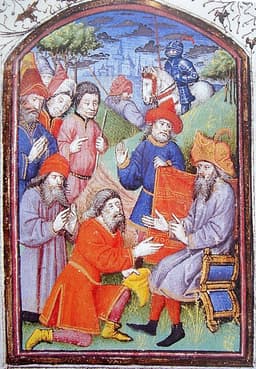
Hethum I of Armenia
Emperor · Medieval
53.1Total

Ishbara Qaghan
Emperor · Medieval
59.4Total
Basic Information
Born
1213
540
Died
1270
587
Era
Medieval
Medieval
Nationality
Cilician Armenia
Gokturk Khaganate
Occupation
Emperor
Emperor
Civilization
Middle Eastern
Eastern
Score Comparison
Military (10%)
38.3
65.0
Political (20%)
61.3
68.0
Influence (20%)
52.5
57.2
Legacy (20%)
45.0
50.0
Leadership (15%)
65.0
65.0
Strategy (15%)
60.0
61.2
TOTAL
53.1
59.4
Hethum I of Armenia — Complete Timeline
1244 AD
Submission to the Mongol EmpirePolitical Action◆ Major
Hethum I traveled to the Mongol court of Baiju and formally submitted the Kingdom of Cilician Armenia to Mongol suzerainty. This alliance made Armenia a vassal state of the Mongol Empire, providing military protection against the Mamluks and Seljuks.
SubmissionMongol EmpireVassalage
Impact: regional
1254 AD
Diplomatic Mission to the Mongol Court of KarakorumPolitical Action◆ Major
Hethum I undertook a long journey to the Mongol capital of Karakorum to meet the Great Khan M
DiplomacyMongol EmpireTravel
Impact: regionalconstructive
1258 AD
Alliance with the Mongols at the Siege of Baghdad (1258)War◆ Major
Hethum I led Armenian troops to support the Mongol army under Hulagu Khan during the Siege of Baghdad. The Mongol-Armenian alliance resulted in the fall of the Abbasid Caliphate, a major event in Islamic history.
SiegeMongol AllianceAbbasid Caliphate
Impact: global
1260 AD
Battle of Ain Jalut (Armenian Participation)War◆ Major
Hethum I's Armenian forces fought alongside the Mongols at the Battle of Ain Jalut against the Mamluks. The Mamluk victory halted Mongol expansion and left Cilician Armenia vulnerable to future Mamluk attacks.
BattleMamluksDefeat
Impact: regionaldestructive
Ishbara Qaghan — Complete Timeline
581 AD
Accession as Khagan of the Eastern Turkic KhaganatePolitical Action◆ Major
Ishbara Qaghan became the first ruler of the Eastern Turkic Khaganate after the division of the First Turkic Khaganate. He inherited the eastern territories and faced challenges from the Western Khaganate and China.
SuccessionEastern Turkic KhaganateDivision
Impact: regional
582 AD
War with the Western Turkic KhaganateWar◆ Major
Ishbara Qaghan fought a series of wars against the Western Turkic Khaganate under Tardu. These conflicts weakened both khaganates and allowed the Sui dynasty to assert influence over the steppe.
Civil WarTurkic KhaganatesConflict
Impact: regionaldestructive
585 AD
Submission to the Sui dynastyPolitical Action◆ Major
Facing pressure from the Western Khaganate and internal revolts, Ishbara Qaghan submitted to the Sui dynasty of China. He accepted Sui suzerainty, paying tribute and receiving Chinese support, which stabilized his rule temporarily.
TributeSui DynastySubmission
Impact: regional
587 AD
Death and successionPolitical Action
Ishbara Qaghan died, and his son was briefly khagan before being overthrown. His death led to further instability in the Eastern Turkic Khaganate, which continued to struggle with internal divisions and Chinese influence.
SuccessionDeathEastern Turkic Khaganate
Impact: regional
This comparison has not been analyzed yet.
One-time AI generation (~1 minute). Scores and timeline are already available below.
Rankings
🥇
Ishbara QaghanLeader
Mil: 65.0Pol: 68.0Inf: 57.2
59.4
🥈
Hethum I of Armenia
Mil: 38.3Pol: 61.3Inf: 52.5
53.1
+6.3 behind
How This Comparison Works
Algorithm
Each figure is scored on 6 dimensions (0—100 scale) based on structured historical data: Military (10%), Political (20%), Influence (20%), Legacy (20%), Leadership (15%), Strategy (15%). The weighted total produces the final ranking.
Data Sources
Scores are computed from structured sub-indicators in the database. Scale factors adjust for era (Ancient ×0.85, Modern ×1.0) and civilization size (Eastern ×1.05, Other ×0.80) to account for differences in population and military scale.
Maximum 3 Figures
Comparisons are limited to 2—3 figures to ensure readability and statistical meaningfulness.
Error Margins
±5 points per dimension — Sub-scores are derived from historical records with inherent uncertainty. Two figures within 5 points on a dimension should be considered roughly equivalent in that area.
Total Score Accuracy
±3 points overall — The weighted combination of 6 dimensions produces a total score with approximately ±3 points of uncertainty. Differences of less than 3 points are not statistically significant— the figures are effectively tied.
Known Limitations
- Historical records are incomplete and uneven across civilizations
- Figures from oral-tradition societies may be underrepresented
- Occupation labels can misclassify multi-role figures
- Scores measure capability and impact, not moral character
- Quantitative scoring is a comparison tool, not absolute truth
Capability Radar
Military (10%) — Battles & Warfare
Battles
35
65
Win Rate
40
60
Expansion
25
70
Political (20%) — Governance & Reform
Reform
40
50
Diplomacy
70
65
Economy
35
50
Influence (20%) — Cultural & Global Reach
Cultural
30
40
Global
25
45
Legacy (20%) — Historical Impact
Historical
40
55
Longevity
30
50
Leadership (15%) — Power & Stability
Tenure
55
55
Stability
45
45
Strategy (15%) — Tactics & Innovation
Strategy
45
75
Tactics
30
70
Reform
20
60
Similar Comparisons
Comments & Discussion
No comments yet. Be the first to share your thoughts!