Loading...
Hethum I of Armenia vs Napoleon Bonaparte
Napoleon Bonaparte leads by 17.8 pts · 2 figures compared
…
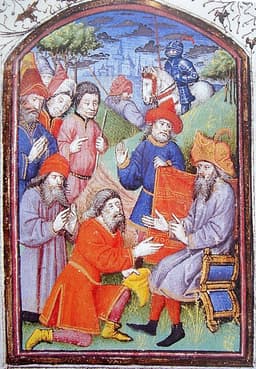
Hethum I of Armenia
Emperor · Medieval
53.1Total

Napoleon Bonaparte
General · Modern
70.9Total
Basic Information
Born
1213
1769
Died
1270
1821
Era
Medieval
Modern
Nationality
Cilician Armenia
France
Occupation
Emperor
General
Civilization
Middle Eastern
Western
Score Comparison
Military (10%)
38.3
94.0
Political (20%)
61.3
72.0
Influence (20%)
52.5
40.0
Legacy (20%)
45.0
80.0
Leadership (15%)
65.0
78.0
Strategy (15%)
60.0
90.0
TOTAL
53.1
70.9
Hethum I of Armenia — Complete Timeline
1244 AD
Submission to the Mongol EmpirePolitical Action◆ Major
Hethum I traveled to the Mongol court of Baiju and formally submitted the Kingdom of Cilician Armenia to Mongol suzerainty. This alliance made Armenia a vassal state of the Mongol Empire, providing military protection against the Mamluks and Seljuks.
SubmissionMongol EmpireVassalage
Impact: regional
1254 AD
Diplomatic Mission to the Mongol Court of KarakorumPolitical Action◆ Major
Hethum I undertook a long journey to the Mongol capital of Karakorum to meet the Great Khan M
DiplomacyMongol EmpireTravel
Impact: regionalconstructive
1258 AD
Alliance with the Mongols at the Siege of Baghdad (1258)War◆ Major
Hethum I led Armenian troops to support the Mongol army under Hulagu Khan during the Siege of Baghdad. The Mongol-Armenian alliance resulted in the fall of the Abbasid Caliphate, a major event in Islamic history.
SiegeMongol AllianceAbbasid Caliphate
Impact: global
1260 AD
Battle of Ain Jalut (Armenian Participation)War◆ Major
Hethum I's Armenian forces fought alongside the Mongols at the Battle of Ain Jalut against the Mamluks. The Mamluk victory halted Mongol expansion and left Cilician Armenia vulnerable to future Mamluk attacks.
BattleMamluksDefeat
Impact: regionaldestructive
Napoleon Bonaparte — Complete Timeline
1799 AD
Coup of 18 BrumaireOther◆ Major
Napoleon Bonaparte, with support from his brother Lucien and key political figures, overthrew the Directory in a bloodless coup. He established the Consulate with himself as First Consul, effectively becoming the ruler of France. This event ended the French Revolution's most unstable period.
French RevolutionCoupRise to Power
Impact: regional
1804 AD
Promulgation of the Napoleonic CodeOther◆ Major
Napoleon enacted the Civil Code of the French, known as the Napoleonic Code, a comprehensive set of laws that replaced the fragmented feudal legal systems. The code established legal equality, protected property rights, and secularized law. It became the basis for legal systems in many European and world countries.
Legal ReformNapoleonic CodeCivil Law
Impact: globalconstructive
1805 AD
Battle of AusterlitzWar◆ Major
Napoleon's Grande Arm
Napoleonic WarsBattleDecisive Victory
Impact: global
1812 AD
Invasion of RussiaWar◆ Major
Napoleon led the Grande Arm
Napoleonic WarsInvasionDisaster
Impact: globaldestructive
1815 AD
Battle of WaterlooWar◆ Major
Napoleon's French army was defeated by the combined forces of the Duke of Wellington's Anglo-Allied army and Gebhard Leberecht von Bl
Napoleonic WarsBattleFinal Defeat
Impact: globaldestructive
Expert Analysis
hethum-i-of-armenia-vs-napoleon-bonaparte
# The Emperor and the King: Two Paths to Power in an Age of Empires
In the spring of 1254, a middle-aged Armenian king named Hethum I set out from his Mediterranean kingdom on a journey that would take him across the spine of Asia. He traveled through snow-choked passes, across endless steppes, and into the heart of the Mongol Empire at Karakorum, a city so remote that few Europeans had ever laid eyes upon it. His purpose was simple: to bow before the Great Khan Möngle and secure his kingdom's survival.
Five hundred years later and half a world away, a young Corsican artillery officer named Napoleon Bonaparte stood before a map of Europe in a cramped Parisian office. He had just been given command of an army that was starving, unpaid, and demoralized. Within weeks, he would transform it into the most feared fighting force on the continent.
These two men never met. They could not have. Yet both faced the same fundamental question of their age: how does a smaller power navigate a world dominated by giants? One chose submission as survival. The other chose conquest as destiny. Their stories reveal not just different strategies, but fundamentally different understandings of what power means.
Origins
Napoleon Bonaparte was born in 1769 on the island of Corsica, a year after France purchased the island from Genoa. His family was minor nobility, but they were Corsican first and French only by recent circumstance. Young Napoleon spoke Italian-accented French, was mocked by classmates at military school, and carried a burning resentment that fueled his ambition. The French Revolution, which began when he was twenty, shattered the old order and created unprecedented opportunity for a gifted outsider.
Hethum I was born in 1213 into a world already ancient. Cilician Armenia was a Christian kingdom carved out of the Taurus Mountains on the northeastern shore of the Mediterranean, a fragile outpost surrounded by Muslim powers. His family, the Het‘umids, had ruled for generations through a combination of diplomacy, marriage alliances, and careful neutrality. Hethum inherited not a revolutionary upheaval but a precarious tradition of survival. The Mongol Empire, which had already swallowed half of Asia, was now at his doorstep.
Rise to Power
Napoleon rose through merit and chaos. In 1793, at age twenty-four, he drove British forces from the port of Toulon, earning promotion to brigadier general. The Directory, France's corrupt post-revolutionary government, needed generals who could win victories and keep the army loyal. Napoleon delivered both. By 1796, he commanded the Army of Italy and proceeded to shatter Austrian forces in a series of lightning campaigns that stunned Europe. His political score of 75 reflects a man who understood that military glory was the currency of political power.
Hethum ascended to the throne in 1226 through more conventional means: his father died, and he inherited a kingdom already squeezed between the Seljuk Turks and the rising Mamluks. But he understood something that many rulers did not: the Mongols were not merely another enemy. They were a force of nature, and nature could be negotiated with. In 1244, he made the fateful decision to travel to the Mongol court of Baiju and formally submit Cilician Armenia to Mongol suzerainty.
Leadership & Governance
Napoleon governed through force of will and institutional genius. His Napoleonic Code, implemented in 1804, standardized French law, abolished feudal privileges, and established merit-based advancement. It was a revolutionary document that spread across Europe in the wake of his conquests. But his political wisdom had limits. He crowned himself emperor in 1804, betrayed the republican ideals that had launched him, and placed his brothers on thrones across the continent. His leadership score of 80 reflects a man who could inspire armies but could not build lasting alliances.
Hethum governed through patience and strategic humility. His diplomatic mission to Karakorum in 1254 secured guarantees from Möngke Khan that Armenian churches and lands would be protected. When Hulagu Khan marched on Baghdad in 1258, Hethum led Armenian troops alongside the Mongols, participating in one of history's most devastating sieges. His military score of 25.6 is low, but his political score of 74.3 suggests a ruler who understood that survival sometimes requires fighting for someone else's empire.
Triumph & Tragedy
Napoleon's greatest triumph was Austerlitz in 1805, where he crushed the combined armies of Russia and Austria in a battle so perfect it became a textbook example of military genius. His strategy score of 93 was earned on fields like these. But his tragedy was hubris: the invasion of Russia in 1812, the disastrous retreat through winter snows, and the final defeat at Waterloo in 1815. He died in exile on Saint Helena, a prisoner of the British, his empire reduced to memory.
Hethum's greatest moment was also his greatest tragedy. At the Battle of Ain Jalut in 1260, Armenian forces fought alongside the Mongols against the Mamluks. The Mongol-Armenian alliance was shattered. The Mamluks won, and the Mongols never again threatened Egypt. Hethum's kingdom, having bet everything on the Mongol alliance, was now exposed to Mamluk vengeance. He abdicated in 1266 after his sons were captured in battle, and died in 1270, a king who had preserved his realm for decades only to see it crumble in his final years.
Character & Destiny
Napoleon was driven by an insatiable hunger for glory. "Impossible is a word to be found only in the dictionary of fools," he once said. He believed that will could overcome any obstacle, that history belonged to those who seized it. This made him magnificent in victory and catastrophic in defeat. He could not stop, could not compromise, could not accept limits.
Hethum was driven by a different calculus: survival. He understood that his kingdom was too small to dominate, too exposed to hide. His strategy score of 62 reflects a man who chose diplomacy over battle, submission over annihilation. He was not a great general, but he was a great king in the truest sense: he kept his people alive.
Legacy
Napoleon left behind a transformed Europe. The Napoleonic Code, the metric system, the reorganization of German states, the spread of nationalism—his shadow stretches across the modern world. His legacy score of 78 acknowledges both his achievements and his failures. He is remembered as a military genius, a tyrant, a reformer, a conqueror.
Hethum left behind a different legacy: a model of survival for small states in a world of empires. The Armenian Kingdom of Cilicia would endure for another century after his death, thanks in part to the alliances he forged. His legacy score of 56.7 is modest, but it measures something different: the quiet art of holding on.
Conclusion
Standing at the edge of the Mediterranean, looking out toward the mountains where Hethum once ruled, one can almost see the two figures passing each other across time. Napoleon, charging forward with cannon and code, reshaping the world in his image. Hethum, traveling east with empty hands and open eyes, bending before a storm he could not stop.
Both men understood power. But they understood it differently: Napoleon as something to be taken, Hethum as something to be borrowed. In the end, Napoleon's empire collapsed in a single battle, while Hethum's kingdom survived for generations after his death. Perhaps the greatest lesson of their comparison is not about who was stronger, but about what strength truly means when the forces arrayed against you are greater than any army you can raise.
Rankings
🥇
Napoleon BonaparteLeader
Mil: 94.0Pol: 72.0Inf: 40.0
70.9
🥈
Hethum I of Armenia
Mil: 38.3Pol: 61.3Inf: 52.5
53.1
+17.8 behind
How This Comparison Works
Algorithm
Each figure is scored on 6 dimensions (0—100 scale) based on structured historical data: Military (10%), Political (20%), Influence (20%), Legacy (20%), Leadership (15%), Strategy (15%). The weighted total produces the final ranking.
Data Sources
Scores are computed from structured sub-indicators in the database. Scale factors adjust for era (Ancient ×0.85, Modern ×1.0) and civilization size (Eastern ×1.05, Other ×0.80) to account for differences in population and military scale.
Maximum 3 Figures
Comparisons are limited to 2—3 figures to ensure readability and statistical meaningfulness.
Error Margins
±5 points per dimension — Sub-scores are derived from historical records with inherent uncertainty. Two figures within 5 points on a dimension should be considered roughly equivalent in that area.
Total Score Accuracy
±3 points overall — The weighted combination of 6 dimensions produces a total score with approximately ±3 points of uncertainty. Differences of less than 3 points are not statistically significant— the figures are effectively tied.
Known Limitations
- Historical records are incomplete and uneven across civilizations
- Figures from oral-tradition societies may be underrepresented
- Occupation labels can misclassify multi-role figures
- Scores measure capability and impact, not moral character
- Quantitative scoring is a comparison tool, not absolute truth
Capability Radar
Military (10%) — Battles & Warfare
Battles
35
95
Win Rate
40
90
Expansion
25
95
Political (20%) — Governance & Reform
Reform
40
95
Diplomacy
70
80
Economy
35
85
Influence (20%) — Cultural & Global Reach
Cultural
30
85
Global
25
90
Legacy (20%) — Historical Impact
Historical
40
95
Longevity
30
90
Leadership (15%) — Power & Stability
Tenure
55
85
Stability
45
70
Strategy (15%) — Tactics & Innovation
Strategy
45
95
Tactics
30
98
Reform
20
92
Similar Comparisons
Comments & Discussion
HETHSCOPE6/17/2026
The comparison completely misses the point. Hethum I wasn't choosing "submission" like some cowardly puppet — he was playing 4D chess. He secured Armenian Cilicia's survival as the last Christian bastion in the Levant, buying decades of existence through calculated diplomacy. Meanwhile, Napoleon's "conquest as destiny" left 400,000 French soldiers rotting in Russian snow. Who really understood power? The king who preserved his kingdom or the emperor who gambled everything on ego?|
拿破仑棋圣6/17/2026
这是典型的西方中心史观强行对比。赫图米一世在1254年穿越半个亚洲去觐见蒙哥可汗时,带去的不是屈辱,而是丝绸、珠宝和精明的外交手腕。他用朝贡换来了亚美尼亚王国长达三十年的免战金牌。反观拿破仑,1807年《提尔西特和约》时何尝不是对沙皇亚历山大低眉顺眼?所谓"征服者的骄傲"在绝对实力面前就是个笑话。|
KINGFISHER CONQUEROR6/17/2026
As a military historian, I'm uncomfortable with this false dichotomy. Napoleon's Italian campaign of 1796—where he defeated four Austrian armies with 30,000 underfed men—was the same dynamic as Hethum's journey: leveraging limited resources against overwhelming odds. The difference is timing. Napoleon understood that 19th-century Europe rewarded aggression, while 13th-century Asia rewarded submission. Both were correct for their contexts. Stop moralizing strategy.|
粗看细瞧6/17/2026
数据控说两句。赫图米旅行约8000公里,耗时一年,换来的蒙古同盟在1258年攻陷巴格达时确实有用。但1275年马穆鲁克杀回来时,蒙古人帮上忙了吗?没有。拿破仑的意大利战役只打了11个月,就为法国攫取了三倍于战前面积的领土和数千万法郎赔款。所以谁的"生存策略"更有效?看实际产出,不是看悲情故事。|
Chronicler12936/17/2026
True classics scholar here: this is a genius contrast. Hethum mirrors Themistocles before Xerxes, bowing to buy time. Napoleon mirrors Alexander, who conquered because he could. But here's what the analysis misses: Hethum wrote his own chronicle of the journey—The Journey of Het‘um—deliberately framing his "submission" as a bold pilgrimage to gain intel on Mongol power. Napoleon wrote his own narrative too but called it propaganda. Same game, different audiences.