Loading...
Hethum I of Armenia vs Julius Caesar
Julius Caesar leads by 29.7 pts · 2 figures compared
…
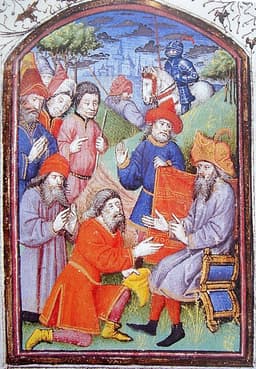
Hethum I of Armenia
Emperor · Medieval
53.1Total

Julius Caesar
General · Ancient
82.8Total
Basic Information
Born
1213
-100
Died
1270
-44
Era
Medieval
Ancient
Nationality
Cilician Armenia
Roman Republic
Occupation
Emperor
General
Civilization
Middle Eastern
Western
Score Comparison
Military (10%)
38.3
88.0
Political (20%)
61.3
78.0
Influence (20%)
52.5
85.0
Legacy (20%)
45.0
82.0
Leadership (15%)
65.0
80.0
Strategy (15%)
60.0
85.0
TOTAL
53.1
82.8
Hethum I of Armenia — Complete Timeline
1244 AD
Submission to the Mongol EmpirePolitical Action◆ Major
Hethum I traveled to the Mongol court of Baiju and formally submitted the Kingdom of Cilician Armenia to Mongol suzerainty. This alliance made Armenia a vassal state of the Mongol Empire, providing military protection against the Mamluks and Seljuks.
SubmissionMongol EmpireVassalage
Impact: regional
1254 AD
Diplomatic Mission to the Mongol Court of KarakorumPolitical Action◆ Major
Hethum I undertook a long journey to the Mongol capital of Karakorum to meet the Great Khan M
DiplomacyMongol EmpireTravel
Impact: regionalconstructive
1258 AD
Alliance with the Mongols at the Siege of Baghdad (1258)War◆ Major
Hethum I led Armenian troops to support the Mongol army under Hulagu Khan during the Siege of Baghdad. The Mongol-Armenian alliance resulted in the fall of the Abbasid Caliphate, a major event in Islamic history.
SiegeMongol AllianceAbbasid Caliphate
Impact: global
1260 AD
Battle of Ain Jalut (Armenian Participation)War◆ Major
Hethum I's Armenian forces fought alongside the Mongols at the Battle of Ain Jalut against the Mamluks. The Mamluk victory halted Mongol expansion and left Cilician Armenia vulnerable to future Mamluk attacks.
BattleMamluksDefeat
Impact: regionaldestructive
Julius Caesar — Complete Timeline
58 BC
Gallic WarsWar◆ Major
Caesar, as proconsul of Gaul, launched a series of campaigns that conquered all of Gaul (modern France, Belgium, and parts of Switzerland). He fought numerous battles, including against the Helvetii, the Belgae, and the Gallic chieftain Vercingetorix. The wars brought immense wealth and a loyal army to Caesar.
Gallic WarsConquestRoman Expansion
Impact: regional
49 BC
Crossing the RubiconPolitical Action◆ Major
Caesar led Legio XIII across the Rubicon River into Italy, defying the Roman Senate's order to disband his army. This act triggered a civil war against Pompey and the Optimates, ultimately leading to Caesar's dictatorship and the end of the Roman Republic.
Roman Civil WarEnd of RepublicPower Struggle
Impact: global
48 BC
Battle of PharsalusWar◆ Major
Caesar's outnumbered army defeated the larger forces of Pompey the Great at Pharsalus in Greece. Caesar's tactical use of a reserve line to counter Pompey's cavalry charge proved decisive. Pompey fled to Egypt, where he was assassinated, leaving Caesar as the undisputed master of the Roman world.
Roman Civil WarBattleDecisive Victory
Impact: regional
44 BC
Appointment as Dictator for LifePolitical Action◆ Major
The Roman Senate appointed Caesar dictator perpetuo (dictator for life), granting him unprecedented personal power. This move concentrated military, legislative, and judicial authority in one person, effectively ending the Roman Republic's traditional system of checks and balances and alarming many senators.
DictatorshipEnd of RepublicPower Consolidation
Impact: regionaldestructive
Assassination on the Ides of MarchPolitical Action◆ Major
A group of Roman senators, led by Marcus Junius Brutus and Gaius Cassius Longinus, stabbed Caesar to death at a meeting of the Senate in the Theatre of Pompey. The assassination was intended to restore the Republic, but instead triggered another civil war that led to the rise of the Roman Empire.
AssassinationRoman PoliticsEnd of Republic
Impact: globaldestructive
Expert Analysis
hethum-i-of-armenia-vs-julius-caesar
# The Crossroads of History
On a winter morning in 49 BCE, Julius Caesar stood at the banks of the Rubicon River, a small stream that marked the boundary between his province and Italy proper. To cross with his army was to declare war on the Roman Republic itself. He hesitated, then gave the order. The die was cast. Thirteen centuries later, in the summer of 1254, King Hethum I of Armenia set out from his capital at Sis on a journey far more arduous—a year-long trek across mountains and deserts to the Mongol court at Karakorum, the heart of an empire that stretched from Korea to the gates of Europe. Both men stood at crossroads, but their paths could not have been more different. One would reshape the Western world; the other would fight to keep his small kingdom from being erased from the map. Why did Caesar achieve immortality while Hethum, despite his courage and cunning, remains a footnote? The answer lies not merely in their deeds but in the worlds they inhabited.
Origins
Julius Caesar was born into the twilight of the Roman Republic, a civilization already drunk on power and fractured by ambition. His family, the Julii, claimed descent from the goddess Venus, but they were patricians of modest means. Rome in 100 BCE was a cauldron of civil strife: populists like Marius clashed with aristocrats like Sulla, and the old republican institutions were buckling under the weight of empire. Caesar grew up watching his uncle Marius fight for reform, then saw Sulla’s proscriptions butcher his enemies. From childhood, he learned that in Rome, survival meant seizing power before others seized it from you.
Hethum I, born in 1213, ruled a very different world. Cilician Armenia was a Christian kingdom clinging to the northeastern coast of the Mediterranean, sandwiched between the Byzantine Empire, the Crusader states, and the rising Muslim powers of the Mamluks and Seljuks. It was a land of refugees, descendants of the ancient Armenian kingdom, who had carved out a fragile home in the Taurus Mountains. Hethum’s dynasty, the Hethumids, came to power through marriage and diplomacy, not conquest. His Armenia was a small state in a brutal neighborhood, where survival depended on alliances with stronger neighbors, not on legions or conquests.
Rise to Power
Caesar’s ascent was a masterpiece of calculated risk. He avoided Sulla’s purges by hiding, then climbed the republican ladder: quaestor in Spain, aedile in Rome (where he bankrupted himself to stage lavish games), then pontifex maximus. His military career began in earnest with the conquest of Gaul from 58 to 50 BCE. There, he built a loyal army, amassed staggering wealth through plunder, and wrote his own propaganda in the *Commentaries*. When the Senate ordered him to disband his army and return to Rome as a private citizen, he chose war. The Rubicon was the point of no return.
Hethum’s path was quieter but no less decisive. In 1244, facing pressure from the Seljuks and the Mamluks, he made a bold choice: he traveled to the court of Baiju, the Mongol commander in Persia, and formally submitted Cilician Armenia to Mongol suzerainty. For a Christian king to bow to pagan Mongols was controversial, but Hethum saw the big picture. The Mongols were the rising power, and they tolerated Christianity. Ten years later, in 1254, he undertook the epic journey to Karakorum to meet the Great Khan Möngke, securing guarantees of protection and religious freedom. It was a masterstroke of political survival.
Leadership & Governance
Caesar governed as a revolutionary. As dictator, he reformed the calendar, granted citizenship to provincials, initiated public works, and centralized power in his own hands. His military genius lay in speed and logistics: he crossed the English Channel, built a bridge across the Rhine in ten days, and crushed Pompey’s larger forces at Pharsalus. But his political wisdom was flawed. He pardoned his enemies, believing generosity would win loyalty. Instead, it gave them time to plot his murder.
Hethum governed as a guardian. He could not conquer; he could only negotiate. His alliance with the Mongols bore fruit in 1258 when he led Armenian troops alongside Hulagu Khan at the Siege of Baghdad, one of history’s great cataclysms. The Mongol-Armenian coalition sacked the Abbasid capital, ending the Islamic Golden Age. For Hethum, it was a victory against a common enemy. But his strategy depended on Mongol strength, and the Mongols were overextended. At the Battle of Ain Jalut in 1260, his forces fought alongside the Mongols against the Mamluks—and lost. The Mamluk victory shattered the Mongol advance and left Armenia exposed.
Triumph & Tragedy
Caesar’s triumph was absolute: he defeated every rival, became dictator for life, and laid the foundation for the Roman Empire. His tragedy came on March 15, 44 BCE, the Ides of March, when sixty senators stabbed him to death. He fell at the foot of Pompey’s statue, bleeding from twenty-three wounds. His murder, meant to save the Republic, instead plunged Rome into civil war and paved the way for Augustus.
Hethum’s triumph was survival itself. For a quarter-century, he kept his kingdom independent through diplomacy and calculated submission. His tragedy was that he could not save Armenia from the Mamluk backlash. After Ain Jalut, the Mamluks raided Cilicia, and Hethum was forced to abdicate in 1266, dying a monk four years later. His kingdom would fall to the Mamluks a generation after his death.
Character & Destiny
Caesar was audacious, charismatic, and ruthless. He gambled on his own genius, believing that fortune favored the bold. His personality—the refusal to share power, the contempt for tradition—drove him to cross the Rubicon, and it also drove the daggers. He was a man who could not stop, and that made him both great and doomed.
Hethum was cautious, patient, and pragmatic. He knew his limits. He did not seek glory; he sought safety. His personality—the willingness to bow, the long view—allowed his kingdom to survive the Mongol storm, but it could not outlast the Mamluk tide. He was a man who knew when to stop, and that made him a survivor but not a legend.
Legacy
Caesar’s legacy is the Western world. His name became synonymous with emperor (Kaiser, Tsar). His reforms shaped Europe for centuries. He is remembered as a military genius, a political visionary, and a warning against tyranny.
Hethum’s legacy is a footnote in Armenian history, a lesson in the limits of small-state diplomacy. His journey to Karakorum is recorded in his cousin’s chronicle, a rare window into Mongol-Armenian relations. He is remembered by scholars, not by schoolchildren.
Conclusion
Caesar and Hethum both faced impossible choices. Caesar chose to break the world and remake it in his image. Hethum chose to bend before the storm and hope it passed. One became a monument; the other, a memory. Their differences were not of skill or courage but of scale. Caesar had an empire to win; Hethum had a kingdom to lose. In the end, history remembers not the survivor but the shatterer. The die is cast, and the Ides of March come for us all.
Rankings
🥇
Julius CaesarLeader
Mil: 88.0Pol: 78.0Inf: 85.0
82.8
🥈
Hethum I of Armenia
Mil: 38.3Pol: 61.3Inf: 52.5
53.1
+29.7 behind
How This Comparison Works
Algorithm
Each figure is scored on 6 dimensions (0—100 scale) based on structured historical data: Military (10%), Political (20%), Influence (20%), Legacy (20%), Leadership (15%), Strategy (15%). The weighted total produces the final ranking.
Data Sources
Scores are computed from structured sub-indicators in the database. Scale factors adjust for era (Ancient ×0.85, Modern ×1.0) and civilization size (Eastern ×1.05, Other ×0.80) to account for differences in population and military scale.
Maximum 3 Figures
Comparisons are limited to 2—3 figures to ensure readability and statistical meaningfulness.
Error Margins
±5 points per dimension — Sub-scores are derived from historical records with inherent uncertainty. Two figures within 5 points on a dimension should be considered roughly equivalent in that area.
Total Score Accuracy
±3 points overall — The weighted combination of 6 dimensions produces a total score with approximately ±3 points of uncertainty. Differences of less than 3 points are not statistically significant— the figures are effectively tied.
Known Limitations
- Historical records are incomplete and uneven across civilizations
- Figures from oral-tradition societies may be underrepresented
- Occupation labels can misclassify multi-role figures
- Scores measure capability and impact, not moral character
- Quantitative scoring is a comparison tool, not absolute truth
Capability Radar
Military (10%) — Battles & Warfare
Battles
35
95
Win Rate
40
92
Expansion
25
97
Political (20%) — Governance & Reform
Reform
40
90
Diplomacy
70
85
Economy
35
82
Influence (20%) — Cultural & Global Reach
Cultural
30
88
Global
25
94
Legacy (20%) — Historical Impact
Historical
40
95
Longevity
30
96
Leadership (15%) — Power & Stability
Tenure
55
75
Stability
45
60
Strategy (15%) — Tactics & Innovation
Strategy
45
94
Tactics
30
96
Reform
20
88
Similar Comparisons
Comments & Discussion
CenturionSpike6/17/2026
Caesar crossed a river and changed history. Hethum crossed continents just to bow to a Mongol Khan. Let's be real: one was a conqueror forging an empire, the other a desperate ruler playing diplomat to survive. Caesar's gamble at the Rubicon took hours and reshaped the West for millennia. Hethum's year-long trek got Armenia a brief reprieve from extinction, but who remembers that? Immortality belongs to risk-takers, not survivalists. Hethum was brave, but bravery without enduring impact is just
帝国铁蹄6/17/2026
说来说去,赫图姆一世跟凯撒比就是个茶几上的杯具。凯撒跨过卢比孔河,那是主动打破共和旧制,为自己称霸铺路。赫图姆呢?千里迢迢跑到哈拉和林,还不是为了给小小亚美尼亚讨个活路?一个创造历史,一个只能乞求历史别把他碾碎。你拿游说蒙古大汗和发动罗马内战比,怎么比?勇气在绝对实力面前不值一提,赫图姆再英勇也就是个拼图上的小碎片。