Loading...
Hisham ibn Abd al-Malik vs Julius Caesar
Julius Caesar leads by 12.2 pts · 2 figures compared
…
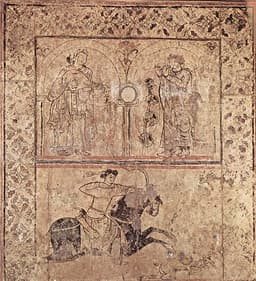
Hisham ibn Abd al-Malik
Emperor · Medieval
70.6Total

Julius Caesar
General · Ancient
82.8Total
Basic Information
Born
691
-100
Died
743
-44
Era
Medieval
Ancient
Nationality
Umayyad Caliphate
Roman Republic
Occupation
Emperor
General
Civilization
Middle Eastern
Western
Score Comparison
Military (10%)
74.7
88.0
Political (20%)
78.0
78.0
Influence (20%)
72.0
85.0
Legacy (20%)
58.0
82.0
Leadership (15%)
80.0
80.0
Strategy (15%)
69.1
85.0
TOTAL
70.6
82.8
Hisham ibn Abd al-Malik — Complete Timeline
724 AD
Accession as CaliphPolitical Action◆ Major
Hisham ibn Abd al-Malik became the Umayyad caliph after the death of his brother, Yazid II. His reign was the longest of the later Umayyads, lasting 19 years.
SuccessionCaliphate
Impact: global
726 AD
Military campaigns against the ByzantinesWar◆ Major
Hisham launched annual raids into Byzantine Anatolia, capturing several fortresses. These campaigns were costly but maintained pressure on the Byzantine Empire, though they did not achieve decisive conquest.
Byzantine WarsRaidsAnatolia
Impact: regional
730 AD
Administrative and economic reformsReform◆ Major
Hisham implemented administrative reforms to improve tax collection and centralize control over the provinces. He also invested in irrigation projects in Iraq, boosting agricultural productivity.
AdministrationEconomyAgriculture
Impact: globalconstructive
732 AD
Defeat at the Battle of ToursWar
Umayyad forces under Hisham's reign were defeated by the Franks under Charles Martel at the Battle of Tours. This halted the northward expansion of the Umayyad Caliphate into Western Europe.
BattleDefeatFranks
Impact: global
Julius Caesar — Complete Timeline
58 BC
Gallic WarsWar◆ Major
Caesar, as proconsul of Gaul, launched a series of campaigns that conquered all of Gaul (modern France, Belgium, and parts of Switzerland). He fought numerous battles, including against the Helvetii, the Belgae, and the Gallic chieftain Vercingetorix. The wars brought immense wealth and a loyal army to Caesar.
Gallic WarsConquestRoman Expansion
Impact: regional
49 BC
Crossing the RubiconPolitical Action◆ Major
Caesar led Legio XIII across the Rubicon River into Italy, defying the Roman Senate's order to disband his army. This act triggered a civil war against Pompey and the Optimates, ultimately leading to Caesar's dictatorship and the end of the Roman Republic.
Roman Civil WarEnd of RepublicPower Struggle
Impact: global
48 BC
Battle of PharsalusWar◆ Major
Caesar's outnumbered army defeated the larger forces of Pompey the Great at Pharsalus in Greece. Caesar's tactical use of a reserve line to counter Pompey's cavalry charge proved decisive. Pompey fled to Egypt, where he was assassinated, leaving Caesar as the undisputed master of the Roman world.
Roman Civil WarBattleDecisive Victory
Impact: regional
44 BC
Appointment as Dictator for LifePolitical Action◆ Major
The Roman Senate appointed Caesar dictator perpetuo (dictator for life), granting him unprecedented personal power. This move concentrated military, legislative, and judicial authority in one person, effectively ending the Roman Republic's traditional system of checks and balances and alarming many senators.
DictatorshipEnd of RepublicPower Consolidation
Impact: regionaldestructive
Assassination on the Ides of MarchPolitical Action◆ Major
A group of Roman senators, led by Marcus Junius Brutus and Gaius Cassius Longinus, stabbed Caesar to death at a meeting of the Senate in the Theatre of Pompey. The assassination was intended to restore the Republic, but instead triggered another civil war that led to the rise of the Roman Empire.
AssassinationRoman PoliticsEnd of Republic
Impact: globaldestructive
Expert Analysis
hisham-ibn-abd-al-malik-vs-julius-caesar
# The Two Faces of Power: Caesar and Hisham
On a March morning in 44 BCE, a lone figure in a purple toga stood frozen before a Senate chamber in Rome, sixty daggers about to end his life. Seven centuries later, in the quiet halls of a palace in Resafa, an aging caliph lay on his deathbed, having outlasted every enemy and seen his empire reach its widest extent. One died in spectacular violence, the other in exhausted peace. Yet both men held the reins of the ancient world's mightiest states—and both failed to preserve what they built.
Origins
Gaius Julius Caesar was born into the chaos of a dying republic. His family, the Julian clan, claimed descent from the goddess Venus, but their political fortunes had dwindled. Young Caesar grew up in a Rome where senatorial factions murdered rivals in the streets, where the old aristocratic order was cracking under the weight of empire. He learned early that survival meant outmaneuvering men who would kill you without hesitation.
Hisham ibn Abd al-Malik emerged into a different world. Born in 691 in Damascus, he was a prince of the Umayyad dynasty, grandson of the caliph who had built the Dome of the Rock. The Islamic empire his family ruled stretched from Spain to India, a young civilization still drunk on its first century of conquest. Where Caesar had to claw his way upward through a jungle of rivals, Hisham was born into the throne's shadow—but that shadow came with its own dangers.
Rise to Power
Caesar's path was a masterpiece of calculated risk. He borrowed fortunes to buy popularity, seduced the wives of enemies to gain intelligence, and survived the dictator Sulla's proscription lists by hiding in the Sabine hills. His military command in Spain at age thirty-three was nearly his undoing—he was almost killed in a skirmish, saved only by the quick thinking of a loyal soldier. But by 59 BCE, he had forged the First Triumvirate with Pompey and Crassus, and his conquest of Gaul (58–50 BCE) gave him an army that would make him master of Rome.
Hisham's rise was quieter but no less decisive. When his brother Caliph Yazid II died in 724, Hisham was already a mature administrator of thirty-three. His accession was smooth—no civil war, no rival claimants. But the empire he inherited was bleeding from overexpansion. The great wave of Arab conquests had crested, and now the tide was turning.
Leadership & Governance
Here the two men diverged like rivers from the same mountain. Caesar led from the front. At the Battle of Alesia in 52 BCE, he rode among his legions, personally rallying troops who were outnumbered five to one. He shared rations with common soldiers, remembered their names, and once wrote, "Soldiers do not love a general who is not one of them." His military score of 88 reflects a commander who invented siege tactics still studied at West Point.
Hisham never led an army. His military score of 62.7 reflects a different reality: he was a caliph who stayed in the palace, sending generals to fight. His strategy was defensive, not offensive. He reinforced border fortresses, improved the postal system, and standardized tax collection. His administrative reforms were brilliant—he centralized the empire's finances, built irrigation canals in Iraq, and patronized the translation of Greek scientific texts. But when his armies marched, they often lost.
Caesar governed through personal magnetism and the threat of his legions. He reformed the calendar, granted citizenship to Gauls, and started public works that employed Rome's poor. His political score of 78 is lower than his military genius, for he never solved the Republic's fundamental problems—he merely postponed them with his own authority.
Hisham governed through bureaucracy and patience. His political score of 77.7 is nearly equal to Caesar's, but achieved through different means. He appointed capable governors, balanced budgets, and kept the empire stable for nineteen years—the longest Umayyad reign. Yet his reforms could not stop the rot: Arab tribal rivalries, religious dissent from non-Arab converts, and the growing power of the Abbasid faction that would destroy his dynasty within a decade of his death.
Triumph & Tragedy
Caesar's greatest moment came in 48 BCE at the Battle of Pharsalus, where he defeated Pompey's larger army through tactical brilliance. His tragedy was the Ides of March, 44 BCE—assassination by senators he had pardoned, men he trusted. "Et tu, Brute?" may be legend, but the betrayal was real. He died thinking he had won, only to learn that power without legitimacy is a house of cards.
Hisham's triumph was quieter: the empire reached its greatest territorial extent under his rule, from the Pyrenees to the Indus. His tragedy came in 732 at the Battle of Tours, where his general Abd al-Rahman al-Ghafiqi was killed by Charles Martel's Franks. This defeat ended the Islamic advance into Western Europe. Hisham's long reign also saw the failure of the siege of Constantinople in 718, and by his death in 743, the Umayyad dynasty was already dying.
Character & Destiny
Caesar was driven by an insatiable need for glory. He wrote his own commentaries to shape his legacy, forgave enemies strategically, and once said, "It is easier to find men who will volunteer to die than to find those who are willing to endure pain with patience." His character demanded he be first—and that need destroyed him.
Hisham was cautious, pious, and methodical. He was known as a strict administrator who once rejected a poet's praise because it was exaggerated. He prayed daily, avoided luxury, and tried to rule by Islamic law. His personality suited a manager of empire, not its conqueror. He could maintain what was built, but he could not inspire the loyalty that Caesar commanded.
Legacy
Caesar's legacy transformed the world. His name became synonymous with imperial power—Kaiser, Tsar, Qaysar. His reforms laid the foundation for the Roman Empire, and his writings shaped Western literature. He is remembered as both hero and tyrant, a man who destroyed a republic and built an empire.
Hisham's legacy is more obscure. He is called the "last great Umayyad caliph," but his dynasty collapsed within seven years of his death. His administrative reforms were adopted by the Abbasids who overthrew his family. The empire he held together fragmented, and his name is known mainly to scholars. Yet his reign was a golden age of stability in an unstable century.
Conclusion
Caesar and Hisham represent two faces of power: the conqueror and the administrator. One built an empire through genius and violence, the other maintained one through patience and order. Caesar's tragedy was that he could not secure what he built; Hisham's was that he built nothing new. In the end, the world remembers the man who crossed the Rubicon, not the one who balanced the budget. But perhaps Hisham's quiet competence was the greater achievement—for in ruling an empire that stretched across three continents, he kept the peace for nineteen years. And that, in the ancient world, was a miracle worth remembering.
Rankings
🥇
Julius CaesarLeader
Mil: 88.0Pol: 78.0Inf: 85.0
82.8
🥈
Hisham ibn Abd al-Malik
Mil: 74.7Pol: 78.0Inf: 72.0
70.6
+12.2 behind
How This Comparison Works
Algorithm
Each figure is scored on 6 dimensions (0—100 scale) based on structured historical data: Military (10%), Political (20%), Influence (20%), Legacy (20%), Leadership (15%), Strategy (15%). The weighted total produces the final ranking.
Data Sources
Scores are computed from structured sub-indicators in the database. Scale factors adjust for era (Ancient ×0.85, Modern ×1.0) and civilization size (Eastern ×1.05, Other ×0.80) to account for differences in population and military scale.
Maximum 3 Figures
Comparisons are limited to 2—3 figures to ensure readability and statistical meaningfulness.
Error Margins
±5 points per dimension — Sub-scores are derived from historical records with inherent uncertainty. Two figures within 5 points on a dimension should be considered roughly equivalent in that area.
Total Score Accuracy
±3 points overall — The weighted combination of 6 dimensions produces a total score with approximately ±3 points of uncertainty. Differences of less than 3 points are not statistically significant— the figures are effectively tied.
Known Limitations
- Historical records are incomplete and uneven across civilizations
- Figures from oral-tradition societies may be underrepresented
- Occupation labels can misclassify multi-role figures
- Scores measure capability and impact, not moral character
- Quantitative scoring is a comparison tool, not absolute truth
Capability Radar
Military (10%) — Battles & Warfare
Battles
75
95
Win Rate
70
92
Expansion
75
97
Political (20%) — Governance & Reform
Reform
90
90
Diplomacy
70
85
Economy
85
82
Influence (20%) — Cultural & Global Reach
Cultural
70
88
Global
65
94
Legacy (20%) — Historical Impact
Historical
75
95
Longevity
60
96
Leadership (15%) — Power & Stability
Tenure
80
75
Stability
75
60
Strategy (15%) — Tactics & Innovation
Strategy
80
94
Tactics
65
96
Reform
85
88
Similar Comparisons
Comments & Discussion
Chronicler90376/17/2026
The comparison misses the crucial difference in institutional foundations. Caesar dismantled a republic and built a personal dictatorship that collapsed within decades. Hisham expanded an already-functioning imperial bureaucracy, adding postal relays and tax reforms that outlived his dynasty. Caesar's power was personal charisma; Hisham's was systemic control. That's why one empire fragmented into civil war and the other survived dynasty change.