Loading...
Hojo Soun vs Julius Caesar
Julius Caesar leads by 24.7 pts · 2 figures compared
…
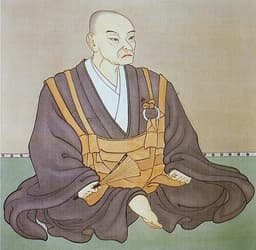
Hojo Soun
Emperor · Medieval
58.1Total

Julius Caesar
General · Ancient
82.8Total
Basic Information
Born
1432
-100
Died
1519
-44
Era
Medieval
Ancient
Nationality
Japan
Roman Republic
Occupation
Emperor
General
Civilization
Eastern
Western
Score Comparison
Military (10%)
50.0
88.0
Political (20%)
68.0
78.0
Influence (20%)
53.3
85.0
Legacy (20%)
50.0
82.0
Leadership (15%)
74.0
80.0
Strategy (15%)
60.0
85.0
TOTAL
58.1
82.8
Hojo Soun — Complete Timeline
1491 AD
Became a Ronin and Founded the Later Hojo ClanPolitical Action
Hojo Soun, originally a samurai of the Imagawa clan, became a ronin after his lord's death. He seized control of Izu Province in 1491, establishing the Later Hojo clan and beginning his rise to power.
RoninLater HojoIzu
Impact: regional
1495 AD
Captured Odawara CastleWar◆ Major
Hojo Soun captured Odawara Castle from the Omori clan through a combination of military force and deception. Odawara became the Later Hojo clan's stronghold and a symbol of their power in the Kanto region.
CastleKantoMilitary
Impact: regional
1512 AD
Expanded Hojo Control Over Sagami ProvinceWar◆ Major
Hojo Soun expanded his territory by conquering Sagami Province, defeating local lords and the Uesugi clan. This established the Later Hojo as a major power in the Kanto region, controlling key trade routes.
ExpansionSagamiKanto
Impact: regional
Julius Caesar — Complete Timeline
58 BC
Gallic WarsWar◆ Major
Caesar, as proconsul of Gaul, launched a series of campaigns that conquered all of Gaul (modern France, Belgium, and parts of Switzerland). He fought numerous battles, including against the Helvetii, the Belgae, and the Gallic chieftain Vercingetorix. The wars brought immense wealth and a loyal army to Caesar.
Gallic WarsConquestRoman Expansion
Impact: regional
49 BC
Crossing the RubiconPolitical Action◆ Major
Caesar led Legio XIII across the Rubicon River into Italy, defying the Roman Senate's order to disband his army. This act triggered a civil war against Pompey and the Optimates, ultimately leading to Caesar's dictatorship and the end of the Roman Republic.
Roman Civil WarEnd of RepublicPower Struggle
Impact: global
48 BC
Battle of PharsalusWar◆ Major
Caesar's outnumbered army defeated the larger forces of Pompey the Great at Pharsalus in Greece. Caesar's tactical use of a reserve line to counter Pompey's cavalry charge proved decisive. Pompey fled to Egypt, where he was assassinated, leaving Caesar as the undisputed master of the Roman world.
Roman Civil WarBattleDecisive Victory
Impact: regional
44 BC
Appointment as Dictator for LifePolitical Action◆ Major
The Roman Senate appointed Caesar dictator perpetuo (dictator for life), granting him unprecedented personal power. This move concentrated military, legislative, and judicial authority in one person, effectively ending the Roman Republic's traditional system of checks and balances and alarming many senators.
DictatorshipEnd of RepublicPower Consolidation
Impact: regionaldestructive
Assassination on the Ides of MarchPolitical Action◆ Major
A group of Roman senators, led by Marcus Junius Brutus and Gaius Cassius Longinus, stabbed Caesar to death at a meeting of the Senate in the Theatre of Pompey. The assassination was intended to restore the Republic, but instead triggered another civil war that led to the rise of the Roman Empire.
AssassinationRoman PoliticsEnd of Republic
Impact: globaldestructive
Expert Analysis
hojo-soun-vs-julius-caesar
# The Man Who Crossed the Rubicon and the Man Who Came from Nothing
On a January morning in 49 BCE, Julius Caesar stood at the banks of the Rubicon River in northern Italy, knowing that crossing it would mean civil war and the end of the Roman Republic. On a misty day in 1491, in a remote corner of Izu Province, a middle-aged samurai named Hojo Soun found himself without a lord, stripped of status, and facing a future that offered nothing but obscurity. One man was about to break the most sacred law of his civilization; the other was about to build a dynasty from the ashes of his own ruin. What drove them—and what made one a name that echoes across millennia while the other remains a footnote even in his own nation’s history?
Origins
Julius Caesar was born into the patrician Julian clan, one of Rome’s oldest families, in 100 BCE. His lineage traced back to the goddess Venus, but his family’s political influence had waned. He grew up in a Rome that was tearing itself apart—civil wars, street violence, and the collapse of republican norms were the air he breathed. His uncle by marriage was Gaius Marius, the populist general who had reformed the army and defied the Senate. From childhood, Caesar understood that power in Rome came not from tradition but from force, ambition, and the loyalty of soldiers.
Hojo Soun, born Ise Shinkuro in 1432, emerged from a very different world—the chaos of Japan’s Warring States period, when the shogunate had lost control and every province was a battlefield. He was a samurai of the Imagawa clan, a minor retainer in a feudal order that was disintegrating. Unlike Caesar, he had no divine ancestry, no ancient name, no wealth. He was a man of his time, but a time that offered no guarantees. When his lord died in 1491, Soun made a choice that would define him: instead of seeking another master, he became a ronin—a masterless samurai—and set out to carve his own domain.
Rise to Power
Caesar’s path was a masterclass in political calculation. He borrowed fortunes to fund lavish games and public works, winning the love of the Roman mob. He formed the First Triumvirate with Pompey and Crassus, an illegal alliance that gave him command of Gaul. Over eight years, from 58 to 50 BCE, he conquered a territory larger than Italy itself, crossed the Rhine into Germany, and landed on the shores of Britain. His Commentaries on the Gallic Wars were not just history—they were propaganda, crafted to make him the hero of Rome. When the Senate ordered him to disband his army, he knew that obedience meant exile or death. So he crossed the Rubicon, and the Republic fell.
Hojo Soun’s rise was quieter, more patient, and far more precarious. In 1491, he seized control of Izu Province not through a grand battle but through a combination of cunning and opportunism. He exploited a succession dispute, married into local families, and presented himself as a restorer of order. In 1495, he captured Odawara Castle—a fortress that would become his dynasty’s capital—through a ruse. According to legend, he and his men disguised themselves as pilgrims, entered the castle during a festival, and took it from within. By 1512, he had expanded into Sagami Province, defeating the powerful Uesugi clan and establishing the Later Hojo as a regional power. He did not conquer an empire; he built a base, inch by inch.
Leadership & Governance
Caesar ruled as a revolutionary. As dictator, he reformed the calendar, granted citizenship to provincials, launched massive building projects, and centralized power in his own hands. He was a military genius—his siege of Alesia in 52 BCE remains a textbook example of double-envelopment—but his political wisdom was flawed. He pardoned his enemies, believing that clemency would win their loyalty. It did not. He ignored the deep resentment of the senatorial class, and he failed to build a lasting political structure for his reforms. His leadership was brilliant but brittle, dependent on his own presence.
Hojo Soun governed as a builder. He codified laws, stabilized land tenure, and encouraged agriculture and trade. The Later Hojo clan became known for its efficient administration, its strong fortifications, and its ability to integrate conquered lords into its system. Soun was not a battlefield commander of Caesar’s caliber—his military score is a modest 10.2 compared to Caesar’s 88—but his political score of 78.3 rivals Caesar’s 78.0. He understood that in Japan’s endless wars, survival depended on alliances, patience, and the loyalty of vassals. He did not seek to rule Japan; he sought to rule his domain well.
Triumph & Tragedy
Caesar’s greatest moment was his triumph over Gaul, the conquest that made him master of the West. His greatest tragedy was the Ides of March, 44 BCE, when sixty senators stabbed him to death in the Senate chamber. He fell at the feet of a statue of Pompey, his former ally and enemy, bleeding out on the marble floor. He had achieved everything, and it cost him everything.
Hojo Soun’s triumph was the founding of a dynasty that would last a century. He died peacefully in 1519 at the age of eighty-seven, having passed his domain to his son. His tragedy was that he never saw the peak of his clan’s power—the Later Hojo would become one of the most powerful families in Japan, only to be destroyed by Toyotomi Hideyoshi in 1590, seventy-one years after Soun’s death. His legacy was a castle and a name, but not an empire.
Character & Destiny
Caesar was driven by an insatiable ambition, a belief that he was destined to rule. He took risks that would have destroyed any other man—crossing the Rubicon, fighting in Britain, pardoning assassins—because he believed the gods were on his side. His personality was magnetic, ruthless, and ultimately self-destructive. He could not stop, because stopping would mean admitting that he was just a man.
Hojo Soun was driven by survival. He had nothing to lose, and he built everything from nothing. His personality was cautious, patient, and shrewd. He did not believe in destiny; he believed in opportunity. He could stop, because he knew that the greatest victory was to die in bed.
Legacy
Caesar’s legacy is the Roman Empire, the Latin language, the Julian calendar, and the very idea of the dictator as a figure of both glory and danger. His name became a title—Kaiser, Tsar—that lasted for two millennia. He is remembered in every history book, every play, every film.
Hojo Soun’s legacy is the Later Hojo clan, a footnote in the story of Japan’s unification. He is remembered by historians and by the residents of Odawara, but his name does not echo beyond his country’s shores.
Conclusion
Both men faced the same fundamental question: when the old order collapses, what do you do? Caesar answered by trying to become the new order, and he died for it. Soun answered by building a new order in a small corner of the world, and he lived. The difference between them is not just in their scores or their civilizations—it is in the scale of their ambition and the price they were willing to pay. Caesar wanted everything, and he got it, for a moment. Soun wanted enough, and he got it, for a lifetime. Which of them was wiser is a question that each reader must answer for themselves.
Rankings
🥇
Julius CaesarLeader
Mil: 88.0Pol: 78.0Inf: 85.0
82.8
🥈
Hojo Soun
Mil: 50.0Pol: 68.0Inf: 53.3
58.1
+24.7 behind
How This Comparison Works
Algorithm
Each figure is scored on 6 dimensions (0—100 scale) based on structured historical data: Military (10%), Political (20%), Influence (20%), Legacy (20%), Leadership (15%), Strategy (15%). The weighted total produces the final ranking.
Data Sources
Scores are computed from structured sub-indicators in the database. Scale factors adjust for era (Ancient ×0.85, Modern ×1.0) and civilization size (Eastern ×1.05, Other ×0.80) to account for differences in population and military scale.
Maximum 3 Figures
Comparisons are limited to 2—3 figures to ensure readability and statistical meaningfulness.
Error Margins
±5 points per dimension — Sub-scores are derived from historical records with inherent uncertainty. Two figures within 5 points on a dimension should be considered roughly equivalent in that area.
Total Score Accuracy
±3 points overall — The weighted combination of 6 dimensions produces a total score with approximately ±3 points of uncertainty. Differences of less than 3 points are not statistically significant— the figures are effectively tied.
Known Limitations
- Historical records are incomplete and uneven across civilizations
- Figures from oral-tradition societies may be underrepresented
- Occupation labels can misclassify multi-role figures
- Scores measure capability and impact, not moral character
- Quantitative scoring is a comparison tool, not absolute truth
Capability Radar
Military (10%) — Battles & Warfare
Battles
40
95
Win Rate
45
92
Expansion
55
97
Political (20%) — Governance & Reform
Reform
50
90
Diplomacy
55
85
Economy
50
82
Influence (20%) — Cultural & Global Reach
Cultural
40
88
Global
20
94
Legacy (20%) — Historical Impact
Historical
55
95
Longevity
50
96
Leadership (15%) — Power & Stability
Tenure
60
75
Stability
45
60
Strategy (15%) — Tactics & Innovation
Strategy
55
94
Tactics
50
96
Reform
30
88
Similar Comparisons
Comments & Discussion
SAMURAI_REVISED6/17/2026
This comparison fails because Caesar played the Roman political game for decades before crossing the Rubicon—he was a consul, a general, a master of propaganda. Soun, on the other hand, was a nobody who literally started as a wandering ronin. Apples and oranges. Caesar's gamble was calculated treason from a position of strength; Soun's was desperate improvisation. Let's not romanticize the "self-made man" myth—Soun exploited local power vacuums, while Caesar reshaped an entire civilization's des
数据侦探6/17/2026
你所谓的“分析”根本站不住脚。连个具体的军队规模、领地面积都没有,就敢说谁更伟大?说Hojo Soun从零开始?史料记载他继承了妻子家族的人脉和地盘,根本不是什么白手起家。要比较就拿出硬数据:Caesar征服高卢时指挥了多少个军团?Soun控制了多少石高?否则就是文人瞎编故事,别浪费我时间。
CLASSICS_DISSECTOR6/17/2026
Let's be brutally honest—calling Caesar a "man who crossed the Rubicon" misses the point entirely. That moment was the culmination of a decade of military conquest in Gaul, where he trained an unbeatable army and looted enough gold to buy the Senate. Hojo Soun's "rise from nothing" is a romanticized legend created by later Tokugawa historians to legitimize the Hojo clan's rule. By 1495, Soun was already a local power broker, not some destitute wanderer. History loves underdog stories, but facts
武家批评家6/17/2026
把Hojo Soun和Julius Caesar放在一起比较,本身就是对后者的侮辱。Caesar改变了西方文明的进程,他的名字就是权力和征服的代名词。Hojo Soun?一个地方小大名,统治了关东几十年,然后家族就被丰臣秀吉灭了。后北条氏的功绩连织田信长的一根手指都比不上,更别说罗马的凯撒了。这种比较纯粹是为了吸引眼球,毫无历史深度。
POP_HISTORY_SLAM6/17/2026
Here we go again—another "great man" comparison that ignores how much of both stories is pure legend. Caesar's crossing of the Rubicon is dramatic, sure, but we have almost no contemporary accounts of what he actually thought. And Hojo Soun? Most of his early life is fictional, invented by 17th-century chroniclers. History buffs love these epic moments, but the truth is messier: Soun was a pragmatic warlord who got lucky, and Caesar was a brilliant but ruthless politician who gambled and won. St