Loading...
Hojo Ujitsuna vs Julius Caesar
Julius Caesar leads by 30.1 pts · 2 figures compared
…
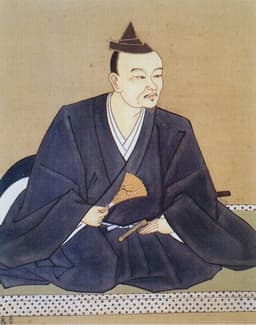
Hojo Ujitsuna
Emperor · Medieval
52.7Total

Julius Caesar
General · Ancient
82.8Total
Basic Information
Born
1487
-100
Died
1541
-44
Era
Medieval
Ancient
Nationality
Japan
Roman Republic
Occupation
Emperor
General
Civilization
Eastern
Western
Score Comparison
Military (10%)
45.0
88.0
Political (20%)
68.0
78.0
Influence (20%)
53.3
85.0
Legacy (20%)
45.8
82.0
Leadership (15%)
53.2
80.0
Strategy (15%)
52.5
85.0
TOTAL
52.7
82.8
Hojo Ujitsuna — Complete Timeline
1524 AD
Capture of Edo CastleWar◆ Major
Hojo Ujitsuna captured Edo Castle from the Uesugi clan, expanding Hojo control into the Kanto region. This victory established the Hojo as a major power in the area and laid the foundation for their future dominance.
ConquestEdo CastleKanto
Impact: regional
1526 AD
Siege of Odawara CastleWar◆ Major
Hojo Ujitsuna successfully defended Odawara Castle against a siege by the Uesugi and their allies. The defense solidified Odawara as the Hojo stronghold and demonstrated Ujitsuna's military capability.
SiegeDefenseOdawara
Impact: regional
1537 AD
Expansion into Musashi ProvinceWar
Hojo Ujitsuna led campaigns into Musashi Province, capturing several castles from the Uesugi. This expansion significantly increased Hojo territory and influence in the Kanto region.
ExpansionMusashiUesugi Conflict
Impact: regional
Julius Caesar — Complete Timeline
58 BC
Gallic WarsWar◆ Major
Caesar, as proconsul of Gaul, launched a series of campaigns that conquered all of Gaul (modern France, Belgium, and parts of Switzerland). He fought numerous battles, including against the Helvetii, the Belgae, and the Gallic chieftain Vercingetorix. The wars brought immense wealth and a loyal army to Caesar.
Gallic WarsConquestRoman Expansion
Impact: regional
49 BC
Crossing the RubiconPolitical Action◆ Major
Caesar led Legio XIII across the Rubicon River into Italy, defying the Roman Senate's order to disband his army. This act triggered a civil war against Pompey and the Optimates, ultimately leading to Caesar's dictatorship and the end of the Roman Republic.
Roman Civil WarEnd of RepublicPower Struggle
Impact: global
48 BC
Battle of PharsalusWar◆ Major
Caesar's outnumbered army defeated the larger forces of Pompey the Great at Pharsalus in Greece. Caesar's tactical use of a reserve line to counter Pompey's cavalry charge proved decisive. Pompey fled to Egypt, where he was assassinated, leaving Caesar as the undisputed master of the Roman world.
Roman Civil WarBattleDecisive Victory
Impact: regional
44 BC
Appointment as Dictator for LifePolitical Action◆ Major
The Roman Senate appointed Caesar dictator perpetuo (dictator for life), granting him unprecedented personal power. This move concentrated military, legislative, and judicial authority in one person, effectively ending the Roman Republic's traditional system of checks and balances and alarming many senators.
DictatorshipEnd of RepublicPower Consolidation
Impact: regionaldestructive
Assassination on the Ides of MarchPolitical Action◆ Major
A group of Roman senators, led by Marcus Junius Brutus and Gaius Cassius Longinus, stabbed Caesar to death at a meeting of the Senate in the Theatre of Pompey. The assassination was intended to restore the Republic, but instead triggered another civil war that led to the rise of the Roman Empire.
AssassinationRoman PoliticsEnd of Republic
Impact: globaldestructive
Expert Analysis
hojo-ujitsuna-vs-julius-caesar
# The Rubicon and the Castle: Two Paths to Power
On a winter day in 49 BCE, Julius Caesar stood at the banks of a small river in northern Italy, the Rubicon, knowing that crossing it meant civil war and the end of the Roman Republic. Fourteen hundred years later and half a world away, Hojo Ujitsuna looked out from the walls of Odawara Castle, a fortress he would transform into an unbreachable symbol of his family’s dominance over the Kanto region. Both men were builders of empires, yet one carved his name into the bedrock of Western civilization while the other remains a footnote even in Eastern history. What explains the chasm between them?
Origins
Caesar was born into the patrician Julian clan, a family claiming descent from the goddess Venus, but his Rome was a republic in decay, torn by class conflict between the senatorial elite and the popular party. His father died when he was sixteen, thrusting him into a world where survival depended on alliances, debts, and audacity. He fled proscription lists, was captured by pirates (whom he later crucified), and learned that reputation was a currency more valuable than gold.
Hojo Ujitsuna, by contrast, was born in 1487 into the chaos of Japan’s Sengoku period—the “Warring States”—where the old order had shattered and local warlords, the daimyo, fought for scraps of territory. His father, Hojo Soun, had risen from obscurity to seize control of Izu Province, but the Hojo were newcomers, despised by ancient clans like the Uesugi. Ujitsuna inherited not a legacy of divine ancestry but a precarious domain that could be erased in a single battle.
Rise to Power
Caesar’s ascent was a masterclass in political calculation. He forged the First Triumvirate with Pompey and Crassus, used his consulship in 59 BCE to push through land reforms for veterans, then secured a five-year command in Gaul. There, over eight years, he conquered a territory larger than Italy itself, fighting over a million men and capturing eight hundred cities. His Commentaries on the Gallic Wars were not just history but propaganda, crafted to make him a legend while his enemies in Rome schemed.
Hojo Ujitsuna’s path was narrower. In 1524, he captured Edo Castle from the Uesugi clan, a victory that gave the Hojo a foothold in the Kanto region. But this was not the conquest of Gaul; it was a single castle in a land of hundreds. Two years later, in 1526, he defended Odawara Castle against a Uesugi siege, a defensive triumph that solidified his reputation but did not expand his domain. Each gain was hard-won, each castle taken only after months of siege and treachery.
Leadership & Governance
Caesar governed through sheer force of personality and strategic genius. As dictator, he reformed the calendar, granted citizenship to Gauls, initiated public works, and centralized power in his own hands. His military leadership was instinctive—he fought alongside his men, shared their rations, and once swam a river to escape capture. He understood that loyalty came from victory and generosity, not fear.
Hojo Ujitsuna governed differently. His leadership score of 79.0 reflects a competent but cautious ruler. He built Odawara into a fortress city, a center of administration and defense, but his governance was about consolidation, not transformation. He expanded into Musashi Province in 1537, capturing several castles, yet these were incremental gains, not the sweeping conquests of Caesar. Where Caesar rewrote the rules of power, Ujitsuna played by them, securing his family’s position through marriage alliances and patient siegecraft.
Triumph & Tragedy
Caesar’s greatest moment was his triumph over Pompey at Pharsalus in 48 BCE, where he defeated an army twice his size through tactical brilliance and the loyalty of his veteran legions. His tragedy was the Ides of March, 44 BCE, when sixty senators stabbed him to death in the Senate chamber, believing they were saving the Republic. In truth, they ensured its death.
Hojo Ujitsuna’s triumphs were quieter. The capture of Edo Castle in 1524 was his Pharsalus, but it lacked the dramatic scale. His tragedy was not assassination but limitation—he died in 1541 at age fifty-four, leaving his domain to his son, Ujiyasu, who would face the same endless wars. The Hojo would eventually fall to Toyotomi Hideyoshi in 1590, their fortress city reduced to rubble. Ujitsuna’s tragedy was that his life’s work was temporary.
Character & Destiny
Caesar was audacity incarnate. He crossed the Rubicon with a single legion, gambling that speed and nerve would overwhelm his enemies. His personality—arrogant, generous, calculating, and reckless—drove him to seize power that no Roman had held before. He believed in his own destiny, and history obliged him.
Hojo Ujitsuna was patience incarnate. He built walls, not bridges; he secured, not expanded. His personality was suited to a world where survival mattered more than glory. He did not cross a river and change history; he fortified a castle and hoped to endure. Destiny gave him a smaller stage, and he played his part competently but without brilliance.
Legacy
Caesar’s legacy is immeasurable. His name became synonymous with imperial power—Kaiser, Tsar, Caesar. His reforms shaped Europe for millennia. He is remembered as a military genius, a political visionary, and a warning against ambition.
Hojo Ujitsuna’s legacy is provincial. He is remembered in Japan as a capable daimyo who strengthened the Hojo clan, but his name does not echo in world history. His total score of 67.2 against Caesar’s 83.3 reflects not just achievement but scale: Caesar played on a continental stage, Ujitsuna on a regional one.
Conclusion
The difference between Caesar and Hojo Ujitsuna is not merely talent but opportunity. Caesar lived in a civilization that was expanding, where one man could reshape the world. Ujitsuna lived in a Japan fractured into a hundred pieces, where even the greatest daimyo could only hold a few provinces. One crossed a river and changed history; the other held a castle and hoped to survive. Both were products of their eras, but only one era was ready for a Caesar.
Rankings
🥇
Julius CaesarLeader
Mil: 88.0Pol: 78.0Inf: 85.0
82.8
🥈
Hojo Ujitsuna
Mil: 45.0Pol: 68.0Inf: 53.3
52.7
+30.1 behind
How This Comparison Works
Algorithm
Each figure is scored on 6 dimensions (0—100 scale) based on structured historical data: Military (10%), Political (20%), Influence (20%), Legacy (20%), Leadership (15%), Strategy (15%). The weighted total produces the final ranking.
Data Sources
Scores are computed from structured sub-indicators in the database. Scale factors adjust for era (Ancient ×0.85, Modern ×1.0) and civilization size (Eastern ×1.05, Other ×0.80) to account for differences in population and military scale.
Maximum 3 Figures
Comparisons are limited to 2—3 figures to ensure readability and statistical meaningfulness.
Error Margins
±5 points per dimension — Sub-scores are derived from historical records with inherent uncertainty. Two figures within 5 points on a dimension should be considered roughly equivalent in that area.
Total Score Accuracy
±3 points overall — The weighted combination of 6 dimensions produces a total score with approximately ±3 points of uncertainty. Differences of less than 3 points are not statistically significant— the figures are effectively tied.
Known Limitations
- Historical records are incomplete and uneven across civilizations
- Figures from oral-tradition societies may be underrepresented
- Occupation labels can misclassify multi-role figures
- Scores measure capability and impact, not moral character
- Quantitative scoring is a comparison tool, not absolute truth
Capability Radar
Military (10%) — Battles & Warfare
Battles
45
95
Win Rate
50
92
Expansion
55
97
Political (20%) — Governance & Reform
Reform
45
90
Diplomacy
50
85
Economy
55
82
Influence (20%) — Cultural & Global Reach
Cultural
40
88
Global
20
94
Legacy (20%) — Historical Impact
Historical
45
95
Longevity
40
96
Leadership (15%) — Power & Stability
Tenure
50
75
Stability
50
60
Strategy (15%) — Tactics & Innovation
Strategy
60
94
Tactics
55
96
Reform
40
88
Similar Comparisons
Comments & Discussion
OdawaraGazer6/17/2026
Caesar crossing the Rubicon is the most overrated pivot in military history—a theatrical gamble that relied on luck and loyal legions already in his pocket. Ujitsuna actually built something: Odawara Castle’s triple moats and stone walls turned a provincial fort into a fortress that withstood sieges for a century. Caesar burned bridges; Ujitsuna laid foundations. Give me the engineer over the gambler any day.
数据狂人6/17/2026
别被“卢比孔河神话”忽悠了——凯撒跨河时手里握着高卢军团老兵,那不叫勇气,叫算牌。北条氏纲才叫真刀真枪:1524年江户城之战,他仅用三千人奇袭扇谷上杉一万大军,靠的是情报和地形,不是写自传。硬要拿数据比,凯撒的征服成本每平方公里死伤率远超氏纲,这账算不过去。
VeritasVex6/17/2026
Comparing these two is like equating a tsunami to a garden pond. Caesar reshaped the entire Mediterranean world—from Gaul to Egypt to Britain—and his actions echo in every Western constitution today. Ujitsuna expanded a regional clan in a fractured island. Yes, Odawara Castle is impressive, but it never hosted a senate, never wrote a commentary, never changed history beyond the Kanto plain. Scale matters, folks.
纸上谈兵6/17/2026
你们这些西方中心论者真可笑。凯撒写的《高卢战记》是最高明的政治宣传,把自己包装成天选之人,实际不过是个欠债无数的权贵。北条氏纲从没粉饰过野心:他父亲北条早云本是足利家的一介食客,硬生生在关东撕出一片天。氏纲接手后没写一本书吹自己,却用十五年把后北条家变成战国最强经济体——这才是真本事,不是写文案。
ClassicistInArms6/17/2026
The Rubicon moment is not about military strategy—it’s about constitutional rupture. Caesar knew crossing that stream meant he was declaring war on the Senate itself, a decision that toppled a republic lasting nearly 500 years. Ujitsuna’s seizure of Odawara was a local power play within an already shattered feudal system. The Hojo were regional players; Caesar was a civilization-level disruptor. Apples and oranges, but the apple changed the ecosystem permanently.