Loading...
Hong Xiuquan vs Qin Shi Huang
Qin Shi Huang leads by 28.6 pts · 2 figures compared
…

Hong Xiuquan
Revolutionary · Modern
56.6Total
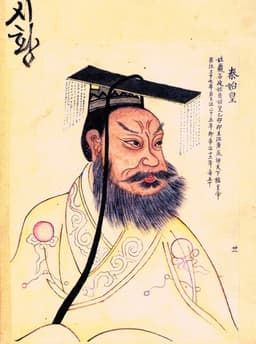
Qin Shi Huang
Emperor · Ancient
85.2Total
Basic Information
Born
1814
-259
Died
1864
-210
Era
Modern
Ancient
Nationality
China
China
Occupation
Revolutionary
Emperor
Civilization
Eastern
Eastern
Score Comparison
Military (10%)
67.5
80.0
Political (20%)
54.7
90.0
Influence (20%)
57.2
85.0
Legacy (20%)
50.0
90.0
Leadership (15%)
65.7
78.0
Strategy (15%)
50.0
82.0
TOTAL
56.6
85.2
Hong Xiuquan — Complete Timeline
1851 AD
Proclamation of the Taiping Heavenly KingdomPolitical Action
Hong Xiuquan proclaimed the establishment of the Taiping Heavenly Kingdom in Jintian, Guangxi. He declared himself the Heavenly King and younger brother of Jesus Christ, initiating a rebellion that would become the deadliest civil war in history.
Taiping RebellionState FormationReligion
Impact: global
1853 AD
Capture of NanjingWar◆ Major
Taiping forces under Hong Xiuquan captured Nanjing, making it the capital of the Taiping Heavenly Kingdom. The city was renamed Tianjing (Heavenly Capital) and became the center of Taiping rule for over a decade.
Taiping RebellionConquestCapital
Impact: regional
Implementation of the Land System of the Heavenly DynastyReform◆ Major
Hong Xiuquan promulgated the Land System of the Heavenly Dynasty, which aimed to redistribute land equally among peasants and establish communal ownership. The reform was partially implemented but disrupted by war and internal conflicts.
Taiping RebellionLand ReformSocial Policy
Impact: regionalconstructive
1864 AD
Death in NanjingOther◆ Major
Hong Xiuquan died in Nanjing during the final Qing siege of the city. His death, from illness or suicide, occurred just before the fall of the Taiping capital, leading to the collapse of the rebellion.
Taiping RebellionDeathEnd of Rebellion
Impact: nationaltragic
Qin Shi Huang — Complete Timeline
246 BC
Construction of the Mausoleum and Terracotta ArmyOther◆ Major
Qin Shi Huang commissioned a vast mausoleum complex near Xi'an, guarded by thousands of life-sized terracotta soldiers, horses, and chariots. The project employed hundreds of thousands of workers and reflected his obsession with immortality and imperial power.
Impact: global
230 BC
Conquest of the Six Warring StatesWar
From 230 to 221 BCE, Ying Zheng led the Qin state in a series of campaigns that conquered the Han, Zhao, Wei, Chu, Yan, and Qi states. This unified China under a single ruler for the first time, ending the Warring States period.
Impact: global
221 BC
Standardization of Writing, Currency, and MeasurementsReform◆ Major
Qin Shi Huang ordered the standardization of Chinese script, currency, and weights and measures across the unified empire. This facilitated administration, trade, and cultural integration, laying a foundation for future dynasties.
Impact: globalconstructive
Proclamation of the Qin DynastyPolitical Action
After conquering the last independent state, Ying Zheng declared himself Shi Huangdi (First Emperor), founding the Qin Dynasty. He adopted a new title to signify his supreme authority and initiated centralized imperial rule.
Impact: global
214 BC
Initiation of the Great Wall ConstructionOther◆ Major
Qin Shi Huang ordered the connection and extension of existing northern fortifications to create a unified defensive wall against nomadic Xiongnu raids. This project involved massive conscripted labor and became the precursor to the later Great Wall.
Impact: regional
213 BC
Burning of Books and Burying of ScholarsPolitical Action◆ Major
On the advice of Li Si, Qin Shi Huang ordered the burning of historical records and philosophical texts not aligned with Legalist doctrine. He also had 460 Confucian scholars buried alive to suppress dissent and consolidate ideological control.
Impact: nationaldestructive
Expert Analysis
hong-xiuquan-vs-qin-shi-huang
# The First Emperor and the Heavenly King: Two Visions of a Unified China
In the winter of 221 BC, a young king of Qin stood before the ruins of the last independent state, declaring himself *Shi Huangdi*—the First Emperor. Two thousand years later, in the summer of 1864, another man who called himself a sovereign lay dead in a burning city, his kingdom crumbling around him. Both sought to remake China. One succeeded so thoroughly that his name became synonymous with empire itself. The other failed so completely that his memory lingers as a cautionary tale. What separates triumph from catastrophe? The answer lies not merely in their ambitions, but in the worlds that shaped them.
Origins
Ying Zheng was born in 259 BC into a violent age. The Warring States period had torn China apart for centuries—seven kingdoms locked in ceaseless conflict, each vying for supremacy. His father was a Qin prince, his mother a former concubine, and his childhood was spent as a hostage in the Zhao court. This precarious existence forged a mind both ruthless and calculating. He learned early that trust was a weakness, that power flowed from the sword, and that survival demanded absolute control.
Hong Xiuquan entered the world in 1814, a child of the Hakka minority in Guangdong province. The Qing dynasty, though decaying, still ruled. China was battered by opium wars, humiliated by foreign powers, and plagued by famine. Hong was a scholar who failed the imperial examinations four times—a devastating rejection in a society where civil service exams were the only path to respect. In 1837, during a feverish illness, he had visions: he was the younger brother of Jesus Christ, sent to purge China of idolatry and restore true worship. Where Qin Shi Huang saw chaos and responded with steel, Hong saw sin and responded with scripture.
Rise to Power
Qin Shi Huang’s ascent was methodical. He inherited the Qin throne at thirteen, but real power came when he crushed a rebellion by his mother’s lover, Lao Ai, in 238 BC. From there, he unleashed a campaign of conquest that was terrifying in its efficiency. Between 230 and 221 BC, his armies devoured the Han, Zhao, Wei, Chu, Yan, and Qi states one by one. Each victory was not just military but psychological—he deployed spies, bribed ministers, and sowed discord before his soldiers ever marched. By the time he proclaimed the Qin dynasty, he had achieved what no ruler before him had: a unified China.
Hong Xiuquan’s rise was born of desperation. In 1851, he gathered a ragtag army of peasants, miners, and disaffected Hakka in Jintian, Guangxi, and proclaimed the Taiping Heavenly Kingdom. He declared himself the Heavenly King, sent by God to overthrow the Manchu Qing. What began as a fringe millenarian cult exploded into a rebellion that swept through southern China. By 1853, his forces had captured Nanjing, a city of immense strategic and symbolic importance. He renamed it the Heavenly Capital and settled in, convinced that divine favor would secure his reign.
Leadership & Governance
Qin Shi Huang governed with a vision that was both brutal and brilliant. He standardized writing, currency, and weights and measures across the empire, creating a unified administrative system that would survive for two millennia. He ordered the construction of roads and canals, linking his realm into a coherent whole. He initiated the Great Wall, connecting existing fortifications into a single barrier against northern nomads. Yet his methods were merciless: he burned books that contradicted his ideology and buried alive scholars who resisted. His legalist philosophy demanded absolute obedience, and his punishments were swift and severe.
Hong Xiuquan governed through revelation. He issued the Land System of the Heavenly Dynasty in 1853, promising to redistribute land equally among peasants—a radical vision that resonated with millions of starving farmers. He banned opium, alcohol, and prostitution, and promoted gender equality, allowing women to serve as soldiers and officials. But his rule was undermined by his own delusions. He withdrew into his palace, claiming direct communication with God, while his generals fought among themselves. He never built lasting institutions, never standardized anything beyond his own theology. His kingdom was a cult, not a state.
Triumph & Tragedy
Qin Shi Huang’s greatest triumph was the creation of a unified China that, despite periodic fragmentation, would endure as a cultural and political entity. His mausoleum, guarded by the Terracotta Army of thousands of life-sized soldiers, stands as a testament to his ambition—a man who sought to command even the afterlife. But his tragedy was his obsession with immortality. He consumed mercury elixirs prescribed by alchemists, which slowly poisoned him. He died in 210 BC at age 49, and his empire, built on fear, collapsed within three years of his death.
Hong Xiuquan’s triumph was his ability to ignite a rebellion that, at its peak, controlled vast swaths of China and threatened the Qing dynasty itself. The Taiping Rebellion remains one of the deadliest conflicts in human history, with casualties estimated at 20 to 30 million. But his tragedy was his isolation. As Qing forces tightened the siege on Nanjing in 1864, Hong refused to flee, insisting that God would save him. He died in June of that year—from illness or suicide, accounts differ—just weeks before the city fell. His body was mutilated and burned by Qing soldiers.
Character & Destiny
Qin Shi Huang was paranoid, brilliant, and relentless. He survived assassination attempts, purged his own ministers, and never trusted anyone completely. His personality was forged in the crucible of war, and his decisions reflected a cold logic: unity was worth any cost. He understood that power required not just conquest but structure—laws, scripts, roads—that would outlast any single ruler.
Hong Xiuquan was charismatic, deluded, and ultimately paralyzed. He believed he was chosen by God, which gave him the confidence to lead millions but also the blindness to see reality. His personality was shaped by rejection and revelation, not statecraft. He could inspire devotion but could not build bureaucracy. He could ignite a fire but could not control it.
Legacy
Qin Shi Huang’s legacy is foundational. Every Chinese emperor who followed—the Han, Tang, Ming, and Qing—ruled within the framework he created. The Great Wall, the standardized script, the concept of a unified China—all trace back to him. He is remembered as both a unifier and a tyrant, a figure of awe and dread. His tomb remains unopened, a mystery that still captivates the world.
Hong Xiuquan’s legacy is tragic. The Taiping Rebellion devastated China, weakening the Qing dynasty and paving the way for foreign incursions and eventual revolution. But his radical ideas—land reform, gender equality, anti-imperialism—resonated with later movements, from the Nationalists to the Communists. He is remembered as a madman or a prophet, depending on who tells the story. His Heavenly Kingdom vanished, but its echoes remain.
Conclusion
Two men, two centuries, two Chinas. Qin Shi Huang triumphed because he understood that unity demands not just faith but institutions—laws that bind, scripts that communicate, roads that connect. Hong Xiuquan failed because he believed that faith alone could remake the world. The First Emperor built a machine; the Heavenly King lit a fire. Both burned, but only one left behind a structure that could withstand the ashes. In the end, history judges not by the purity of vision but by the durability of what is built. And that, perhaps, is the hardest lesson of all.
Rankings
🥇
Qin Shi HuangLeader
Mil: 80.0Pol: 90.0Inf: 85.0
85.2
🥈
Hong Xiuquan
Mil: 67.5Pol: 54.7Inf: 57.2
56.6
+28.6 behind
How This Comparison Works
Algorithm
Each figure is scored on 6 dimensions (0—100 scale) based on structured historical data: Military (10%), Political (20%), Influence (20%), Legacy (20%), Leadership (15%), Strategy (15%). The weighted total produces the final ranking.
Data Sources
Scores are computed from structured sub-indicators in the database. Scale factors adjust for era (Ancient ×0.85, Modern ×1.0) and civilization size (Eastern ×1.05, Other ×0.80) to account for differences in population and military scale.
Maximum 3 Figures
Comparisons are limited to 2—3 figures to ensure readability and statistical meaningfulness.
Error Margins
±5 points per dimension — Sub-scores are derived from historical records with inherent uncertainty. Two figures within 5 points on a dimension should be considered roughly equivalent in that area.
Total Score Accuracy
±3 points overall — The weighted combination of 6 dimensions produces a total score with approximately ±3 points of uncertainty. Differences of less than 3 points are not statistically significant— the figures are effectively tied.
Known Limitations
- Historical records are incomplete and uneven across civilizations
- Figures from oral-tradition societies may be underrepresented
- Occupation labels can misclassify multi-role figures
- Scores measure capability and impact, not moral character
- Quantitative scoring is a comparison tool, not absolute truth
Capability Radar
Military (10%) — Battles & Warfare
Battles
70
85
Win Rate
60
90
Expansion
80
90
Political (20%) — Governance & Reform
Reform
85
95
Diplomacy
30
75
Economy
40
90
Influence (20%) — Cultural & Global Reach
Cultural
60
95
Global
55
85
Legacy (20%) — Historical Impact
Historical
70
95
Longevity
50
95
Leadership (15%) — Power & Stability
Tenure
65
70
Stability
20
65
Strategy (15%) — Tactics & Innovation
Strategy
65
85
Tactics
55
80
Reform
75
95
Similar Comparisons
Comments & Discussion
QINOCRATOR6/17/2026
You revisionists keep trying to sanitize Qin Shi Huang, but the guy literally buried 460 scholars alive for disagreeing with him and forced millions into slave labor for his tomb. Hong was definitely insane, but at least his Taiping Rebellion mobilized millions who actually believed in his cause. Comparing the two is like comparing terminators—one was just better funded and had better timing. Qin was totalitarian efficiency; Hong was populist chaos. Pick your poison.