Loading...
Hongwu Emperor vs Julius Caesar
Julius Caesar leads by 10.8 pts · 2 figures compared
…
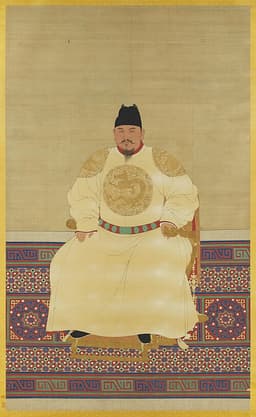
Hongwu Emperor
Emperor · Medieval
72.0Total

Julius Caesar
General · Ancient
82.8Total
Basic Information
Born
1328
-100
Died
1398
-44
Era
Medieval
Ancient
Nationality
China
Roman Republic
Occupation
Emperor
General
Civilization
Eastern
Western
Score Comparison
Military (10%)
85.0
88.0
Political (20%)
78.0
78.0
Influence (20%)
68.0
85.0
Legacy (20%)
65.0
82.0
Leadership (15%)
78.0
80.0
Strategy (15%)
68.0
85.0
TOTAL
72.0
82.8
Hongwu Emperor — Complete Timeline
1368 AD
Capture of Dadu (Beijing)War◆ Major
Ming forces under Xu Da captured the Yuan capital of Dadu (modern Beijing). The last Yuan emperor fled to the steppes. This conquest ended Mongol rule in China proper and solidified Ming control over the northern heartland.
Yuan Dynasty FallBeijingMilitary Campaign
Impact: national
Agrarian Reforms and Land RedistributionReform◆ Major
Hongwu implemented land surveys and redistributed land from large estates to peasant farmers. He reduced taxes, promoted irrigation projects, and encouraged cultivation of wasteland. These policies revived agriculture after decades of war and famine.
Land ReformAgriculturePeasant Welfare
Impact: nationalprogressive
Founding of the Ming DynastyPolitical Action
Zhu Yuanzhang proclaimed himself the Hongwu Emperor in Nanjing, founding the Ming dynasty. He led rebel forces to expel the Mongol Yuan dynasty from China, restoring Han Chinese rule after nearly a century of foreign domination.
Dynasty FoundingHan RestorationMing Dynasty
Impact: globalconstructive
1380 AD
Execution of Hu Weiyong and Purge of OfficialsPolitical Action◆ Major
Hongwu accused Chancellor Hu Weiyong of treason and had him executed. This triggered a massive purge that killed tens of thousands of officials and their families. The emperor then abolished the position of chancellor, centralizing all power in his own hands.
PurgeCentralizationPolitical Violence
Impact: nationaldestructive
1382 AD
Establishment of the Jinyiwei (Imperial Guard)Political Action◆ Major
Hongwu created the Jinyiwei, a secret police force under his direct control. They spied on officials, investigated corruption, and suppressed dissent. This institution became a tool of political repression, executing thousands during purges.
Secret PoliceRepressionPolitical Control
Impact: nationaldestructive
Julius Caesar — Complete Timeline
58 BC
Gallic WarsWar◆ Major
Caesar, as proconsul of Gaul, launched a series of campaigns that conquered all of Gaul (modern France, Belgium, and parts of Switzerland). He fought numerous battles, including against the Helvetii, the Belgae, and the Gallic chieftain Vercingetorix. The wars brought immense wealth and a loyal army to Caesar.
Gallic WarsConquestRoman Expansion
Impact: regional
49 BC
Crossing the RubiconPolitical Action◆ Major
Caesar led Legio XIII across the Rubicon River into Italy, defying the Roman Senate's order to disband his army. This act triggered a civil war against Pompey and the Optimates, ultimately leading to Caesar's dictatorship and the end of the Roman Republic.
Roman Civil WarEnd of RepublicPower Struggle
Impact: global
48 BC
Battle of PharsalusWar◆ Major
Caesar's outnumbered army defeated the larger forces of Pompey the Great at Pharsalus in Greece. Caesar's tactical use of a reserve line to counter Pompey's cavalry charge proved decisive. Pompey fled to Egypt, where he was assassinated, leaving Caesar as the undisputed master of the Roman world.
Roman Civil WarBattleDecisive Victory
Impact: regional
44 BC
Appointment as Dictator for LifePolitical Action◆ Major
The Roman Senate appointed Caesar dictator perpetuo (dictator for life), granting him unprecedented personal power. This move concentrated military, legislative, and judicial authority in one person, effectively ending the Roman Republic's traditional system of checks and balances and alarming many senators.
DictatorshipEnd of RepublicPower Consolidation
Impact: regionaldestructive
Assassination on the Ides of MarchPolitical Action◆ Major
A group of Roman senators, led by Marcus Junius Brutus and Gaius Cassius Longinus, stabbed Caesar to death at a meeting of the Senate in the Theatre of Pompey. The assassination was intended to restore the Republic, but instead triggered another civil war that led to the rise of the Roman Empire.
AssassinationRoman PoliticsEnd of Republic
Impact: globaldestructive
Expert Analysis
hongwu-emperor-vs-julius-caesar
### The Man Who Crossed the River and the Man Who Built the Wall
On a cool January morning in 49 BCE, a Roman general stopped his army at a small, unremarkable stream called the Rubicon. To cross was to declare war on the Republic. To turn back was to accept exile and political oblivion. Julius Caesar, a patrician with debts and a burning ambition, made his choice. Nearly fourteen centuries later and half a world away, a Chinese peasant named Zhu Yuanzhang watched his rebel armies swarm the Mongol capital of Dadu, the modern Beijing. He had risen from begging in the streets to become the first emperor of a new dynasty, and his first instinct was not to cross a river, but to build a wall—a wall of laws, secret police, and absolute control. Both men reshaped their worlds, but their paths, their natures, and their endings could not have been more different. Why did the Roman conqueror die on the Senate floor while the Chinese peasant died in his bed, surrounded by a dynasty he had founded?
### Origins: The Patrician and the Peasant
Gaius Julius Caesar was born in 100 BCE into one of Rome’s oldest patrician families, though one that had fallen from political prominence. His world was a Republic tearing itself apart: a Senate of aristocrats, a mob of citizens, and generals who commanded personal armies. Caesar’s aunt had married the populist general Marius, and his own wife was the daughter of Marius’ rival Cinna. From childhood, he breathed the air of faction, conspiracy, and civil war. His education was Greek philosophy and rhetoric; his playground was the Forum.
Zhu Yuanzhang, born in 1328, experienced a different kind of chaos. His family were tenant farmers in a China ravaged by plague, famine, and the collapsing Mongol Yuan dynasty. By the time he was sixteen, his parents and elder brother had died of starvation. He became a beggar, then a monk, then a wanderer. He could barely read. But what he lacked in letters, he possessed in raw survival instinct. He knew what it was to watch people die for a handful of rice. That knowledge would never leave him.
### Rise to Power: The Senate and the Sword
Caesar’s rise was a masterpiece of calculated risk. He climbed the Roman political ladder—quaestor, aedile, praetor—buying popularity with borrowed money and dazzling the public with gladiatorial games. He secured the governorship of Gaul and, between 58 and 50 BCE, conquered a territory larger than Italy itself. His *Commentaries* turned military dispatches into propaganda. He became rich, beloved by his legions, and feared by his rivals in the Senate. When ordered to disband his army and return to Rome as a private citizen, he chose war.
Zhu Yuanzhang’s rise was slower, grittier, and far more brutal. He joined a rebel sect called the Red Turbans, where his military talent and organizational skill lifted him above illiterate commanders. He did not conquer a foreign land; he fought to reclaim his own. His key turning point came in 1368, when he proclaimed himself the Hongwu Emperor in Nanjing, then sent his general Xu Da to capture Dadu. The Mongol emperor fled. Zhu did not just defeat an enemy—he restored Han Chinese rule after nearly a century of foreign domination. His legitimacy was not based on lineage, but on liberation.
### Leadership & Governance: Reformer and Tyrant
As dictator of Rome, Caesar governed with a blend of clemency and radical reform. He pardoned former enemies, extended Roman citizenship to Gauls, reformed the calendar, and planned public works. His rule was swift, efficient, and merciful by Roman standards. But he made one fatal miscalculation: he believed that power could be won by generosity. He spared the men who would kill him.
Hongwu governed with the opposite philosophy. After executing his chancellor Hu Weiyong in 1380 on charges of treason, he launched a purge that killed tens of thousands of officials. He established the Jinyiwei, a secret police force that spied on every corner of his empire. He forbade eunuchs from holding power, centralized the military, and redistributed land to peasants. His reforms were sweeping—agrarian surveys, tax reductions, a new legal code—but they were enforced by terror. He trusted no one, not even his own generals. Where Caesar believed in forgiveness, Hongwu believed in fear.
### Triumph & Tragedy: The Ides and the Iron Fist
Caesar’s greatest triumph was also his tragedy. By 44 BCE, he had been declared dictator for life. He had conquered Gaul, defeated his rival Pompey, and stood at the summit of the known world. But the Republic’s traditions could not contain a monarch. On the Ides of March, a conspiracy of senators stabbed him twenty-three times. His body fell at the base of a statue of his old enemy, Pompey. The Republic died with him, though it took a civil war to bury it.
Hongwu’s tragedy was quieter but no less profound. He succeeded in everything he set out to do: he reunited China, drove out the Mongols, and established a dynasty that would last nearly three centuries. But his paranoia consumed him. He executed his own prime minister, purged his own generals, and created a secret police state that stifled the very creativity his reforms might have unleashed. He died in 1398 at the age of seventy, having outlived his designated heir and leaving behind a court paralyzed by fear.
### Character & Destiny: The Gambler and the Builder
Caesar was a gambler. He staked everything on the crossing of the Rubicon, on the gamble of clemency, on the belief that his personal charm could overcome political institutions. He was brilliant, charming, and reckless. He loved the applause of the crowd and the adoration of his soldiers. His fatal flaw was not arrogance, but a kind of aristocratic naivety—he believed that his enemies would see reason.
Hongwu was a builder. Every stone of the Ming dynasty was laid by his hand, and every crack was sealed with blood. He was suspicious, methodical, and ruthless. He had seen how quickly the world could take everything from a man, and he was determined that no one would take anything from him. His fatal flaw was not naivety but paranoia—he believed that his enemies were always at the gate, even when they were his own ministers.
### Legacy: The Empire and the Dynasty
Caesar’s legacy is the Roman Empire itself. His adopted heir, Octavian, became Augustus, the first emperor. The title “Caesar” became synonymous with imperial power, surviving in the German *Kaiser* and the Russian *Tsar*. His writings shaped Western military thought for two millennia. He is remembered as a man who changed the world, but also as a warning: that the man who breaks the rules to save the state may end up destroying it.
Hongwu’s legacy is the Ming dynasty, one of the most stable and prosperous in Chinese history. His land reforms lifted millions from hunger. His legal code shaped Chinese governance for centuries. But he is also remembered as a tyrant who killed more of his own officials than his enemies. In Chinese historical memory, he is a hero who restored Han glory and a monster who drowned the country in blood.
### Conclusion: Two Rivers, Two Walls
Caesar crossed the Rubicon and found his empire. Hongwu built a wall around his throne and found his dynasty. Both men achieved the impossible—a patrician who became a god, a peasant who became a king. But their stories ask a question that has no easy answer: Is it better to die loved by your enemies, or to live feared by your friends? Caesar chose the first and was stabbed. Hongwu chose the second and died in peace. Yet it is Caesar, not Hongwu, whose name still rings in the ears of the world. Perhaps that is the final irony: the man who gambled everything and lost won immortality, while the man who built everything and won was buried in the silence of his own dread.
Rankings
🥇
Julius CaesarLeader
Mil: 88.0Pol: 78.0Inf: 85.0
82.8
🥈
Hongwu Emperor
Mil: 85.0Pol: 78.0Inf: 68.0
72.0
+10.8 behind
How This Comparison Works
Algorithm
Each figure is scored on 6 dimensions (0—100 scale) based on structured historical data: Military (10%), Political (20%), Influence (20%), Legacy (20%), Leadership (15%), Strategy (15%). The weighted total produces the final ranking.
Data Sources
Scores are computed from structured sub-indicators in the database. Scale factors adjust for era (Ancient ×0.85, Modern ×1.0) and civilization size (Eastern ×1.05, Other ×0.80) to account for differences in population and military scale.
Maximum 3 Figures
Comparisons are limited to 2—3 figures to ensure readability and statistical meaningfulness.
Error Margins
±5 points per dimension — Sub-scores are derived from historical records with inherent uncertainty. Two figures within 5 points on a dimension should be considered roughly equivalent in that area.
Total Score Accuracy
±3 points overall — The weighted combination of 6 dimensions produces a total score with approximately ±3 points of uncertainty. Differences of less than 3 points are not statistically significant— the figures are effectively tied.
Known Limitations
- Historical records are incomplete and uneven across civilizations
- Figures from oral-tradition societies may be underrepresented
- Occupation labels can misclassify multi-role figures
- Scores measure capability and impact, not moral character
- Quantitative scoring is a comparison tool, not absolute truth
Capability Radar
Military (10%) — Battles & Warfare
Battles
85
95
Win Rate
90
92
Expansion
80
97
Political (20%) — Governance & Reform
Reform
90
90
Diplomacy
70
85
Economy
85
82
Influence (20%) — Cultural & Global Reach
Cultural
75
88
Global
70
94
Legacy (20%) — Historical Impact
Historical
85
95
Longevity
80
96
Leadership (15%) — Power & Stability
Tenure
85
75
Stability
80
60
Strategy (15%) — Tactics & Innovation
Strategy
85
94
Tactics
80
96
Reform
75
88
Similar Comparisons
Comments & Discussion
No comments yet. Be the first to share your thoughts!