Loading...
Hongwu Emperor vs Qin Shi Huang
Qin Shi Huang leads by 13.2 pts · 2 figures compared
…
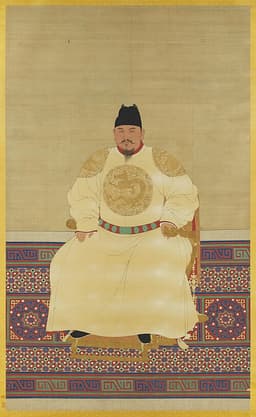
Hongwu Emperor
Emperor · Medieval
72.0Total
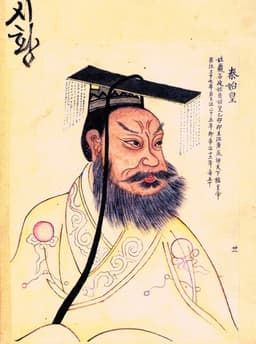
Qin Shi Huang
Emperor · Ancient
85.2Total
Basic Information
Born
1328
-259
Died
1398
-210
Era
Medieval
Ancient
Nationality
China
China
Occupation
Emperor
Emperor
Civilization
Eastern
Eastern
Score Comparison
Military (10%)
85.0
80.0
Political (20%)
78.0
90.0
Influence (20%)
68.0
85.0
Legacy (20%)
65.0
90.0
Leadership (15%)
78.0
78.0
Strategy (15%)
68.0
82.0
TOTAL
72.0
85.2
Hongwu Emperor — Complete Timeline
1368 AD
Capture of Dadu (Beijing)War◆ Major
Ming forces under Xu Da captured the Yuan capital of Dadu (modern Beijing). The last Yuan emperor fled to the steppes. This conquest ended Mongol rule in China proper and solidified Ming control over the northern heartland.
Yuan Dynasty FallBeijingMilitary Campaign
Impact: national
Agrarian Reforms and Land RedistributionReform◆ Major
Hongwu implemented land surveys and redistributed land from large estates to peasant farmers. He reduced taxes, promoted irrigation projects, and encouraged cultivation of wasteland. These policies revived agriculture after decades of war and famine.
Land ReformAgriculturePeasant Welfare
Impact: nationalprogressive
Founding of the Ming DynastyPolitical Action
Zhu Yuanzhang proclaimed himself the Hongwu Emperor in Nanjing, founding the Ming dynasty. He led rebel forces to expel the Mongol Yuan dynasty from China, restoring Han Chinese rule after nearly a century of foreign domination.
Dynasty FoundingHan RestorationMing Dynasty
Impact: globalconstructive
1380 AD
Execution of Hu Weiyong and Purge of OfficialsPolitical Action◆ Major
Hongwu accused Chancellor Hu Weiyong of treason and had him executed. This triggered a massive purge that killed tens of thousands of officials and their families. The emperor then abolished the position of chancellor, centralizing all power in his own hands.
PurgeCentralizationPolitical Violence
Impact: nationaldestructive
1382 AD
Establishment of the Jinyiwei (Imperial Guard)Political Action◆ Major
Hongwu created the Jinyiwei, a secret police force under his direct control. They spied on officials, investigated corruption, and suppressed dissent. This institution became a tool of political repression, executing thousands during purges.
Secret PoliceRepressionPolitical Control
Impact: nationaldestructive
Qin Shi Huang — Complete Timeline
246 BC
Construction of the Mausoleum and Terracotta ArmyOther◆ Major
Qin Shi Huang commissioned a vast mausoleum complex near Xi'an, guarded by thousands of life-sized terracotta soldiers, horses, and chariots. The project employed hundreds of thousands of workers and reflected his obsession with immortality and imperial power.
Impact: global
230 BC
Conquest of the Six Warring StatesWar
From 230 to 221 BCE, Ying Zheng led the Qin state in a series of campaigns that conquered the Han, Zhao, Wei, Chu, Yan, and Qi states. This unified China under a single ruler for the first time, ending the Warring States period.
Impact: global
221 BC
Standardization of Writing, Currency, and MeasurementsReform◆ Major
Qin Shi Huang ordered the standardization of Chinese script, currency, and weights and measures across the unified empire. This facilitated administration, trade, and cultural integration, laying a foundation for future dynasties.
Impact: globalconstructive
Proclamation of the Qin DynastyPolitical Action
After conquering the last independent state, Ying Zheng declared himself Shi Huangdi (First Emperor), founding the Qin Dynasty. He adopted a new title to signify his supreme authority and initiated centralized imperial rule.
Impact: global
214 BC
Initiation of the Great Wall ConstructionOther◆ Major
Qin Shi Huang ordered the connection and extension of existing northern fortifications to create a unified defensive wall against nomadic Xiongnu raids. This project involved massive conscripted labor and became the precursor to the later Great Wall.
Impact: regional
213 BC
Burning of Books and Burying of ScholarsPolitical Action◆ Major
On the advice of Li Si, Qin Shi Huang ordered the burning of historical records and philosophical texts not aligned with Legalist doctrine. He also had 460 Confucian scholars buried alive to suppress dissent and consolidate ideological control.
Impact: nationaldestructive
Expert Analysis
hongwu-emperor-vs-qin-shi-huang
# The First Emperor and the Peasant King
On a winter morning in 221 BC, Ying Zheng stood before the assembled nobles of a conquered China and proclaimed himself *Shi Huangdi*—the First Emperor. The son of a king, he had inherited a war machine and used it to crush six rival states. More than fifteen hundred years later, in 1368, a man named Zhu Yuanzhang—born in a mud-walled hut to parents who would die of starvation—climbed the throne of Nanjing as the Hongwu Emperor, founder of the Ming dynasty. One was born to rule; the other seized rule from the ashes of famine and rebellion. Yet both men reshaped China with iron hands, and both left legacies that still haunt the Middle Kingdom. Why did the First Emperor's dynasty collapse within fifteen years of his death, while Hongwu's Ming endured for nearly three centuries? The answer lies not in their ambitions, which were equally vast, but in the soil from which they grew.
Origins
Qin Shi Huang entered the world in 259 BC as Ying Zheng, the son of a prince who had been a hostage in the state of Zhao. His childhood was spent in a court of knives and whispers. His father died when he was twelve, and the boy king grew up surrounded by scheming eunuchs and ambitious ministers. The Warring States period had torn China apart for two centuries; every ruler dreamed of unification, but only the Qin state had forged the legalist machinery to achieve it. Ying Zheng absorbed this cold philosophy: that human nature was corrupt, that law must be harsh, and that the state's power was absolute.
Zhu Yuanzhang, born in 1328, knew no such privilege. His family were tenant farmers in what is now Anhui province. When he was sixteen, a plague and a drought killed his father, mother, and eldest brother within weeks. He buried them with his own hands, using borrowed cloth for shrouds. To survive, he entered a Buddhist monastery as a beggar-monk, then watched it burn during a rebel uprising. He spent years wandering as a homeless mendicant, learning the desperation of the poor and the cruelty of the powerful. Where Qin Shi Huang was forged in the cold steel of legalist theory, Hongwu was forged in the raw fire of hunger and war.
Rise to Power
Ying Zheng's path was linear and brutal. At twenty-two, he crushed a rebellion by his own chancellor, Lü Buwei, and seized full control of the Qin state. From 230 to 221 BC, he unleashed his generals on the six remaining kingdoms, one by one. He did not lead armies himself—his military score of 80 reflects a commander who delegated to brilliant subordinates like Wang Jian and Meng Tian—but he orchestrated the campaigns with ruthless precision. When the last king of Qi surrendered, Ying Zheng had conquered all of China before his fortieth birthday.
Zhu Yuanzhang's rise was messier, more human. He joined a rebel army in 1352, not as a leader but as a common soldier. He rose through talent, marrying the general's adopted daughter and taking command after his patron died. For sixteen years, he fought not only the Mongol Yuan dynasty but also rival Chinese warlords. In 1368, at age forty, he proclaimed the Ming dynasty and sent his armies north to capture Dadu (Beijing). The last Mongol emperor fled into the steppes, and Zhu Yuanzhang, the peasant's son, became the Son of Heaven.
Leadership & Governance
Here the two emperors diverged like rivers from a single mountain. Qin Shi Huang governed through terror and uniformity. He standardized writing, currency, and axle widths so that his chariots could roll across every road in the empire. He ordered the burning of all books not related to medicine, agriculture, or divination, and buried 460 scholars alive for criticizing his rule. His legal code was merciless: punishments included castration, amputation, and death by boiling. He believed that only fear could hold his new empire together.
Hongwu also ruled with an iron fist, but his fist remembered the peasant's hand. He redistributed land from wealthy estates to poor farmers, reduced taxes, and punished corrupt officials with flogging and execution. In 1380, he executed his chancellor Hu Weiyong and purged tens of thousands of officials in a paranoid frenzy. He created the Jinyiwei—the "Brocade Guard"—a secret police that spied on every level of government. Yet he also built granaries to prevent famine, established schools in every county, and drafted a legal code that, while harsh, was at least written down and accessible. He understood the suffering of the poor because he had been poor. His reforms were not theoretical; they were survival instincts turned into policy.
Triumph & Tragedy
Qin Shi Huang's greatest triumph was the unification itself—a feat that had eluded every ruler before him. He connected the northern fortifications into the first Great Wall and built a network of roads and canals that tied his empire together. But his tragedy was the fragility of his achievement. Obsessed with immortality, he consumed mercury pills prescribed by alchemists and died at age forty-nine during a tour of his empire. His son, the weak and cruel Qin Er Shi, was overthrown within three years. The Qin dynasty lasted only fifteen years after the First Emperor's death.
Hongwu's greatest triumph was the restoration of Han Chinese rule after a century of Mongol domination. He reunified China and established a dynasty that would last until 1644—276 years. His tragedy was his own paranoia. In his later years, he executed tens of thousands of officials and generals, leaving his successor, his grandson Jianwen, with a decimated bureaucracy that could not resist the rebellion of Hongwu's own son, Zhu Di. The Hongwu Emperor died in 1398, haunted by the ghosts of the men he had killed.
Character & Destiny
Qin Shi Huang was a man of cold vision. He saw China as a machine to be perfected, not a people to be nurtured. His legalist adviser Li Si told him that "the past is not a model for the present," and he believed it utterly. He burned the past to build the future. But his contempt for human life—the forced labor that killed millions building his wall and his mausoleum—meant that no one mourned him. When his dynasty fell, the world barely wept.
Hongwu was a man of burning contradictions. He could weep for a starving peasant and order a corrupt official's tongue torn out in the same hour. He wrote poems about the beauty of farming and the ugliness of power. His peasant origins gave him empathy, but also a deep suspicion of the educated elite who had once looked down on him. He built a system that served the common people, but he also built a cage of surveillance and fear. His character was the Ming dynasty itself: brilliant, brutal, and profoundly human.
Legacy
Qin Shi Huang's legacy is the skeleton of China. The administrative divisions, the standardized script, the very idea of a unified Chinese empire—all of it traces back to him. The Terracotta Army, discovered in 1974, has made him a global icon. But his name is also synonymous with tyranny. He is remembered as a builder and a destroyer, a visionary and a monster.
Hongwu's legacy is the Ming dynasty itself—a golden age of exploration, porcelain, and the Forbidden City. He is remembered as a restorer, the peasant who saved China. But his secret police and his purges also planted seeds of despotism that would flower in later dynasties. He is less famous than Qin Shi Huang in the West, but in China, he is revered as one of the greatest emperors.
Conclusion
Two men, two Chinas. Qin Shi Huang built the empire; Hongwu rebuilt it. One was born to the purple and died in delusion; the other was born in the mud and died in majesty. The First Emperor's dynasty vanished like smoke, but his idea of unity endured. Hongwu's dynasty lasted centuries, but his methods—the secret police, the purges, the paranoia—also endured. Perhaps the deepest difference is this: Qin Shi Huang wanted to conquer time itself, while Hongwu only wanted to conquer hunger. The First Emperor built a mausoleum guarded by an army of clay; the Peasant Emperor built a nation that could feed its people. In the end, the clay soldiers still stand, but the Ming granaries saved millions of lives. Which legacy matters more? The answer depends on whether you are a historian—or a farmer.
Rankings
🥇
Qin Shi HuangLeader
Mil: 80.0Pol: 90.0Inf: 85.0
85.2
🥈
Hongwu Emperor
Mil: 85.0Pol: 78.0Inf: 68.0
72.0
+13.2 behind
How This Comparison Works
Algorithm
Each figure is scored on 6 dimensions (0—100 scale) based on structured historical data: Military (10%), Political (20%), Influence (20%), Legacy (20%), Leadership (15%), Strategy (15%). The weighted total produces the final ranking.
Data Sources
Scores are computed from structured sub-indicators in the database. Scale factors adjust for era (Ancient ×0.85, Modern ×1.0) and civilization size (Eastern ×1.05, Other ×0.80) to account for differences in population and military scale.
Maximum 3 Figures
Comparisons are limited to 2—3 figures to ensure readability and statistical meaningfulness.
Error Margins
±5 points per dimension — Sub-scores are derived from historical records with inherent uncertainty. Two figures within 5 points on a dimension should be considered roughly equivalent in that area.
Total Score Accuracy
±3 points overall — The weighted combination of 6 dimensions produces a total score with approximately ±3 points of uncertainty. Differences of less than 3 points are not statistically significant— the figures are effectively tied.
Known Limitations
- Historical records are incomplete and uneven across civilizations
- Figures from oral-tradition societies may be underrepresented
- Occupation labels can misclassify multi-role figures
- Scores measure capability and impact, not moral character
- Quantitative scoring is a comparison tool, not absolute truth
Capability Radar
Military (10%) — Battles & Warfare
Battles
85
85
Win Rate
90
90
Expansion
80
90
Political (20%) — Governance & Reform
Reform
90
95
Diplomacy
70
75
Economy
85
90
Influence (20%) — Cultural & Global Reach
Cultural
75
95
Global
70
85
Legacy (20%) — Historical Impact
Historical
85
95
Longevity
80
95
Leadership (15%) — Power & Stability
Tenure
85
70
Stability
80
65
Strategy (15%) — Tactics & Innovation
Strategy
85
85
Tactics
80
80
Reform
75
95
Similar Comparisons
Comments & Discussion
LegionOfBronze6/17/2026
Hongwu's peasant roots gave him something Qin never had: trust in people over systems. Sure, both built centralized nightmares, but Qin's legalist iron cage suffocated loyalty—his dynasty died with him. Hongwu built grain levies, tax reforms, and a postal system that *worked* because he knew hunger. Qin threw billions of drafted laborers at a wall; Hongwu rebuilt a nation from famine. That's the difference between a conqueror and a ruler who survived starvation.
黄沙独夫6/17/2026
教科书总把两人并称“暴君”,但朱元璋的屠刀砍向官僚,嬴政的屠刀砍向苍生。洪武四大案杀了十五万人,可明初田赋减了七成、荒地开垦翻倍;秦皇一统后徭役猛增三十倍,修陵墓、驰道、长城,民有菜色。暴政要看效能的——一个让国家活了三百年,一个十五年就亡了。数据会说话,同情心不管用。
SkepticInResidence6/17/2026
The narrative worship here is exhausting. Yes, Hongwu's dynasty lasted longer—but factoring in historical context? Qin united a fractured warzone with no precedents, while Ming had centuries of bureaucratic templates to borrow. Plus, Qin's "collapse" ignores that the Han basically continued his systems. Hongwu's longevity owes more to improved infrastructure and Confucian stability than his personal genius. Let's stop pretending lifespan equals quality—both were brutal authoritarians who killed
铁血考据派6/17/2026
说秦皇不懂经济?秦国商鞅变法就搞了军功授田、统一度量衡,后来更推行二十等爵制激励生产。洪武搞的卫所制度、黄册户籍确实细致,但本质是重农抑商的死循环。秦皇至少允许巴蜀寡妇清开矿,给乌氏倮商人地位——对商业的容忍度反而比明朝高。谁更“保守”还不一定呢,别被烂俗的“暴君比较学”洗脑了。
RicePaddyMarshal6/17/2026
Here's what hagiographers miss: Hongwu's longevity came from literal dirt. His army taxed grain in kind, paid soldiers with farmland, created self-sustaining garrisons—Qin's soldiers got drafted for life and paid in hope. Qin Shi Huang standardized writing, currency, and roads—that's visionary. But his entire system required a demigod at the top. Hongwu built institutions that could survive an idiot son. That's why the Ming lasted: peasant pragmatism beats imperial theater every time.