Loading...
Honorius vs Musaylimah al-Kadhdhab
Musaylimah al-Kadhdhab leads by 3.6 pts · 2 figures compared
…
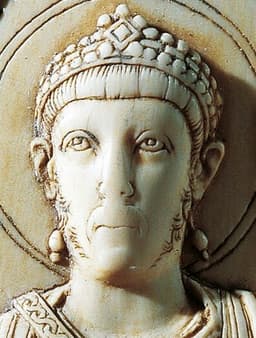
Honorius
Emperor · Ancient
36.3Total

Musaylimah al-Kadhdhab
Emperor · Ancient
39.9Total
Basic Information
Born
384
-580
Died
423
—
Era
Ancient
Ancient
Nationality
Western Roman Empire
Banu Hanifa
Occupation
Emperor
Emperor
Civilization
Western
Middle Eastern
Score Comparison
Military (10%)
10.2
50.0
Political (20%)
32.1
35.0
Influence (20%)
44.8
43.2
Legacy (20%)
38.3
33.3
Leadership (15%)
34.6
49.9
Strategy (15%)
45.0
30.3
TOTAL
36.3
39.9
Honorius — Complete Timeline
408 AD
Execution of StilichoPolitical Action◆ Major
Honorius ordered the execution of his magister militum Stilicho, who had effectively ruled the Western Empire. Stilicho was accused of treason and executed, leading to the massacre of barbarian soldiers' families and weakening Roman defenses.
Court IntrigueStilichoMilitary
Impact: nationaldestructive
410 AD
Sack of Rome by AlaricWar
The Visigoths under King Alaric sacked the city of Rome, the first time in 800 years that the city had fallen to a foreign enemy. Honorius, residing in Ravenna, failed to prevent the sack, which shocked the Roman world.
Barbarian InvasionsVisigothsFall of Rome
Impact: globaltragic
Loss of BritainPolitical Action◆ Major
Honorius wrote to the cities of Britain telling them to look to their own defense, effectively ending Roman rule in Britain. This withdrawal allowed Anglo-Saxon settlement and the formation of early medieval kingdoms.
BritainRoman WithdrawalAnglo-Saxons
Impact: regional
Musaylimah al-Kadhdhab — Complete Timeline
632 BC
Battle of YamamaWar
Musaylimah led his forces against the Muslim army commanded by Khalid ibn al-Walid. The battle was a decisive Muslim victory; Musaylimah was killed in the fighting. This defeat ended the most serious rebellion of the Ridda Wars.
Ridda WarsBattleDeath
Impact: regionaltragic
610 BC
Proclaimed prophethood in YamamaPolitical Action◆ Major
Musaylimah declared himself a prophet in the region of Yamama, claiming to share prophethood with Muhammad. He gained significant support from the Banu Hanifa tribe, challenging the authority of the nascent Islamic state in Medina.
Ridda WarsFalse ProphetBanu Hanifa
Impact: regionaldestructive
Expert Analysis
Origins
Honorius (born 384 AD) was the younger son of Emperor Theodosius I, raised in the imperial court of the Eastern Roman Empire. His early life was marked by privilege and isolation, with little military or administrative training. Upon his father's death in 395 AD, the Roman Empire was divided: Honorius became Western Emperor at age 11, while his brother Arcadius ruled the East. Honorius was heavily reliant on advisors, particularly the general Stilicho, who acted as regent and defender of the West.
Musaylimah (born c. 580 AD) was a member of the Banu Hanifa tribe in the Yamama region of central Arabia. He was known as a charismatic leader and orator, and his tribe was influential in the area. Unlike Honorius, Musaylimah rose to prominence through his own efforts, leveraging his rhetorical skills and tribal connections. He was initially a contemporary of the Prophet Muhammad, and his tribe had sent a delegation to Muhammad in 631 AD, ostensibly converting to Islam. However, after Muhammad's death in 632 AD, Musaylimah declared himself a prophet, claiming to have received revelations that paralleled the Quran.
Rise to Power
Honorius became emperor at age 11, but his real rise to power was passive: he inherited the throne. His early reign was dominated by Stilicho, who led campaigns against the Visigoths and other barbarian groups. Honorius's first major independent decision came in 408 AD when he ordered the execution of Stilicho, believing false rumors of treason. This act removed the West's most capable general, leading to a rapid decline in imperial control. Honorius then failed to negotiate with Alaric, the Visigothic king, precipitating the sack of Rome in 410 AD. After that, Honorius retreated to Ravenna, effectively ceding control of much of the West to barbarian generals.
Musaylimah's rise was more dynamic. After Muhammad's death, many Arabian tribes rebelled against the nascent Islamic state, including the Banu Hanifa. Musaylimah capitalized on this, proclaiming prophethood and gaining followers by claiming to share divine revelations. He secured support from his tribe and neighboring tribes, building an army of around 40,000 men. He sent a letter to the new Caliph Abu Bakr, demanding recognition as a co-prophet. Abu Bakr refused and launched a campaign to suppress the rebellion. Musaylimah's forces clashed with Muslim armies in early 633 AD, culminating in the Battle of Yamama.
Leadership & Governance
Honorius's leadership was passive and reactive. He delegated authority to generals like Stilicho and later Constantius, but failed to provide strategic direction. His governance was marked by inaction: during the sack of Rome, he reportedly was more concerned about his pet chickens. He implemented no major reforms and allowed the Western Empire to fragment. His military score of 10.2 reflects his complete lack of military involvement; he never led an army. Politically, he scored 32.1, showing some ability to maintain power through alliances with barbarian generals, but ultimately he lost control of vast territories.
Musaylimah, in contrast, was an active leader. He organized his forces, appointed commanders, and led his army at Yamama. His military score of 50.0 indicates moderate competence, as he managed to inflict heavy casualties on the Muslims before his death. Politically, he scored 35.0, demonstrating skill in rallying tribes and creating a religious movement. However, his governance was limited to his own region; he never administered a state. His leadership score of 49.9 shows he was a charismatic figure who inspired loyalty, but his strategic score of 30.3 reveals poor tactical decisions that led to his defeat.
Triumph & Tragedy
Honorius's greatest triumph was surviving as emperor for 28 years (395–423 AD) despite the empire's collapse around him. He managed to preserve the imperial title and pass it to his nephew Valentinian III. However, his greatest failure was the sack of Rome in 410 AD, a symbolic catastrophe that shattered the myth of Roman invincibility. He also lost Britain, Spain, and North Africa to barbarians. His reign saw the decline of the Western Empire from which it never recovered. His legacy score of 38.3 reflects his role as a symbol of imperial decay.
Musaylimah's greatest success was uniting the Banu Hanifa and other tribes into a formidable force that challenged the early Islamic state. At the Battle of Yamama, his forces initially pushed back the Muslims, killing many companions of the Prophet. However, his tragedy was his death in the same battle, ending his movement. His legacy is overwhelmingly negative: he is remembered as 'al-Kadhdhab' (the Liar) in Islamic tradition. His influence score of 43.2 is moderate because his rebellion forced the Muslims to consolidate power, but his movement was extinguished.
Character & Destiny
Honorius was characterized by indecision and detachment. He relied on advisors and was easily swayed, leading to disastrous decisions like Stilicho's execution. His personality was that of a weak ruler who preferred comfort over responsibility. His destiny was to preside over the fall of the Western Roman Empire, a role he was ill-suited for. Historians often view him as a tragic figure, but also as a failure of leadership.
Musaylimah was bold, charismatic, and ambitious. He saw a power vacuum after Muhammad's death and acted decisively. His claims of prophethood were likely calculated to gain political power. His destiny was to be defeated and killed, becoming a cautionary tale in Islam. His character—overconfident and underestimating the Muslims' resolve—led to his downfall. He scored 49.9 in leadership, but his overall total of 39.9 is dragged down by low strategy (30.3).
Legacy
Honorius's legacy is overwhelmingly negative: he is remembered as the emperor who lost Rome. The sack of Rome in 410 AD became a symbol of the empire's decline, and his inaction is often cited as a cause. However, his long reign allowed the Western Empire to persist in name, and his administrative decisions, like the withdrawal from Britain, had lasting effects. His influence score of 44.8 reflects the enduring impact of his failures on Western history.
Musaylimah's legacy is also negative, but more limited. In Islamic history, he is the archetypal false prophet, and his defeat solidified the Muslim community. The Battle of Yamama was a turning point in the Ridda Wars, and the massive loss of Quran reciters there prompted the compilation of the Quran into a single book. Thus, his rebellion indirectly contributed to the preservation of Islam's holy text. His legacy score of 33.3 is lower than Honorius's, but his impact on Islamic history is significant.
Conclusion
While Musaylimah al-Kadhdhab scores higher overall (39.9 vs. 36.3), Honorius had a far greater impact on history. Honorius's failures led to the collapse of the Western Roman Empire, which reshaped Europe for centuries. Musaylimah's rebellion, while important, was a regional event that was quickly suppressed. Honorius's score of 44.8 in influence and 38.3 in legacy demonstrate his larger footprint in world history. However, Musaylimah's higher military (50.0) and leadership (49.9) scores show that he was a more capable leader in his own right. Ultimately, Honorius's passive incompetence changed the course of history more than Musaylimah's active challenge to Islam. The sack of Rome is a pivotal event; the Battle of Yamama is a footnote. Therefore, Honorius, despite his lower total score, had greater impact.
Rankings
🥇
Musaylimah al-KadhdhabLeader
Mil: 50.0Pol: 35.0Inf: 43.2
39.9
🥈
Honorius
Mil: 10.2Pol: 32.1Inf: 44.8
36.3
+3.6 behind
How This Comparison Works
Algorithm
Each figure is scored on 6 dimensions (0—100 scale) based on structured historical data: Military (10%), Political (20%), Influence (20%), Legacy (20%), Leadership (15%), Strategy (15%). The weighted total produces the final ranking.
Data Sources
Scores are computed from structured sub-indicators in the database. Scale factors adjust for era (Ancient ×0.85, Modern ×1.0) and civilization size (Eastern ×1.05, Other ×0.80) to account for differences in population and military scale.
Maximum 3 Figures
Comparisons are limited to 2—3 figures to ensure readability and statistical meaningfulness.
Error Margins
±5 points per dimension — Sub-scores are derived from historical records with inherent uncertainty. Two figures within 5 points on a dimension should be considered roughly equivalent in that area.
Total Score Accuracy
±3 points overall — The weighted combination of 6 dimensions produces a total score with approximately ±3 points of uncertainty. Differences of less than 3 points are not statistically significant— the figures are effectively tied.
Known Limitations
- Historical records are incomplete and uneven across civilizations
- Figures from oral-tradition societies may be underrepresented
- Occupation labels can misclassify multi-role figures
- Scores measure capability and impact, not moral character
- Quantitative scoring is a comparison tool, not absolute truth
Capability Radar
Military (10%) — Battles & Warfare
Battles
5
15
Win Rate
5
10
Expansion
5
20
Political (20%) — Governance & Reform
Reform
10
5
Diplomacy
10
10
Economy
10
5
Influence (20%) — Cultural & Global Reach
Cultural
10
10
Global
15
5
Legacy (20%) — Historical Impact
Historical
20
15
Longevity
20
5
Leadership (15%) — Power & Stability
Tenure
30
10
Stability
10
5
Strategy (15%) — Tactics & Innovation
Strategy
5
15
Tactics
5
20
Reform
5
5
Similar Comparisons
Comments & Discussion
No comments yet. Be the first to share your thoughts!