Loading...
Hormizd I vs Julius Caesar
Julius Caesar leads by 42.8 pts · 2 figures compared
…
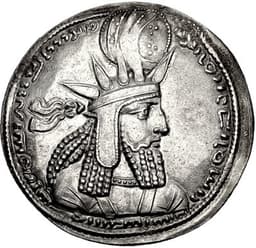
Hormizd I
Emperor · Ancient
40.0Total

Julius Caesar
General · Ancient
82.8Total
Basic Information
Born
270
-100
Died
271
-44
Era
Ancient
Ancient
Nationality
Sasanian Empire
Roman Republic
Occupation
Emperor
General
Civilization
Middle Eastern
Western
Score Comparison
Military (10%)
34.6
88.0
Political (20%)
27.9
78.0
Influence (20%)
42.4
85.0
Legacy (20%)
32.5
82.0
Leadership (15%)
55.3
80.0
Strategy (15%)
53.4
85.0
TOTAL
40.0
82.8
Hormizd I — Complete Timeline
270 AD
Accession to the ThronePolitical Action
Hormizd I succeeded his father Shapur I as king of the Sasanian Empire. His reign was extremely brief, lasting less than one year, and little is known about his policies or actions during this short period.
AccessionShort Reign
Impact: national
271 AD
Death from IllnessOther
Hormizd I died from an illness after ruling for less than a year. His death led to the accession of his brother Bahram I, and the brevity of his reign meant he had no significant impact on the empire.
DeathIllnessShort Reign
Impact: nationaltragic
Julius Caesar — Complete Timeline
58 BC
Gallic WarsWar◆ Major
Caesar, as proconsul of Gaul, launched a series of campaigns that conquered all of Gaul (modern France, Belgium, and parts of Switzerland). He fought numerous battles, including against the Helvetii, the Belgae, and the Gallic chieftain Vercingetorix. The wars brought immense wealth and a loyal army to Caesar.
Gallic WarsConquestRoman Expansion
Impact: regional
49 BC
Crossing the RubiconPolitical Action◆ Major
Caesar led Legio XIII across the Rubicon River into Italy, defying the Roman Senate's order to disband his army. This act triggered a civil war against Pompey and the Optimates, ultimately leading to Caesar's dictatorship and the end of the Roman Republic.
Roman Civil WarEnd of RepublicPower Struggle
Impact: global
48 BC
Battle of PharsalusWar◆ Major
Caesar's outnumbered army defeated the larger forces of Pompey the Great at Pharsalus in Greece. Caesar's tactical use of a reserve line to counter Pompey's cavalry charge proved decisive. Pompey fled to Egypt, where he was assassinated, leaving Caesar as the undisputed master of the Roman world.
Roman Civil WarBattleDecisive Victory
Impact: regional
44 BC
Appointment as Dictator for LifePolitical Action◆ Major
The Roman Senate appointed Caesar dictator perpetuo (dictator for life), granting him unprecedented personal power. This move concentrated military, legislative, and judicial authority in one person, effectively ending the Roman Republic's traditional system of checks and balances and alarming many senators.
DictatorshipEnd of RepublicPower Consolidation
Impact: regionaldestructive
Assassination on the Ides of MarchPolitical Action◆ Major
A group of Roman senators, led by Marcus Junius Brutus and Gaius Cassius Longinus, stabbed Caesar to death at a meeting of the Senate in the Theatre of Pompey. The assassination was intended to restore the Republic, but instead triggered another civil war that led to the rise of the Roman Empire.
AssassinationRoman PoliticsEnd of Republic
Impact: globaldestructive
Expert Analysis
hormizd-i-vs-julius-caesar
### The Conqueror and the Shadow
On the Ides of March, 44 BCE, a dictator lay bleeding at the foot of a statue of his rival, Pompey. Sixty senators, men he had pardoned and promoted, had stabbed him twenty-three times. Julius Caesar, master of the known world, died not on a battlefield but in a chamber of betrayal. A world away, in 271 CE, another ruler, Hormizd I of the Sasanian Empire, also met his end—not by daggers, but by a fever that stole his throne after a reign so brief it barely left a mark on history. One man’s fall shook Rome to its foundations; the other’s passing was a footnote in the annals of Persia. What made the difference? The answer lies not in their deaths, but in the lives they led—and the worlds they chose to conquer.
### Origins
Gaius Julius Caesar was born into the chaos of the late Roman Republic, a world of civil wars, senatorial corruption, and aristocratic ambition. His family, the Julii, claimed descent from the goddess Venus, but their wealth and influence were modest. Caesar’s early years were shaped by the brutal rivalry between Marius and Sulla, and he learned early that survival meant forging alliances and taking risks. He fled Rome when Sulla proscribed his relatives, and later, as a young officer, he won the *corona civica* for saving a citizen’s life in battle. His was a world where a man could rise—or be destroyed—by his own audacity.
Hormizd I inherited a very different world. The Sasanian Empire, founded by Ardashir I just decades earlier, was a young, aggressive power that had humbled Rome and revived Persian glory. Hormizd was the son of Shapur I, the emperor who had captured the Roman Emperor Valerian and built the great victory reliefs at Naqsh-e Rostam. But Hormizd was a prince in a system of rigid dynastic succession, where power flowed through bloodlines, not personal ambition. His upbringing would have been one of courtly ritual, Zoroastrian piety, and military training—but little room for the kind of self-made destiny that defined Caesar.
### Rise to Power
Caesar’s ascent was a masterpiece of calculated risk. He climbed the *cursus honorum*—the ladder of Roman offices—through a combination of military glory, political bribery, and populist appeal. His election as Pontifex Maximus in 63 BCE was won through lavish spending and alliances with Crassus and Pompey. The conquest of Gaul (58–50 BCE) was his true springboard: eight years of brutal warfare that made him fabulously wealthy, gave him a loyal army, and terrified the Senate. When ordered to disband his legions, Caesar crossed the Rubicon River in 49 BCE, igniting a civil war that ended with him as dictator.
Hormizd I’s rise was quiet and predetermined. When his father Shapur I died in 270 CE, Hormizd simply succeeded him—no election, no civil war, no dramatic crossing of a river. The Sasanian system was designed for stability, not drama. His key event was his accession, a bureaucratic transfer of power that required no personal heroism. He was a placeholder, not a conqueror.
### Leadership & Governance
Caesar governed with a blend of ruthlessness and reform. As dictator, he centralized power, reformed the calendar (creating the Julian calendar still used today), granted citizenship to provincials, and launched public works to employ the poor. He was a military genius—his siege of Alesia and his campaigns in Britain are still studied—but his political wisdom was flawed. He pardoned his enemies, only to be killed by them. He underestimated the depth of republican sentiment, believing his personal charisma could replace constitutional legitimacy.
Hormizd I, by contrast, governed so briefly that his policies are lost to history. The Sasanian Empire under his father had been a formidable military state, with a centralized bureaucracy and a state religion that enforced orthodoxy. But Hormizd left no laws, no battles, no reforms. His leadership score of 27.6—lowest among all his metrics—reflects a reign so short it was effectively a non-event.
### Triumph & Tragedy
Caesar’s greatest triumph was his conquest of Gaul, a campaign that added a vast, wealthy province to Rome and made him the most powerful man in the Republic. His tragedy was the Ides of March—a death that came not from a foreign enemy, but from the very men he had elevated. His last words, according to tradition, were *“Et tu, Brute?”*—a cry of personal betrayal that echoed the Republic’s own suicide.
Hormizd I’s triumph, if it can be called that, was simply ascending the throne. His tragedy was dying of an illness before he could do anything with it. His brother Bahram I succeeded him, and the empire continued its course as if Hormizd had never reigned. His total score of 41.6—less than half of Caesar’s 83.3—is a statistical reflection of a life that history forgot.
### Character & Destiny
Caesar’s character was defined by ambition, intelligence, and a reckless confidence. He believed in his own star, famously saying, *“I came, I saw, I conquered.”* This hubris drove him to cross the Rubicon, to refuse a crown, and to ignore warnings of the conspiracy. His destiny was to destroy the Republic he loved, paving the way for the Empire that would bear his name.
Hormizd I’s character is a blank. We do not know if he was brave, wise, or foolish. His destiny was to be a statistic—a name in a list of Sasanian kings, remembered only because his reign was so short it is a curiosity. He did not shape history; history simply passed him by.
### Legacy
Caesar’s legacy is immense. His name became a title—*Kaiser* in German, *Tsar* in Russian—and his writings, especially the *Commentaries on the Gallic War*, are classics of military literature. The Roman Empire, which he unwittingly founded, lasted for centuries, spreading Latin, law, and Christianity across Europe. He is remembered as both a tyrant and a visionary, a man who changed the world.
Hormizd I’s legacy is negligible. He is a footnote in Sasanian history, known only to specialists. His reign was so brief that it did not even produce a coinage or an inscription of note. He is a reminder that not all rulers are born to change the world—some are born merely to fill a gap in a dynasty.
### Conclusion
The contrast between Julius Caesar and Hormizd I is not merely a comparison of two men, but a meditation on the nature of historical significance. Caesar’s life was a storm—violent, brilliant, and transformative. Hormizd’s was a whisper, a faint sound in the vast silence of ancient Persia. One man seized history by the throat; the other was swallowed by it. And yet, both died within a year of each other, separated by three centuries and a world of difference. The lesson is humbling: in the great ledger of time, some names are written in stone, and others in sand. The difference is not in the length of a life, but in the fire with which it is lived.
Rankings
🥇
Julius CaesarLeader
Mil: 88.0Pol: 78.0Inf: 85.0
82.8
🥈
Hormizd I
Mil: 34.6Pol: 27.9Inf: 42.4
40.0
+42.8 behind
How This Comparison Works
Algorithm
Each figure is scored on 6 dimensions (0—100 scale) based on structured historical data: Military (10%), Political (20%), Influence (20%), Legacy (20%), Leadership (15%), Strategy (15%). The weighted total produces the final ranking.
Data Sources
Scores are computed from structured sub-indicators in the database. Scale factors adjust for era (Ancient ×0.85, Modern ×1.0) and civilization size (Eastern ×1.05, Other ×0.80) to account for differences in population and military scale.
Maximum 3 Figures
Comparisons are limited to 2—3 figures to ensure readability and statistical meaningfulness.
Error Margins
±5 points per dimension — Sub-scores are derived from historical records with inherent uncertainty. Two figures within 5 points on a dimension should be considered roughly equivalent in that area.
Total Score Accuracy
±3 points overall — The weighted combination of 6 dimensions produces a total score with approximately ±3 points of uncertainty. Differences of less than 3 points are not statistically significant— the figures are effectively tied.
Known Limitations
- Historical records are incomplete and uneven across civilizations
- Figures from oral-tradition societies may be underrepresented
- Occupation labels can misclassify multi-role figures
- Scores measure capability and impact, not moral character
- Quantitative scoring is a comparison tool, not absolute truth
Capability Radar
Military (10%) — Battles & Warfare
Battles
37
95
Win Rate
44
92
Expansion
42
97
Political (20%) — Governance & Reform
Reform
0
90
Diplomacy
10
85
Economy
5
82
Influence (20%) — Cultural & Global Reach
Cultural
5
88
Global
5
94
Legacy (20%) — Historical Impact
Historical
10
95
Longevity
5
96
Leadership (15%) — Power & Stability
Tenure
5
75
Stability
5
60
Strategy (15%) — Tactics & Innovation
Strategy
49
94
Tactics
53
96
Reform
51
88
Similar Comparisons
Comments & Discussion
CaesarCynic6/17/2026
Let’s be real—this comparison is a joke. Hormizd I reigned for barely a year and died of a fever with zero lasting achievements. Caesar conquered Gaul, reformed the calendar, and set Rome on a path to empire. Pitting them together is like comparing Mount Everest to a speed bump. The only “shadow” here is Hormizd’s entire reign. Don’t let poetic language fool you—one of these guys changed history; the other is a trivia answer.
历史计量师6/17/2026
数据不会说谎:凯撒的每一场战役都记录在案,直接导致高卢人口锐减百万;霍米兹德一世的在位时间短到连铸币证据都稀罕。你拿一个统治不到两年的“影子”和改变地中海文明格局的巨人比?这就像拿蜡烛比太阳。别用“反差”当借口,事实就是一边是传奇,一边是统计数据里的零头。
DepthNotDrama6/17/2026
The real difference isn’t death—it’s legacy. Caesar’s murder created a power vacuum that birthed the Roman Empire; Hormizd’s fever just reset the Sasanian throne. But ask yourself: would we remember Hormizd if he’d lived longer? Probably not. His reign was a placeholder between his father Shapur I and brother Bahram I. Caesar’s life was a cascade of game-changing moves. This comparison highlights how timing and impact, not just titles, define historical weight.
古典学考据迷6/17/2026
从古典学角度,凯撒的“神化”早有根基:维纳斯后裔的宣称、高卢战争评论的自我包装,甚至死前被尊为“终身独裁官”。而霍米兹德一世的名字在波斯文献中几乎空白——连他的在位年数都靠钱币推断。凯撒的死是莎士比亚的素材,霍米兹德的死只是医学笔记。评论者硬拉一个“影子”当对手,无非是想制造戏剧性,但学术严谨性何在?
LegendoftheForgotten6/17/2026
I’m going against the grain here: Hormizd I matters because he represents the fragility of power in the Sasanian court. His short reign wasn’t a failure—it was a symptom of a system where succession was brutal and brief. Caesar’s assassination, dramatic as it was, still led to stability under Augustus. Hormizd’s death, by contrast, opened the door for Bahram I’s religious purges, which shaped Zoroastrian orthodoxy. Sometimes shadows cast longer rays than sunlight.