Loading...
Hosni Mubarak vs Mangosuthu Buthelezi
Hosni Mubarak leads by 0.4 pts · 2 figures compared
…

Hosni Mubarak
Politician · Modern
55.7Total
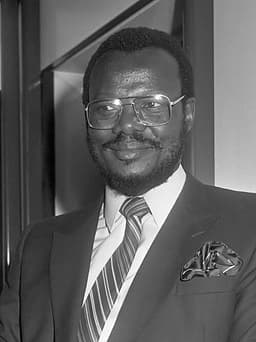
Mangosuthu Buthelezi
Politician · Modern
55.3Total
Basic Information
Born
1928
1928
Died
—
—
Era
Modern
Modern
Nationality
Egypt
South Africa
Occupation
Politician
Politician
Civilization
Middle Eastern
Other
Score Comparison
Military (10%)
41.6
34.9
Political (20%)
61.3
61.3
Influence (20%)
54.9
59.0
Legacy (20%)
45.0
49.2
Leadership (15%)
80.0
68.0
Strategy (15%)
53.5
53.8
TOTAL
55.7
55.3
Hosni Mubarak — Complete Timeline
1981 AD
Assassination of Anwar SadatPolitical Action
Following President Anwar Sadat's assassination by Islamist extremists, Vice President Hosni Mubarak assumed the presidency. He declared a state of emergency and initiated a crackdown on political opposition, consolidating his power.
AssassinationSuccessionEmergency Law
Impact: nationaltragic
Emergency Law ExtensionPolitical Action◆ Major
Mubarak extended Egypt's state of emergency, originally enacted after Sadat's assassination. The law granted security forces broad powers of arrest and surveillance, remaining in effect for nearly 30 years and becoming a tool for suppressing political dissent.
Emergency LawHuman RightsAuthoritarianism
Impact: nationaldestructive
2005 AD
Egyptian Parliamentary Elections 2005Political Action
Under domestic and international pressure, Mubarak allowed limited multi-candidate presidential elections. He won with 88% of the vote, but the elections were widely criticized for irregularities and lack of genuine competition, with opposition candidates facing harassment.
ElectionsDemocracyPolitical Reform
Impact: national
2011 AD
Egyptian Revolution of 2011Political Action
Mass protests erupted across Egypt demanding Mubarak's resignation. After 18 days of demonstrations, Mubarak stepped down on February 11, 2011, transferring power to the Supreme Council of the Armed Forces. He was later tried for corruption and complicity in killing protesters.
RevolutionArab SpringResignation
Impact: regional
Mangosuthu Buthelezi — Complete Timeline
1975 AD
Founded Inkatha Freedom PartyPolitical Action◆ Major
Buthelezi revived the Zulu cultural movement Inkatha as a political party, the Inkatha Freedom Party (IFP). He positioned it as a moderate alternative to the ANC, advocating for federalism and Zulu autonomy within a democratic South Africa.
InkathaZuluPolitical Party
Impact: nationalconstructive
1976 AD
Chief Minister of KwaZulu BantustanPolitical Action◆ Major
Buthelezi became Chief Minister of the KwaZulu bantustan, a nominally self-governing territory under apartheid. He used this position to resist incorporation into South Africa while cooperating with the system, a stance criticized by anti-apartheid activists.
BantustanApartheidZulu
Impact: regional
1990 AD
IFP-ANC Violence EscalationWar◆ Major
Following the unbanning of the ANC, violent conflict erupted between IFP and ANC supporters in KwaZulu-Natal and the Transvaal, resulting in thousands of deaths. Buthelezi's IFP was accused of collaborating with apartheid security forces.
Political ViolenceTransitionZulu
Impact: nationaldestructive
1994 AD
Participated in 1994 ElectionsPolitical Action◆ Major
Buthelezi agreed to participate in South Africa's first democratic elections after last-minute negotiations, allowing the IFP to be included on the ballot. The IFP won 10.5% of the vote, and Buthelezi became Minister of Home Affairs.
ElectionsTransitionDemocracy
Impact: nationalconstructive
Expert Analysis
Origins
Hosni Mubarak was born on May 4, 1928, in Kafr-El Meselha, Egypt. He came from a modest rural family, his father a judicial official. Mubarak pursued a military career, graduating from the Egyptian Military Academy in 1949 and later the Air Force Academy. He rose through the ranks as a pilot and commander, becoming Chief of the Air Force in 1972.
Mangosuthu Buthelezi was born on August 27, 1928, in Mahlabathini, South Africa. He was a prince of the Zulu royal family, grandson of King Dinuzulu. Buthelezi studied at the University of Fort Hare, where he joined the ANC Youth League. He later served as a clerk in the Native Affairs Department before entering tribal politics.
Rise to Power
Mubarak's rise accelerated after the 1967 Six-Day War, where he served as a fighter pilot. He became Air Force Commander in 1972 and successfully coordinated the air strikes in the 1973 Yom Kippur War. His performance led President Anwar Sadat to appoint him Vice President in 1975. Following Sadat's assassination on October 6, 1981, Mubarak assumed the presidency, quickly consolidating power.
Buthelezi rose through Zulu traditional structures. He was appointed Chief of the Buthelezi clan in 1953 and later became Chief Minister of the KwaZulu bantustan in 1970. In 1975, he revived the Inkatha movement as the Inkatha Freedom Party (IFP), positioning it as a moderate alternative to the ANC. He used his bantustan platform to gain influence, resisting incorporation into the apartheid system while opposing armed struggle.
Leadership & Governance
Mubarak governed Egypt with an iron grip for 30 years. He maintained the state of emergency law, granting security forces broad powers. His leadership score of 80.0 reflects his ability to maintain stability and control. Economically, he pursued limited reforms but faced criticism for corruption and cronyism. His political score of 61.3 indicates his skill in navigating regional politics, including maintaining peace with Israel and balancing ties with the US.
Buthelezi led the IFP with a focus on Zulu ethnic interests and federalism. He served as Chief Minister of KwaZulu until 1994, using the position to build a patronage network. His leadership score of 68.0 shows his effectiveness in mobilizing Zulu support. However, his governance was marred by authoritarian tendencies and involvement in political violence. His political score of 61.3 matches Mubarak's, indicating similar political acumen.
Triumph & Tragedy
Mubarak's greatest triumph was maintaining stability and peace in Egypt for three decades, avoiding major wars. He also survived multiple assassination attempts. However, his greatest failure was the suppression of political freedoms and economic stagnation, leading to the 2011 revolution. His military score of 41.6 reflects his background as a pilot but limited direct military command.
Buthelezi's triumph was successfully transforming Inkatha into a major political force and participating in the 1994 elections, securing the IFP's place in government. He also played a role in ending apartheid. His tragedy was the violent conflict between IFP and ANC, resulting in thousands of deaths. His military score of 34.9 indicates his involvement in paramilitary activities but not formal military leadership.
Character & Destiny
Mubarak was cautious, pragmatic, and secretive. He avoided bold reforms, preferring incremental change. His character shaped his fate: his refusal to address economic grievances and political repression led to his downfall. Historical assessments note his skill in maintaining power but lack of vision.
Buthelezi was charismatic, stubborn, and fiercely independent. He often clashed with ANC leaders and refused to join the anti-apartheid front. His character led to his marginalization after 1994, as the IFP's influence waned. Historians view him as a complex figure who both advanced and hindered democracy.
Legacy
Mubarak's legacy is mixed. He is remembered for stability but also for authoritarianism and corruption. The emergency law he extended remained in place after his fall. His influence score of 54.9 reflects his regional impact but limited global standing.
Buthelezi's legacy is tied to Zulu identity and federalism. The IFP remains a regional party in KwaZulu-Natal. His legacy score of 49.2 indicates a more localized impact. He is remembered as a polarizing figure who contributed to South Africa's transition but also to violence.
Conclusion
While both scored similarly (Mubarak 55.7, Buthelezi 55.3), Mubarak had greater impact due to Egypt's larger population and geopolitical role. His 30-year rule shaped the modern Middle East, while Buthelezi's influence was confined to South Africa's transition. Mubarak's legacy, though tarnished, affected more people and international relations. Thus, Mubarak had the greater overall impact.
Rankings
🥇
Hosni MubarakLeader
Mil: 41.6Pol: 61.3Inf: 54.9
55.7
🥈
Mangosuthu Buthelezi
Mil: 34.9Pol: 61.3Inf: 59.0
55.3
+0.4 behind
How This Comparison Works
Algorithm
Each figure is scored on 6 dimensions (0—100 scale) based on structured historical data: Military (10%), Political (20%), Influence (20%), Legacy (20%), Leadership (15%), Strategy (15%). The weighted total produces the final ranking.
Data Sources
Scores are computed from structured sub-indicators in the database. Scale factors adjust for era (Ancient ×0.85, Modern ×1.0) and civilization size (Eastern ×1.05, Other ×0.80) to account for differences in population and military scale.
Maximum 3 Figures
Comparisons are limited to 2—3 figures to ensure readability and statistical meaningfulness.
Error Margins
±5 points per dimension — Sub-scores are derived from historical records with inherent uncertainty. Two figures within 5 points on a dimension should be considered roughly equivalent in that area.
Total Score Accuracy
±3 points overall — The weighted combination of 6 dimensions produces a total score with approximately ±3 points of uncertainty. Differences of less than 3 points are not statistically significant— the figures are effectively tied.
Known Limitations
- Historical records are incomplete and uneven across civilizations
- Figures from oral-tradition societies may be underrepresented
- Occupation labels can misclassify multi-role figures
- Scores measure capability and impact, not moral character
- Quantitative scoring is a comparison tool, not absolute truth
Capability Radar
Military (10%) — Battles & Warfare
Battles
10
5
Win Rate
10
5
Expansion
10
10
Political (20%) — Governance & Reform
Reform
30
40
Diplomacy
60
60
Economy
40
30
Influence (20%) — Cultural & Global Reach
Cultural
20
55
Global
40
40
Legacy (20%) — Historical Impact
Historical
40
50
Longevity
30
45
Leadership (15%) — Power & Stability
Tenure
85
70
Stability
50
35
Strategy (15%) — Tactics & Innovation
Strategy
10
10
Tactics
10
10
Reform
10
15
Similar Comparisons
Comments & Discussion
No comments yet. Be the first to share your thoughts!