Loading...
Hosni Mubarak vs William Gladstone
William Gladstone leads by 6.5 pts · 2 figures compared
…

Hosni Mubarak
Politician · Modern
55.7Total
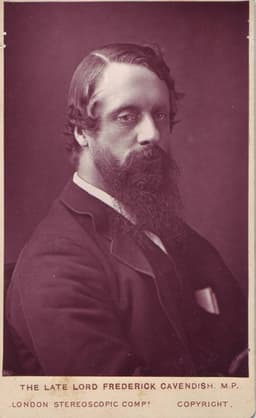
William Gladstone
Politician · Modern
62.2Total
Basic Information
Born
1928
1809
Died
—
1898
Era
Modern
Modern
Nationality
Egypt
United Kingdom
Occupation
Politician
Politician
Civilization
Middle Eastern
Western
Score Comparison
Military (10%)
41.6
10.0
Political (20%)
61.3
88.0
Influence (20%)
54.9
65.0
Legacy (20%)
45.0
65.0
Leadership (15%)
80.0
78.0
Strategy (15%)
53.5
38.3
TOTAL
55.7
62.2
Hosni Mubarak — Complete Timeline
1981 AD
Assassination of Anwar SadatPolitical Action
Following President Anwar Sadat's assassination by Islamist extremists, Vice President Hosni Mubarak assumed the presidency. He declared a state of emergency and initiated a crackdown on political opposition, consolidating his power.
AssassinationSuccessionEmergency Law
Impact: nationaltragic
Emergency Law ExtensionPolitical Action◆ Major
Mubarak extended Egypt's state of emergency, originally enacted after Sadat's assassination. The law granted security forces broad powers of arrest and surveillance, remaining in effect for nearly 30 years and becoming a tool for suppressing political dissent.
Emergency LawHuman RightsAuthoritarianism
Impact: nationaldestructive
2005 AD
Egyptian Parliamentary Elections 2005Political Action
Under domestic and international pressure, Mubarak allowed limited multi-candidate presidential elections. He won with 88% of the vote, but the elections were widely criticized for irregularities and lack of genuine competition, with opposition candidates facing harassment.
ElectionsDemocracyPolitical Reform
Impact: national
2011 AD
Egyptian Revolution of 2011Political Action
Mass protests erupted across Egypt demanding Mubarak's resignation. After 18 days of demonstrations, Mubarak stepped down on February 11, 2011, transferring power to the Supreme Council of the Armed Forces. He was later tried for corruption and complicity in killing protesters.
RevolutionArab SpringResignation
Impact: regional
William Gladstone — Complete Timeline
1853 AD
First Budget as ChancellorReform
Gladstone, as Chancellor of the Exchequer, delivered his first budget in 1853, which reduced tariffs and extended income tax. He aimed for free trade and fiscal responsibility, setting the stage for his reputation as a financial reformer.
BudgetFree TradeTax Reform
Impact: nationalconstructive
1868 AD
First Term as Prime MinisterPolitical Action
Gladstone became Prime Minister for the first time on December 3, 1868, after winning the general election. His first ministry (1868-1874) passed major reforms including the disestablishment of the Irish Church, the Education Act 1870, and the Ballot Act 1872.
Prime MinisterLiberal PartyReform
Impact: nationalconstructive
1869 AD
Irish Church DisestablishmentReform◆ Major
Gladstone's government passed the Irish Church Act 1869, which disestablished the Church of Ireland as the state church in Ireland. This removed its official status and ended mandatory tithes for Catholics, addressing a major grievance in Irish politics.
IrelandChurchReligious Reform
Impact: regionalprogressive
1870 AD
Education Act 1870Reform◆ Major
Gladstone's government passed the Elementary Education Act 1870, which established school boards and provided for elementary education in England and Wales. It created a national system of education, though attendance was not compulsory until later.
EducationReformSocial Policy
Impact: nationalprogressive
1879 AD
Midlothian CampaignPolitical Action◆ Major
Gladstone conducted the Midlothian Campaign in 1879-1880, a series of speeches in Scotland attacking Disraeli's foreign policy. This was the first modern political campaign, using mass rallies and media coverage. It helped the Liberals win the 1880 general election.
Election CampaignPolitical OratoryLiberal Party
Impact: national
1886 AD
Home Rule Bill for IrelandPolitical Action◆ Major
Gladstone introduced the First Home Rule Bill in 1886, proposing a devolved parliament for Ireland. The bill split the Liberal Party and was defeated in the Commons. This issue dominated his later career and led to the formation of the Liberal Unionist Party.
IrelandHome RuleLiberal Party Split
Impact: national
Expert Analysis
Origins
Hosni Mubarak was born on May 4, 1928, in Kafr-El Meselha, Egypt, into a modest family. He attended the Egyptian Military Academy and later the Air Force Academy, training in the Soviet Union. Mubarak became a bomber pilot and rose through the ranks, becoming commander of the Egyptian Air Force in 1972. His early life was shaped by military discipline and the 1952 revolution that brought Gamal Abdel Nasser to power.
William Ewart Gladstone was born on December 29, 1809, in Liverpool, England, into a wealthy merchant family. He attended Eton College and Christ Church, Oxford, where he excelled in classics and mathematics. Gladstone entered Parliament in 1832 as a Tory, but his views evolved toward liberalism. His early career was influenced by his devout Anglican faith and a strong sense of moral duty.
Rise to Power
Mubarak's rise to power came abruptly after the assassination of President Anwar Sadat on October 6, 1981. As Vice President since 1975, Mubarak was in a position to succeed Sadat. He declared a state of emergency and consolidated power by purging rivals and emphasizing stability. His political score of 61.3 reflects his ability to maintain control through a combination of military support and emergency laws.
Gladstone's rise was more gradual. He served as President of the Board of Trade in the 1840s and Chancellor of the Exchequer under Lord Aberdeen and Lord Palmerston. His budget reforms and fiscal conservatism earned him respect. He became leader of the Liberal Party and first became Prime Minister on December 3, 1868, after winning the general election. His political score of 88.0 reflects his mastery of parliamentary politics and public opinion.
Leadership & Governance
Mubarak's leadership style was autocratic and security-focused. He maintained the state of emergency throughout his rule, granting security forces broad powers of arrest and surveillance. He tolerated limited political pluralism but cracked down on Islamist opposition. Economically, he pursued neoliberal reforms that benefited elites, while corruption flourished. His leadership score of 80.0 indicates his effectiveness in maintaining stability, but his strategy score of 53.5 shows a lack of long-term vision.
Gladstone's governance was characterized by moral conviction and liberal reform. He passed the Irish Church Act 1869 disestablishing the Church of Ireland, the Elementary Education Act 1870 establishing school boards, and introduced the secret ballot in 1872. He championed free trade and fiscal retrenchment. However, his strategy score of 38.3 reflects his inability to pass Home Rule for Ireland, which split his party. His leadership score of 78.0 is high but reflects his intellectual dominance rather than administrative efficiency.
Triumph & Tragedy
Mubarak's greatest success was maintaining stability in Egypt during turbulent times, avoiding civil war and keeping peace with Israel. He survived multiple assassination attempts and kept the country stable for nearly 30 years. His greatest failure was the suppression of political freedoms and rampant corruption, which led to the Egyptian Revolution of 2011. After 18 days of protests, he resigned on February 11, 2011, and was later convicted of corruption. His legacy score of 45.0 reflects the collapse of his regime.
Gladstone's triumphs include the disestablishment of the Irish Church and the Education Act, which laid foundations for modern British education. His Midlothian Campaign of 1879-1880 pioneered modern political campaigning. His greatest failure was the defeat of the First Home Rule Bill in 1886, which split the Liberal Party and kept Ireland under British rule for decades. His legacy score of 65.0 reflects his lasting impact on liberal reforms.
Character & Destiny
Mubarak was cautious, pragmatic, and risk-averse. He avoided bold reforms and preferred gradual, controlled change. His character as a military man made him prioritize order over freedom. This ultimately led to his downfall when he failed to address popular grievances.
Gladstone was passionate, moralistic, and intellectually formidable. He was known for his intense work ethic and religious devotion. His character drove him to pursue justice, but his rigidity on issues like Home Rule led to political defeats. He is remembered as the "Grand Old Man" of British politics.
Legacy
Mubarak's legacy is mixed. He is remembered as a dictator who stifled democracy, but also as a leader who kept Egypt stable and maintained the peace treaty with Israel. His downfall inspired the Arab Spring, but the subsequent instability has complicated his legacy.
Gladstone's legacy is more positive. He is celebrated as a champion of liberalism, free trade, and parliamentary reform. His policies shaped modern British education and Irish church-state relations. His influence on liberal thought endures.
Conclusion
While Mubarak scored 80.0 in leadership and 61.3 in political skill, Gladstone's political score of 88.0 and legacy score of 65.0 indicate a broader and more positive impact. Gladstone's reforms transformed British society and inspired liberal movements worldwide, whereas Mubarak's rule ended in revolution and a legacy of authoritarianism. Therefore, William Gladstone had greater historical impact, as measured by his scores and the enduring nature of his contributions. Hosni Mubarak's total score of 55.7 against Gladstone's 62.2 confirms this assessment.
Rankings
🥇
William GladstoneLeader
Mil: 10.0Pol: 88.0Inf: 65.0
62.2
🥈
Hosni Mubarak
Mil: 41.6Pol: 61.3Inf: 54.9
55.7
+6.5 behind
How This Comparison Works
Algorithm
Each figure is scored on 6 dimensions (0—100 scale) based on structured historical data: Military (10%), Political (20%), Influence (20%), Legacy (20%), Leadership (15%), Strategy (15%). The weighted total produces the final ranking.
Data Sources
Scores are computed from structured sub-indicators in the database. Scale factors adjust for era (Ancient ×0.85, Modern ×1.0) and civilization size (Eastern ×1.05, Other ×0.80) to account for differences in population and military scale.
Maximum 3 Figures
Comparisons are limited to 2—3 figures to ensure readability and statistical meaningfulness.
Error Margins
±5 points per dimension — Sub-scores are derived from historical records with inherent uncertainty. Two figures within 5 points on a dimension should be considered roughly equivalent in that area.
Total Score Accuracy
±3 points overall — The weighted combination of 6 dimensions produces a total score with approximately ±3 points of uncertainty. Differences of less than 3 points are not statistically significant— the figures are effectively tied.
Known Limitations
- Historical records are incomplete and uneven across civilizations
- Figures from oral-tradition societies may be underrepresented
- Occupation labels can misclassify multi-role figures
- Scores measure capability and impact, not moral character
- Quantitative scoring is a comparison tool, not absolute truth
Capability Radar
Military (10%) — Battles & Warfare
Battles
10
0
Win Rate
10
0
Expansion
10
0
Political (20%) — Governance & Reform
Reform
30
90
Diplomacy
60
85
Economy
40
85
Influence (20%) — Cultural & Global Reach
Cultural
20
70
Global
40
75
Legacy (20%) — Historical Impact
Historical
40
80
Longevity
30
75
Leadership (15%) — Power & Stability
Tenure
85
85
Stability
50
75
Strategy (15%) — Tactics & Innovation
Strategy
10
0
Tactics
10
0
Reform
10
10
Similar Comparisons
Comments & Discussion
No comments yet. Be the first to share your thoughts!