Loading...
Fumio Kishida vs Mangosuthu Buthelezi
Mangosuthu Buthelezi leads by 3.5 pts · 2 figures compared
…
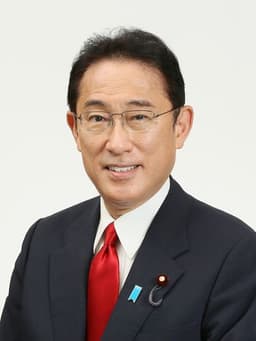
Fumio Kishida
Politician · Modern
51.8Total
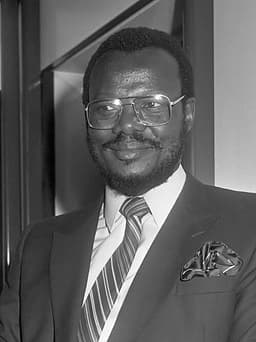
Mangosuthu Buthelezi
Politician · Modern
55.3Total
Basic Information
Born
1957
1928
Died
—
—
Era
Modern
Modern
Nationality
Japan
South Africa
Occupation
Politician
Politician
Civilization
Eastern
Other
Score Comparison
Military (10%)
29.2
34.9
Political (20%)
68.0
61.3
Influence (20%)
53.3
59.0
Legacy (20%)
40.0
49.2
Leadership (15%)
64.0
68.0
Strategy (15%)
57.2
53.8
TOTAL
51.8
55.3
Fumio Kishida — Complete Timeline
2021 AD
Announced new capitalism policyReform◆ Major
Kishida unveiled a 'new capitalism' economic policy aiming to redistribute wealth and promote growth. The plan included raising wages, increasing investment in green technology, and addressing income inequality in Japan.
JapanEconomic PolicyNew Capitalism
Impact: nationalconstructive
Elected Prime Minister of JapanPolitical Action◆ Major
Kishida was elected as Prime Minister of Japan after winning the LDP leadership election. He succeeded Yoshihide Suga and formed a cabinet focused on economic recovery and COVID-19 response.
JapanPrime MinisterLDP
Impact: national
2022 AD
Assassination of Shinzo AbePolitical Action◆ Major
Former Prime Minister Shinzo Abe was assassinated during a campaign speech in Nara. Kishida, as sitting prime minister, led the government's response, including security reviews and a state funeral for Abe.
JapanAssassinationAbe
Impact: nationaltragic
Mangosuthu Buthelezi — Complete Timeline
1975 AD
Founded Inkatha Freedom PartyPolitical Action◆ Major
Buthelezi revived the Zulu cultural movement Inkatha as a political party, the Inkatha Freedom Party (IFP). He positioned it as a moderate alternative to the ANC, advocating for federalism and Zulu autonomy within a democratic South Africa.
InkathaZuluPolitical Party
Impact: nationalconstructive
1976 AD
Chief Minister of KwaZulu BantustanPolitical Action◆ Major
Buthelezi became Chief Minister of the KwaZulu bantustan, a nominally self-governing territory under apartheid. He used this position to resist incorporation into South Africa while cooperating with the system, a stance criticized by anti-apartheid activists.
BantustanApartheidZulu
Impact: regional
1990 AD
IFP-ANC Violence EscalationWar◆ Major
Following the unbanning of the ANC, violent conflict erupted between IFP and ANC supporters in KwaZulu-Natal and the Transvaal, resulting in thousands of deaths. Buthelezi's IFP was accused of collaborating with apartheid security forces.
Political ViolenceTransitionZulu
Impact: nationaldestructive
1994 AD
Participated in 1994 ElectionsPolitical Action◆ Major
Buthelezi agreed to participate in South Africa's first democratic elections after last-minute negotiations, allowing the IFP to be included on the ballot. The IFP won 10.5% of the vote, and Buthelezi became Minister of Home Affairs.
ElectionsTransitionDemocracy
Impact: nationalconstructive
Expert Analysis
Origins
Fumio Kishida was born on July 29, 1957, into a political family in Hiroshima, Japan. His father was a politician, and his grandfather served in the Diet. He studied law at Keio University and worked at a bank before entering politics. Mangosuthu Buthelezi was born on August 27, 1928, in Mahlabathini, South Africa, into the Zulu royal family; his mother was a princess. He studied at the University of Fort Hare and joined the ANC Youth League. Both came from politically active families, but Buthelezi's early exposure to apartheid shaped his lifelong struggle.
Rise to Power
Kishida was first elected to the House of Representatives in 1993. He held various ministerial posts, including Minister of Foreign Affairs under Shinzo Abe. In 2021, he won the LDP leadership election and became Prime Minister on October 4, 2021. His rise was steady and within the party system. Buthelezi rose through the Zulu cultural movement Inkatha, which he revived as the Inkatha Freedom Party (IFP) in 1975. He became Chief Minister of the KwaZulu bantustan in 1977, using the position to resist apartheid while opposing the ANC's armed struggle. His rise was marked by ethnic mobilization and complex negotiations.
Leadership & Governance
Kishida's leadership style is consensus-driven, focusing on 'new capitalism' to address inequality. He raised wages and increased investment in technology. He scored 64.0 in leadership. Buthelezi's leadership was more authoritarian and ethnic-based; he scored 68.0. He governed KwaZulu with a mix of traditional authority and political maneuvering, often clashing with the ANC. Kishida's governance is technocratic, while Buthelezi's is rooted in Zulu nationalism.
Triumph & Tragedy
Kishida's triumph includes passing a record defense budget (¥6.8 trillion in 2023) and strengthening Japan's alliance with the US. His tragedy: the assassination of Shinzo Abe during his tenure, which exposed security failures, and his low approval ratings due to inflation. Buthelezi's triumph: leading the IFP into the 1994 elections, helping ensure a peaceful transition. His tragedy: the IFP-ANC violence that killed thousands (estimated 10,000-20,000 deaths) in the 1980s-90s. He also failed to achieve a federal system for KwaZulu-Natal.
Character & Destiny
Kishida is cautious and pragmatic, shaped by Hiroshima's postwar identity. He prioritizes stability, scoring 57.2 in strategy. Buthelezi was stubborn and principled, often refusing compromise, which led to isolation. His destiny intertwined with Zulu identity and apartheid's collapse. Both faced critical moments: Kishida after Abe's assassination, Buthelezi during the transition. Their characters determined their paths: Kishida as a reformer within the system, Buthelezi as a challenger from the periphery.
Legacy
Kishida's legacy is still forming: he aims to reshape Japan's economy and defense. He scored 40.0 in legacy. Buthelezi's legacy is more defined: he preserved Zulu political identity and influenced South Africa's federal debate. He scored 49.2. Kishida's impact may be measured by economic reforms; Buthelezi's by his role in the transition. Both are transitional figures, but Buthelezi's impact on South Africa's democratization is more concrete.
Conclusion
Mangosuthu Buthelezi had greater impact. His score of 55.3 tops Kishida's 51.8. Buthelezi shaped a nation's transition from apartheid to democracy, while Kishida's reforms are incremental. Buthelezi's legacy of ethnic politics and federalism endures, whereas Kishida's legacy is uncertain. Though both are politicians, Buthelezi's role in a historic transformation gives him higher influence and legacy scores. He is the more consequential figure.
Rankings
🥇
Mangosuthu ButheleziLeader
Mil: 34.9Pol: 61.3Inf: 59.0
55.3
🥈
Fumio Kishida
Mil: 29.2Pol: 68.0Inf: 53.3
51.8
+3.5 behind
How This Comparison Works
Algorithm
Each figure is scored on 6 dimensions (0—100 scale) based on structured historical data: Military (10%), Political (20%), Influence (20%), Legacy (20%), Leadership (15%), Strategy (15%). The weighted total produces the final ranking.
Data Sources
Scores are computed from structured sub-indicators in the database. Scale factors adjust for era (Ancient ×0.85, Modern ×1.0) and civilization size (Eastern ×1.05, Other ×0.80) to account for differences in population and military scale.
Maximum 3 Figures
Comparisons are limited to 2—3 figures to ensure readability and statistical meaningfulness.
Error Margins
±5 points per dimension — Sub-scores are derived from historical records with inherent uncertainty. Two figures within 5 points on a dimension should be considered roughly equivalent in that area.
Total Score Accuracy
±3 points overall — The weighted combination of 6 dimensions produces a total score with approximately ±3 points of uncertainty. Differences of less than 3 points are not statistically significant— the figures are effectively tied.
Known Limitations
- Historical records are incomplete and uneven across civilizations
- Figures from oral-tradition societies may be underrepresented
- Occupation labels can misclassify multi-role figures
- Scores measure capability and impact, not moral character
- Quantitative scoring is a comparison tool, not absolute truth
Capability Radar
Military (10%) — Battles & Warfare
Battles
51
5
Win Rate
56
5
Expansion
57
10
Political (20%) — Governance & Reform
Reform
40
40
Diplomacy
55
60
Economy
45
30
Influence (20%) — Cultural & Global Reach
Cultural
20
55
Global
30
40
Legacy (20%) — Historical Impact
Historical
25
50
Longevity
15
45
Leadership (15%) — Power & Stability
Tenure
35
70
Stability
40
35
Strategy (15%) — Tactics & Innovation
Strategy
59
10
Tactics
63
10
Reform
69
15
Similar Comparisons
Comments & Discussion
No comments yet. Be the first to share your thoughts!