Loading...
Rajaji Chakravarti vs William Gladstone
William Gladstone leads by 0.7 pts · 2 figures compared
…

Rajaji Chakravarti
Politician · Modern
61.5Total
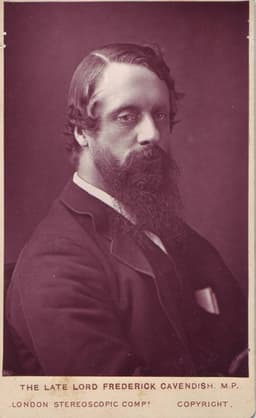
William Gladstone
Politician · Modern
62.2Total
Basic Information
Born
1878
1809
Died
1972
1898
Era
Modern
Modern
Nationality
India
United Kingdom
Occupation
Politician
Politician
Civilization
Indian
Western
Score Comparison
Military (10%)
50.0
10.0
Political (20%)
65.0
88.0
Influence (20%)
72.0
65.0
Legacy (20%)
54.0
65.0
Leadership (15%)
72.0
78.0
Strategy (15%)
45.0
38.3
TOTAL
61.5
62.2
Rajaji Chakravarti — Complete Timeline
1948 AD
Appointed as Governor-General of IndiaPolitical Action◆ Major
Rajaji succeeded Lord Mountbatten as the Governor-General of India, becoming the first and only Indian to hold the position. He served until India became a republic in 1950, overseeing the transition from dominion to republic.
Governor-GeneralIndian IndependenceTransition
Impact: nationalconstructive
1952 AD
Served as Chief Minister of Madras StatePolitical Action
Rajaji became Chief Minister of Madras State, serving from 1952 to 1954. His tenure included the introduction of the Modified Scheme of Elementary Education, which faced opposition for its vocational focus, leading to his resignation.
Chief MinisterEducation PolicyMadras
Impact: regional
1954 AD
Awarded Bharat RatnaCultural◆ Major
Rajaji was awarded the Bharat Ratna, India's highest civilian award, in recognition of his service as a statesman, lawyer, and independence activist. He was one of the first recipients of the award.
Bharat RatnaAwardRecognition
Impact: nationalconstructive
1955 AD
Opposed the Congress Party's Socialist PoliciesPolitical Action
Rajaji became a vocal critic of the Congress party's socialist economic policies under Jawaharlal Nehru. He argued for free enterprise and against state control, leading to his departure from Congress and eventual founding of the Swatantra Party.
Economic PolicySocialismCriticism
Impact: national
1959 AD
Founded the Swatantra PartyPolitical Action◆ Major
Rajaji founded the Swatantra Party as a classical liberal alternative to the dominant Congress party. The party advocated for free-market economics, limited government, and individual liberties, becoming a significant opposition force in the 1960s.
Swatantra PartyLiberal PoliticsOpposition
Impact: nationalconstructive
William Gladstone — Complete Timeline
1853 AD
First Budget as ChancellorReform
Gladstone, as Chancellor of the Exchequer, delivered his first budget in 1853, which reduced tariffs and extended income tax. He aimed for free trade and fiscal responsibility, setting the stage for his reputation as a financial reformer.
BudgetFree TradeTax Reform
Impact: nationalconstructive
1868 AD
First Term as Prime MinisterPolitical Action
Gladstone became Prime Minister for the first time on December 3, 1868, after winning the general election. His first ministry (1868-1874) passed major reforms including the disestablishment of the Irish Church, the Education Act 1870, and the Ballot Act 1872.
Prime MinisterLiberal PartyReform
Impact: nationalconstructive
1869 AD
Irish Church DisestablishmentReform◆ Major
Gladstone's government passed the Irish Church Act 1869, which disestablished the Church of Ireland as the state church in Ireland. This removed its official status and ended mandatory tithes for Catholics, addressing a major grievance in Irish politics.
IrelandChurchReligious Reform
Impact: regionalprogressive
1870 AD
Education Act 1870Reform◆ Major
Gladstone's government passed the Elementary Education Act 1870, which established school boards and provided for elementary education in England and Wales. It created a national system of education, though attendance was not compulsory until later.
EducationReformSocial Policy
Impact: nationalprogressive
1879 AD
Midlothian CampaignPolitical Action◆ Major
Gladstone conducted the Midlothian Campaign in 1879-1880, a series of speeches in Scotland attacking Disraeli's foreign policy. This was the first modern political campaign, using mass rallies and media coverage. It helped the Liberals win the 1880 general election.
Election CampaignPolitical OratoryLiberal Party
Impact: national
1886 AD
Home Rule Bill for IrelandPolitical Action◆ Major
Gladstone introduced the First Home Rule Bill in 1886, proposing a devolved parliament for Ireland. The bill split the Liberal Party and was defeated in the Commons. This issue dominated his later career and led to the formation of the Liberal Unionist Party.
IrelandHome RuleLiberal Party Split
Impact: national
Expert Analysis
Origins
**Rajaji Chakravarti** (born C. Rajagopalachari on December 8, 1878) came from a Tamil Brahmin family in Salem, Madras Presidency. He studied law at Presidency College, Madras, and became a prominent lawyer. His early career was shaped by his involvement in the Indian National Congress, where he worked alongside Mahatma Gandhi. Rajaji was a key figure in the independence movement, known for his intellectual rigor and administrative acumen.
**William Gladstone** (born December 29, 1809) in Liverpool, England, into a wealthy merchant family. He attended Eton and Christ Church, Oxford, where he excelled in classics and mathematics. Initially a High Tory, his political views evolved towards liberalism. He entered Parliament in 1832 as a Conservative but later joined the Liberal Party, becoming its leading figure.
Rise to Power
Rajaji rose to prominence through the Indian independence movement. He was a close associate of Gandhi and participated in the Salt Satyagraha in 1930. His administrative skills led to his appointment as Premier of Madras Presidency (1937–1939) and later as Governor of West Bengal (1947). His political score of 65.0 reflects his steady ascent within the Congress, though he never sought the highest executive office. In 1948, he succeeded Lord Mountbatten as Governor-General of India, becoming the first and only Indian to hold the post.
Gladstone's rise was meteoric. He became President of the Board of Trade at age 34 and Chancellor of the Exchequer under Lord Aberdeen. His budgets of the 1850s and 1860s established his reputation as a financial reformer. In 1868, he became Prime Minister for the first time, winning a landslide victory. His political score of 88.0 underscores his dominance in British politics, serving four terms (1868–1874, 1880–1885, 1886, 1892–1894).
Leadership & Governance
Rajaji's leadership style was pragmatic and intellectual. As Chief Minister of Madras (1952–1954), he introduced the Modified Scheme of Elementary Education, which faced criticism for promoting caste-based vocational training. He later founded the Swatantra Party in 1959, advocating free-market economics and limited government, opposing Nehru's socialist policies. His leadership score of 72.0 reflects his principled stance but limited electoral success; the Swatantra Party never held national power.
Gladstone governed with a moralistic fervor, famously saying "Liberalism is trust in the people tempered by prudence." His first ministry passed the Irish Church Act 1869, disestablishing the Church of Ireland, and the Education Act 1870, creating school boards. His Irish Home Rule bills, though unsuccessful, demonstrated his commitment to devolution. His leadership score of 78.0 reflects his ability to drive legislative change, though his strategy score of 38.3 indicates tactical missteps, such as the 1886 Home Rule bill that split his party.
Triumph & Tragedy
Rajaji's greatest triumph was serving as the first Indian Governor-General, symbolizing the peaceful transfer of power. He also won the Bharat Ratna in 1954. However, his tragedy was his failure to prevent the decline of classical liberalism in India. The Swatantra Party never became a major force, and his opposition to Congress's socialist policies was largely ignored. His influence score of 72.0 reflects his intellectual impact but limited political legacy.
Gladstone's triumphs include the disestablishment of the Irish Church and the Education Act 1870, which expanded schooling. He also reformed the civil service and extended the franchise. His greatest tragedy was his inability to pass Home Rule for Ireland, which led to the Liberal Party's split and eventual decline. His legacy score of 65.0 reflects his enduring impact on British liberalism, though his Irish policy failure remains a blemish.
Character & Destiny
Rajaji was known for his sharp intellect and moral integrity. He was a prolific writer and translator, and his decision-making was guided by principle rather than political expediency. This trait led him to break with Congress when he disagreed with its socialist turn. His destiny was to be a respected elder statesman rather than a mass leader, which limited his direct impact on policy.
Gladstone was a man of immense energy and moral conviction, often described as a "great Christian statesman." He was a fierce orator and campaigner, as seen in the Midlothian Campaign. His character drove him to tackle major issues like Irish Home Rule, but his stubbornness contributed to political defeats. His destiny was to be the defining figure of Victorian liberalism, despite personal and political setbacks.
Legacy
Rajaji's legacy is as a champion of classical liberalism in India. The Swatantra Party influenced later economic reforms, though his direct impact on policy was limited. He is remembered as a scholar-statesman, but his political score of 65.0 and legacy score of 54.0 indicate a relatively modest impact compared to his contemporaries.
Gladstone's legacy is immense. He reshaped British politics, making the Liberal Party the vehicle for reform. His policies on education, church, and Ireland set precedents for future governments. His legacy score of 65.0 and influence score of 65.0 reflect his enduring significance, though his failure on Ireland tempers his record.
Conclusion
William Gladstone had a greater impact than Rajaji Chakravarti. With a total score of 62.2 to Rajaji's 61.5, the gap is narrow but significant. Gladstone's political score of 88.0 dwarfs Rajaji's 65.0, reflecting his ability to shape national policy over four terms. While Rajaji's influence on Indian liberalism is notable, his lack of executive power after independence limits his legacy. Gladstone's reforms in education, church, and governance had a lasting impact on the United Kingdom. Therefore, Gladstone emerges as the more consequential figure in terms of political achievement and long-term influence.
Rankings
🥇
William GladstoneLeader
Mil: 10.0Pol: 88.0Inf: 65.0
62.2
🥈
Rajaji Chakravarti
Mil: 50.0Pol: 65.0Inf: 72.0
61.5
+0.7 behind
How This Comparison Works
Algorithm
Each figure is scored on 6 dimensions (0—100 scale) based on structured historical data: Military (10%), Political (20%), Influence (20%), Legacy (20%), Leadership (15%), Strategy (15%). The weighted total produces the final ranking.
Data Sources
Scores are computed from structured sub-indicators in the database. Scale factors adjust for era (Ancient ×0.85, Modern ×1.0) and civilization size (Eastern ×1.05, Other ×0.80) to account for differences in population and military scale.
Maximum 3 Figures
Comparisons are limited to 2—3 figures to ensure readability and statistical meaningfulness.
Error Margins
±5 points per dimension — Sub-scores are derived from historical records with inherent uncertainty. Two figures within 5 points on a dimension should be considered roughly equivalent in that area.
Total Score Accuracy
±3 points overall — The weighted combination of 6 dimensions produces a total score with approximately ±3 points of uncertainty. Differences of less than 3 points are not statistically significant— the figures are effectively tied.
Known Limitations
- Historical records are incomplete and uneven across civilizations
- Figures from oral-tradition societies may be underrepresented
- Occupation labels can misclassify multi-role figures
- Scores measure capability and impact, not moral character
- Quantitative scoring is a comparison tool, not absolute truth
Capability Radar
Military (10%) — Battles & Warfare
Battles
25
0
Win Rate
29
0
Expansion
31
0
Political (20%) — Governance & Reform
Reform
70
90
Diplomacy
75
85
Economy
60
85
Influence (20%) — Cultural & Global Reach
Cultural
50
70
Global
55
75
Legacy (20%) — Historical Impact
Historical
60
80
Longevity
45
75
Leadership (15%) — Power & Stability
Tenure
65
85
Stability
55
75
Strategy (15%) — Tactics & Innovation
Strategy
35
0
Tactics
39
0
Reform
43
10
Similar Comparisons
Comments & Discussion
No comments yet. Be the first to share your thoughts!