Loading...
Houari Boumediene vs Kassim Majaliwa
Houari Boumediene leads by 12.5 pts · 2 figures compared
…
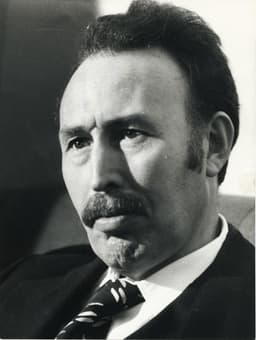
Houari Boumediene
Politician · Modern
55.0Total
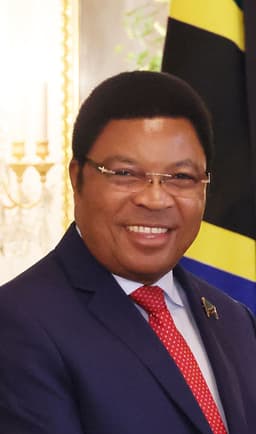
Kassim Majaliwa
Politician · Modern
42.5Total
Basic Information
Born
1932
1960
Died
—
—
Era
Modern
Modern
Nationality
Algeria
Tanzania
Occupation
Politician
Politician
Civilization
Middle Eastern
Other
Score Comparison
Military (10%)
41.6
16.7
Political (20%)
60.0
40.8
Influence (20%)
58.0
47.1
Legacy (20%)
48.3
36.7
Leadership (15%)
72.0
65.0
Strategy (15%)
45.0
40.4
TOTAL
55.0
42.5
Houari Boumediene — Complete Timeline
1954 AD
Role in Algerian War of IndependenceWar◆ Major
Boumediene joined the National Liberation Front (FLN) and became a key military commander in the war against French colonial rule. He organized guerrilla operations and rose through the ranks.
Algerian WarDecolonizationFLN
Impact: national
1965 AD
Coup d'État against Ben BellaPolitical Action
Boumediene led a military coup that overthrew President Ahmed Ben Bella. He suspended the constitution, dissolved parliament, and established a Revolutionary Council, consolidating power.
CoupAuthoritarianismMilitary Rule
Impact: nationaldestructive
1971 AD
Nationalization of HydrocarbonsReform◆ Major
Boumediene nationalized French oil and gas companies, taking control of Algeria's hydrocarbon resources. This provided the state with revenue to fund industrialization and socialist development programs.
NationalizationEconomic SovereigntySocialism
Impact: nationalconstructive
Launch of Agrarian RevolutionReform◆ Major
Boumediene implemented an agrarian reform program that redistributed land from large landowners to peasants and established state farms. The program aimed to increase agricultural production and reduce rural inequality.
Land ReformAgricultureSocialism
Impact: nationalconstructive
1973 AD
Chairmanship of Non-Aligned MovementPolitical Action◆ Major
Boumediene chaired the Non-Aligned Movement (NAM) and advocated for a New International Economic Order. He used the platform to promote Third World solidarity and challenge Western economic dominance.
Non-Aligned MovementThird WorldDiplomacy
Impact: globalconstructive
Kassim Majaliwa — Complete Timeline
2015 AD
Appointed Prime Minister of TanzaniaPolitical Action◆ Major
Kassim Majaliwa was appointed Prime Minister by President John Magufuli after the 2015 election. He succeeded Mizengo Pinda and became the head of government, responsible for coordinating cabinet activities and policy implementation.
AppointmentGovernmentTanzania
Impact: nationalconstructive
2020 AD
Oversaw COVID-19 ResponsePolitical Action
As Prime Minister, Majaliwa coordinated Tanzania's response to the COVID-19 pandemic, including public health measures and economic support programs. The government initially downplayed the pandemic but later adopted more conventional measures.
COVID-19Public HealthGovernment Response
Impact: national
2021 AD
Reappointed Under President SuluhuPolitical Action
Following President Magufuli's death, new President Samia Suluhu Hassan reappointed Majaliwa as Prime Minister in 2021. He continued in the role, supporting Suluhu's administration and policy direction.
ReappointmentGovernment Continuity
Impact: nationalconstructive
Expert Analysis
Origins
Houari Boumediene was born Mohamed Ben Brahim Boukharouba on August 23, 1932, in Clauzel (now Aïn El Hadjar), French Algeria. He came from a modest rural family and studied at the Islamic University of Constantine and later at Al-Azhar University in Cairo, where he was exposed to Arab nationalism and anti-colonial thought. In 1955, he joined the National Liberation Front (FLN) in Egypt and quickly rose through the military ranks during the Algerian War of Independence (1954–1962). His early experiences in guerrilla warfare shaped his disciplined, secretive leadership style.
Kassim Majaliwa was born on December 22, 1960, in Ruangwa, Lindi Region, Tanzania. He studied at the University of Dar es Salaam, earning a Bachelor of Arts in Education, and later a Master's in Education from the same university. Before politics, he worked as a teacher and school inspector. He entered politics through the ruling Chama Cha Mapinduzi (CCM) party, winning a parliamentary seat in 2010. His background is administrative rather than revolutionary.
Rise to Power
Boumediene's rise was military. He became chief of staff of the FLN's armed wing, the National Liberation Army (ALN), in 1960. After independence, he served as Minister of Defense under President Ahmed Ben Bella. On June 19, 1965, he led a bloodless coup (the 19 Juin coup) that overthrew Ben Bella, citing corruption and instability. He then suspended the constitution, dissolved parliament, and established the Revolutionary Council, ruling as head of state until his death.
Majaliwa's rise was bureaucratic. After teaching, he became a district executive director and later a regional commissioner. He was elected to parliament in 2010 and appointed Deputy Minister of State in the Vice President's Office for Union Affairs. In 2015, President John Magufuli appointed him Prime Minister, a position largely subordinate to the executive president. He was reappointed by President Samia Suluhu Hassan in 2021.
Leadership & Governance
Boumediene ruled as an autocrat, centralizing power in the Revolutionary Council and suppressing political dissent. His governance was socialist: he nationalized French oil and gas companies in 1971, launched an agrarian revolution redistributing land (1972–1978), and promoted state-led industrialization. He also invested heavily in education and healthcare, increasing literacy from 10% to over 60% during his rule. However, his regime was repressive, with limited political freedoms.
Majaliwa operates within Tanzania's presidential system. As prime minister, he oversees government business in parliament and coordinates ministries, but real power lies with the president. His leadership style is administrative and low-profile. Under Magufuli, he implemented austerity measures and anti-corruption drives. Under Suluhu, he has focused on COVID-19 response and economic recovery. His governance score of 40.8 reflects limited independent authority.
Triumph & Tragedy
Boumediene's greatest triumph was nationalizing hydrocarbons, which gave Algeria control over its oil and gas resources, funding development and making it a leader in the Non-Aligned Movement (he chaired NAM from 1973–1974). His agrarian reform increased agricultural output initially but later faced inefficiencies. His tragedy was his authoritarianism: he crushed opposition, banned political parties, and left a legacy of one-party rule that stunted democratic growth. He also failed to diversify the economy, leaving Algeria dependent on oil.
Majaliwa's triumph is his steady management of government affairs, ensuring continuity during Magufuli's controversial tenure and Suluhu's transition. He oversaw COVID-19 response, including vaccination campaigns. His tragedy is his obscurity: he has no major independent achievements or reforms. His political score of 40.8 and legacy score of 36.7 indicate limited impact.
Character & Destiny
Boumediene was secretive, disciplined, and pragmatic. He avoided personal cults, preferring to work behind the scenes. His military background made him decisive but also authoritarian. He died in 1978 from a rare blood disease, aged 46, leaving Algeria without a clear successor. His character shaped his destiny: his secrecy allowed him to consolidate power but prevented institutional succession, leading to instability after his death.
Majaliwa is described as a loyal technocrat, unassuming and hardworking. He has survived two presidencies by staying out of controversy. His destiny is tied to Tanzania's political stability; he is a safe pair of hands rather than a transformative leader.
Legacy
Boumediene's legacy is mixed. He is remembered as the father of independent Algeria's economic development, having nationalized oil and built state infrastructure. However, his authoritarian rule and socialist policies also contributed to Algeria's later economic struggles and political repression. His influence score of 58.0 and legacy score of 48.3 reflect this complexity.
Majaliwa's legacy is minimal. He is not a historical figure of note; his name is unlikely to appear in future history books. His total score of 42.5, with a legacy of 36.7, places him among many mid-level bureaucrats.
Conclusion
Houari Boumediene had greater historical impact than Kassim Majaliwa. Boumediene's total score of 55.0 compared to Majaliwa's 42.5 reflects his role in shaping Algeria's post-independence trajectory through nationalization, agrarian reform, and leadership of the Non-Aligned Movement. While his authoritarianism limited his legacy, he fundamentally altered Algeria's economy and international standing. Majaliwa, as a prime minister in a presidential system, has exercised limited independent power and leaves no comparable mark. The 12.5-point gap is justified by Boumediene's decisive actions that affected millions, versus Majaliwa's administrative role within an existing system.
Rankings
🥇
Houari BoumedieneLeader
Mil: 41.6Pol: 60.0Inf: 58.0
55.0
🥈
Kassim Majaliwa
Mil: 16.7Pol: 40.8Inf: 47.1
42.5
+12.5 behind
How This Comparison Works
Algorithm
Each figure is scored on 6 dimensions (0—100 scale) based on structured historical data: Military (10%), Political (20%), Influence (20%), Legacy (20%), Leadership (15%), Strategy (15%). The weighted total produces the final ranking.
Data Sources
Scores are computed from structured sub-indicators in the database. Scale factors adjust for era (Ancient ×0.85, Modern ×1.0) and civilization size (Eastern ×1.05, Other ×0.80) to account for differences in population and military scale.
Maximum 3 Figures
Comparisons are limited to 2—3 figures to ensure readability and statistical meaningfulness.
Error Margins
±5 points per dimension — Sub-scores are derived from historical records with inherent uncertainty. Two figures within 5 points on a dimension should be considered roughly equivalent in that area.
Total Score Accuracy
±3 points overall — The weighted combination of 6 dimensions produces a total score with approximately ±3 points of uncertainty. Differences of less than 3 points are not statistically significant— the figures are effectively tied.
Known Limitations
- Historical records are incomplete and uneven across civilizations
- Figures from oral-tradition societies may be underrepresented
- Occupation labels can misclassify multi-role figures
- Scores measure capability and impact, not moral character
- Quantitative scoring is a comparison tool, not absolute truth
Capability Radar
Military (10%) — Battles & Warfare
Battles
10
27
Win Rate
10
30
Expansion
10
31
Political (20%) — Governance & Reform
Reform
70
30
Diplomacy
60
35
Economy
65
30
Influence (20%) — Cultural & Global Reach
Cultural
40
10
Global
40
10
Legacy (20%) — Historical Impact
Historical
50
10
Longevity
40
10
Leadership (15%) — Power & Stability
Tenure
65
40
Stability
55
40
Strategy (15%) — Tactics & Innovation
Strategy
10
35
Tactics
10
37
Reform
40
39
Similar Comparisons
Comments & Discussion
No comments yet. Be the first to share your thoughts!