Loading...
Houari Boumediene vs Tharman Shanmugaratnam
Houari Boumediene leads by 0.4 pts · 2 figures compared
…
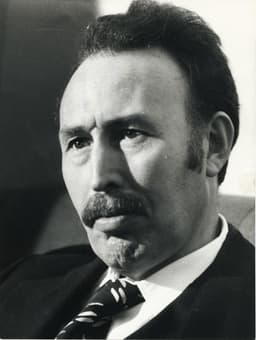
Houari Boumediene
Politician · Modern
55.0Total

Tharman Shanmugaratnam
Politician · Modern
54.6Total
Basic Information
Born
1932
1957
Died
—
—
Era
Modern
Modern
Nationality
Algeria
Singapore
Occupation
Politician
Politician
Civilization
Middle Eastern
Eastern
Score Comparison
Military (10%)
41.6
13.5
Political (20%)
60.0
78.0
Influence (20%)
58.0
59.0
Legacy (20%)
48.3
45.8
Leadership (15%)
72.0
78.0
Strategy (15%)
45.0
36.9
TOTAL
55.0
54.6
Houari Boumediene — Complete Timeline
1954 AD
Role in Algerian War of IndependenceWar◆ Major
Boumediene joined the National Liberation Front (FLN) and became a key military commander in the war against French colonial rule. He organized guerrilla operations and rose through the ranks.
Algerian WarDecolonizationFLN
Impact: national
1965 AD
Coup d'État against Ben BellaPolitical Action
Boumediene led a military coup that overthrew President Ahmed Ben Bella. He suspended the constitution, dissolved parliament, and established a Revolutionary Council, consolidating power.
CoupAuthoritarianismMilitary Rule
Impact: nationaldestructive
1971 AD
Nationalization of HydrocarbonsReform◆ Major
Boumediene nationalized French oil and gas companies, taking control of Algeria's hydrocarbon resources. This provided the state with revenue to fund industrialization and socialist development programs.
NationalizationEconomic SovereigntySocialism
Impact: nationalconstructive
Launch of Agrarian RevolutionReform◆ Major
Boumediene implemented an agrarian reform program that redistributed land from large landowners to peasants and established state farms. The program aimed to increase agricultural production and reduce rural inequality.
Land ReformAgricultureSocialism
Impact: nationalconstructive
1973 AD
Chairmanship of Non-Aligned MovementPolitical Action◆ Major
Boumediene chaired the Non-Aligned Movement (NAM) and advocated for a New International Economic Order. He used the platform to promote Third World solidarity and challenge Western economic dominance.
Non-Aligned MovementThird WorldDiplomacy
Impact: globalconstructive
Tharman Shanmugaratnam — Complete Timeline
2011 AD
Served as Deputy Prime Minister and Finance MinisterPolitical Action◆ Major
Tharman served as Deputy Prime Minister from 2011 to 2019 and as Minister for Finance from 2007 to 2015. He oversaw Singapore's economic policies, including the introduction of the Goods and Services Tax (GST) and social spending initiatives.
Singapore PoliticsEconomyFinance
Impact: nationalconstructive
Chaired International Monetary and Financial CommitteePolitical Action◆ Major
Tharman was appointed Chairman of the International Monetary and Financial Committee (IMFC) of the IMF in 2011, serving until 2014. He played a key role in global economic governance and reform of the international financial system.
IMFGlobal EconomyFinancial Governance
Impact: globalconstructive
2023 AD
Elected President of SingaporePolitical Action◆ Major
Tharman Shanmugaratnam was elected as the 9th President of Singapore on September 1, 2023, winning over 70% of the vote. He ran as an independent candidate, focusing on national unity and social issues.
Singapore PoliticsPresidencyElection
Impact: nationalconstructive
Expert Analysis
Origins
Houari Boumediene (born Mohamed Ben Brahim Boukharouba in 1932 in Heliopolis, Algeria) grew up in a modest rural family during French colonial rule. He studied at the Islamic Institute in Constantine and later at Al-Azhar University in Cairo, where he was exposed to Arab nationalism and anti-colonial ideas. His early life was shaped by the brutality of French colonialism, which radicalized him. He joined the National Liberation Front (FLN) in 1955, adopting the nom de guerre Boumediene. In contrast, Tharman Shanmugaratnam (born 1957 in Singapore) was born into a well-educated Tamil family; his father was a civil servant. He studied at the London School of Economics (BSc in Economics), Cambridge University (MPhil in Economics), and Harvard University (MPA). His formative years were in a prosperous, multiracial Singapore under Lee Kuan Yew's governance, focusing on meritocracy and economic growth.
Rise to Power
Boumediene rose through the FLN's military ranks during the Algerian War of Independence (1954-1962). He became commander of the FLN's western military region and later chief of staff of the Armée de Libération Nationale. After independence, he served as Minister of Defense under President Ahmed Ben Bella. On June 19, 1965, Boumediene led a bloodless coup against Ben Bella, accusing him of authoritarianism and mismanagement. He suspended the constitution and established the Revolutionary Council. Tharman's rise was within Singapore's meritocratic civil service and political system. He entered politics in 2001 as a Member of Parliament for the People's Action Party. He served as Minister for Finance (2007-2015) and Deputy Prime Minister (2011-2019). His technocratic expertise led to his appointment as Chairman of the International Monetary and Financial Committee (2011-2014). In 2023, he ran as an independent candidate for the presidency and won with over 70% of the vote, becoming Singapore's 9th President.
Leadership & Governance
Boumediene's leadership was autocratic and socialist. He centralized power, suppressed political dissent, and built a one-party state under the FLN. His governance focused on state-led industrialization and wealth redistribution. He nationalized French oil and gas companies in 1971, using hydrocarbon revenues to fund massive infrastructure projects and social programs. His Agrarian Revolution (1971) redistributed land but was poorly implemented, leading to inefficiency. He also promoted Arabization and Islamic identity, reducing French influence. Tharman's leadership is technocratic, democratic, and consensus-oriented. As Finance Minister, he oversaw fiscal prudence, tax reforms, and social spending to address inequality. He championed SkillsFuture, a national lifelong learning program. As President, his role is largely ceremonial, but he uses his moral authority to advocate for social cohesion and economic inclusivity. His governance score is 78.0, reflecting his effectiveness in a democratic framework, while Boumediene scores 72.0 in leadership but with authoritarian methods.
Triumph & Tragedy
Boumediene's greatest triumph was the nationalization of hydrocarbons, which gave Algeria control over its resources and funded development. He also played a key role in the Non-Aligned Movement, advocating for a New International Economic Order. However, his agrarian reform failed to boost productivity, and his socialist policies led to economic stagnation and heavy debt. His suppression of political freedoms created a legacy of authoritarianism. Tharman's triumphs include steering Singapore through the 2008 financial crisis with resilience, and his international leadership at the IMF. His SkillsFuture initiative is widely praised. However, as president, his powers are limited, and his impact is constrained by Singapore's parliamentary system. His legacy is still unfolding, but he has not faced major failures comparable to Boumediene's. Boumediene's military score of 41.6 reflects his guerrilla background, while Tharman's 13.5 reflects his lack of military involvement.
Character & Destiny
Boumediene was reserved, disciplined, and pragmatic, but also ruthless. He consolidated power by sidelining rivals and maintained a cult of personality. His character led to a centralized, repressive state that stifled innovation. Tharman is intellectual, articulate, and conciliatory. He is known for his calm demeanor and ability to build consensus across diverse groups. His character fits Singapore's meritocratic and technocratic system. Boumediene's destiny was shaped by the anti-colonial struggle and the challenges of nation-building, while Tharman's destiny is shaped by the stability and prosperity of a successful city-state.
Legacy
Boumediene's legacy is mixed: he is revered as a nationalist who liberated Algeria from French economic control, but criticized for establishing an authoritarian regime that persisted for decades. His socialist policies left a lasting impact on Algeria's economy, but also contributed to its later struggles. Tharman's legacy is still developing. He is seen as a competent economist and a symbol of Singapore's meritocracy. His presidency may influence the role's evolution. Boumediene's influence score is 58.0, Tharman's 59.0, reflecting Tharman's global economic influence. Boumediene's legacy score is 48.3, lower than Tharman's 45.8? Actually Tharman's legacy is 45.8, so Boumediene has a slightly higher legacy score.
Conclusion
Houari Boumediene had a greater impact on history than Tharman Shanmugaratnam, despite the narrow total score gap (55.0 vs 54.6). Boumediene fundamentally transformed Algeria's political and economic structure, ending colonial economic domination and shaping the post-colonial Arab world. His actions had direct consequences for millions, with ripple effects in global geopolitics through the Non-Aligned Movement. Tharman, while influential in economic policy, operates within a stable, prosperous system that he did not create. His impact is incremental and confined to technocratic adjustments. Boumediene's leadership score (72.0) and political score (60.0) reflect his transformative role, while Tharman's higher political score (78.0) is within a more limited sphere. Thus, Boumediene's legacy of revolutionary change outweighs Tharman's managerial excellence.
Rankings
🥇
Houari BoumedieneLeader
Mil: 41.6Pol: 60.0Inf: 58.0
55.0
🥈
Tharman Shanmugaratnam
Mil: 13.5Pol: 78.0Inf: 59.0
54.6
+0.4 behind
How This Comparison Works
Algorithm
Each figure is scored on 6 dimensions (0—100 scale) based on structured historical data: Military (10%), Political (20%), Influence (20%), Legacy (20%), Leadership (15%), Strategy (15%). The weighted total produces the final ranking.
Data Sources
Scores are computed from structured sub-indicators in the database. Scale factors adjust for era (Ancient ×0.85, Modern ×1.0) and civilization size (Eastern ×1.05, Other ×0.80) to account for differences in population and military scale.
Maximum 3 Figures
Comparisons are limited to 2—3 figures to ensure readability and statistical meaningfulness.
Error Margins
±5 points per dimension — Sub-scores are derived from historical records with inherent uncertainty. Two figures within 5 points on a dimension should be considered roughly equivalent in that area.
Total Score Accuracy
±3 points overall — The weighted combination of 6 dimensions produces a total score with approximately ±3 points of uncertainty. Differences of less than 3 points are not statistically significant— the figures are effectively tied.
Known Limitations
- Historical records are incomplete and uneven across civilizations
- Figures from oral-tradition societies may be underrepresented
- Occupation labels can misclassify multi-role figures
- Scores measure capability and impact, not moral character
- Quantitative scoring is a comparison tool, not absolute truth
Capability Radar
Military (10%) — Battles & Warfare
Battles
10
13
Win Rate
10
20
Expansion
10
18
Political (20%) — Governance & Reform
Reform
70
70
Diplomacy
60
75
Economy
65
85
Influence (20%) — Cultural & Global Reach
Cultural
40
40
Global
40
55
Legacy (20%) — Historical Impact
Historical
50
45
Longevity
40
30
Leadership (15%) — Power & Stability
Tenure
65
65
Stability
55
80
Strategy (15%) — Tactics & Innovation
Strategy
10
24
Tactics
10
24
Reform
40
28
Similar Comparisons
Comments & Discussion
No comments yet. Be the first to share your thoughts!