Loading...
This comparison has not been analyzed yet.
One-time AI generation (~1 minute). Scores and timeline are already available below.
Houari Boumediene vs Koloa Talake
Houari Boumediene leads by 15.9 pts · 2 figures compared
…
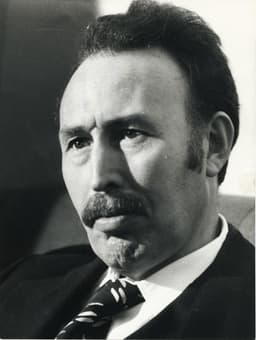
Houari Boumediene
Politician · Modern
55.0Total

Koloa Talake
Politician · Modern
39.1Total
Basic Information
Born
1932
1934
Died
—
—
Era
Modern
Modern
Nationality
Algeria
Tuvalu
Occupation
Politician
Politician
Civilization
Middle Eastern
Other
Score Comparison
Military (10%)
41.6
44.2
Political (20%)
60.0
26.4
Influence (20%)
58.0
48.6
Legacy (20%)
48.3
35.8
Leadership (15%)
72.0
34.6
Strategy (15%)
45.0
43.8
TOTAL
55.0
39.1
Houari Boumediene — Complete Timeline
1954 AD
Role in Algerian War of IndependenceWar◆ Major
Boumediene joined the National Liberation Front (FLN) and became a key military commander in the war against French colonial rule. He organized guerrilla operations and rose through the ranks.
Algerian WarDecolonizationFLN
Impact: national
1965 AD
Coup d'État against Ben BellaPolitical Action
Boumediene led a military coup that overthrew President Ahmed Ben Bella. He suspended the constitution, dissolved parliament, and established a Revolutionary Council, consolidating power.
CoupAuthoritarianismMilitary Rule
Impact: nationaldestructive
1971 AD
Nationalization of HydrocarbonsReform◆ Major
Boumediene nationalized French oil and gas companies, taking control of Algeria's hydrocarbon resources. This provided the state with revenue to fund industrialization and socialist development programs.
NationalizationEconomic SovereigntySocialism
Impact: nationalconstructive
Launch of Agrarian RevolutionReform◆ Major
Boumediene implemented an agrarian reform program that redistributed land from large landowners to peasants and established state farms. The program aimed to increase agricultural production and reduce rural inequality.
Land ReformAgricultureSocialism
Impact: nationalconstructive
1973 AD
Chairmanship of Non-Aligned MovementPolitical Action◆ Major
Boumediene chaired the Non-Aligned Movement (NAM) and advocated for a New International Economic Order. He used the platform to promote Third World solidarity and challenge Western economic dominance.
Non-Aligned MovementThird WorldDiplomacy
Impact: globalconstructive
Koloa Talake — Complete Timeline
2001 AD
Became Prime Minister of TuvaluPolitical Action◆ Major
Koloa Talake was elected Prime Minister of Tuvalu in December 2001, succeeding Faimalaga Luka. He served as head of government during a period of economic challenges and increasing international attention on climate change impacts on low-lying islands.
Prime MinisterTuvaluElection
Impact: national
2002 AD
Threatened to Sue Over Climate ChangePolitical Action◆ Major
Prime Minister Talake announced that Tuvalu would take legal action against the United States and Australia at the International Court of Justice for their failure to reduce greenhouse gas emissions. The threat aimed to hold major polluters accountable for sea-level rise threatening Tuvalu's existence.
Climate ChangeLegal ActionTuvalu
Impact: globalconstructive
Lost No-Confidence Vote and Left OfficePolitical Action◆ Major
Koloa Talake lost a no-confidence vote in the Tuvalu Parliament in December 2002, ending his one-year tenure as Prime Minister. The vote was triggered by political infighting and dissatisfaction with his leadership. He was succeeded by Saufatu Sopoanga.
No-ConfidencePolitical CrisisTuvalu
Impact: nationaldestructive
This comparison has not been analyzed yet.
One-time AI generation (~1 minute). Scores and timeline are already available below.
Rankings
🥇
Houari BoumedieneLeader
Mil: 41.6Pol: 60.0Inf: 58.0
55.0
🥈
Koloa Talake
Mil: 44.2Pol: 26.4Inf: 48.6
39.1
+15.9 behind
How This Comparison Works
Algorithm
Each figure is scored on 6 dimensions (0—100 scale) based on structured historical data: Military (10%), Political (20%), Influence (20%), Legacy (20%), Leadership (15%), Strategy (15%). The weighted total produces the final ranking.
Data Sources
Scores are computed from structured sub-indicators in the database. Scale factors adjust for era (Ancient ×0.85, Modern ×1.0) and civilization size (Eastern ×1.05, Other ×0.80) to account for differences in population and military scale.
Maximum 3 Figures
Comparisons are limited to 2—3 figures to ensure readability and statistical meaningfulness.
Error Margins
±5 points per dimension — Sub-scores are derived from historical records with inherent uncertainty. Two figures within 5 points on a dimension should be considered roughly equivalent in that area.
Total Score Accuracy
±3 points overall — The weighted combination of 6 dimensions produces a total score with approximately ±3 points of uncertainty. Differences of less than 3 points are not statistically significant— the figures are effectively tied.
Known Limitations
- Historical records are incomplete and uneven across civilizations
- Figures from oral-tradition societies may be underrepresented
- Occupation labels can misclassify multi-role figures
- Scores measure capability and impact, not moral character
- Quantitative scoring is a comparison tool, not absolute truth
Capability Radar
Military (10%) — Battles & Warfare
Battles
10
19
Win Rate
10
27
Expansion
10
28
Political (20%) — Governance & Reform
Reform
70
15
Diplomacy
60
20
Economy
65
10
Influence (20%) — Cultural & Global Reach
Cultural
40
5
Global
40
15
Legacy (20%) — Historical Impact
Historical
50
10
Longevity
40
5
Leadership (15%) — Power & Stability
Tenure
65
10
Stability
55
10
Strategy (15%) — Tactics & Innovation
Strategy
10
32
Tactics
10
33
Reform
40
35
Similar Comparisons
Comments & Discussion
No comments yet. Be the first to share your thoughts!