Loading...
Hugh O Neill vs Uesugi Kenshin
Uesugi Kenshin leads by 7.6 pts · 2 figures compared
…

Hugh O Neill
General · Modern
57.6Total
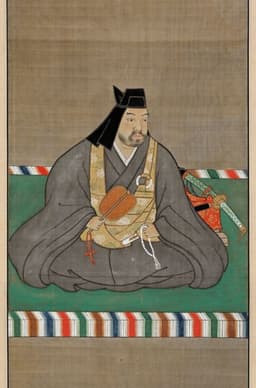
Uesugi Kenshin
General · Modern
65.2Total
Basic Information
Born
1550
1530
Died
1616
1578
Era
Modern
Modern
Nationality
Ireland
Japan
Occupation
General
General
Civilization
Western
Eastern
Score Comparison
Military (10%)
70.0
67.3
Political (20%)
45.0
70.0
Influence (20%)
58.3
58.3
Legacy (20%)
52.0
55.0
Leadership (15%)
72.0
85.0
Strategy (15%)
55.0
69.1
TOTAL
57.6
65.2
Hugh O Neill — Complete Timeline
1595 AD
Rebellion against English RuleWar◆ Major
Hugh O'Neill openly rebelled against English authority in Ireland, beginning the Nine Years' War. He sought to defend Gaelic Irish autonomy and resist English expansion, using guerrilla tactics and seeking foreign support.
RebellionNine Years' WarGaelic Resistance
Impact: national
1598 AD
Battle of the Yellow FordWar◆ Major
Hugh O'Neill, Earl of Tyrone, led Irish forces to a decisive victory over an English army at the Yellow Ford in County Armagh. The English commander Sir Henry Bagenal was killed, and the victory boosted Irish morale during the Nine Years' War.
Nine Years' WarBattleIrish Victory
Impact: regional
1601 AD
Battle of KinsaleWar◆ Major
Hugh O'Neill and his Spanish allies were defeated by English forces at Kinsale in County Cork. The defeat was a turning point in the Nine Years' War, as it ended Spanish support and forced O'Neill into a defensive position in Ulster.
Nine Years' WarBattleSpanish Intervention
Impact: regionaltragic
1603 AD
Treaty of MellifontPolitical Action◆ Major
Hugh O'Neill surrendered to the English Crown at Mellifont, ending the Nine Years' War. He submitted to Lord Deputy Mountjoy, received a pardon, and was allowed to retain his lands and title, though his power was significantly reduced.
SurrenderNine Years' WarTreaty
Impact: national
1607 AD
Flight of the EarlsPolitical Action◆ Major
Hugh O'Neill, along with other Ulster Gaelic lords, fled Ireland for continental Europe after the failure of the Nine Years' War. This departure marked the end of the Gaelic Irish political order in Ulster and led to the Plantation of Ulster by English and Scottish settlers.
ExileUlster PlantationGaelic Decline
Impact: nationaltragic
Uesugi Kenshin — Complete Timeline
1548 AD
Adoption of the Name Uesugi and Inheritance of EchigoPolitical Action◆ Major
Nagao Kagetora (later Uesugi Kenshin) was adopted into the Uesugi clan and became the lord of Echigo Province. This adoption gave him the legitimacy to rule and the resources to become a major daimyo. He took the name Uesugi Kenshin and began his campaigns to expand his influence.
AdoptionSuccessionEchigo
Impact: regional
1560 AD
Invasion of Kanto RegionWar◆ Major
Uesugi Kenshin launched a major campaign into the Kanto region, aiming to challenge the Hojo clan's dominance. He captured several castles, including Odawara's outer defenses, but failed to take the main Hojo stronghold. This campaign demonstrated his ambition but also his limitations in sustained siege warfare.
InvasionKantoHojo Clan
Impact: regional
1561 AD
Battle of Kawanakajima (Fourth)War◆ Major
Uesugi Kenshin engaged Takeda Shingen in the fourth Battle of Kawanakajima, a fierce contest that ended inconclusively. Kenshin's forces reportedly broke through to Shingen's command post, with Kenshin allegedly attacking Shingen personally. The battle solidified Kenshin's reputation as a brilliant tactician.
BattleRivalrySengoku Period
Impact: regional
Siege of Odawara (1561)War
Uesugi Kenshin besieged Odawara Castle, the stronghold of the Hojo clan, for several weeks. Despite his efforts, the castle's defenses held, and he was forced to withdraw due to supply shortages and the approach of Takeda Shingen's forces. The siege was a strategic failure.
SiegeOdawaraHojo Clan
Impact: regional
Expert Analysis
Origins
Hugh O'Neill (c. 1550–1616) was born into the Gaelic nobility of Ulster, Ireland. His father was Matthew O'Neill, baron of Dungannon, but Hugh was raised in England under the care of the Crown, receiving an English education. This dual background gave him insights into both Gaelic and English worlds. He returned to Ireland in 1568 and became Earl of Tyrone in 1585, inheriting a position of power but also a history of conflict with English expansion.
Uesugi Kenshin (1530–1578) was born Nagao Kagetora in Echigo Province, Japan. His father was Nagao Tamekage, a warlord, but Kenshin was raised in a temple after his father's death. He later took the name Uesugi Kenshin after being adopted into the Uesugi clan, giving him legitimacy to rule Echigo. His upbringing in Buddhist temples instilled a strategic mind and a reputation for piety.
Rise to Power
Hugh O'Neill's rise began with his claim to the earldom of Tyrone, confirmed by the English in 1585. He initially cooperated with the English, even serving as a sheriff, but tensions grew over land rights and religious freedom. In 1595, he openly rebelled, beginning the Nine Years' War (1595–1603). He skillfully united various Gaelic lords, using guerrilla tactics and seeking Spanish support. His major victory at the Battle of the Yellow Ford (1598) saw him defeat an English army, killing its commander Sir Henry Bagenal.
Uesugi Kenshin's rise came through military prowess and political maneuvering. After inheriting Echigo, he consolidated power by defeating rival clans. His rivalry with Takeda Shingen defined his early career, culminating in the fourth Battle of Kawanakajima (1561), a fierce but inconclusive engagement. Kenshin's forces reportedly broke into Shingen's command post, a moment of legendary courage. He later expanded into the Kanto region, besieging Odawara Castle (1561) and challenging the Hojo clan.
Leadership & Governance
Hugh O'Neill's leadership was characterized by his ability to forge a coalition of Gaelic Irish and Old English Catholics. He employed modern military tactics, training his troops with muskets and pikes. Politically, he sought to balance between Gaelic traditions and English-style centralization, but his governance was limited by the war. His score of 72.0 in leadership reflects his skill in managing a diverse rebellion, though his political score of 45.0 indicates challenges in diplomacy and long-term state-building.
Uesugi Kenshin's leadership earned him a score of 85.0, reflecting his reputation as a just and capable ruler. He was known for his strategic acumen and personal courage, often leading from the front. He governed Echigo effectively, maintaining stability and fostering trade. His political score of 70.0 shows his ability to navigate the complex daimyo system, though his invasion of Kanto failed to achieve lasting gains. Kenshin was also a devout Buddhist, which influenced his governance and personal conduct.
Triumph & Tragedy
Hugh O'Neill's greatest triumph was the Battle of the Yellow Ford (1598), where he annihilated an English army, securing control of Ulster. His greatest tragedy was the defeat at the Battle of Kinsale (1601), where Spanish reinforcements failed to coordinate, leading to a decisive English victory. This loss forced him to surrender under the Treaty of Mellifont (1603), ending the war. His subsequent Flight of the Earls (1607) marked the end of Gaelic aristocracy in Ireland.
Uesugi Kenshin's triumphs include his successful campaigns in Echigo and his legendary defense against Takeda Shingen. His siege of Odawara (1561) was a failure, as he could not capture the Hojo stronghold. His greatest tragedy may be his sudden death in 1578, likely from illness, which prevented him from achieving his ambitions of controlling the Kanto region. His death led to internal succession disputes that weakened the Uesugi clan.
Character & Destiny
Hugh O'Neill was pragmatic and adaptable, shaped by his English upbringing and Gaelic heritage. He was cautious yet capable of daring moves, but his reliance on Spanish aid proved a strategic weakness. His character, marked by a desire for autonomy, ultimately led to his exile. Historians note his skill as a military commander but criticize his political naivety in trusting foreign allies.
Uesugi Kenshin was known for his code of honor and religious devotion. He was called the "Dragon of Echigo" and respected even by enemies like Takeda Shingen. His character was seen as principled, but his unwillingness to compromise may have limited his success. His destiny was cut short by death at 48, leaving his legacy in the hands of successors.
Legacy
Hugh O'Neill's legacy is significant in Irish history as a symbol of resistance against English rule. The Flight of the Earls led to the Plantation of Ulster, reshaping Ireland's demographic and political landscape. His military tactics influenced later Irish rebellions. He scores 52.0 in legacy, reflecting his impact on Irish nationalism, though his immediate failure limited long-term influence.
Uesugi Kenshin's legacy is enduring in Japanese culture as a model of the ideal samurai. His rivalry with Takeda Shingen is legendary, immortalized in literature and film. He scores 55.0 in legacy, indicating strong cultural resonance but limited political impact. His governance of Echigo is remembered as just, and his military strategies are studied.
Conclusion
Uesugi Kenshin had a greater overall impact than Hugh O'Neill, with a total score of 65.2 to O'Neill's 57.6. Kenshin's leadership (85.0) and political acumen (70.0) exceed O'Neill's, reflecting his success in governing a stable domain and inspiring loyalty. While O'Neill's rebellion was pivotal for Ireland, it ultimately failed, whereas Kenshin's legacy as a cultural icon endures. In the context of their respective histories, Kenshin's influence on Japanese identity outweighs O'Neill's on Irish nationalism.
Rankings
🥇
Uesugi KenshinLeader
Mil: 67.3Pol: 70.0Inf: 58.3
65.2
🥈
Hugh O Neill
Mil: 70.0Pol: 45.0Inf: 58.3
57.6
+7.6 behind
How This Comparison Works
Algorithm
Each figure is scored on 6 dimensions (0—100 scale) based on structured historical data: Military (10%), Political (20%), Influence (20%), Legacy (20%), Leadership (15%), Strategy (15%). The weighted total produces the final ranking.
Data Sources
Scores are computed from structured sub-indicators in the database. Scale factors adjust for era (Ancient ×0.85, Modern ×1.0) and civilization size (Eastern ×1.05, Other ×0.80) to account for differences in population and military scale.
Maximum 3 Figures
Comparisons are limited to 2—3 figures to ensure readability and statistical meaningfulness.
Error Margins
±5 points per dimension — Sub-scores are derived from historical records with inherent uncertainty. Two figures within 5 points on a dimension should be considered roughly equivalent in that area.
Total Score Accuracy
±3 points overall — The weighted combination of 6 dimensions produces a total score with approximately ±3 points of uncertainty. Differences of less than 3 points are not statistically significant— the figures are effectively tied.
Known Limitations
- Historical records are incomplete and uneven across civilizations
- Figures from oral-tradition societies may be underrepresented
- Occupation labels can misclassify multi-role figures
- Scores measure capability and impact, not moral character
- Quantitative scoring is a comparison tool, not absolute truth
Capability Radar
Military (10%) — Battles & Warfare
Battles
65
75
Win Rate
60
70
Expansion
40
60
Political (20%) — Governance & Reform
Reform
50
60
Diplomacy
70
75
Economy
45
65
Influence (20%) — Cultural & Global Reach
Cultural
50
65
Global
40
45
Legacy (20%) — Historical Impact
Historical
55
70
Longevity
45
60
Leadership (15%) — Power & Stability
Tenure
60
70
Stability
40
70
Strategy (15%) — Tactics & Innovation
Strategy
75
80
Tactics
70
85
Reform
55
65
Similar Comparisons
Comments & Discussion
No comments yet. Be the first to share your thoughts!