Loading...
Hulegu Khan vs Malcolm III Canmore
Hulegu Khan leads by 5.6 pts · 2 figures compared
…
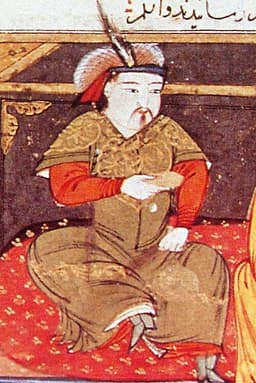
Hulegu Khan
Emperor · Medieval
64.3Total
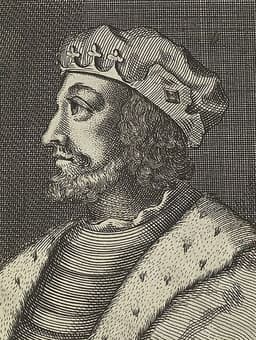
Malcolm III Canmore
Emperor · Medieval
58.7Total
Basic Information
Born
1217
1031
Died
1265
1093
Era
Medieval
Medieval
Nationality
Ilkhanate
Scotland
Occupation
Emperor
Emperor
Civilization
Middle Eastern
Western
Score Comparison
Military (10%)
85.0
45.0
Political (20%)
45.0
68.0
Influence (20%)
68.0
57.2
Legacy (20%)
55.0
54.0
Leadership (15%)
72.0
68.0
Strategy (15%)
75.0
60.0
TOTAL
64.3
58.7
Hulegu Khan — Complete Timeline
1256 AD
Destruction of the Ismaili FortressesWar◆ Major
Hulagu's army captured and destroyed the mountain fortresses of the Nizari Ismailis (Assassins), including Alamut. The Ismaili state was effectively eliminated, and their library and treasures were burned. This removed a major political and military force in Persia.
Mongol ConquestIsmailisAlamut
Impact: regionaldestructive
Founding of the IlkhanatePolitical Action◆ Major
Hulagu established the Ilkhanate as a Mongol khanate in Persia, with his capital at Maragheh. The state encompassed modern Iran, Iraq, Azerbaijan, and parts of Turkey and Syria, and it became a major power in the Middle East.
Mongol EmpireIlkhanatePersia
Impact: regional
1258 AD
Destruction of BaghdadWar
Hulagu's Mongol army besieged and sacked Baghdad, the capital of the Abbasid Caliphate. The city was systematically destroyed, with estimates of 100,000 to 1 million civilians killed. The last Abbasid caliph, Al-Musta'sim, was executed, ending the Islamic Golden Age.
Mongol ConquestBaghdadAbbasid Caliphate
Impact: globaldestructive
1260 AD
Battle of Ain JalutWar
Hulagu's forces, led by general Kitbuqa, were defeated by the Mamluk Sultanate at Ain Jalut in Palestine. This was the first major Mongol defeat in the Middle East, halting Mongol expansion into Syria and Egypt. Hulagu was unable to reinforce due to the Berke
Mongol DefeatMamluk SultanateSyria
Impact: regionaltragic
1262 AD
War with BerkeWar◆ Major
Hulagu fought a war against his cousin Berke, Khan of the Golden Horde, after Berke converted to Islam and opposed the destruction of Baghdad. The war involved battles in the Caucasus and weakened both khanates, preventing further Mongol expansion westward.
Mongol Civil WarCaucasusGolden Horde
Impact: regionaldestructive
Malcolm III Canmore — Complete Timeline
1057 AD
Battle of LumphananWar
Malcolm Canmore killed Macbeth at the Battle of Lumphanan, ending Macbeth's reign. Malcolm then claimed the Scottish throne, though he faced opposition from Macbeth's stepson Lulach, whom he killed in 1058 to secure his position.
BattleSuccessionMacbeth
Impact: national
1070 AD
Invasion of England (1070s)War◆ Major
Malcolm launched a series of raids into northern England, exploiting the instability after the Norman Conquest. He invaded Northumbria in 1070 and again in 1079, but was forced to submit to William the Conqueror at the Treaty of Abernethy in 1072, becoming a vassal.
InvasionNorthumbriaNorman Conquest
Impact: regional
Marriage to Margaret of WessexPolitical Action◆ Major
Malcolm married Margaret, an Anglo-Saxon princess who had fled to Scotland after the Norman Conquest. The marriage strengthened ties with the English church and nobility, and Margaret later became a saint. It also introduced English cultural and religious influences to the Scottish court.
MarriageAnglo-SaxonReligion
Impact: regionalconstructive
1093 AD
Battle of AlnwickWar◆ Major
Malcolm invaded England again and was killed at the Battle of Alnwick in Northumberland, along with his eldest son Edward. His death led to a succession crisis in Scotland, as his brother Donald III seized the throne, beginning a period of instability.
BattleDeathSuccession Crisis
Impact: nationaltragic
Expert Analysis
Origins
Hulegu Khan (c. 1217–1265) was a grandson of Genghis Khan, born to Tolui and Sorghaghtani Beki. He was raised in the Mongol warrior tradition, learning horseback archery and command from an early age. His mother, a Nestorian Christian, provided some education, but his formative years were dominated by the Mongol conquests of China and Central Asia. He inherited the Mongol military machine and its ruthless tactics.
Malcolm III Canmore (c. 1031–1093) was the son of Duncan I, King of Scotland. After his father's death at the hands of Macbeth in 1040, Malcolm fled to England and later to the court of Edward the Confessor. He spent years in exile, learning English politics and military tactics. His return to Scotland was driven by a desire to reclaim his birthright.
Rise to Power
Hulegu's rise began when his brother Möngke became Great Khan in 1251. Möngke tasked Hulegu with conquering the Islamic world's remaining strongholds. In 1253, Hulegu set out from Mongolia with a massive army, estimated at 150,000 men. He systematically crushed the Nizari Ismaili (Assassins) fortresses, capturing Alamut in 1256. Then, in 1258, he besieged Baghdad, capital of the Abbasid Caliphate. After a 12-day siege, the city fell; Hulegu ordered a massacre that killed up to 1 million people, ending the Islamic Golden Age. This event scored him 85.0 in military but also damaged his political standing.
Malcolm III's rise came through bloodshed. In 1054, with English support, he defeated Macbeth at the Battle of Dunsinane. In 1057, he killed Macbeth at Lumphanan and seized the throne. However, he faced opposition from Macbeth's stepson Lulach, whom he killed in 1058. Malcolm's military score of 45.0 reflects his smaller scale conflicts compared to Hulegu.
Leadership & Governance
Hulegu ruled the Ilkhanate (modern Iran, Iraq, Azerbaijan, and parts of Turkey) from 1256. He adopted Persian administrative practices, appointing local viziers like the historian Juvayni. He promoted religious tolerance among Christians, Buddhists, and Muslims, but his destruction of Baghdad alienated many Muslims. His political score of 45.0 indicates instability: he fought a war with his cousin Berke of the Golden Horde (1262–1265) over religion and territory, weakening Mongol unity.
Malcolm III strengthened Scotland through marriage and diplomacy. He married Margaret of Wessex (c. 1070), an Anglo-Saxon princess who introduced English customs and reformed the Scottish Church. Malcolm built fortresses and encouraged trade, but his governance was marked by constant raids into England. His political score of 68.0 reflects his ability to consolidate power and establish the Canmore dynasty, though his aggressive foreign policy led to his death.
Triumph & Tragedy
Hulegu's greatest triumph was the destruction of the Abbasid Caliphate and the founding of the Ilkhanate, which lasted until 1335. His greatest failure was the defeat at Ain Jalut (1260), where his general Kitbuqa was routed by the Mamluks. This defeat halted Mongol expansion into Africa and the Levant. Additionally, his war with Berke drained resources and split the Mongol Empire.
Malcolm's triumph was killing Macbeth and securing the Scottish throne for the Canmore line, which ruled for two centuries. His marriage to Margaret brought cultural and religious reforms. However, his repeated invasions of England (1070, 1079, 1091–1093) overreached. He was killed at Alnwick in 1093, leading to a succession crisis and temporary Norman influence in Scotland.
Character & Destiny
Hulegu was a ruthless military commander but also a patron of science and culture. He built an observatory at Maragheh and supported scholars. His decision to destroy Baghdad, however, was a strategic error: it alienated potential Muslim allies and provoked Berke's hostility. His legacy score of 55.0 reflects the mixed results of his conquests.
Malcolm was determined and politically astute, but his ambition in England led to his downfall. His character is often seen as the founder of a dynasty, but his reign was marred by constant warfare. Historians note his leadership score of 68.0, but his military score of 45.0 shows he was not a great general.
Legacy
Hulegu's Ilkhanate introduced Mongol rule to Persia, influencing art, architecture, and trade along the Silk Road. The destruction of Baghdad ended the Abbasid Caliphate, shifting the Islamic world's center. However, the Ilkhanate eventually converted to Islam and assimilated into Persian culture.
Malcolm's Canmore dynasty stabilized Scotland and integrated Anglo-Norman feudalism. His descendants included David I and Malcolm IV, who expanded royal power. The marriage of Margaret brought English customs, but also conflict with England.
Conclusion
Hulegu Khan had a greater impact on world history due to the scale of his conquests and the transformation of the Middle East. His total score of 64.3 surpasses Malcolm's 58.7, with significant advantages in military (85.0 vs 45.0) and strategy (75.0 vs 60.0). Malcolm's influence was limited to Scotland, while Hulegu's actions reshaped the Islamic world and the Mongol Empire. The destruction of Baghdad remains a pivotal event, whereas Malcolm's legacy is primarily dynastic. Thus, Hulegu Khan is the more consequential figure.
Rankings
🥇
Hulegu KhanLeader
Mil: 85.0Pol: 45.0Inf: 68.0
64.3
🥈
Malcolm III Canmore
Mil: 45.0Pol: 68.0Inf: 57.2
58.7
+5.6 behind
How This Comparison Works
Algorithm
Each figure is scored on 6 dimensions (0—100 scale) based on structured historical data: Military (10%), Political (20%), Influence (20%), Legacy (20%), Leadership (15%), Strategy (15%). The weighted total produces the final ranking.
Data Sources
Scores are computed from structured sub-indicators in the database. Scale factors adjust for era (Ancient ×0.85, Modern ×1.0) and civilization size (Eastern ×1.05, Other ×0.80) to account for differences in population and military scale.
Maximum 3 Figures
Comparisons are limited to 2—3 figures to ensure readability and statistical meaningfulness.
Error Margins
±5 points per dimension — Sub-scores are derived from historical records with inherent uncertainty. Two figures within 5 points on a dimension should be considered roughly equivalent in that area.
Total Score Accuracy
±3 points overall — The weighted combination of 6 dimensions produces a total score with approximately ±3 points of uncertainty. Differences of less than 3 points are not statistically significant— the figures are effectively tied.
Known Limitations
- Historical records are incomplete and uneven across civilizations
- Figures from oral-tradition societies may be underrepresented
- Occupation labels can misclassify multi-role figures
- Scores measure capability and impact, not moral character
- Quantitative scoring is a comparison tool, not absolute truth
Capability Radar
Military (10%) — Battles & Warfare
Battles
85
45
Win Rate
80
50
Expansion
90
55
Political (20%) — Governance & Reform
Reform
70
55
Diplomacy
65
60
Economy
60
50
Influence (20%) — Cultural & Global Reach
Cultural
60
45
Global
75
30
Legacy (20%) — Historical Impact
Historical
80
55
Longevity
65
60
Leadership (15%) — Power & Stability
Tenure
75
70
Stability
55
55
Strategy (15%) — Tactics & Innovation
Strategy
85
45
Tactics
88
40
Reform
70
30
Similar Comparisons
Comments & Discussion
No comments yet. Be the first to share your thoughts!