Loading...
Emperor Taizu of Liao vs Malcolm III Canmore
Emperor Taizu of Liao leads by 8.1 pts · 2 figures compared
…
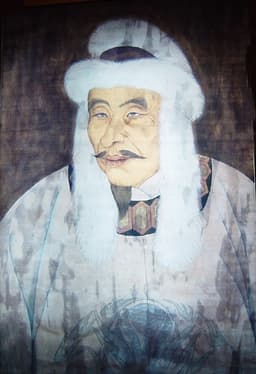
Emperor Taizu of Liao
Emperor · Medieval
66.8Total
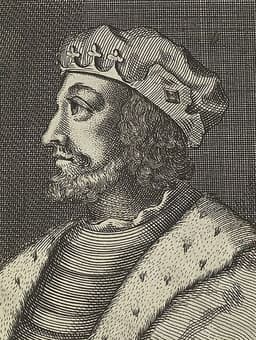
Malcolm III Canmore
Emperor · Medieval
58.7Total
Basic Information
Born
872
1031
Died
926
1093
Era
Medieval
Medieval
Nationality
China
Scotland
Occupation
Emperor
Emperor
Civilization
Eastern
Western
Score Comparison
Military (10%)
76.0
45.0
Political (20%)
78.0
68.0
Influence (20%)
72.0
57.2
Legacy (20%)
40.0
54.0
Leadership (15%)
80.0
68.0
Strategy (15%)
75.0
60.0
TOTAL
66.8
58.7
Emperor Taizu of Liao — Complete Timeline
907 AD
Founding of the Liao DynastyPolitical Action
Abaoji, a Khitan chieftain, unified the Khitan tribes and proclaimed himself emperor, founding the Liao dynasty. This established the first major steppe-based dynasty to rule parts of northern China.
Dynasty FoundingUnification
Impact: regionalconstructive
916 AD
Establishment of the Dual Administration SystemReform◆ Major
Emperor Taizu established a dual administration system, with separate institutions for Khitan and Chinese subjects. This allowed the Liao to effectively govern both nomadic and agricultural populations, a model later adopted by other conquest dynasties.
Government ReformAdministration
Impact: regionalconstructive
920 AD
Creation of the Khitan ScriptCultural◆ Major
Emperor Taizu ordered the creation of a Khitan script, based on Chinese characters, to write the Khitan language. This script was used for official documents and inscriptions, promoting Khitan culture and administration.
Writing SystemCultural Development
Impact: regionalconstructive
926 AD
Conquest of the Bohai KingdomWar◆ Major
Emperor Taizu led a campaign that conquered the Bohai Kingdom in Manchuria. This victory expanded Liao territory eastward and eliminated a rival state, securing the Liao's eastern frontier.
ConquestExpansion
Impact: regionalconstructive
Death of Emperor TaizuPolitical Action
Emperor Taizu died during a campaign against the Bohai Kingdom. His death led to a succession struggle among his sons, but his son Yel
DeathSuccession
Impact: national
Malcolm III Canmore — Complete Timeline
1057 AD
Battle of LumphananWar
Malcolm Canmore killed Macbeth at the Battle of Lumphanan, ending Macbeth's reign. Malcolm then claimed the Scottish throne, though he faced opposition from Macbeth's stepson Lulach, whom he killed in 1058 to secure his position.
BattleSuccessionMacbeth
Impact: national
1070 AD
Invasion of England (1070s)War◆ Major
Malcolm launched a series of raids into northern England, exploiting the instability after the Norman Conquest. He invaded Northumbria in 1070 and again in 1079, but was forced to submit to William the Conqueror at the Treaty of Abernethy in 1072, becoming a vassal.
InvasionNorthumbriaNorman Conquest
Impact: regional
Marriage to Margaret of WessexPolitical Action◆ Major
Malcolm married Margaret, an Anglo-Saxon princess who had fled to Scotland after the Norman Conquest. The marriage strengthened ties with the English church and nobility, and Margaret later became a saint. It also introduced English cultural and religious influences to the Scottish court.
MarriageAnglo-SaxonReligion
Impact: regionalconstructive
1093 AD
Battle of AlnwickWar◆ Major
Malcolm invaded England again and was killed at the Battle of Alnwick in Northumberland, along with his eldest son Edward. His death led to a succession crisis in Scotland, as his brother Donald III seized the throne, beginning a period of instability.
BattleDeathSuccession Crisis
Impact: nationaltragic
Expert Analysis
Origins
Emperor Taizu of Liao, born Yelü Abaoji in 872 AD, was a chieftain of the Khitan tribes in present-day northeastern China. His father was a tribal leader, but Abaoji rose through military prowess. He was exposed to Chinese culture through contacts with the Tang dynasty, which influenced his later administrative innovations. Malcolm III Canmore, born around 1031, was the son of King Duncan I of Scotland. After Duncan's murder by Macbeth in 1040, Malcolm fled to England, spending years in exile at the court of Edward the Confessor. This experience shaped his later political and marital alliances.
Rise to Power
Abaoji united the Khitan tribes in 907 AD by defeating rival chieftains. In 916, he proclaimed himself emperor, founding the Liao dynasty. He consolidated power by absorbing other nomadic groups and establishing a capital. Malcolm's return to Scotland culminated in the Battle of Lumphanan in 1057, where he killed Macbeth. He was crowned king, but faced opposition from Macbeth's stepson Lulach, whom he defeated in 1058. Malcolm's early reign was marked by securing his throne against internal rivals.
Leadership & Governance
Taizu's governance was innovative. He created the dual administration system: the Northern Administration for Khitan affairs and the Southern Administration for Chinese subjects. This allowed the Liao to rule a multi-ethnic empire effectively. He also commissioned the Khitan script in 920, based on Chinese characters but adapted for the Khitan language. Malcolm III focused on strengthening ties with England. He married Margaret of Wessex in 1070, an Anglo-Saxon princess fleeing the Norman Conquest. This marriage introduced English customs, reformed the Scottish church, and promoted Romanesque architecture. However, Malcolm's raids into England provoked Norman retaliation, undermining his security.
Triumph & Tragedy
Taizu's greatest success was founding the Liao dynasty and expanding its territory, including the conquest of the Bohai Kingdom in 926. This victory eliminated a rival and provided resources. His tragedy came during the same campaign: he died in 926, leaving a succession crisis among his sons. The empire he built, however, endured for two centuries. Malcolm's triumphs include killing Macbeth and establishing the Canmore dynasty, which ruled Scotland for over 200 years. His marriage to Margaret strengthened Scotland's cultural and religious ties with Europe. His tragedy was his death at the Battle of Alnwick in 1093 during an invasion of England, along with his son Edward, leading to a period of instability. Malcolm's military score of 45.0 reflects his limited success in warfare, while Taizu scored 76.0.
Character & Destiny
Taizu was a strategic and pragmatic ruler, able to blend Khitan traditions with Chinese administrative practices. His decision to create a dual system showed foresight. His death on campaign, however, revealed a risk-taking nature. Malcolm was determined and resilient, surviving exile to reclaim his throne. His marriage to Margaret was politically astute, but his repeated invasions of England demonstrated a stubbornness that ultimately led to his downfall. Historians note that Malcolm's political score of 68.0 is higher than his military score, indicating better diplomacy than warfare.
Legacy
Taizu's Liao dynasty controlled northern China and influenced subsequent dynasties, such as the Jin and Yuan. The dual administration system was adopted by later conquest dynasties. The Khitan script, though now extinct, was a significant cultural achievement. His total score of 66.8 reflects a well-rounded founder. Malcolm III's legacy is the Canmore dynasty, which brought stability and European integration to Scotland. His descendants included notable kings like David I. However, his direct impact was less transformative than Taizu's. Malcolm's total score of 58.7 shows a competent but less influential ruler.
Conclusion
Emperor Taizu of Liao had a greater impact than Malcolm III Canmore. Taizu's innovations in governance, his conquests, and the longevity of the Liao dynasty outweigh Malcolm's achievements. While Malcolm established a dynasty that lasted longer, his military failures and limited territorial expansion place him below Taizu. The score gap of 8.1 points confirms this: Taizu's total of 66.8 versus Malcolm's 58.7. Taizu's legacy influenced Chinese history more profoundly, while Malcolm's impact was confined to Scotland.
Rankings
🥇
Emperor Taizu of LiaoLeader
Mil: 76.0Pol: 78.0Inf: 72.0
66.8
🥈
Malcolm III Canmore
Mil: 45.0Pol: 68.0Inf: 57.2
58.7
+8.1 behind
How This Comparison Works
Algorithm
Each figure is scored on 6 dimensions (0—100 scale) based on structured historical data: Military (10%), Political (20%), Influence (20%), Legacy (20%), Leadership (15%), Strategy (15%). The weighted total produces the final ranking.
Data Sources
Scores are computed from structured sub-indicators in the database. Scale factors adjust for era (Ancient ×0.85, Modern ×1.0) and civilization size (Eastern ×1.05, Other ×0.80) to account for differences in population and military scale.
Maximum 3 Figures
Comparisons are limited to 2—3 figures to ensure readability and statistical meaningfulness.
Error Margins
±5 points per dimension — Sub-scores are derived from historical records with inherent uncertainty. Two figures within 5 points on a dimension should be considered roughly equivalent in that area.
Total Score Accuracy
±3 points overall — The weighted combination of 6 dimensions produces a total score with approximately ±3 points of uncertainty. Differences of less than 3 points are not statistically significant— the figures are effectively tied.
Known Limitations
- Historical records are incomplete and uneven across civilizations
- Figures from oral-tradition societies may be underrepresented
- Occupation labels can misclassify multi-role figures
- Scores measure capability and impact, not moral character
- Quantitative scoring is a comparison tool, not absolute truth
Capability Radar
Military (10%) — Battles & Warfare
Battles
75
45
Win Rate
80
50
Expansion
85
55
Political (20%) — Governance & Reform
Reform
90
55
Diplomacy
80
60
Economy
75
50
Influence (20%) — Cultural & Global Reach
Cultural
65
45
Global
60
30
Legacy (20%) — Historical Impact
Historical
75
55
Longevity
70
60
Leadership (15%) — Power & Stability
Tenure
85
70
Stability
70
55
Strategy (15%) — Tactics & Innovation
Strategy
85
45
Tactics
70
40
Reform
90
30
Similar Comparisons
Comments & Discussion
No comments yet. Be the first to share your thoughts!