Loading...
Louis the Pious vs Malcolm III Canmore
Malcolm III Canmore leads by 9.8 pts · 2 figures compared
…
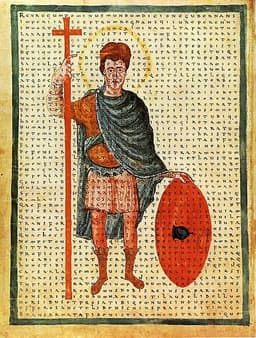
Louis the Pious
Emperor · Medieval
48.9Total
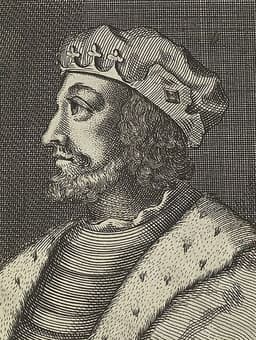
Malcolm III Canmore
Emperor · Medieval
58.7Total
Basic Information
Born
778
1031
Died
840
1093
Era
Medieval
Medieval
Nationality
Frankish Empire
Scotland
Occupation
Emperor
Emperor
Civilization
Western
Western
Score Comparison
Military (10%)
50.0
45.0
Political (20%)
39.4
68.0
Influence (20%)
54.1
57.2
Legacy (20%)
45.0
54.0
Leadership (15%)
62.2
68.0
Strategy (15%)
38.6
60.0
TOTAL
48.9
58.7
Louis the Pious — Complete Timeline
817 AD
Ordinatio ImperiiPolitical Action◆ Major
Louis issued the Ordinatio Imperii, dividing the Frankish Empire among his three sons: Lothair, Pepin, and Louis the German. This plan aimed to maintain unity under Lothair's seniority but led to civil wars after Pepin's death.
SuccessionDivisionCivil War
Impact: regional
822 AD
Penance at AttignyPolitical Action
Louis performed public penance at Attigny for the death of his nephew Bernard of Italy, whom he had blinded. This act weakened his authority and set a precedent for ecclesiastical intervention in royal affairs.
PenanceChurchBernard of Italy
Impact: nationaltragic
841 AD
Battle of FontenoyWar◆ Major
After Louis's death, his sons fought the Battle of Fontenoy, where Charles the Bald and Louis the German defeated Lothair. This battle was a key event in the Carolingian civil wars that led to the empire's fragmentation.
Civil WarCarolingianDivision
Impact: regionaldestructive
Malcolm III Canmore — Complete Timeline
1057 AD
Battle of LumphananWar
Malcolm Canmore killed Macbeth at the Battle of Lumphanan, ending Macbeth's reign. Malcolm then claimed the Scottish throne, though he faced opposition from Macbeth's stepson Lulach, whom he killed in 1058 to secure his position.
BattleSuccessionMacbeth
Impact: national
1070 AD
Invasion of England (1070s)War◆ Major
Malcolm launched a series of raids into northern England, exploiting the instability after the Norman Conquest. He invaded Northumbria in 1070 and again in 1079, but was forced to submit to William the Conqueror at the Treaty of Abernethy in 1072, becoming a vassal.
InvasionNorthumbriaNorman Conquest
Impact: regional
Marriage to Margaret of WessexPolitical Action◆ Major
Malcolm married Margaret, an Anglo-Saxon princess who had fled to Scotland after the Norman Conquest. The marriage strengthened ties with the English church and nobility, and Margaret later became a saint. It also introduced English cultural and religious influences to the Scottish court.
MarriageAnglo-SaxonReligion
Impact: regionalconstructive
1093 AD
Battle of AlnwickWar◆ Major
Malcolm invaded England again and was killed at the Battle of Alnwick in Northumberland, along with his eldest son Edward. His death led to a succession crisis in Scotland, as his brother Donald III seized the throne, beginning a period of instability.
BattleDeathSuccession Crisis
Impact: nationaltragic
Expert Analysis
Origins
Louis the Pious (778-840) was the third son of Charlemagne and Hildegard. Born at Chasseneuil-du-Poitou, he was the only surviving son by 813. His upbringing was courtly and religious, tutored by scholars like Benedict of Aniane. He was crowned co-emperor in 813 and became sole emperor upon Charlemagne's death in 814. His early life was shaped by the Carolingian Renaissance and the expectation of maintaining his father's empire.
Malcolm III Canmore (c. 1031-1093) was born into the House of Dunkeld, son of King Duncan I. After Duncan's murder by Macbeth in 1040, Malcolm fled to England, spending years in exile at the court of Edward the Confessor. This exposure to Anglo-Saxon and Norman culture influenced his later reign. His early life was marked by displacement and the ambition to reclaim his father's throne.
Rise to Power
Louis ascended smoothly as co-emperor in 813 and sole emperor in 814. His reign began with reforms to centralize the church and empire, but he soon faced challenges from his nephews and sons. In 817, he issued the Ordinatio Imperii, dividing the empire among his three sons: Lothair, Pepin, and Louis the German. This plan aimed to maintain unity but sowed discord. Louis's authority was further undermined by the rebellion of his nephew Bernard of Italy, whom he blinded (Bernard died), leading to Louis's public penance at Attigny in 822. This act weakened his moral authority.
Malcolm's rise was violent. After killing Macbeth at the Battle of Lumphanan in 1057, he claimed the throne. However, he faced opposition from Lulach, Macbeth's stepson, whom he defeated and killed in 1058. His marriage to Margaret of Wessex in 1070, an Anglo-Saxon princess fleeing Norman conquest, strengthened his legitimacy and ties to English claimants. Malcolm's early reign focused on consolidating power against internal rivals and external threats from Norway and England.
Leadership & Governance
Louis's governance was characterized by religious piety and administrative reforms. He sought to unify the empire under a single Christian order, supported by Benedict of Aniane. However, his indecisiveness and reliance on factional advisors led to inconsistent policies. The Ordinatio Imperii, while intended to prevent civil war, actually created competing power centers. Louis's leadership score of 62.2 reflects his attempts at reform but poor execution. He failed to control his sons, leading to rebellions in 830 and 833-834.
Malcolm's leadership score of 68.0 reflects his effective consolidation of Scotland. He introduced Norman feudalism, built castles, and strengthened the monarchy. His marriage to Margaret brought English church reforms and cultural influence. He also established the Canmore dynasty, which ruled Scotland for two centuries. However, his aggressive raids into England provoked Norman retaliation. His governance was pragmatic, balancing Scottish traditions with Anglo-Norman innovations.
Triumph & Tragedy
Louis's triumphs include the preservation of the Carolingian Empire during his lifetime and the promotion of religious uniformity. His Ordinatio Imperii, though flawed, attempted to manage succession. His tragedy was the civil wars with his sons, culminating in his deposition in 833 and humiliation at the Field of Lies. He was restored in 834 but never fully regained authority. The empire fragmented after his death, leading to the Battle of Fontenoy (841) where his sons fought. Louis's military score of 50.0 reflects his inability to command effectively.
Malcolm's triumph was the establishment of a stable dynasty. He defeated Macbeth, secured Scotland's independence, and integrated Anglo-Saxon refugees. His marriage to Margaret produced eight children, including future kings. His tragedy was his death in battle. In 1093, he invaded Northumbria and was killed at the Battle of Alnwick, along with his son Edward. This led to a succession crisis and Norman intervention. His military score of 45.0 is lower due to his fatal overreach.
Character & Destiny
Louis was pious and conscientious but weak-willed. His penance at Attigny showed a sense of guilt but also a lack of political ruthlessness. He was influenced by clergy and nobles, often reversing decisions. His character led to a destiny of decline: the Carolingian Empire disintegrated under his sons. Historical assessments view him as a well-meaning ruler who failed to hold what Charlemagne built.
Malcolm was ambitious and pragmatic. His exile taught him diplomacy and military strategy. He was determined to secure Scotland's throne and expand its influence. His marriage to Margaret showed political acumen. However, his aggression against England proved his undoing. His character shaped a destiny of dynasty building but also violent end. He is remembered as a founder of a royal line.
Legacy
Louis's legacy is mixed. He is often overshadowed by his father. The Ordinatio Imperii set a precedent for division that contributed to the eventual split into France and Germany. His religious reforms had lasting impact on Frankish church. However, his reign marked the decline of Carolingian power. His legacy score of 45.0 reflects limited enduring influence.
Malcolm's legacy is more positive. He founded the Canmore dynasty, which ruled Scotland until 1286. His introduction of Norman feudalism and church reforms modernized Scotland. He is seen as a unifier and a king who resisted Norman conquest. His legacy score of 54.0 and influence score of 57.2 indicate a lasting impact on Scottish identity and governance.
Conclusion
Malcolm III Canmore had a greater historical impact than Louis the Pious. Malcolm's total score of 58.7 exceeds Louis's 48.9 by 9.8 points. While Louis inherited a vast empire, his failures led to its fragmentation. Malcolm, from a weaker starting point, established a dynasty that shaped Scotland for centuries. His political and leadership scores (68.0 each) reflect effective governance, whereas Louis's political score of 39.4 indicates poor management. Malcolm's legacy is tangible in Scotland's medieval development, while Louis's is one of decline. Thus, Malcolm III Canmore emerges as the more impactful ruler.
Rankings
🥇
Malcolm III CanmoreLeader
Mil: 45.0Pol: 68.0Inf: 57.2
58.7
🥈
Louis the Pious
Mil: 50.0Pol: 39.4Inf: 54.1
48.9
+9.8 behind
How This Comparison Works
Algorithm
Each figure is scored on 6 dimensions (0—100 scale) based on structured historical data: Military (10%), Political (20%), Influence (20%), Legacy (20%), Leadership (15%), Strategy (15%). The weighted total produces the final ranking.
Data Sources
Scores are computed from structured sub-indicators in the database. Scale factors adjust for era (Ancient ×0.85, Modern ×1.0) and civilization size (Eastern ×1.05, Other ×0.80) to account for differences in population and military scale.
Maximum 3 Figures
Comparisons are limited to 2—3 figures to ensure readability and statistical meaningfulness.
Error Margins
±5 points per dimension — Sub-scores are derived from historical records with inherent uncertainty. Two figures within 5 points on a dimension should be considered roughly equivalent in that area.
Total Score Accuracy
±3 points overall — The weighted combination of 6 dimensions produces a total score with approximately ±3 points of uncertainty. Differences of less than 3 points are not statistically significant— the figures are effectively tied.
Known Limitations
- Historical records are incomplete and uneven across civilizations
- Figures from oral-tradition societies may be underrepresented
- Occupation labels can misclassify multi-role figures
- Scores measure capability and impact, not moral character
- Quantitative scoring is a comparison tool, not absolute truth
Capability Radar
Military (10%) — Battles & Warfare
Battles
25
45
Win Rate
30
50
Expansion
10
55
Political (20%) — Governance & Reform
Reform
40
55
Diplomacy
35
60
Economy
30
50
Influence (20%) — Cultural & Global Reach
Cultural
30
45
Global
25
30
Legacy (20%) — Historical Impact
Historical
40
55
Longevity
30
60
Leadership (15%) — Power & Stability
Tenure
60
70
Stability
20
55
Strategy (15%) — Tactics & Innovation
Strategy
25
45
Tactics
20
40
Reform
15
30
Similar Comparisons
Comments & Discussion
No comments yet. Be the first to share your thoughts!