Loading...
Huni vs Julius Caesar
Julius Caesar leads by 41.0 pts · 2 figures compared
…
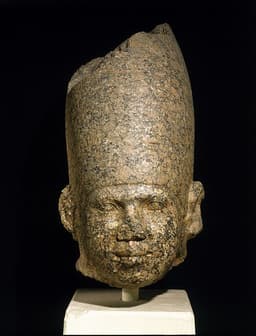
Huni
Emperor · Ancient
41.8Total

Julius Caesar
General · Ancient
82.8Total
Basic Information
Born
-2620
-100
Died
-2600
-44
Era
Ancient
Ancient
Nationality
Old Kingdom Egypt
Roman Republic
Occupation
Emperor
General
Civilization
Middle Eastern
Western
Score Comparison
Military (10%)
38.4
88.0
Political (20%)
26.4
78.0
Influence (20%)
45.5
85.0
Legacy (20%)
40.0
82.0
Leadership (15%)
48.4
80.0
Strategy (15%)
53.5
85.0
TOTAL
41.8
82.8
Huni — Complete Timeline
2615 BC
Establishment of the cult of the sun god RaCultural
Huni may have promoted the cult of Ra, as evidenced by the sun temple at Meidum and the use of the sun symbol in his name. This religious shift laid the groundwork for the solar temples of the Fifth Dynasty.
ReligionSun CultRa
Impact: national
2610 BC
Construction of the Meidum PyramidOther◆ Major
Huni is credited with building the Meidum Pyramid, originally a step pyramid later converted into a true pyramid. The pyramid's outer casing collapsed in antiquity, leaving a distinctive three-step core. It represents a transitional phase in pyramid construction from step to true pyramids.
Pyramid ConstructionMeidumArchitecture
Impact: nationalconstructive
Julius Caesar — Complete Timeline
58 BC
Gallic WarsWar◆ Major
Caesar, as proconsul of Gaul, launched a series of campaigns that conquered all of Gaul (modern France, Belgium, and parts of Switzerland). He fought numerous battles, including against the Helvetii, the Belgae, and the Gallic chieftain Vercingetorix. The wars brought immense wealth and a loyal army to Caesar.
Gallic WarsConquestRoman Expansion
Impact: regional
49 BC
Crossing the RubiconPolitical Action◆ Major
Caesar led Legio XIII across the Rubicon River into Italy, defying the Roman Senate's order to disband his army. This act triggered a civil war against Pompey and the Optimates, ultimately leading to Caesar's dictatorship and the end of the Roman Republic.
Roman Civil WarEnd of RepublicPower Struggle
Impact: global
48 BC
Battle of PharsalusWar◆ Major
Caesar's outnumbered army defeated the larger forces of Pompey the Great at Pharsalus in Greece. Caesar's tactical use of a reserve line to counter Pompey's cavalry charge proved decisive. Pompey fled to Egypt, where he was assassinated, leaving Caesar as the undisputed master of the Roman world.
Roman Civil WarBattleDecisive Victory
Impact: regional
44 BC
Appointment as Dictator for LifePolitical Action◆ Major
The Roman Senate appointed Caesar dictator perpetuo (dictator for life), granting him unprecedented personal power. This move concentrated military, legislative, and judicial authority in one person, effectively ending the Roman Republic's traditional system of checks and balances and alarming many senators.
DictatorshipEnd of RepublicPower Consolidation
Impact: regionaldestructive
Assassination on the Ides of MarchPolitical Action◆ Major
A group of Roman senators, led by Marcus Junius Brutus and Gaius Cassius Longinus, stabbed Caesar to death at a meeting of the Senate in the Theatre of Pompey. The assassination was intended to restore the Republic, but instead triggered another civil war that led to the rise of the Roman Empire.
AssassinationRoman PoliticsEnd of Republic
Impact: globaldestructive
Expert Analysis
huni-vs-julius-caesar
# The Dictator and the Pyramid Builder
On the Ides of March in 44 BCE, a Roman dictator fell beneath twenty-three dagger blows, his blood pooling at the base of Pompey's statue. Thirteen hundred miles away and two and a half millennia earlier, a pharaoh named Huni laid the final stone of a monument that would outlast his name, his dynasty, and his civilization. One man changed the course of history in a single, violent moment; the other built something that would stand for four thousand years. What drives a leader to seize the world, and what compels another to build for eternity?
Origins
Julius Caesar was born into the twilight of the Roman Republic, a world of bitter rivalries between patrician families, where political ambition was measured in military commands and provincial governorships. His family, the Julii, claimed descent from the goddess Venus, but they had fallen from the heights of power. Caesar grew up in a Rome still shaking from the civil wars of Marius and Sulla, where a young man learned that survival required cunning, alliances, and a willingness to break the rules.
Huni emerged from a different cosmos entirely. He was the last pharaoh of Egypt's Third Dynasty, a time when the Nile Valley was unified under divine kingship, when the gods walked among men through the person of the pharaoh. His world was one of cosmic order—*ma'at*—where the ruler's primary duty was to maintain balance between heaven and earth. The pyramids rising from the desert were not monuments to ego but stairways to the stars, ensuring the pharaoh's eternal journey.
Rise to Power
Caesar's path to power was a masterclass in political brinkmanship. He climbed the *cursus honorum*—the ladder of Roman offices—through a combination of bribery, marriage alliances, and military glory. His appointment as governor of Gaul in 58 BCE gave him the army he needed. Over eight years, he conquered what is now France and Belgium, crossed the Rhine, and invaded Britain. When the Senate ordered him to disband his legions, Caesar instead crossed the Rubicon River in 49 BCE, igniting a civil war. "The die is cast," he reportedly said, and with those words, the Republic died.
Huni's rise is lost to the sands of time. We know he was the successor to Pharaoh Khaba, but how he claimed the throne—whether by blood, marriage, or conquest—remains unknown. In Old Kingdom Egypt, power was inherited, sacred, and unquestioned. A pharaoh did not campaign for office; he was born into divinity. Huni's path was not a ladder but a birthright, and his authority required no Rubicon.
Leadership & Governance
Caesar governed as a revolutionary. As dictator, he reformed the calendar, granted citizenship to provincials, initiated public works, and centralized power in his own hands. His military genius was legendary: at the Battle of Alesia in 52 BCE, he besieged a Gallic army while simultaneously defending against a massive relief force, a feat of logistics and tactics that still astonishes. Yet his political wisdom was flawed. He pardoned his enemies, only to be killed by them. He accumulated titles—dictator for life, consul, pontifex maximus—but never built the institutions that could outlast him.
Huni governed as a priest-king. His primary achievement was the Meidum Pyramid, originally built as a step pyramid and later converted into a true pyramid, a technological leap that would culminate in the Great Pyramid of Giza. He may have promoted the cult of the sun god Ra, as evidenced by the sun temple at Meidum and the sun symbol in his name. His governance was not about reform but about preservation—maintaining the cosmic order through ritual, monument-building, and the careful administration of the Nile's bounty.
Triumph & Tragedy
Caesar's greatest triumph was his conquest of Gaul, which brought immense wealth and glory to Rome—and to himself. His most devastating failure was his assassination. He had been warned by a soothsayer to "beware the Ides of March," but he ignored the warning. The tragedy was not merely his death but the chaos that followed: a decade of civil war, the rise of Augustus, and the end of the Republic he had both destroyed and tried to save.
Huni's triumph was the Meidum Pyramid, a monument that would inspire his successors to build ever greater structures. His tragedy is that we remember almost nothing else about him. His pyramid collapsed in antiquity, its outer casing stripped away, leaving a strange, stepped core that puzzles tourists today. He built for eternity, but eternity forgot his name.
Character & Destiny
Caesar was restless, ambitious, and calculating. He wept at the statue of Alexander the Great, lamenting that at the same age, Alexander had conquered the world while Caesar had done nothing. His personality drove him to take risks that would have destroyed lesser men—crossing the Rubicon, pardoning his enemies, accepting a crown offered by Mark Antony. He believed in his own luck, his own genius, his own destiny. That belief made him great, and it killed him.
Huni was anonymous in his own time. We have no records of his personality, no speeches, no letters. He was a placeholder in a dynasty, a link in a chain stretching back to the first pharaohs. His destiny was not to be remembered as an individual but to fulfill the role of the pharaoh—to build, to pray, to die, and to be reborn in the afterlife. His character is a blank, and perhaps that is the point: in Old Kingdom Egypt, the king was not a person but a office.
Legacy
Caesar's legacy is the Roman Empire. His name became synonymous with power: "Caesar" evolved into "Kaiser" and "Tsar." His military campaigns, his writings, his calendar, and his political innovations shaped Western civilization for two millennia. He is remembered as a brilliant general, a flawed politician, and a martyr to ambition.
Huni's legacy is the pyramid-building tradition of the Old Kingdom. His Meidum pyramid was a prototype for the great pyramids of Giza, and his promotion of the Ra cult influenced Egyptian religion for centuries. But his name is known only to specialists. He is a footnote in the history of a civilization that lasted three thousand years.
Conclusion
Standing before the ruins of the Meidum Pyramid, one feels the weight of eternity—a monument built to outlast time itself. Standing in the Roman Forum, where Caesar's ashes were scattered, one feels the weight of history—a life that changed everything and ended in blood. Huni built for the gods; Caesar conquered for himself. One sought to preserve the cosmic order; the other sought to remake the human one. Both succeeded, and both failed. The pyramid crumbles; the empire falls. But the questions they answered—How shall we rule? What shall we leave behind?—remain as urgent today as when the pharaoh laid his first stone and the dictator crossed his fatal river.
Rankings
🥇
Julius CaesarLeader
Mil: 88.0Pol: 78.0Inf: 85.0
82.8
🥈
Huni
Mil: 38.4Pol: 26.4Inf: 45.5
41.8
+41.0 behind
How This Comparison Works
Algorithm
Each figure is scored on 6 dimensions (0—100 scale) based on structured historical data: Military (10%), Political (20%), Influence (20%), Legacy (20%), Leadership (15%), Strategy (15%). The weighted total produces the final ranking.
Data Sources
Scores are computed from structured sub-indicators in the database. Scale factors adjust for era (Ancient ×0.85, Modern ×1.0) and civilization size (Eastern ×1.05, Other ×0.80) to account for differences in population and military scale.
Maximum 3 Figures
Comparisons are limited to 2—3 figures to ensure readability and statistical meaningfulness.
Error Margins
±5 points per dimension — Sub-scores are derived from historical records with inherent uncertainty. Two figures within 5 points on a dimension should be considered roughly equivalent in that area.
Total Score Accuracy
±3 points overall — The weighted combination of 6 dimensions produces a total score with approximately ±3 points of uncertainty. Differences of less than 3 points are not statistically significant— the figures are effectively tied.
Known Limitations
- Historical records are incomplete and uneven across civilizations
- Figures from oral-tradition societies may be underrepresented
- Occupation labels can misclassify multi-role figures
- Scores measure capability and impact, not moral character
- Quantitative scoring is a comparison tool, not absolute truth
Capability Radar
Military (10%) — Battles & Warfare
Battles
39
95
Win Rate
43
92
Expansion
42
97
Political (20%) — Governance & Reform
Reform
20
90
Diplomacy
20
85
Economy
20
82
Influence (20%) — Cultural & Global Reach
Cultural
20
88
Global
10
94
Legacy (20%) — Historical Impact
Historical
30
95
Longevity
20
96
Leadership (15%) — Power & Stability
Tenure
30
75
Stability
30
60
Strategy (15%) — Tactics & Innovation
Strategy
46
94
Tactics
53
96
Reform
54
88
Similar Comparisons
Comments & Discussion
No comments yet. Be the first to share your thoughts!