Loading...
Hyegong of Silla vs Julius Caesar
Julius Caesar leads by 48.4 pts · 2 figures compared
…
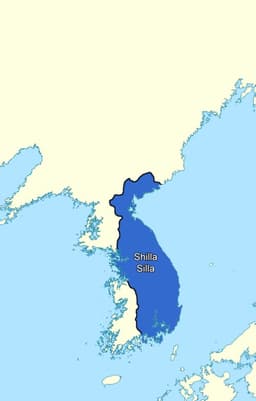
Hyegong of Silla
Emperor · Ancient
34.4Total

Julius Caesar
General · Ancient
82.8Total
Basic Information
Born
-758
-100
Died
—
-44
Era
Ancient
Ancient
Nationality
Korea
Roman Republic
Occupation
Emperor
General
Civilization
Eastern
Western
Score Comparison
Military (10%)
10.2
88.0
Political (20%)
26.4
78.0
Influence (20%)
44.0
85.0
Legacy (20%)
35.0
82.0
Leadership (15%)
34.6
80.0
Strategy (15%)
45.0
85.0
TOTAL
34.4
82.8
Hyegong of Silla — Complete Timeline
780 AD
Assassination of Hyegong of SillaPolitical Action◆ Major
King Hyegong was killed in a coup led by Kim Yang-sang and other nobles. The assassination ended the middle Silla period and resulted in the collapse of the direct royal line, leading to a period of instability and the rise of the succeeding king Wonseong.
CoupAssassinationSilla
Impact: nationaldestructive
Julius Caesar — Complete Timeline
58 BC
Gallic WarsWar◆ Major
Caesar, as proconsul of Gaul, launched a series of campaigns that conquered all of Gaul (modern France, Belgium, and parts of Switzerland). He fought numerous battles, including against the Helvetii, the Belgae, and the Gallic chieftain Vercingetorix. The wars brought immense wealth and a loyal army to Caesar.
Gallic WarsConquestRoman Expansion
Impact: regional
49 BC
Crossing the RubiconPolitical Action◆ Major
Caesar led Legio XIII across the Rubicon River into Italy, defying the Roman Senate's order to disband his army. This act triggered a civil war against Pompey and the Optimates, ultimately leading to Caesar's dictatorship and the end of the Roman Republic.
Roman Civil WarEnd of RepublicPower Struggle
Impact: global
48 BC
Battle of PharsalusWar◆ Major
Caesar's outnumbered army defeated the larger forces of Pompey the Great at Pharsalus in Greece. Caesar's tactical use of a reserve line to counter Pompey's cavalry charge proved decisive. Pompey fled to Egypt, where he was assassinated, leaving Caesar as the undisputed master of the Roman world.
Roman Civil WarBattleDecisive Victory
Impact: regional
44 BC
Appointment as Dictator for LifePolitical Action◆ Major
The Roman Senate appointed Caesar dictator perpetuo (dictator for life), granting him unprecedented personal power. This move concentrated military, legislative, and judicial authority in one person, effectively ending the Roman Republic's traditional system of checks and balances and alarming many senators.
DictatorshipEnd of RepublicPower Consolidation
Impact: regionaldestructive
Assassination on the Ides of MarchPolitical Action◆ Major
A group of Roman senators, led by Marcus Junius Brutus and Gaius Cassius Longinus, stabbed Caesar to death at a meeting of the Senate in the Theatre of Pompey. The assassination was intended to restore the Republic, but instead triggered another civil war that led to the rise of the Roman Empire.
AssassinationRoman PoliticsEnd of Republic
Impact: globaldestructive
Expert Analysis
hyegong-of-silla-vs-julius-caesar
# The Ides of March and the Longest Night: Caesar and Hyegong
In the Senate chamber on March 15, 44 BCE, Gaius Julius Caesar fell beneath sixty dagger strokes, his blood pooling on the marble floor where he had once stood as the undisputed master of Rome. Seven centuries later and six thousand miles east, on the Korean Peninsula, another king met his end in darkness: Hyegong of Silla, murdered in his own palace by the very nobles who had once sworn loyalty to his throne. Both men died at the hands of their own elites. Yet one name echoes through millennia as the architect of an empire, while the other is known only to specialists—a footnote in the long chronicle of Korean dynasties. Why did these two rulers, separated by time and space, suffer such similar fates yet leave such profoundly different legacies?
Origins
Julius Caesar was born into the patrician Julian clan, an ancient but politically diminished family in the late Roman Republic. His uncle was Gaius Marius, the populist general who had reformed the army, and his aunt was married to Marius himself. From childhood, Caesar breathed the air of civil war, proscriptions, and the crumbling of aristocratic consensus. His era was one of violent ambition, where a man could rise by military glory and popular favor, not merely by birth.
Hyegong came to the throne of Silla as a child, the last king of the middle Silla period. His kingdom had reached its golden age under his predecessors—unified the peninsula, fostered Buddhism, and enjoyed relative peace. But Silla’s stability depended on a delicate balance among the *jingol* (true-bone) aristocracy, who held land, titles, and military power. Hyegong inherited a system that had already begun to crack, yet he had neither the life experience nor the political tools to mend it.
Rise to Power
Caesar’s path was a masterpiece of calculated risk. He climbed the *cursus honorum*—quaestor, aedile, praetor—borrowing fortunes to stage games that won him the people’s love. His appointment as governor of Gaul in 58 BCE gave him the army he needed. Over eight years, he conquered all of Gaul, crossed the Rhine, and invaded Britain, forging a veteran army loyal to him alone. When the Senate ordered him to disband, he crossed the Rubicon River in 49 BCE, igniting a civil war that ended with his dictatorship.
Hyegong became king at age eight, following the death of his father, King Gyeongdeok. He had no military campaigns, no conquests, no personal following. His rise was not an achievement but an accident of birth. By the time he reached adulthood, the Silla aristocracy had already divided into factions, each maneuvering for control of the young monarch. He was a pawn before he could become a player.
Leadership & Governance
Caesar governed as a revolutionary reformer. As dictator, he overhauled the calendar (giving us the Julian calendar), extended Roman citizenship to Gauls and Spaniards, reformed debt laws, and initiated massive public works. He centralized power in his own hands while preserving the forms of the Republic—a contradiction that ultimately killed him. His military genius was undeniable: at Alesia, he besieged the Gallic chieftain Vercingetorix while simultaneously repelling a relief army, a feat of logistics and tactics that still astounds.
Hyegong’s reign, by contrast, was marked by drift. The historical records of the *Samguk Sagi* note few reforms, no major military campaigns, and a growing estrangement from the aristocracy. He attempted to strengthen royal authority, but lacked the army, the wealth, or the personal charisma to back it. His governance was reactive, not proactive—a series of concessions that satisfied no one. Where Caesar built, Hyegong merely presided.
Triumph & Tragedy
Caesar’s greatest triumph was his own survival and ascent: the conquest of Gaul, the defeat of Pompey at Pharsalus, the pardon of his enemies (a clemency that would later be called his fatal mercy). His tragedy was that he could not transform his personal power into a stable system. The Ides of March was not just a murder; it was the failure of his political vision—a man who could conquer the world but could not convince his peers to accept his supremacy.
Hyegong’s sole recorded triumph may have been simply lasting twenty-two years on the throne—a testament to endurance rather than achievement. His tragedy was total: in 780 CE, a coup led by Kim Yang-sang, a distant royal relative, stormed the palace. Hyegong was killed, his body reportedly left unburied for days. The murder ended the middle Silla period and plunged the kingdom into a century of decline. He left no mark except the date of his death.
Character & Destiny
Caesar was audacious, intelligent, and ruthlessly pragmatic. He believed in his own star—literally, he claimed descent from the goddess Venus. His personality drove him to take risks that others would not: crossing the Rubicon, pardoning enemies, accepting the title of dictator for life. But that same confidence blinded him to the hatred he inspired. When warned of the conspiracy, he dismissed it, saying, “It is more important for the republic that I should not fear death than that I should avoid it.”
Hyegong’s character is harder to discern from the sparse records. He appears to have been a weak king in an era that demanded strength—or perhaps a reformer who lacked the means to reform. What is clear is that he did not understand the game he was playing. In Silla, a king’s power was only as strong as the coalition of nobles behind him. Hyegong tried to rule alone, and the nobles responded as they had to every such attempt: with a knife in the dark.
Legacy
Caesar’s legacy is immeasurable. His name became synonymous with imperial rule—*Kaiser* in German, *Tsar* in Russian. His writings, especially the *Commentaries on the Gallic War*, are still read as masterpieces of military prose. The Roman Empire that followed his death was, in every meaningful sense, his creation. He was deified, memorialized in Shakespeare’s play, and studied by every strategist from Napoleon to modern CEOs.
Hyegong’s legacy is nearly blank. He is remembered as the last king of the middle Silla period, a transitional figure whose assassination marked the beginning of the end for unified Silla. No statues, no writings, no reforms survive him. In Korean historiography, he is a cautionary tale—a king who failed to hold the center, whose death was a symptom of a system’s decay, not a turning point in world history.
Conclusion
Caesar and Hyegong shared a fate, but not a destiny. One man remade the world and died for it; the other was erased by forces he could not control. The difference lies not in their deaths, but in the lives that preceded them. Caesar had a vision, an army, and an era that rewarded ambition. Hyegong had a throne, a fractured aristocracy, and a system that punished weakness. In the end, both were murdered by their own elites—but one murder changed the course of Western civilization, while the other merely closed a chapter in the long, quiet history of a Korean kingdom. The Ides of March still echo; the longest night in Silla is forgotten.
Rankings
🥇
Julius CaesarLeader
Mil: 88.0Pol: 78.0Inf: 85.0
82.8
🥈
Hyegong of Silla
Mil: 10.2Pol: 26.4Inf: 44.0
34.4
+48.4 behind
How This Comparison Works
Algorithm
Each figure is scored on 6 dimensions (0—100 scale) based on structured historical data: Military (10%), Political (20%), Influence (20%), Legacy (20%), Leadership (15%), Strategy (15%). The weighted total produces the final ranking.
Data Sources
Scores are computed from structured sub-indicators in the database. Scale factors adjust for era (Ancient ×0.85, Modern ×1.0) and civilization size (Eastern ×1.05, Other ×0.80) to account for differences in population and military scale.
Maximum 3 Figures
Comparisons are limited to 2—3 figures to ensure readability and statistical meaningfulness.
Error Margins
±5 points per dimension — Sub-scores are derived from historical records with inherent uncertainty. Two figures within 5 points on a dimension should be considered roughly equivalent in that area.
Total Score Accuracy
±3 points overall — The weighted combination of 6 dimensions produces a total score with approximately ±3 points of uncertainty. Differences of less than 3 points are not statistically significant— the figures are effectively tied.
Known Limitations
- Historical records are incomplete and uneven across civilizations
- Figures from oral-tradition societies may be underrepresented
- Occupation labels can misclassify multi-role figures
- Scores measure capability and impact, not moral character
- Quantitative scoring is a comparison tool, not absolute truth
Capability Radar
Military (10%) — Battles & Warfare
Battles
5
95
Win Rate
5
92
Expansion
5
97
Political (20%) — Governance & Reform
Reform
20
90
Diplomacy
20
85
Economy
20
82
Influence (20%) — Cultural & Global Reach
Cultural
15
88
Global
5
94
Legacy (20%) — Historical Impact
Historical
20
95
Longevity
10
96
Leadership (15%) — Power & Stability
Tenure
30
75
Stability
10
60
Strategy (15%) — Tactics & Innovation
Strategy
5
94
Tactics
5
96
Reform
5
88
Similar Comparisons
Comments & Discussion
TheGhostOfAgustus6/17/2026
Caesar didn’t die because of "ambition." He died because he refused to play the Senate’s game. Read Suetonius: Caesar was offered a crown twice and refused. It wasn’t tyranny they feared—it was his total disregard for their monopoly on power. Hyegong? His tragedy was being born under a system where the aristocracy already controlled everything. Caesar was killed by rivals. Hyegong was killed by his own babysitters. Big difference.
TheRomanKyng6/17/2026
You can't compare a dictator who redrew the map of Europe to a puppet king who vanished from history. Caesar marched on Rome, crossed the Rubicon, and rewrote the constitutional order. Hyegong inherited a unified Korea from his father, let the nobles run everything, and got stabbed for being weak. One chose to die on his feet; the other got caught napping. That’s legacy: Caesar’s blood made emperors. Hyegong’s blood just stained the floor.
唐朝史官6/17/2026
说穿了,惠恭就是被“贵族的惯性”压死的。统一新罗之后,真骨贵族抱团对抗王权,惠恭想扶植寒门、搞改革,结果元金、金良相那帮人直接夜袭王宫。他死得冤枉,但历史很公平:没军队、没地盘,光有王号有什么用?凯撒至少有军团撑腰,死了还有屋大维接盘。惠恭连个复仇的侄儿都没留下——真骨们抹掉他就像擦掉棋盘上一颗子。
数据拆解师6/17/2026
别被“血溅元老院”的戏剧误导了。从政治学角度看,这是一场权力分布的游戏。凯撒死前已经集立法、行政、宗教大权于一身,元老院只剩空壳。惠恭呢?《三国史记》说他15岁即位,大赦天下三次,全是贵族内阁操作。他的“被杀”更像是制度性清理——一个失能君主被替换掉了。前者是帝国engine的故障,后者是轮子掉了随便换一个。
千年孤灯6/17/2026
我心疼惠恭。他最后那晚据说抱着王妃躲在内殿,叛军砸门,他连剑都没来得及拔。史书写他“为下所杀”,四个字就翻篇了。可凯撒呢?从苏埃托尼乌斯到莎士比亚,多少人替他写悼词?这不是能力问题,是史书的偏心:罗马史从不缺强人的颂歌,而东亚史里,那些被贵族碾碎的君王,就像扔进井里的旧历书——湿透了,再也翻不开。