Loading...
This comparison has not been analyzed yet.
One-time AI generation (~1 minute). Scores and timeline are already available below.
Hyeonjong of Goryeo vs Liutprand
Hyeonjong of Goryeo leads by 0.8 pts · 2 figures compared
…
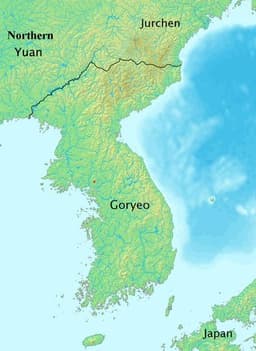
Hyeonjong of Goryeo
Emperor · Medieval
59.7Total

Liutprand
Emperor · Medieval
58.9Total
Basic Information
Born
992
690
Died
1031
744
Era
Medieval
Medieval
Nationality
Korea
Lombards
Occupation
Emperor
Emperor
Civilization
Eastern
Western
Score Comparison
Military (10%)
45.0
61.7
Political (20%)
68.0
68.0
Influence (20%)
56.7
57.2
Legacy (20%)
55.0
49.2
Leadership (15%)
74.0
66.0
Strategy (15%)
60.0
60.7
TOTAL
59.7
58.9
Hyeonjong of Goryeo — Complete Timeline
1010 AD
Defense Against the Khitan InvasionWar◆ Major
Hyeonjong led Goryeo's resistance against a major invasion by the Khitan Liao dynasty. Despite initial setbacks, including the burning of Gaegyeong, Goryeo forces repelled the invaders, and Hyeonjong's leadership preserved the kingdom's independence and territorial integrity.
WarKhitanGoryeo
Impact: national
1011 AD
Order to Carve the Tripitaka KoreanaCultural
King Hyeonjong ordered the carving of the Tripitaka Koreana, a complete set of Buddhist scriptures, as a prayer for divine protection against the Khitan invasions. This massive project produced over 80,000 wooden printing blocks, becoming a masterpiece of Buddhist scripture preservation.
BuddhismPrintingCultural Heritage
Impact: globalconstructive
Liutprand — Complete Timeline
713 AD
Issued the Laws of LiutprandReform◆ Major
Liutprand issued a comprehensive code of laws, the Edictus Rothari, updating Lombard legal traditions. These laws covered property, inheritance, and criminal justice, and helped unify the Lombard kingdom under a single legal framework.
Legal ReformLombard KingdomCode of Law
Impact: nationalconstructive
728 AD
Donation of SutriPolitical Action
Liutprand donated the town of Sutri to Pope Gregory II. This act, known as the Donation of Sutri, is considered the first territorial grant to the Papacy, establishing the Papal States and setting a precedent for future papal temporal power.
Papal StatesChurch-State RelationsDonation
Impact: regionalconstructive
739 AD
Conquest of the Duchy of SpoletoWar◆ Major
Liutprand captured the Duchy of Spoleto, a Lombard duchy that had been in rebellion. This conquest consolidated Lombard control over central Italy and expanded the kingdom's territory, demonstrating Liutprand's military strength.
Lombard KingdomConquestItaly
Impact: regional
743 AD
Defeat at the Battle of the Unnamed RiverWar
Liutprand was defeated by the Frankish mayor of the palace, Pepin the Short, near the Alps. This battle halted Lombard expansion into Provence and forced Liutprand to abandon claims to Frankish territory, limiting his ambitions.
Frankish-Lombard WarDefeatExpansion Halted
Impact: regional
This comparison has not been analyzed yet.
One-time AI generation (~1 minute). Scores and timeline are already available below.
Rankings
🥇
Hyeonjong of GoryeoLeader
Mil: 45.0Pol: 68.0Inf: 56.7
59.7
🥈
Liutprand
Mil: 61.7Pol: 68.0Inf: 57.2
58.9
+0.8 behind
How This Comparison Works
Algorithm
Each figure is scored on 6 dimensions (0—100 scale) based on structured historical data: Military (10%), Political (20%), Influence (20%), Legacy (20%), Leadership (15%), Strategy (15%). The weighted total produces the final ranking.
Data Sources
Scores are computed from structured sub-indicators in the database. Scale factors adjust for era (Ancient ×0.85, Modern ×1.0) and civilization size (Eastern ×1.05, Other ×0.80) to account for differences in population and military scale.
Maximum 3 Figures
Comparisons are limited to 2—3 figures to ensure readability and statistical meaningfulness.
Error Margins
±5 points per dimension — Sub-scores are derived from historical records with inherent uncertainty. Two figures within 5 points on a dimension should be considered roughly equivalent in that area.
Total Score Accuracy
±3 points overall — The weighted combination of 6 dimensions produces a total score with approximately ±3 points of uncertainty. Differences of less than 3 points are not statistically significant— the figures are effectively tied.
Known Limitations
- Historical records are incomplete and uneven across civilizations
- Figures from oral-tradition societies may be underrepresented
- Occupation labels can misclassify multi-role figures
- Scores measure capability and impact, not moral character
- Quantitative scoring is a comparison tool, not absolute truth
Capability Radar
Military (10%) — Battles & Warfare
Battles
30
65
Win Rate
35
70
Expansion
10
70
Political (20%) — Governance & Reform
Reform
65
60
Diplomacy
55
65
Economy
50
55
Influence (20%) — Cultural & Global Reach
Cultural
70
50
Global
55
35
Legacy (20%) — Historical Impact
Historical
75
55
Longevity
70
40
Leadership (15%) — Power & Stability
Tenure
60
75
Stability
45
60
Strategy (15%) — Tactics & Innovation
Strategy
45
65
Tactics
40
60
Reform
30
55
Similar Comparisons
Comments & Discussion
No comments yet. Be the first to share your thoughts!