Loading...
Liutprand vs Theudelinda
Liutprand leads by 8.7 pts · 2 figures compared
…

Liutprand
Emperor · Medieval
58.9Total
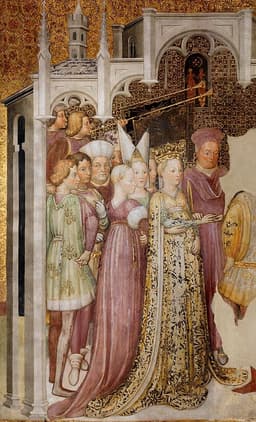
Theudelinda
Emperor · Medieval
50.2Total
Basic Information
Born
690
570
Died
744
628
Era
Medieval
Medieval
Nationality
Lombards
Lombards
Occupation
Emperor
Emperor
Civilization
Western
Western
Score Comparison
Military (10%)
61.7
21.2
Political (20%)
68.0
68.0
Influence (20%)
57.2
56.4
Legacy (20%)
49.2
48.3
Leadership (15%)
66.0
53.2
Strategy (15%)
60.7
36.8
TOTAL
58.9
50.2
Liutprand — Complete Timeline
713 AD
Issued the Laws of LiutprandReform◆ Major
Liutprand issued a comprehensive code of laws, the Edictus Rothari, updating Lombard legal traditions. These laws covered property, inheritance, and criminal justice, and helped unify the Lombard kingdom under a single legal framework.
Legal ReformLombard KingdomCode of Law
Impact: nationalconstructive
728 AD
Donation of SutriPolitical Action
Liutprand donated the town of Sutri to Pope Gregory II. This act, known as the Donation of Sutri, is considered the first territorial grant to the Papacy, establishing the Papal States and setting a precedent for future papal temporal power.
Papal StatesChurch-State RelationsDonation
Impact: regionalconstructive
739 AD
Conquest of the Duchy of SpoletoWar◆ Major
Liutprand captured the Duchy of Spoleto, a Lombard duchy that had been in rebellion. This conquest consolidated Lombard control over central Italy and expanded the kingdom's territory, demonstrating Liutprand's military strength.
Lombard KingdomConquestItaly
Impact: regional
743 AD
Defeat at the Battle of the Unnamed RiverWar
Liutprand was defeated by the Frankish mayor of the palace, Pepin the Short, near the Alps. This battle halted Lombard expansion into Provence and forced Liutprand to abandon claims to Frankish territory, limiting his ambitions.
Frankish-Lombard WarDefeatExpansion Halted
Impact: regional
Theudelinda — Complete Timeline
589 AD
Marriage to AuthariPolitical Action◆ Major
Theudelinda married Lombard King Authari, strengthening ties between the Lombards and Bavarians. After Authari's death, she married his successor Agilulf, ensuring political continuity and promoting Catholic conversion.
Marriage AllianceDynastic PoliticsLombard Kingdom
Impact: nationalconstructive
590 AD
Promotion of Catholic ConversionCultural◆ Major
Theudelinda used her influence as queen to promote the conversion of the Lombards from Arianism to Catholicism. She corresponded with Pope Gregory I and supported the construction of Catholic churches, including the Basilica of Saint John in Monza.
Religious ConversionCatholic ChurchLombard Kingdom
Impact: regionalconstructive
595 AD
Construction of the Basilica of Saint John in MonzaCultural
Theudelinda founded the Basilica of Saint John in Monza, which became a major religious center. She donated the Iron Crown of Lombardy to the church, a symbol of Lombard kingship later used for coronations.
Church BuildingPatronageIron Crown
Impact: regionalconstructive
616 AD
Regency for AdaloaldPolitical Action
After Agilulf's death, Theudelinda served as regent for her young son Adaloald. She maintained stability and continued her religious policies, but Adaloald's later mental instability led to his deposition.
RegencyLombard KingdomSuccession
Impact: nationalconstructive
Expert Analysis
Origins
Liutprand was born around 690 AD into the Lombard royal family, the son of King Ansprand. His early life was shaped by exile and civil war; his father briefly ruled before dying in 712, leaving Liutprand to claim the throne. He was raised in the Lombard tradition of Arian Christianity and military training. Theudelinda was born around 570 AD in Bavaria, a princess of the Bavarian dynasty. She was raised Catholic, which would later influence her policies. Her marriage to Lombard King Authari in 589 AD brought her into Lombard politics, and after Authari's death, she married his successor Agilulf, becoming queen again. Her background gave her a unique position as a Catholic in a predominantly Arian Lombard court.
Rise to Power
Liutprand became king in 712 after his father's death, but his early reign was marked by rebellions. He consolidated power by defeating rivals like the Dukes of Spoleto and Benevento. A turning point was his victory over the Byzantine Exarchate of Ravenna in 727, which expanded Lombard territory. Theudelinda rose to prominence through her marriages. As queen, she used her influence to promote Catholicism, corresponding with Pope Gregory I. She became regent for her son Adaloald after Agilulf's death in 616, ruling effectively until Adaloald's mental instability led to her removal.
Leadership & Governance
Liutprand was a military and political leader. He issued the Laws of Liutprand, updating the Edictus Rothari with 153 new laws covering property, inheritance, and criminal justice. He centralized royal authority, reducing the power of dukes. His military campaigns expanded the kingdom to its greatest extent. Theudelinda's leadership was softer but equally effective. She used diplomacy and religion to unify Lombards, promoting Catholicism to integrate with the Roman population. She founded the Basilica of Saint John in Monza, donating the Iron Crown. Her regency maintained stability but faced challenges from Arian nobles. Liutprand scores 66.0 in leadership, Theudelinda 53.2.
Triumph & Tragedy
Liutprand's greatest success was the Donation of Sutri in 728, granting the town to Pope Gregory II, which established the Papal States' temporal power. He also conquered the rebellious Duchy of Spoleto. His defeat at the Battle of the Unnamed River against Pepin the Short in 739/740 marked a failure, halting expansion into Provence. Theudelinda's triumph was securing Catholic conversion of the Lombards, which eventually became official under her son. Her tragedy was her son Adaloald's insanity, leading to his deposition and her loss of influence. She scored 21.2 in military, reflecting her lack of martial prowess.
Character & Destiny
Liutprand was ambitious and pragmatic, using both force and diplomacy. His donation to the Pope shows political acumen, but his defeat reveals overreach. Theudelinda was devout and diplomatic, using her faith to shape Lombard destiny. Her character fostered unity but could not prevent dynastic failure. Historical assessments: Liutprand is seen as the greatest Lombard king; Theudelinda is remembered as a saintly queen.
Legacy
Liutprand's legal code influenced later Italian law. His territorial gains created a unified Lombard kingdom that lasted until Charlemagne. The Donation of Sutri set a precedent for papal temporal power. Theudelinda's promotion of Catholicism ended Arianism among Lombards, aligning them with Rome. The Iron Crown of Lombardy became a symbol of medieval kingship. Her legacy is religious and cultural, while Liutprand's is political. Scores: Liutprand legacy 49.2, Theudelinda 48.3.
Conclusion
Liutprand had greater impact on Lombard Italy through military expansion and legal reform. His total score of 58.9 versus Theudelinda's 50.2 reflects his broader influence. While Theudelinda's religious shift was important, Liutprand's conquests and laws shaped the kingdom's structure. Theudelinda's contributions were foundational but less transformative. Liutprand stands as the more consequential figure.
Rankings
🥇
LiutprandLeader
Mil: 61.7Pol: 68.0Inf: 57.2
58.9
🥈
Theudelinda
Mil: 21.2Pol: 68.0Inf: 56.4
50.2
+8.7 behind
How This Comparison Works
Algorithm
Each figure is scored on 6 dimensions (0—100 scale) based on structured historical data: Military (10%), Political (20%), Influence (20%), Legacy (20%), Leadership (15%), Strategy (15%). The weighted total produces the final ranking.
Data Sources
Scores are computed from structured sub-indicators in the database. Scale factors adjust for era (Ancient ×0.85, Modern ×1.0) and civilization size (Eastern ×1.05, Other ×0.80) to account for differences in population and military scale.
Maximum 3 Figures
Comparisons are limited to 2—3 figures to ensure readability and statistical meaningfulness.
Error Margins
±5 points per dimension — Sub-scores are derived from historical records with inherent uncertainty. Two figures within 5 points on a dimension should be considered roughly equivalent in that area.
Total Score Accuracy
±3 points overall — The weighted combination of 6 dimensions produces a total score with approximately ±3 points of uncertainty. Differences of less than 3 points are not statistically significant— the figures are effectively tied.
Known Limitations
- Historical records are incomplete and uneven across civilizations
- Figures from oral-tradition societies may be underrepresented
- Occupation labels can misclassify multi-role figures
- Scores measure capability and impact, not moral character
- Quantitative scoring is a comparison tool, not absolute truth
Capability Radar
Military (10%) — Battles & Warfare
Battles
65
10
Win Rate
70
10
Expansion
70
10
Political (20%) — Governance & Reform
Reform
60
55
Diplomacy
65
70
Economy
55
50
Influence (20%) — Cultural & Global Reach
Cultural
50
50
Global
35
30
Legacy (20%) — Historical Impact
Historical
55
50
Longevity
40
40
Leadership (15%) — Power & Stability
Tenure
75
60
Stability
60
60
Strategy (15%) — Tactics & Innovation
Strategy
65
10
Tactics
60
10
Reform
55
10
Similar Comparisons
Comments & Discussion
No comments yet. Be the first to share your thoughts!