Loading...
Hyeonjong of Goryeo vs James I of Scotland
Hyeonjong of Goryeo leads by 15.1 pts · 2 figures compared
…
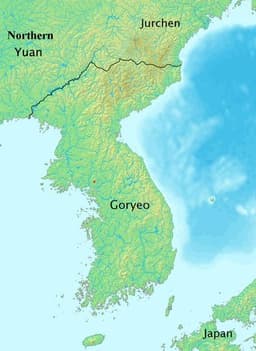
Hyeonjong of Goryeo
Emperor · Medieval
59.7Total
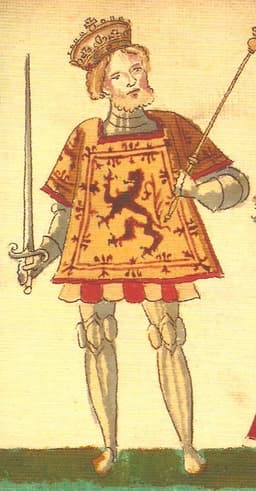
James I of Scotland
Emperor · Medieval
44.6Total
Basic Information
Born
992
1394
Died
1031
1437
Era
Medieval
Medieval
Nationality
Korea
Scotland
Occupation
Emperor
Emperor
Civilization
Eastern
Western
Score Comparison
Military (10%)
45.0
21.2
Political (20%)
68.0
43.7
Influence (20%)
56.7
54.9
Legacy (20%)
55.0
45.0
Leadership (15%)
74.0
48.4
Strategy (15%)
60.0
36.8
TOTAL
59.7
44.6
Hyeonjong of Goryeo — Complete Timeline
1010 AD
Defense Against the Khitan InvasionWar◆ Major
Hyeonjong led Goryeo's resistance against a major invasion by the Khitan Liao dynasty. Despite initial setbacks, including the burning of Gaegyeong, Goryeo forces repelled the invaders, and Hyeonjong's leadership preserved the kingdom's independence and territorial integrity.
WarKhitanGoryeo
Impact: national
1011 AD
Order to Carve the Tripitaka KoreanaCultural
King Hyeonjong ordered the carving of the Tripitaka Koreana, a complete set of Buddhist scriptures, as a prayer for divine protection against the Khitan invasions. This massive project produced over 80,000 wooden printing blocks, becoming a masterpiece of Buddhist scripture preservation.
BuddhismPrintingCultural Heritage
Impact: globalconstructive
James I of Scotland — Complete Timeline
1406 AD
Capture by English PiratesOther
James I was captured by English pirates while traveling to France for safety. He was handed over to Henry IV of England and imprisoned in the Tower of London, remaining a captive for 18 years. His father Robert III died soon after, leaving Scotland without a king.
CaptureImprisonmentRegency
Impact: nationaltragic
1424 AD
Release and Return to ScotlandPolitical Action◆ Major
James I was released from English captivity after the Treaty of London, which required a ransom of 40,000 pounds. He returned to Scotland and was crowned at Scone, beginning his personal rule after 18 years of regency.
ReleaseCoronationRansom
Impact: nationalconstructive
Publication of The Kingis QuairCultural
James I wrote The Kingis Quair, a poetic allegory of his imprisonment and love for Joan Beaufort. The poem is considered a major work of Middle Scots literature and reflects the influence of Chaucer on Scottish poetry.
PoetryLiteratureImprisonment
Impact: nationalconstructive
1425 AD
Execution of Albany StewartsPolitical Action◆ Major
James I executed Murdoch Stewart, Duke of Albany, and his sons at Stirling Castle for treason. The executions eliminated the powerful Albany family, who had ruled as regents during James's captivity, and consolidated royal power.
ExecutionNoble PurgeCentralization
Impact: nationaldestructive
1437 AD
Assassination at PerthPolitical Action
James I was assassinated by a group of nobles led by Sir Robert Graham at the Blackfriars monastery in Perth. The murder was a response to James's centralizing policies and harsh treatment of the nobility. His death plunged Scotland into another period of regency.
AssassinationNoble RevoltRegency
Impact: nationaltragic
Expert Analysis
Origins
Hyeonjong of Goryeo (born 992, reigned 1009–1031) was the eighth monarch of Goryeo, a dynasty that ruled Korea from 918 to 1392. He was the son of King Seongjong and a secondary consort. His early life was marked by political instability; his father died when he was young, and he was raised in a court rife with factional conflict. Hyeonjong received a Confucian education but also embraced Buddhism, which would later influence his major cultural project.
James I of Scotland (born 1394, reigned 1406–1437) was the son of King Robert III. His early life was disrupted by the power struggles between his father and his uncle, Robert Stewart, Duke of Albany. At age 11, James was sent to France for safety but was captured by English pirates and handed over to King Henry IV of England. He spent 18 years imprisoned in the Tower of London and other English castles, where he received a thorough education in literature, law, and governance. This period shaped his intellectual interests, leading him to write poetry.
Rise to Power
Hyeonjong ascended the throne in 1009 after a coup that deposed his predecessor, King Mokjong. His reign began during a period of external threat from the Khitan Liao dynasty. In 1010, the Khitan invaded Goryeo, burning the capital Gaegyeong. Hyeonjong fled south but later returned to lead resistance. Despite initial setbacks, he managed to negotiate a peace treaty in 1022, stabilizing the northern border. His political acumen, scoring 68.0, helped him consolidate power after the invasion.
James I's rise was unconventional. He was crowned in absentia in 1406 while still a prisoner in England. His uncle, the Duke of Albany, ruled as regent until his death in 1420. James was finally released in 1424 under the Treaty of London, which required a ransom of 40,000 pounds. He returned to Scotland and was crowned at Scone. His long captivity gave him a foreign perspective on governance, but also made him a stranger to his own nobles.
Leadership & Governance
Hyeonjong's leadership, scoring 74.0, was characterized by pragmatic diplomacy and cultural patronage. After the Khitan invasion, he focused on rebuilding the capital and strengthening defenses. His most notable act was ordering the carving of the Tripitaka Koreana, a complete set of Buddhist scriptures, in 1011. This project was intended as a prayer for divine protection against the Khitan. The first set was later destroyed by Mongol invasions, but the second set (1236–1251) still survives. Hyeonjong also reformed the civil service examination system and promoted Confucian scholarship.
James I, with a political score of 43.7 and leadership of 48.4, attempted to centralize royal power after years of noble dominance. He executed Murdoch Stewart, Duke of Albany, and his sons in 1425 for treason, eliminating the powerful Albany family. He also reformed the tax system and tried to curb the power of the highland lords. However, his authoritarian methods alienated many nobles. His cultural contribution was The Kingis Quair, a poem he wrote during his imprisonment, which is considered a major work of Middle Scots literature.
Triumph & Tragedy
Hyeonjong's greatest triumph was surviving the Khitan invasion and preserving Goryeo's independence. He successfully negotiated a peace that lasted for decades. His ordering of the Tripitaka Koreana created a cultural monument that remains a UNESCO World Heritage site. However, his reign also saw the burning of Gaegyeong and the loss of life during the invasion. His military score of 45.0 reflects the defensive nature of his campaigns.
James I's triumphs include his return to Scotland after 18 years of captivity and his efforts to strengthen the monarchy. He executed the Albany Stewarts, which broke the power of a major noble faction. However, his reign ended in tragedy: he was assassinated at the Blackfriars monastery in Perth in 1437 by a group of nobles led by Sir Robert Graham. The murder was a direct response to his centralizing policies. His legacy score of 45.0 is lower than Hyeonjong's 55.0.
Character & Destiny
Hyeonjong was a pragmatic ruler who used religion as a tool for state protection. His decision to carve the Tripitaka Koreana reflects a blend of faith and political calculation. He was resilient in the face of invasion and focused on long-term cultural projects. His total score of 59.7 indicates a balanced but not extraordinary leader.
James I was an intellectual who valued literature and law, but his character was shaped by isolation. He was determined to assert royal authority but lacked the political finesse to build alliances. His assassination was the culmination of his confrontational approach. His total score of 44.6 reflects his limited impact.
Legacy
Hyeonjong's legacy is most visible in the Tripitaka Koreana, which is one of the most comprehensive collections of Buddhist scriptures and a masterpiece of woodblock printing. It influenced East Asian Buddhism and Korean culture. His defense against the Khitan also set a precedent for Korean resistance against foreign invasions. His legacy score of 55.0 reflects this enduring cultural impact.
James I's legacy is twofold: his poetry, especially The Kingis Quair, is a notable contribution to Scottish literature. His political reforms, however, were largely undone after his death, as Scotland fell back into noble factionalism. His influence score of 54.9 is close to Hyeonjong's 56.7, but his overall impact is less significant.
Conclusion
Hyeonjong of Goryeo had a greater impact than James I of Scotland. His total score of 59.7 exceeds James's 44.6 by 15.1 points. Hyeonjong's cultural project, the Tripitaka Koreana, endures as a UNESCO treasure, while his political leadership preserved Goryeo during a critical period. James I, despite his literary achievements, failed to establish lasting political reforms and was assassinated by his own nobles. In the balance of historical significance, Hyeonjong's contributions to religion, culture, and state survival outweigh James's poetry and short-lived centralization.
Rankings
🥇
Hyeonjong of GoryeoLeader
Mil: 45.0Pol: 68.0Inf: 56.7
59.7
🥈
James I of Scotland
Mil: 21.2Pol: 43.7Inf: 54.9
44.6
+15.1 behind
How This Comparison Works
Algorithm
Each figure is scored on 6 dimensions (0—100 scale) based on structured historical data: Military (10%), Political (20%), Influence (20%), Legacy (20%), Leadership (15%), Strategy (15%). The weighted total produces the final ranking.
Data Sources
Scores are computed from structured sub-indicators in the database. Scale factors adjust for era (Ancient ×0.85, Modern ×1.0) and civilization size (Eastern ×1.05, Other ×0.80) to account for differences in population and military scale.
Maximum 3 Figures
Comparisons are limited to 2—3 figures to ensure readability and statistical meaningfulness.
Error Margins
±5 points per dimension — Sub-scores are derived from historical records with inherent uncertainty. Two figures within 5 points on a dimension should be considered roughly equivalent in that area.
Total Score Accuracy
±3 points overall — The weighted combination of 6 dimensions produces a total score with approximately ±3 points of uncertainty. Differences of less than 3 points are not statistically significant— the figures are effectively tied.
Known Limitations
- Historical records are incomplete and uneven across civilizations
- Figures from oral-tradition societies may be underrepresented
- Occupation labels can misclassify multi-role figures
- Scores measure capability and impact, not moral character
- Quantitative scoring is a comparison tool, not absolute truth
Capability Radar
Military (10%) — Battles & Warfare
Battles
30
10
Win Rate
35
10
Expansion
10
10
Political (20%) — Governance & Reform
Reform
65
50
Diplomacy
55
30
Economy
50
40
Influence (20%) — Cultural & Global Reach
Cultural
70
50
Global
55
20
Legacy (20%) — Historical Impact
Historical
75
40
Longevity
70
30
Leadership (15%) — Power & Stability
Tenure
60
40
Stability
45
20
Strategy (15%) — Tactics & Innovation
Strategy
45
10
Tactics
40
10
Reform
30
10
Similar Comparisons
Comments & Discussion
No comments yet. Be the first to share your thoughts!