Loading...
Ibrahim Pasha vs Nicholas Ridley
Ibrahim Pasha leads by 27.7 pts · 2 figures compared
…
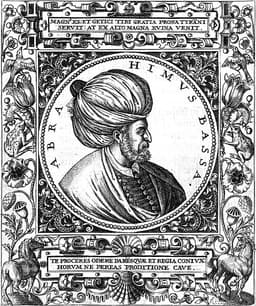
Ibrahim Pasha
Politician · Medieval
68.7Total

Nicholas Ridley
Politician · Medieval
41.0Total
Basic Information
Born
1493
1500
Died
1536
1555
Era
Medieval
Medieval
Nationality
Ottoman Empire
England
Occupation
Politician
Politician
Civilization
Middle Eastern
Western
Score Comparison
Military (10%)
60.0
43.4
Political (20%)
78.0
26.4
Influence (20%)
82.0
47.9
Legacy (20%)
52.0
41.7
Leadership (15%)
80.0
31.2
Strategy (15%)
55.0
56.6
TOTAL
68.7
41.0
Ibrahim Pasha — Complete Timeline
1536 AD
Execution by Suleiman the MagnificentPolitical Action◆ Major
Sultan Suleiman ordered the execution of Grand Vizier Ibrahim Pasha, his longtime friend and confidant. Ibrahim was strangled in the Topkapi Palace after being accused of overreaching his authority and possibly plotting against the sultan. His death shocked the Ottoman court.
Ottoman PoliticsExecutionSuleiman
Impact: nationaltragic
Nicholas Ridley — Complete Timeline
1547 AD
Appointed Bishop of RochesterPolitical Action
Ridley was appointed Bishop of Rochester under Edward VI. He was a leading Protestant reformer, supporting the English Reformation and opposing Catholic practices.
English Reformation
Impact: national
1550 AD
Appointed Bishop of LondonPolitical Action
Ridley became Bishop of London, where he promoted Protestant reforms, including the removal of altars and images from churches. He also supported the revised Book of Common Prayer.
English Reformation
Impact: national
1555 AD
Burned at the Stake with Hugh LatimerPolitical Action◆ Major
Under Mary I, Ridley was tried for heresy and burned at the stake in Oxford alongside Hugh Latimer. His execution was part of the Marian persecutions of Protestants.
MartyrdomReligious Persecution
Impact: nationaltragic
Expert Analysis
Origins
Ibrahim Pasha (c. 1495–1536) was born a Christian in Parga (modern Greece) to a sailor family. Captured in a raid, he was enslaved and later educated in the Ottoman palace system. His intellect and charm caught the attention of Prince Suleiman, becoming his close friend. Ibrahim converted to Islam and rose through the ranks. In contrast, Nicholas Ridley (c. 1500–1555) was born in South Tynedale, Northumberland, England, to a gentry family. He studied at Cambridge (Pembroke College) and later in Paris and Leuven, becoming a scholar and priest. His early career was marked by academic achievement and gradual embrace of Protestant ideas.
Rise to Power
Ibrahim Pasha's rise was meteoric. After Suleiman became sultan in 1520, Ibrahim was appointed Grand Vizier in 1523, bypassing more experienced officials. He commanded armies, notably in the Siege of Rhodes (1522) and the Battle of Mohács (1526). His influence extended to diplomacy, negotiating with European powers. Ridley's ascent was slower. He became Bishop of Rochester in 1547 under Edward VI, then Bishop of London in 1550. He was a key figure in the English Reformation, helping to compile the Book of Common Prayer and enforcing Protestant reforms. His rise ended abruptly with Mary I's accession in 1553.
Leadership & Governance
Ibrahim Pasha governed with authority, overseeing the Ottoman administration and military campaigns. He centralized power, often clashing with other officials. His governance style was pragmatic, securing alliances through marriage (he married Suleiman's sister Hatice). However, his accumulation of wealth and influence alienated rivals, including Suleiman's wife Hurrem Sultan. Ridley's leadership was ecclesiastical: he promoted iconoclasm, removed altars, and supported the poor. He was a strict disciplinarian, but his governance was limited to religious matters. His political score of 26.4 reflects his lack of secular power.
Triumph & Tragedy
Ibrahim's triumphs include the conquest of Belgrade (1521) and Rhodes, and the victory at Mohács. He expanded Ottoman influence in Europe. His tragedy was his execution in 1536, ordered by Suleiman, on charges of treason. He scored 78.3 in political ability but 55.0 in strategy, indicating his political acumen outshone military foresight. Ridley's triumph was his role in the Edwardian Reformation, but his tragedy was his martyrdom: burned at the stake in Oxford on October 16, 1555, alongside Hugh Latimer. He scored 43.4 in military (irrelevant for a bishop) and 47.9 in influence, reflecting his limited reach.
Character & Destiny
Ibrahim was ambitious, charismatic, and overconfident. He believed his friendship with Suleiman made him untouchable, but his arrogance and political maneuvering led to his downfall. Historical assessments note his hubris. Ridley was principled, devout, and uncompromising. His steadfastness in the face of persecution defined his destiny. He chose martyrdom over recantation, echoing his mentor Latimer. Their characters shaped their fates: Ibrahim's desire for power led to his execution; Ridley's faith led to his martyrdom.
Legacy
Ibrahim Pasha's legacy is mixed. He is remembered as a capable vizier but also as a cautionary tale of overreaching. His administrative reforms influenced later Ottoman governance. His score of 52.0 in legacy reflects his overshadowing by Suleiman. Ridley's legacy is as a Protestant martyr. His writings and witness inspired the English Reformation. He is commemorated in the Church of England's calendar. His legacy score of 41.7 is modest but enduring within religious history.
Conclusion
Ibrahim Pasha had greater impact in terms of political and military influence, with a total score of 68.7 versus Ridley's 41.0. He shaped the Ottoman Empire at its zenith, while Ridley's influence was confined to religious reform in England. Ibrahim's actions affected millions across three continents; Ridley's martyrdom influenced a smaller sphere. Therefore, Ibrahim Pasha had a more significant historical impact.
Rankings
🥇
Ibrahim PashaLeader
Mil: 60.0Pol: 78.0Inf: 82.0
68.7
🥈
Nicholas Ridley
Mil: 43.4Pol: 26.4Inf: 47.9
41.0
+27.7 behind
How This Comparison Works
Algorithm
Each figure is scored on 6 dimensions (0—100 scale) based on structured historical data: Military (10%), Political (20%), Influence (20%), Legacy (20%), Leadership (15%), Strategy (15%). The weighted total produces the final ranking.
Data Sources
Scores are computed from structured sub-indicators in the database. Scale factors adjust for era (Ancient ×0.85, Modern ×1.0) and civilization size (Eastern ×1.05, Other ×0.80) to account for differences in population and military scale.
Maximum 3 Figures
Comparisons are limited to 2—3 figures to ensure readability and statistical meaningfulness.
Error Margins
±5 points per dimension — Sub-scores are derived from historical records with inherent uncertainty. Two figures within 5 points on a dimension should be considered roughly equivalent in that area.
Total Score Accuracy
±3 points overall — The weighted combination of 6 dimensions produces a total score with approximately ±3 points of uncertainty. Differences of less than 3 points are not statistically significant— the figures are effectively tied.
Known Limitations
- Historical records are incomplete and uneven across civilizations
- Figures from oral-tradition societies may be underrepresented
- Occupation labels can misclassify multi-role figures
- Scores measure capability and impact, not moral character
- Quantitative scoring is a comparison tool, not absolute truth
Capability Radar
Military (10%) — Battles & Warfare
Battles
75
50
Win Rate
80
56
Expansion
85
61
Political (20%) — Governance & Reform
Reform
80
15
Diplomacy
90
20
Economy
75
10
Influence (20%) — Cultural & Global Reach
Cultural
65
15
Global
65
10
Legacy (20%) — Historical Impact
Historical
70
30
Longevity
60
20
Leadership (15%) — Power & Stability
Tenure
85
10
Stability
70
5
Strategy (15%) — Tactics & Innovation
Strategy
82
61
Tactics
78
66
Reform
70
65
Similar Comparisons
Comments & Discussion
No comments yet. Be the first to share your thoughts!