Loading...
Idaddu I vs Julius Caesar
Julius Caesar leads by 42.6 pts · 2 figures compared
…
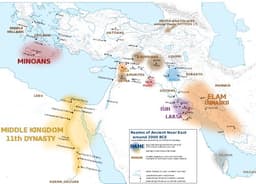
Idaddu I
Emperor · Ancient
40.2Total

Julius Caesar
General · Ancient
82.8Total
Basic Information
Born
-1970
-100
Died
-1950
-44
Era
Ancient
Ancient
Nationality
Elam
Roman Republic
Occupation
Emperor
General
Civilization
Middle Eastern
Western
Score Comparison
Military (10%)
25.9
88.0
Political (20%)
35.1
78.0
Influence (20%)
45.5
85.0
Legacy (20%)
40.0
82.0
Leadership (15%)
48.4
80.0
Strategy (15%)
36.8
85.0
TOTAL
40.2
82.8
Idaddu I — Complete Timeline
1970 BC
Foundation of the Sukkalmah DynastyPolitical Action◆ Major
Idaddu I established the Sukkalmah dynasty, becoming its first ruler. He adopted the title 'sukkalmah' (grand regent), which became the standard designation for Elamite rulers of this period, structuring Elamite governance for centuries.
Dynasty FoundationTitle Adoption
Impact: regionalconstructive
Julius Caesar — Complete Timeline
58 BC
Gallic WarsWar◆ Major
Caesar, as proconsul of Gaul, launched a series of campaigns that conquered all of Gaul (modern France, Belgium, and parts of Switzerland). He fought numerous battles, including against the Helvetii, the Belgae, and the Gallic chieftain Vercingetorix. The wars brought immense wealth and a loyal army to Caesar.
Gallic WarsConquestRoman Expansion
Impact: regional
49 BC
Crossing the RubiconPolitical Action◆ Major
Caesar led Legio XIII across the Rubicon River into Italy, defying the Roman Senate's order to disband his army. This act triggered a civil war against Pompey and the Optimates, ultimately leading to Caesar's dictatorship and the end of the Roman Republic.
Roman Civil WarEnd of RepublicPower Struggle
Impact: global
48 BC
Battle of PharsalusWar◆ Major
Caesar's outnumbered army defeated the larger forces of Pompey the Great at Pharsalus in Greece. Caesar's tactical use of a reserve line to counter Pompey's cavalry charge proved decisive. Pompey fled to Egypt, where he was assassinated, leaving Caesar as the undisputed master of the Roman world.
Roman Civil WarBattleDecisive Victory
Impact: regional
44 BC
Appointment as Dictator for LifePolitical Action◆ Major
The Roman Senate appointed Caesar dictator perpetuo (dictator for life), granting him unprecedented personal power. This move concentrated military, legislative, and judicial authority in one person, effectively ending the Roman Republic's traditional system of checks and balances and alarming many senators.
DictatorshipEnd of RepublicPower Consolidation
Impact: regionaldestructive
Assassination on the Ides of MarchPolitical Action◆ Major
A group of Roman senators, led by Marcus Junius Brutus and Gaius Cassius Longinus, stabbed Caesar to death at a meeting of the Senate in the Theatre of Pompey. The assassination was intended to restore the Republic, but instead triggered another civil war that led to the rise of the Roman Empire.
AssassinationRoman PoliticsEnd of Republic
Impact: globaldestructive
Expert Analysis
idaddu-i-vs-julius-caesar
# The Grand Regent and the Dictator: Two Paths to Power in the Ancient World
On a winter morning in 49 BCE, Julius Caesar stood at the banks of the Rubicon, a small river that marked the boundary between his province and Italy proper. To cross was to declare war on the Roman Senate, to risk everything on a single throw of the dice. He is said to have muttered, “The die is cast,” and stepped forward. Nearly two thousand years earlier, in the mud-brick city of Susa, another man faced a different kind of threshold. Idaddu I, an Elamite chieftain, had no dramatic river to cross—only the slow, grinding work of consolidating power in a land where empires rose and fell like the seasons. He took a title, *sukkalmah*, meaning “grand regent,” and founded a dynasty that would last for centuries. Yet today, Caesar’s name echoes through every schoolroom, while Idaddu I is known only to specialists. Why? The answer lies not in the size of their ambitions, but in the worlds they inherited and the choices they made within them.
Origins
Caesar was born into the twilight of the Roman Republic, a world of fierce competition among aristocratic families. His lineage, the Julian clan, claimed descent from the goddess Venus, but his family’s political fortunes had waned. He grew up in a Rome that was both a republic and an oligarchy, where power flowed through elections, alliances, and, increasingly, military might. His father died when he was sixteen, thrusting him into a precarious position. The civil wars of Sulla and Marius had taught him that survival required cunning, charm, and a willingness to take risks.
Idaddu I emerged from a very different world. Elam, in southwestern Iran, was an ancient civilization that had long been overshadowed by its Mesopotamian neighbors—Akkad, Ur, Babylon. By 1970 BCE, the region was a patchwork of city-states and petty kingdoms, with no single ruler commanding the resources of a Rome or an Egypt. Idaddu’s rise came not from a dramatic coup, but from the slow accumulation of local authority. He founded the Sukkalmah dynasty, a name that would define Elamite governance for generations. His world was one of clay tablets and irrigation canals, where power was measured in the control of trade routes and the loyalty of provincial governors.
Rise to Power
Caesar’s path to dominance was a masterclass in strategic ambition. He served as a military tribune, then as quaestor in Spain, where he saw the statue of Alexander the Great and wept, reportedly saying he had achieved nothing at an age when Alexander had conquered the world. He climbed the *cursus honorum*—the ladder of Roman offices—through a combination of bribery, oratory, and military success. His appointment as governor of Gaul in 58 BCE gave him the army he needed. Over eight years, he conquered all of Gaul, crossed the Rhine into Germany, and even landed in Britain, building a legend and a loyal army.
Idaddu I’s rise was quieter, but no less significant. He likely came from a powerful Elamite family, perhaps a governor or a priest, who saw an opportunity to unify the region. The title *sukkalmah* was not new—it had been used by earlier rulers—but Idaddu made it the cornerstone of a new dynasty. He established a system where the *sukkalmah* was the supreme ruler, but power was shared with a “sister’s son” (often the ruler’s nephew) and a council of elders. This was not a dictatorship; it was a delicate balance of kinship and politics. His key event, the foundation of the dynasty in 1970 BCE, was a political act, not a military conquest.
Leadership & Governance
Caesar governed with a blend of ruthlessness and generosity. As dictator, he reformed the calendar, granted citizenship to provincials, and launched public works that employed the poor. He centralized power, reducing the Senate to a rubber stamp, but he also pardoned many of his enemies, believing that mercy strengthened his rule. His military genius was undeniable: he wrote commentaries on his campaigns that are still studied for their clarity and tactical brilliance. Yet his governance was always personal, dependent on his own authority and the loyalty of his veterans.
Idaddu I’s rule was institutional rather than personal. The Sukkalmah dynasty survived for over three centuries precisely because it was not built around one man. The title *sukkalmah* meant “grand regent,” implying a steward of the realm, not a conqueror. Idaddu’s governance focused on stability: maintaining irrigation systems, managing trade with Mesopotamia, and balancing the demands of local elites. His military score of 60.0 reflects a ruler who was competent but not a conqueror. He did not need to cross a Rubicon; he needed to keep the canals flowing and the tribute coming.
Triumph & Tragedy
Caesar’s greatest triumph was the conquest of Gaul, which brought immense wealth and prestige to Rome—and to him. His greatest tragedy was his assassination on the Ides of March in 44 BCE, when his own senators, fearing he would become king, stabbed him to death in the Senate chamber. His murder plunged Rome into another civil war, but it also ensured his immortality. He became “Caesar,” the title adopted by every subsequent Roman emperor.
Idaddu I’s triumphs were quieter: the founding of a dynasty that would outlast him, the establishment of a title that would define Elamite rule. His tragedy is that we know almost nothing about his death or the immediate aftermath of his reign. The records are fragmentary, and his world was swallowed by larger empires—first Babylon, then Assyria, then Persia. He did not die dramatically; he simply faded into the clay of history.
Character & Destiny
Caesar was driven by an insatiable desire for glory. He was vain, brilliant, and reckless. He once said, “It is easier to find men who will volunteer to die, than to find those who are willing to endure pain with patience.” His character shaped his destiny: his ambition made him great, but it also made him enemies. He could have stopped at the Rubicon; he chose to cross.
Idaddu I was a builder, not a breaker. His character was likely cautious, pragmatic, and focused on legacy rather than personal glory. He founded a dynasty that lasted for centuries—a feat Caesar never achieved, since his adopted son Octavian became the first emperor, but the Julian line died out within a generation. Idaddu’s destiny was to be remembered as a founder, not a martyr.
Legacy
Caesar’s legacy is immense. His reforms shaped the Roman Empire, his name became synonymous with autocracy (Kaiser, Tsar), and his writings are still read. He is both a hero and a warning, a man who destroyed a republic and built an empire.
Idaddu I’s legacy is more modest but more stable. The Sukkalmah dynasty ruled Elam for over 300 years, a remarkable achievement in the turbulent ancient Near East. His title, *sukkalmah*, became a standard for Elamite kings. Yet his total score of 49.0 reflects the reality: he was a regional figure, not a world-changer.
Conclusion
Standing at the Rubicon, Caesar chose the dramatic, the personal, the immediate. Idaddu I, in the dusty plains of Elam, chose the institutional, the patient, the enduring. One became a legend; the other became a footnote. But perhaps the footnote is the more instructive story. In a world that celebrates the dramatic crossing of rivers, we forget that most power is built by those who maintain the canals. Caesar’s life is a tragedy of ambition; Idaddu’s is a quiet success of governance. Both are ancient, but only one reminds us that history is not just made by those who cross lines, but by those who draw them.
Rankings
🥇
Julius CaesarLeader
Mil: 88.0Pol: 78.0Inf: 85.0
82.8
🥈
Idaddu I
Mil: 25.9Pol: 35.1Inf: 45.5
40.2
+42.6 behind
How This Comparison Works
Algorithm
Each figure is scored on 6 dimensions (0—100 scale) based on structured historical data: Military (10%), Political (20%), Influence (20%), Legacy (20%), Leadership (15%), Strategy (15%). The weighted total produces the final ranking.
Data Sources
Scores are computed from structured sub-indicators in the database. Scale factors adjust for era (Ancient ×0.85, Modern ×1.0) and civilization size (Eastern ×1.05, Other ×0.80) to account for differences in population and military scale.
Maximum 3 Figures
Comparisons are limited to 2—3 figures to ensure readability and statistical meaningfulness.
Error Margins
±5 points per dimension — Sub-scores are derived from historical records with inherent uncertainty. Two figures within 5 points on a dimension should be considered roughly equivalent in that area.
Total Score Accuracy
±3 points overall — The weighted combination of 6 dimensions produces a total score with approximately ±3 points of uncertainty. Differences of less than 3 points are not statistically significant— the figures are effectively tied.
Known Limitations
- Historical records are incomplete and uneven across civilizations
- Figures from oral-tradition societies may be underrepresented
- Occupation labels can misclassify multi-role figures
- Scores measure capability and impact, not moral character
- Quantitative scoring is a comparison tool, not absolute truth
Capability Radar
Military (10%) — Battles & Warfare
Battles
10
95
Win Rate
10
92
Expansion
10
97
Political (20%) — Governance & Reform
Reform
30
90
Diplomacy
30
85
Economy
30
82
Influence (20%) — Cultural & Global Reach
Cultural
20
88
Global
10
94
Legacy (20%) — Historical Impact
Historical
30
95
Longevity
20
96
Leadership (15%) — Power & Stability
Tenure
30
75
Stability
30
60
Strategy (15%) — Tactics & Innovation
Strategy
10
94
Tactics
10
96
Reform
10
88
Similar Comparisons
Comments & Discussion
RUBICON\_NOMAD6/17/2026
Caesar wasn't just crossing a river—he was weaponizing theater. Idaddu I quietly built a dynastic bureaucracy that lasted 200+ years. Caesar's dramatic flourish gave us soundbites; Idaddu's *sukkalmah* title gave stability. Yet we teach Caesar because rebellion sells textbooks. Boring competence never gets a statue. Idaddu wins on substance, Caesar on spectacle.
青铜铁律6/17/2026
说伊达度一世是小人物?他称霸时,罗马连个小水坑都算不上。他搞的制度让埃兰平稳运行几百年,而凯撒死后罗马就血流成河。凯撒有命写《高卢战记》,但伊达度的王朝活得更久。历史喜欢吹牛逼,不喜欢实干家。