Loading...
Idris Alooma vs Peter I of Serbia
Idris Alooma leads by 12.0 pts · 2 figures compared
…

Idris Alooma
Emperor · Modern
64.6Total
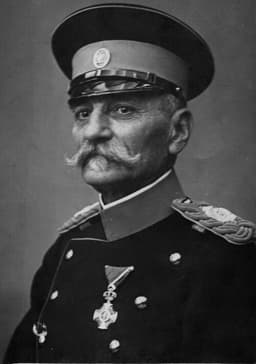
Peter I of Serbia
Emperor · Modern
52.6Total
Basic Information
Born
1542
1844
Died
1603
1921
Era
Modern
Modern
Nationality
Kanem-Bornu
Serbia
Occupation
Emperor
Emperor
Civilization
Other
Western
Score Comparison
Military (10%)
65.0
55.0
Political (20%)
78.0
60.0
Influence (20%)
59.0
58.0
Legacy (20%)
52.0
48.3
Leadership (15%)
78.0
53.2
Strategy (15%)
69.1
35.0
TOTAL
64.6
52.6
Idris Alooma — Complete Timeline
1570 AD
Military Reforms with FirearmsReform◆ Major
Idris Alooma introduced firearms, including muskets and cannons, to the Kanem-Bornu army. He hired Turkish and North African mercenaries to train his troops, creating a professional standing army that gave Bornu a military advantage.
Military ReformFirearmsStanding Army
Impact: regionalconstructive
1571 AD
Pilgrimage to MeccaCultural
Idris Alooma made a pilgrimage to Mecca, traveling through Egypt and Arabia. He established diplomatic ties with the Ottoman Empire and secured support for his military reforms, including the supply of firearms.
PilgrimageMeccaOttoman Alliance
Impact: regionalconstructive
1575 AD
Conquest of the SaoWar
Idris Alooma led campaigns against the Sao people, who had long raided Bornu. He defeated them and incorporated their territory, securing the empire's southern borders and gaining control over trade routes.
ConquestSaoBorder Security
Impact: regional
1580 AD
Construction of Fortified CampsReform
Idris Alooma built fortified military camps (ribats) along Bornu's borders. These camps housed garrisons and served as bases for campaigns, improving defense against raids from the Tuareg and other groups.
FortificationsDefenseMilitary
Impact: regionalconstructive
1585 AD
Legal and Administrative ReformsReform◆ Major
Idris Alooma codified Islamic law and established a system of courts in Bornu. He appointed qadis (judges) and standardized legal procedures, strengthening the rule of law and centralizing authority.
Legal ReformIslamic LawCourts
Impact: regionalconstructive
Peter I of Serbia — Complete Timeline
1903 AD
Became King of SerbiaPolitical Action◆ Major
Peter I Kara
CoupDynasty ChangeKarađorđević
Impact: national
1912 AD
Led Serbia in the Balkan WarsWar◆ Major
King Peter I led Serbia during the First and Second Balkan Wars, which resulted in the expansion of Serbian territory and the expulsion of the Ottoman Empire from most of the Balkans. Serbia emerged as a regional power.
Balkan WarsTerritorial ExpansionOttoman Empire
Impact: regional
1915 AD
World War I and the Retreat through AlbaniaWar
After the Austro-Hungarian and German invasion of Serbia, King Peter I led the Serbian army and government on a retreat through the mountains of Albania to the Adriatic coast. The retreat was a humanitarian disaster but preserved the army for future campaigns.
World War IRetreatHumanitarian Crisis
Impact: regionaltragic
1918 AD
Proclaimed King of the Serbs, Croats, and SlovenesPolitical Action
Following the end of World War I, King Peter I was proclaimed King of the newly formed Kingdom of Serbs, Croats, and Slovenes (later Yugoslavia). This united South Slavic peoples under a single monarchy.
YugoslaviaUnificationMonarchy
Impact: regionalconstructive
Expert Analysis
Origins
Idris Alooma (c. 1564-1603) was born into the ruling dynasty of the Kanem-Bornu Empire, a powerful state in the Lake Chad region. He received a traditional Islamic education and was groomed for leadership from a young age. His father, Mai Ali, had already begun centralizing power, but Idris would take reforms further. In contrast, Peter I of Serbia (1844-1921) was born as Prince Peter Karađorđević, part of the Karađorđević dynasty that had been exiled after the Obrenović dynasty took power. He spent much of his early life in exile, receiving education in France and Switzerland, and served as a volunteer in the French Foreign Legion. His formative experiences were shaped by the struggle for Serbian independence and unification of South Slavs.
Rise to Power
Idris Alooma ascended to the throne of Bornu in 1570 after a period of internal strife. His rise was marked by a swift consolidation of power, eliminating rivals and centralizing authority. He secured support from Muslim scholars and merchants, leveraging his pilgrimage to Mecca to gain legitimacy. Peter I became King of Serbia in 1903 after the May Coup, which resulted in the assassination of King Alexander Obrenović. The coup was orchestrated by military officers seeking to restore the Karađorđević dynasty. Peter I's accession was a turning point for Serbia, aligning it with Russia and moving away from Austro-Hungarian influence. His rise was less about personal ambition and more about being a symbol of national unity.
Leadership & Governance
Idris Alooma's leadership style was autocratic and reformist. He introduced firearms to the Bornu army, employing Turkish and North African mercenaries to train his troops. He codified Islamic law, establishing a system of courts with appointed qadis, which standardized legal procedures and strengthened the rule of law. He built fortified military camps (ribats) along borders, improving defense and enabling campaigns. His governance was centralized and efficient, but relied heavily on his personal authority. Peter I, by contrast, was a constitutional monarch. He presided over a period of parliamentary democracy in Serbia, respecting the constitution and allowing political parties to function. He led Serbia through the Balkan Wars (1912-1913), which expanded Serbian territory, and World War I, where he shared the hardships of his army during the retreat through Albania. His leadership was more symbolic and morale-boosting than directly administrative.
Triumph & Tragedy
Idris Alooma's greatest triumph was the transformation of Bornu into a centralized, militarily powerful state. He conquered the Sao, securing the empire's borders, and established diplomatic ties with the Ottoman Empire. However, his reliance on firearms and mercenaries created a dependency that later weakened Bornu after his death. The legal and administrative reforms did not outlast him fully. Peter I's triumph was the unification of South Slavs into the Kingdom of Serbs, Croats, and Slovenes in 1918, fulfilling a long-held dream. His tragedy was the immense suffering of Serbia during World War I, with huge casualties and the retreat through Albania. He died in 1921, just as the new kingdom faced internal ethnic tensions that would later plague Yugoslavia.
Character & Destiny
Idris Alooma was decisive and pragmatic, using religion and military innovation to strengthen his rule. His character was shaped by the need to defend against external threats and internal dissent. His destiny was to be remembered as a reformer, but his empire declined after his death due to over-centralization. Peter I was known for his humility and dedication to his people, often sharing their hardships. His character was that of a constitutional monarch who put country above personal power. His destiny was to be the father of Yugoslavia, but his legacy was overshadowed by the later authoritarian rule of his son, Alexander I.
Legacy
Idris Alooma's legacy is mixed: he modernized Bornu but left it vulnerable. His military reforms introduced firearms to the region, but the empire fragmented after his reign. He is remembered in West African history as a great ruler, but his influence score of 59.0 reflects limited global impact. Peter I's legacy is more enduring as the founder of Yugoslavia, but the state collapsed in the 1990s. His political score of 60.0 and influence of 58.0 show moderate impact. However, his leadership during war and unification efforts earned him respect. The score gap of 12.0 points in favor of Idris Alooma reflects higher scores in military (65.0 vs 55.0), political (78.0 vs 60.0), and leadership (78.0 vs 53.2).
Conclusion
Idris Alooma had a greater impact on his immediate region through concrete reforms in military and law, scoring a total of 64.6 compared to Peter I's 52.6. While Peter I's unification of South Slavs was historically significant, the subsequent instability of Yugoslavia undermines his legacy. Idris Alooma's transformation of Bornu, though temporary, was more decisive and innovative. Therefore, Idris Alooma is the more impactful figure in terms of tangible achievements and reform.
Rankings
🥇
Idris AloomaLeader
Mil: 65.0Pol: 78.0Inf: 59.0
64.6
🥈
Peter I of Serbia
Mil: 55.0Pol: 60.0Inf: 58.0
52.6
+12.0 behind
How This Comparison Works
Algorithm
Each figure is scored on 6 dimensions (0—100 scale) based on structured historical data: Military (10%), Political (20%), Influence (20%), Legacy (20%), Leadership (15%), Strategy (15%). The weighted total produces the final ranking.
Data Sources
Scores are computed from structured sub-indicators in the database. Scale factors adjust for era (Ancient ×0.85, Modern ×1.0) and civilization size (Eastern ×1.05, Other ×0.80) to account for differences in population and military scale.
Maximum 3 Figures
Comparisons are limited to 2—3 figures to ensure readability and statistical meaningfulness.
Error Margins
±5 points per dimension — Sub-scores are derived from historical records with inherent uncertainty. Two figures within 5 points on a dimension should be considered roughly equivalent in that area.
Total Score Accuracy
±3 points overall — The weighted combination of 6 dimensions produces a total score with approximately ±3 points of uncertainty. Differences of less than 3 points are not statistically significant— the figures are effectively tied.
Known Limitations
- Historical records are incomplete and uneven across civilizations
- Figures from oral-tradition societies may be underrepresented
- Occupation labels can misclassify multi-role figures
- Scores measure capability and impact, not moral character
- Quantitative scoring is a comparison tool, not absolute truth
Capability Radar
Military (10%) — Battles & Warfare
Battles
65
30
Win Rate
70
35
Expansion
60
25
Political (20%) — Governance & Reform
Reform
80
60
Diplomacy
70
70
Economy
65
50
Influence (20%) — Cultural & Global Reach
Cultural
55
50
Global
40
40
Legacy (20%) — Historical Impact
Historical
60
55
Longevity
50
45
Leadership (15%) — Power & Stability
Tenure
75
55
Stability
70
45
Strategy (15%) — Tactics & Innovation
Strategy
70
40
Tactics
75
30
Reform
85
45
Similar Comparisons
Comments & Discussion
No comments yet. Be the first to share your thoughts!