Loading...
This comparison has not been analyzed yet.
One-time AI generation (~1 minute). Scores and timeline are already available below.
Igor Sechin vs Robert Walpole
Robert Walpole leads by 1.5 pts · 2 figures compared
…

Igor Sechin
Politician · Modern
57.3Total
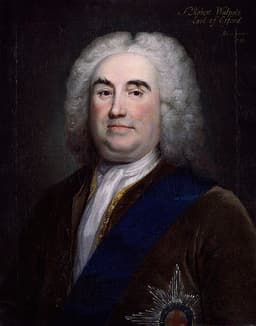
Robert Walpole
Politician · Modern
58.8Total
Basic Information
Born
1960
1676
Died
—
1745
Era
Modern
Modern
Nationality
Russia
United Kingdom
Occupation
Politician
Politician
Civilization
Western
Western
Score Comparison
Military (10%)
50.0
49.5
Political (20%)
62.7
70.3
Influence (20%)
62.0
56.7
Legacy (20%)
49.2
55.0
Leadership (15%)
72.0
75.0
Strategy (15%)
43.1
41.1
TOTAL
57.3
58.8
Igor Sechin — Complete Timeline
2011 AD
Rosneft signed the Arctic exploration deal with ExxonMobilPolitical Action◆ Major
Sechin negotiated a strategic partnership with ExxonMobil to explore and develop oil and gas resources in the Russian Arctic, including the Kara Sea. The deal, valued at up to $500 billion, was later suspended due to Western sanctions imposed after the Ukraine crisis.
ArcticExxonMobilEnergy
Impact: globalconstructive
2012 AD
Appointed CEO of RosneftPolitical Action◆ Major
Igor Sechin was appointed President and Chairman of the Management Board of Rosneft, Russia's state-owned oil company. He transformed Rosneft into the world's largest publicly traded oil producer by output, overseeing major acquisitions and expansion, while maintaining close ties to the Kremlin.
OilRosneftEnergy
Impact: global
2013 AD
Oversaw Rosneft's acquisition of TNK-BPPolitical Action◆ Major
Sechin led Rosneft's $55 billion acquisition of TNK-BP, the third-largest oil company in Russia, from BP and the AAR consortium. The deal made Rosneft the world's largest publicly traded oil producer by output and solidified Sechin's influence in the global energy sector.
AcquisitionTNK-BPEnergy
Impact: globalconstructive
2014 AD
Rosneft placed under US sanctionsPolitical Action◆ Major
Following Russia's annexation of Crimea, the United States imposed sanctions on Rosneft and Sechin personally, freezing assets and restricting access to Western capital markets. The sanctions targeted Russia's energy sector, limiting Rosneft's ability to finance projects and acquire technology.
SanctionsCrimeaEnergy
Impact: globaldestructive
Robert Walpole — Complete Timeline
1720 AD
South Sea Bubble Crisis ManagementPolitical Action◆ Major
Walpole restored public confidence after the South Sea Company's collapse in 1720. He devised a plan to transfer company stock to the Bank of England and South Sea Company, stabilizing the financial system and protecting many investors from ruin.
Financial CrisisEconomic PolicySouth Sea Bubble
Impact: nationalconstructive
1721 AD
Became First Lord of the TreasuryPolitical Action
Robert Walpole was appointed First Lord of the Treasury and Chancellor of the Exchequer in April 1721, following the South Sea Bubble crisis. He is widely regarded as Britain's first de facto prime minister, holding power for over two decades.
Prime MinisterGovernment18th Century
Impact: nationalconstructive
1733 AD
Excise Tax Scheme ProposedReform
Walpole proposed an excise tax on wine and tobacco to replace customs duties and reduce smuggling. The plan faced intense public opposition and was withdrawn in April 1733. The failure weakened Walpole's political position but avoided widespread unrest.
TaxationReformPolitical Crisis
Impact: national
1742 AD
Resigned as Prime MinisterPolitical Action◆ Major
Walpole resigned as First Lord of the Treasury on February 11, 1742, after losing a vote of no confidence in the House of Commons. His resignation marked the end of his 21-year tenure and established the precedent of a prime minister leaving office when losing parliamentary support.
ResignationParliamentary SystemPrecedent
Impact: national
This comparison has not been analyzed yet.
One-time AI generation (~1 minute). Scores and timeline are already available below.
Rankings
🥇
Robert WalpoleLeader
Mil: 49.5Pol: 70.3Inf: 56.7
58.8
🥈
Igor Sechin
Mil: 50.0Pol: 62.7Inf: 62.0
57.3
+1.5 behind
How This Comparison Works
Algorithm
Each figure is scored on 6 dimensions (0—100 scale) based on structured historical data: Military (10%), Political (20%), Influence (20%), Legacy (20%), Leadership (15%), Strategy (15%). The weighted total produces the final ranking.
Data Sources
Scores are computed from structured sub-indicators in the database. Scale factors adjust for era (Ancient ×0.85, Modern ×1.0) and civilization size (Eastern ×1.05, Other ×0.80) to account for differences in population and military scale.
Maximum 3 Figures
Comparisons are limited to 2—3 figures to ensure readability and statistical meaningfulness.
Error Margins
±5 points per dimension — Sub-scores are derived from historical records with inherent uncertainty. Two figures within 5 points on a dimension should be considered roughly equivalent in that area.
Total Score Accuracy
±3 points overall — The weighted combination of 6 dimensions produces a total score with approximately ±3 points of uncertainty. Differences of less than 3 points are not statistically significant— the figures are effectively tied.
Known Limitations
- Historical records are incomplete and uneven across civilizations
- Figures from oral-tradition societies may be underrepresented
- Occupation labels can misclassify multi-role figures
- Scores measure capability and impact, not moral character
- Quantitative scoring is a comparison tool, not absolute truth
Capability Radar
Military (10%) — Battles & Warfare
Battles
27
28
Win Rate
29
35
Expansion
37
33
Political (20%) — Governance & Reform
Reform
75
75
Diplomacy
70
80
Economy
90
85
Influence (20%) — Cultural & Global Reach
Cultural
30
55
Global
70
60
Legacy (20%) — Historical Impact
Historical
55
70
Longevity
40
65
Leadership (15%) — Power & Stability
Tenure
85
85
Stability
65
80
Strategy (15%) — Tactics & Innovation
Strategy
39
38
Tactics
43
40
Reform
42
41
Similar Comparisons
Comments & Discussion
No comments yet. Be the first to share your thoughts!