Loading...
Muhammad Yunus vs Robert Walpole
Robert Walpole leads by 5.9 pts · 2 figures compared
…

Muhammad Yunus
Politician · Modern
52.9Total
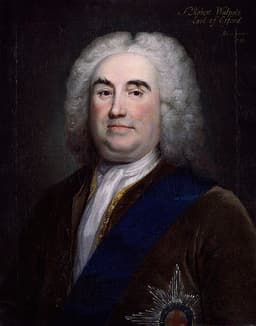
Robert Walpole
Politician · Modern
58.8Total
Basic Information
Born
1940
1676
Died
—
1745
Era
Modern
Modern
Nationality
Bangladesh
United Kingdom
Occupation
Politician
Politician
Civilization
Indian
Western
Score Comparison
Military (10%)
49.8
49.5
Political (20%)
55.0
70.3
Influence (20%)
40.0
56.7
Legacy (20%)
72.0
55.0
Leadership (15%)
48.4
75.0
Strategy (15%)
44.0
41.1
TOTAL
52.9
58.8
Muhammad Yunus — Complete Timeline
1983 AD
Founding of Grameen BankInvention
Muhammad Yunus founded Grameen Bank in 1983 as a microfinance institution providing small loans to the poor, especially women, without requiring collateral. The bank's model of group lending and social development became a global template for poverty alleviation.
MicrofinancePoverty AlleviationSocial Business
Impact: globalconstructive
2006 AD
Nobel Peace Prize AwardCultural◆ Major
Muhammad Yunus and Grameen Bank were jointly awarded the Nobel Peace Prize in 2006 for their efforts to create economic and social development from below. The award recognized microcredit as a tool for peace and poverty reduction worldwide.
Nobel PrizeMicrofinanceRecognition
Impact: globalconstructive
2024 AD
Appointment as Interim Leader of BangladeshPolitical Action◆ Major
Following the fall of Sheikh Hasina's government in a student-led uprising, Muhammad Yunus was appointed as the head of an interim government on August 8, 2024. His role was to oversee a transition to new elections amid political crisis.
Interim GovernmentPolitical TransitionBangladesh
Impact: national
Robert Walpole — Complete Timeline
1720 AD
South Sea Bubble Crisis ManagementPolitical Action◆ Major
Walpole restored public confidence after the South Sea Company's collapse in 1720. He devised a plan to transfer company stock to the Bank of England and South Sea Company, stabilizing the financial system and protecting many investors from ruin.
Financial CrisisEconomic PolicySouth Sea Bubble
Impact: nationalconstructive
1721 AD
Became First Lord of the TreasuryPolitical Action
Robert Walpole was appointed First Lord of the Treasury and Chancellor of the Exchequer in April 1721, following the South Sea Bubble crisis. He is widely regarded as Britain's first de facto prime minister, holding power for over two decades.
Prime MinisterGovernment18th Century
Impact: nationalconstructive
1733 AD
Excise Tax Scheme ProposedReform
Walpole proposed an excise tax on wine and tobacco to replace customs duties and reduce smuggling. The plan faced intense public opposition and was withdrawn in April 1733. The failure weakened Walpole's political position but avoided widespread unrest.
TaxationReformPolitical Crisis
Impact: national
1742 AD
Resigned as Prime MinisterPolitical Action◆ Major
Walpole resigned as First Lord of the Treasury on February 11, 1742, after losing a vote of no confidence in the House of Commons. His resignation marked the end of his 21-year tenure and established the precedent of a prime minister leaving office when losing parliamentary support.
ResignationParliamentary SystemPrecedent
Impact: national
Expert Analysis
Origins
Muhammad Yunus was born on June 28, 1940, in Chittagong, then part of British India (now Bangladesh). He was the third of 14 children in a middle-class family; his father was a jeweler. Yunus studied at the University of Dhaka and later earned a PhD in economics from Vanderbilt University in the United States. His formative experience was the 1974 famine in Bangladesh, which drove him to question traditional economic theories and seek practical solutions to poverty.
Robert Walpole was born on August 26, 1676, in Houghton, Norfolk, England, into a wealthy Whig family. He was educated at Eton and King's College, Cambridge. His father, a member of Parliament, died when Walpole was young, leaving him with a substantial estate. Walpole entered Parliament in 1701 and quickly aligned with the Whig faction, learning the intricacies of British politics under Queen Anne.
Rise to Power
Yunus's rise began with his academic work. In 1976, he started an experimental project in the village of Jobra, lending small sums to poor women from his own pocket. This grew into Grameen Bank, formally established in 1983. The bank's model—collateral-free loans for the poor—spread globally. Yunus received the Nobel Peace Prize in 2006, bringing him international fame. In 2024, following a student-led uprising that ousted Prime Minister Sheikh Hasina, Yunus was appointed interim leader of Bangladesh on August 8, 2024.
Walpole's rise came through political maneuvering. He served as Secretary at War and later as First Lord of the Admiralty. His major breakthrough came after the South Sea Bubble crisis of 1720. Walpole, who had opposed the scheme, was called upon to restore confidence. He became First Lord of the Treasury and Chancellor of the Exchequer in April 1721, effectively becoming the first prime minister of Great Britain. He maintained power through patronage and control of the House of Commons.
Leadership & Governance
Yunus's leadership style is decentralized and bottom-up, focusing on empowering individuals, especially women. As head of Grameen Bank, he emphasized trust-based lending and social business. His governance approach in the interim government is still nascent, but he has prioritized anti-corruption and electoral reforms. His political score of 55.0 reflects his limited experience in formal governance.
Walpole exercised centralized control, managing Parliament through bribery and patronage. He skillfully balanced the interests of the crown and the Commons, avoiding major wars to maintain low taxes. His excise tax scheme in 1733 failed due to public opposition, revealing his limits. Walpole's leadership score of 75.0 is high, reflecting his long tenure and effective management of the British state.
Triumph & Tragedy
Yunus's greatest triumph is the creation of microfinance, which has lifted millions out of poverty. Grameen Bank has over 9 million borrowers, 97% of whom are women. He won the Nobel Peace Prize, scoring 72.0 in legacy. However, his tragedy includes conflicts with the Bangladeshi government, particularly under Sheikh Hasina, who accused him of extracting money from the poor. In 2013, he was forced to step down from Grameen Bank due to a government order, a controversial move criticized internationally.
Walpole's triumph was stabilizing Britain after the South Sea Bubble and establishing the office of prime minister. He kept the country out of costly wars, fostering economic growth. His tragedy was his eventual downfall: he lost a vote of no confidence in 1742 after a disastrous war with Spain (the War of Jenkins' Ear). His excise tax failure also damaged his reputation. His legacy score of 55.0 reflects his foundational role but also his authoritarian methods.
Character & Destiny
Yunus is characterized by idealism and persistence. He ignored skepticism to pursue microfinance, believing in the poor's entrepreneurial potential. His destiny as interim leader came unexpectedly, driven by popular demand. His character, however, has been criticized as naive in political dealings, leading to conflicts with established powers.
Walpole was pragmatic and cunning, known as the "Screenmaster-General" for his ability to cover up scandals. He valued stability over reform. His destiny was to create the prime ministerial role, but his methods—such as extensive patronage—set precedents for corruption. His resignation marked the end of a 20-year dominance.
Legacy
Yunus's legacy is the microfinance movement, which has inspired similar institutions worldwide. The Grameen model has been replicated in over 100 countries. His concept of social business—non-loss, non-dividend companies—continues to influence social entrepreneurship. His political legacy as interim leader is still unfolding, but he has already initiated reforms. His influence score of 40.0 is lower than Walpole's 56.7, reflecting his narrower impact sphere.
Walpole's legacy is the office of Prime Minister itself. He established the precedent of the chief minister leading the cabinet and commanding a parliamentary majority. His policies of peace and low taxes laid the groundwork for British prosperity. However, his reputation as a corrupt manager has persisted. He is remembered as the first de facto prime minister, but his governance style is often contrasted with later reformers.
Conclusion
Robert Walpole scores higher overall (58.8 vs 52.9), driven by superior leadership (75.0 vs 48.4) and political skill (70.3 vs 55.0). However, Yunus's legacy score of 72.0 exceeds Walpole's 55.0, reflecting the transformative impact of microfinance. While Walpole established a political institution that shaped British governance for centuries, Yunus pioneered a global economic movement that has directly improved lives of the poorest. In terms of lasting human impact, Muhammad Yunus has the greater effect. Walpole's influence is confined to political structures; Yunus's work has changed how the world addresses poverty. Therefore, despite the score gap, Yunus's impact is more profound and widespread.
Rankings
🥇
Robert WalpoleLeader
Mil: 49.5Pol: 70.3Inf: 56.7
58.8
🥈
Muhammad Yunus
Mil: 49.8Pol: 55.0Inf: 40.0
52.9
+5.9 behind
How This Comparison Works
Algorithm
Each figure is scored on 6 dimensions (0—100 scale) based on structured historical data: Military (10%), Political (20%), Influence (20%), Legacy (20%), Leadership (15%), Strategy (15%). The weighted total produces the final ranking.
Data Sources
Scores are computed from structured sub-indicators in the database. Scale factors adjust for era (Ancient ×0.85, Modern ×1.0) and civilization size (Eastern ×1.05, Other ×0.80) to account for differences in population and military scale.
Maximum 3 Figures
Comparisons are limited to 2—3 figures to ensure readability and statistical meaningfulness.
Error Margins
±5 points per dimension — Sub-scores are derived from historical records with inherent uncertainty. Two figures within 5 points on a dimension should be considered roughly equivalent in that area.
Total Score Accuracy
±3 points overall — The weighted combination of 6 dimensions produces a total score with approximately ±3 points of uncertainty. Differences of less than 3 points are not statistically significant— the figures are effectively tied.
Known Limitations
- Historical records are incomplete and uneven across civilizations
- Figures from oral-tradition societies may be underrepresented
- Occupation labels can misclassify multi-role figures
- Scores measure capability and impact, not moral character
- Quantitative scoring is a comparison tool, not absolute truth
Capability Radar
Military (10%) — Battles & Warfare
Battles
26
28
Win Rate
30
35
Expansion
29
33
Political (20%) — Governance & Reform
Reform
60
75
Diplomacy
55
80
Economy
85
85
Influence (20%) — Cultural & Global Reach
Cultural
70
55
Global
75
60
Legacy (20%) — Historical Impact
Historical
75
70
Longevity
65
65
Leadership (15%) — Power & Stability
Tenure
10
85
Stability
30
80
Strategy (15%) — Tactics & Innovation
Strategy
34
38
Tactics
35
40
Reform
43
41
Similar Comparisons
Comments & Discussion
No comments yet. Be the first to share your thoughts!