Loading...
Jimmy Carter vs Robert Walpole
Jimmy Carter leads by 0.3 pts · 2 figures compared
…

Jimmy Carter
Politician · Modern
59.1Total
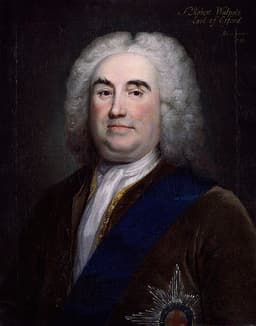
Robert Walpole
Politician · Modern
58.8Total
Basic Information
Born
1924
1676
Died
—
1745
Era
Modern
Modern
Nationality
United States
United Kingdom
Occupation
Politician
Politician
Civilization
Western
Western
Score Comparison
Military (10%)
10.0
49.5
Political (20%)
60.0
70.3
Influence (20%)
82.0
56.7
Legacy (20%)
58.0
55.0
Leadership (15%)
68.0
75.0
Strategy (15%)
38.6
41.1
TOTAL
59.1
58.8
Jimmy Carter — Complete Timeline
1976 AD
Elected PresidentPolitical Action
Carter defeated incumbent Gerald Ford in the 1976 presidential election. He campaigned as a Washington outsider and promised honesty and human rights in foreign policy.
PresidencyElection
Impact: national
1978 AD
Brokered the Camp David AccordsPolitical Action
Carter mediated negotiations between Egyptian President Anwar Sadat and Israeli Prime Minister Menachem Begin at Camp David. The accords led to the Egypt-Israel Peace Treaty in 1979, a landmark in Middle East diplomacy.
Middle East PeaceDiplomacy
Impact: globalconstructive
1979 AD
Iran Hostage CrisisPolitical Action◆ Major
Iranian militants seized the US Embassy in Tehran, taking 52 American hostages. Carter's administration attempted a rescue mission that failed, and the crisis dominated his final year in office.
IranHostage Crisis
Impact: globaldestructive
1980 AD
Lost 1980 Presidential ElectionPolitical Action◆ Major
Carter lost the 1980 election to Ronald Reagan in a landslide. The defeat was attributed to economic stagflation, the Iran hostage crisis, and a perception of weak leadership.
ElectionDefeat
Impact: nationaldestructive
2002 AD
Awarded Nobel Peace PrizeCultural◆ Major
Carter was awarded the Nobel Peace Prize for his decades of work in conflict resolution, human rights, and democracy promotion through the Carter Center. The prize recognized his post-presidential efforts.
Nobel PrizeHuman Rights
Impact: globalconstructive
Robert Walpole — Complete Timeline
1720 AD
South Sea Bubble Crisis ManagementPolitical Action◆ Major
Walpole restored public confidence after the South Sea Company's collapse in 1720. He devised a plan to transfer company stock to the Bank of England and South Sea Company, stabilizing the financial system and protecting many investors from ruin.
Financial CrisisEconomic PolicySouth Sea Bubble
Impact: nationalconstructive
1721 AD
Became First Lord of the TreasuryPolitical Action
Robert Walpole was appointed First Lord of the Treasury and Chancellor of the Exchequer in April 1721, following the South Sea Bubble crisis. He is widely regarded as Britain's first de facto prime minister, holding power for over two decades.
Prime MinisterGovernment18th Century
Impact: nationalconstructive
1733 AD
Excise Tax Scheme ProposedReform
Walpole proposed an excise tax on wine and tobacco to replace customs duties and reduce smuggling. The plan faced intense public opposition and was withdrawn in April 1733. The failure weakened Walpole's political position but avoided widespread unrest.
TaxationReformPolitical Crisis
Impact: national
1742 AD
Resigned as Prime MinisterPolitical Action◆ Major
Walpole resigned as First Lord of the Treasury on February 11, 1742, after losing a vote of no confidence in the House of Commons. His resignation marked the end of his 21-year tenure and established the precedent of a prime minister leaving office when losing parliamentary support.
ResignationParliamentary SystemPrecedent
Impact: national
Expert Analysis
Origins
Jimmy Carter was born on October 1, 1924, in Plains, Georgia, to a farming family. He graduated from the US Naval Academy in 1946 and served in the Navy's nuclear submarine program. After his father's death in 1953, he returned to run the family peanut farm. His religious faith and rural Southern upbringing shaped his moralistic worldview.
Robert Walpole was born on August 26, 1676, in Houghton, Norfolk, to a wealthy Whig family. He studied at Eton and King's College, Cambridge. He entered Parliament in 1701 as a Whig, inheriting a seat and building a political network. His early career was marked by loyalty to party leadership and skill in financial matters.
Rise to Power
Carter entered politics in 1962, winning a Georgia State Senate seat. He became Governor of Georgia in 1971, known for racial integration and government reform. In 1976, he won the Democratic nomination and defeated incumbent Gerald Ford, campaigning as an outsider. His victory was narrow, with 50.1% of the popular vote.
Walpole rose through Whig ranks, serving as Secretary at War (1708-1710) and Treasurer of the Navy (1710-1711). He survived impeachment in 1712 after a Tory backlash. The South Sea Bubble crisis in 1720 propelled him; he restored confidence and became First Lord of the Treasury in 1721, effectively the first prime minister. He skillfully managed the aftermath, consolidating power over two decades.
Leadership & Governance
Carter's leadership style was detail-oriented and moralistic. He emphasized human rights in foreign policy, appointing Andrew Young as UN Ambassador. Domestically, he deregulated airlines, created the Department of Energy, and appointed Paul Volcker to fight inflation. However, his micromanagement and poor relations with Congress hindered effectiveness. His approval rating fell from 75% in 1977 to 34% by 1979.
Walpole governed through patronage and consensus-building. He maintained Whig supremacy by managing Parliament, using appointments and bribes. His financial acumen stabilized the economy after the South Sea Bubble. He avoided war, focusing on trade and low taxes. His Excise Tax scheme in 1733 failed due to public outcry, showing his limits. He scored 75.0 in leadership, higher than Carter's 68.0.
Triumph & Tragedy
Carter's greatest triumph was the Camp David Accords (1978), bringing peace between Egypt and Israel. He also normalized relations with China and signed the Panama Canal treaties. His tragedy was the Iran Hostage Crisis (1979-1981), where 52 Americans were held for 444 days. A rescue mission failed, killing eight servicemen. The crisis crippled his presidency and led to his landslide defeat in 1980.
Walpole's triumph was stabilizing Britain after the South Sea Bubble, preventing economic collapse. He maintained peace for two decades, fostering prosperity. His tragedy was his fall from power in 1742, forced to resign after a vote of no confidence over his handling of war with Spain. He was accused of corruption and war policy failures. His legacy as first prime minister was secured despite the end.
Character & Destiny
Carter was intelligent, hardworking, and principled, but also stubborn and moralistic. His inability to compromise with Congress led to legislative failures. His post-presidency humanitarian work earned him a Nobel Peace Prize in 2002, reflecting his enduring commitment to peace. His character shaped his destiny: a one-term president but a revered elder statesman.
Walpole was pragmatic, shrewd, and corrupt by modern standards. He mastered the art of political management, using patronage to maintain control. His caution avoided major wars but also stoked opposition. His character led to a long tenure but eventual downfall when his methods no longer worked. He is remembered as the architect of the prime ministerial role.
Legacy
Carter's legacy is mixed. His presidency is often ranked average, but his post-presidency work through the Carter Center has been influential in election monitoring, disease eradication, and conflict resolution. His human rights focus influenced US foreign policy. He scored 58.0 in legacy, reflecting limited long-term domestic impact but significant global humanitarian contributions.
Walpole's legacy is foundational. He established the office of prime minister and set precedents for cabinet government. His financial reforms stabilized British credit. He is considered the first 'prime minister' in practice, though the title was informal. His political system of patronage shaped 18th-century British politics. He scored 55.0 in legacy, but his structural impact is profound.
Conclusion
Jimmy Carter and Robert Walpole operated in different eras, but a clear comparison emerges. Carter achieved a major diplomatic breakthrough with the Camp David Accords, but his presidency was weakened by economic and foreign policy crises. Walpole built the framework for modern British governance, stabilizing the nation after financial disaster and establishing the prime minister's role. While Carter's influence score (82.0) exceeds Walpole's (56.7), Walpole's leadership (75.0) and political skill (70.3) produced more lasting structural change. Walpole's impact on the development of parliamentary democracy outweighs Carter's specific achievements. Robert Walpole had greater impact because he created a political office and system that endured for centuries, whereas Carter's successes were more contingent on personal diplomacy and did not fundamentally alter US governance. The 0.3 point total score gap in Carter's favor is misleading; Walpole's foundational contributions to the British political system give him the edge in historical significance.
Rankings
🥇
Jimmy CarterLeader
Mil: 10.0Pol: 60.0Inf: 82.0
59.1
🥈
Robert Walpole
Mil: 49.5Pol: 70.3Inf: 56.7
58.8
+0.3 behind
How This Comparison Works
Algorithm
Each figure is scored on 6 dimensions (0—100 scale) based on structured historical data: Military (10%), Political (20%), Influence (20%), Legacy (20%), Leadership (15%), Strategy (15%). The weighted total produces the final ranking.
Data Sources
Scores are computed from structured sub-indicators in the database. Scale factors adjust for era (Ancient ×0.85, Modern ×1.0) and civilization size (Eastern ×1.05, Other ×0.80) to account for differences in population and military scale.
Maximum 3 Figures
Comparisons are limited to 2—3 figures to ensure readability and statistical meaningfulness.
Error Margins
±5 points per dimension — Sub-scores are derived from historical records with inherent uncertainty. Two figures within 5 points on a dimension should be considered roughly equivalent in that area.
Total Score Accuracy
±3 points overall — The weighted combination of 6 dimensions produces a total score with approximately ±3 points of uncertainty. Differences of less than 3 points are not statistically significant— the figures are effectively tied.
Known Limitations
- Historical records are incomplete and uneven across civilizations
- Figures from oral-tradition societies may be underrepresented
- Occupation labels can misclassify multi-role figures
- Scores measure capability and impact, not moral character
- Quantitative scoring is a comparison tool, not absolute truth
Capability Radar
Military (10%) — Battles & Warfare
Battles
0
28
Win Rate
0
35
Expansion
0
33
Political (20%) — Governance & Reform
Reform
55
75
Diplomacy
85
80
Economy
40
85
Influence (20%) — Cultural & Global Reach
Cultural
50
55
Global
60
60
Legacy (20%) — Historical Impact
Historical
65
70
Longevity
50
65
Leadership (15%) — Power & Stability
Tenure
60
85
Stability
45
80
Strategy (15%) — Tactics & Innovation
Strategy
0
38
Tactics
0
40
Reform
5
41
Similar Comparisons
Comments & Discussion
No comments yet. Be the first to share your thoughts!