Loading...
Ikunum vs Julius Caesar
Julius Caesar leads by 43.0 pts · 2 figures compared
…
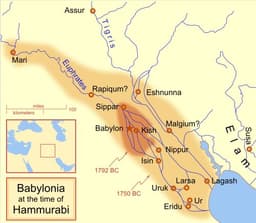
Ikunum
Emperor · Ancient
39.8Total

Julius Caesar
General · Ancient
82.8Total
Basic Information
Born
-1900
-100
Died
-1885
-44
Era
Ancient
Ancient
Nationality
Assyria
Roman Republic
Occupation
Emperor
General
Civilization
Middle Eastern
Western
Score Comparison
Military (10%)
50.0
88.0
Political (20%)
30.8
78.0
Influence (20%)
43.2
85.0
Legacy (20%)
35.8
82.0
Leadership (15%)
45.0
80.0
Strategy (15%)
36.8
85.0
TOTAL
39.8
82.8
Ikunum — Complete Timeline
1900 BC
Reign as Old Assyrian Merchant KingOther
Ikunum ruled Assyria during the Old Assyrian period, a time characterized by extensive trade networks. His reign saw the continuation of the Karum Kanesh trade system, with Assyrian merchants actively trading textiles and metals with Anatolian city-states.
TradeOld Assyrian PeriodMerchant King
Impact: regionalconstructive
Julius Caesar — Complete Timeline
58 BC
Gallic WarsWar◆ Major
Caesar, as proconsul of Gaul, launched a series of campaigns that conquered all of Gaul (modern France, Belgium, and parts of Switzerland). He fought numerous battles, including against the Helvetii, the Belgae, and the Gallic chieftain Vercingetorix. The wars brought immense wealth and a loyal army to Caesar.
Gallic WarsConquestRoman Expansion
Impact: regional
49 BC
Crossing the RubiconPolitical Action◆ Major
Caesar led Legio XIII across the Rubicon River into Italy, defying the Roman Senate's order to disband his army. This act triggered a civil war against Pompey and the Optimates, ultimately leading to Caesar's dictatorship and the end of the Roman Republic.
Roman Civil WarEnd of RepublicPower Struggle
Impact: global
48 BC
Battle of PharsalusWar◆ Major
Caesar's outnumbered army defeated the larger forces of Pompey the Great at Pharsalus in Greece. Caesar's tactical use of a reserve line to counter Pompey's cavalry charge proved decisive. Pompey fled to Egypt, where he was assassinated, leaving Caesar as the undisputed master of the Roman world.
Roman Civil WarBattleDecisive Victory
Impact: regional
44 BC
Appointment as Dictator for LifePolitical Action◆ Major
The Roman Senate appointed Caesar dictator perpetuo (dictator for life), granting him unprecedented personal power. This move concentrated military, legislative, and judicial authority in one person, effectively ending the Roman Republic's traditional system of checks and balances and alarming many senators.
DictatorshipEnd of RepublicPower Consolidation
Impact: regionaldestructive
Assassination on the Ides of MarchPolitical Action◆ Major
A group of Roman senators, led by Marcus Junius Brutus and Gaius Cassius Longinus, stabbed Caesar to death at a meeting of the Senate in the Theatre of Pompey. The assassination was intended to restore the Republic, but instead triggered another civil war that led to the rise of the Roman Empire.
AssassinationRoman PoliticsEnd of Republic
Impact: globaldestructive
Expert Analysis
ikunum-vs-julius-caesar
# The Merchant King and the Conqueror: Two Paths to Ancient Power
On a spring morning in 44 BCE, Julius Caesar walked into the Senate chamber, brushing aside a warning about danger, and met his end beneath the daggers of men he had once called friends. Nearly two millennia earlier, in the dusty archives of an Assyrian trading post, a different kind of ruler—Ikunum—signed his name to clay tablets documenting shipments of tin and textiles, his reign passing without a single recorded battle. These two figures, separated by eighteen centuries, represent the vast spectrum of ancient leadership: one who remade the world through conquest, the other who held power through commerce.
Origins
Julius Caesar was born into the patrician Julian clan, a family of ancient lineage but diminished political clout in the late Roman Republic. His youth coincided with Rome’s civil wars, and he learned early that survival meant navigating violence and ambition. By contrast, Ikunum ascended the throne of Old Assyria around 1900 BCE, inheriting a kingdom that had already established itself as a hub of long-distance trade. His era was one of merchant caravans and diplomatic agreements, not legions and provinces. While Caesar grew up hearing tales of Marius and Sulla’s blood feuds, Ikunum would have known the rhythms of donkey trains carrying Anatolian silver to Assyrian markets.
The difference in their worlds is staggering. Caesar’s Rome was a republic in terminal crisis, a city-state that had swallowed the Mediterranean and could no longer digest it. Ikunum’s Assyria was a small kingdom on the Tigris, its power measured not in conquered territories but in commercial reach—Assyrian merchants had established colonies in Anatolia, living under treaty protections that allowed trade to flourish. The tools of their eras shaped them: Caesar mastered the sword, Ikunum mastered the contract.
Rise to Power
Caesar’s ascent was a masterclass in political theater and calculated risk. He borrowed fortunes to fund public games, formed the First Triumvirate with Pompey and Crassus, and then spent eight years conquering Gaul—a campaign that made him both a hero to his soldiers and a threat to his rivals. When the Senate ordered him to disband his army, he crossed the Rubicon River in 49 BCE, igniting a civil war that would end the Republic. His path was one of deliberate, escalating ambition, each step forcing a confrontation that he intended to win.
Ikunum’s rise is far quieter. He inherited a throne, likely from his father, and ruled during the peak of the Old Assyrian trade network. The key events of his reign—overseeing trade routes, maintaining treaties with Anatolian city-states, managing the karum (trading colonies) at Kanesh—required patience and administrative skill, not battlefield heroics. His power came from stability, not upheaval. Where Caesar gambled everything on a single crossing of a river, Ikunum’s most critical decisions were probably about tax rates and silver purity.
Leadership & Governance
As a ruler, Caesar was a paradox: a reformer who centralized power while claiming to restore tradition. He reformed the calendar, extended citizenship to provincials, and launched public works projects. But he also accumulated offices, had himself declared dictator for life, and surrounded himself with loyalists. His military genius is undisputed—his Commentaries remain a textbook on strategy—but his political wisdom faltered when he failed to secure a stable succession or to read the resentment of the senatorial class.
Ikunum governed through a different logic. Assyrian kingship in the Old Assyrian period was less autocratic than later empires; kings shared authority with merchant assemblies and local councils. Ikunum’s role was to protect trade, adjudicate disputes, and maintain the infrastructure that made commerce possible. His military score of 47.8 reflects a reign of peace, not weakness—he likely maintained a modest army for defense, but his true strength was economic. While Caesar’s leadership score of 82.0 marks him as a commander of men, Ikunum’s 35.1 suggests a ruler who led through negotiation, not command.
Triumph & Tragedy
Caesar’s greatest moment came in 52 BCE at the Siege of Alesia, where he defeated a Gallic coalition led by Vercingetorix, securing Gaul for Rome. His tragedy was the Ides of March in 44 BCE, when his assassination plunged Rome back into civil war. He had conquered the world but could not conquer the distrust of his own elite.
Ikunum’s triumphs and tragedies are invisible to us, lost in the dust of broken tablets. We know that his reign saw the continuation of Assyrian trade, and that after his death around 1885 BCE, the Old Assyrian period continued for another century. His tragedy may be that he is remembered only by name and a few business records—a king without a narrative, a ruler who kept his kingdom stable but left no legend.
Character & Destiny
Caesar was driven by an almost pathological desire for glory. He once said, “I would rather be first in a little Iberian village than second in Rome.” His personality—charming, ruthless, calculating—shaped every decision. He pardoned enemies because it served his image, then provoked them because he needed conflict. His destiny was to destroy the Republic he claimed to love, not out of malice but because his ambition could fit no other container.
Ikunum’s character is opaque, but we can infer from his context that he was a manager, not a warrior. His destiny was to preside over a system that required no heroics—Old Assyrian kings were not expected to conquer, only to enable trade. His personality likely matched his era: cautious, diplomatic, and patient. Where Caesar’s life was a tragedy of overreach, Ikunum’s was a quiet success of maintenance.
Legacy
Caesar’s legacy is immense. His name became synonymous with autocracy—kaiser, czar—and his reforms outlived him. The Roman Empire, which he helped create, lasted another five centuries in the West and a millennium in the East. His writings shaped Western literature, and his assassination became a cautionary tale about power and betrayal.
Ikunum’s legacy is modest but real. The Old Assyrian trade networks he oversaw left behind the Kültepe tablets, which provide our richest source on ancient commerce. His reign was one of many in a long line, but it contributed to the stability that allowed Assyrian merchants to connect the ancient Near East. His total score of 45.5 compared to Caesar’s 83.3 is not a judgment of worth—it is a measure of historical footprint. One man reshaped the world; the other kept his world running.
Conclusion
Standing at the edge of history, we are drawn to the Caesars—the men who burn bright and die young, who fight and fall and leave ruins that echo. But the Ikunums are equally essential: the quiet rulers who maintain order, who let the caravans roll and the markets hum, who are forgotten not because they failed but because they succeeded too quietly. Caesar’s story is a warning about ambition; Ikunum’s is a reminder that most of history is not made by conquerors but by the steady hands who keep the world turning. In the end, perhaps the merchant king’s lesson is the harder one to learn: that greatness is not always loud, and that a reign of peace, however obscure, is no small achievement.
Rankings
🥇
Julius CaesarLeader
Mil: 88.0Pol: 78.0Inf: 85.0
82.8
🥈
Ikunum
Mil: 50.0Pol: 30.8Inf: 43.2
39.8
+43.0 behind
How This Comparison Works
Algorithm
Each figure is scored on 6 dimensions (0—100 scale) based on structured historical data: Military (10%), Political (20%), Influence (20%), Legacy (20%), Leadership (15%), Strategy (15%). The weighted total produces the final ranking.
Data Sources
Scores are computed from structured sub-indicators in the database. Scale factors adjust for era (Ancient ×0.85, Modern ×1.0) and civilization size (Eastern ×1.05, Other ×0.80) to account for differences in population and military scale.
Maximum 3 Figures
Comparisons are limited to 2—3 figures to ensure readability and statistical meaningfulness.
Error Margins
±5 points per dimension — Sub-scores are derived from historical records with inherent uncertainty. Two figures within 5 points on a dimension should be considered roughly equivalent in that area.
Total Score Accuracy
±3 points overall — The weighted combination of 6 dimensions produces a total score with approximately ±3 points of uncertainty. Differences of less than 3 points are not statistically significant— the figures are effectively tied.
Known Limitations
- Historical records are incomplete and uneven across civilizations
- Figures from oral-tradition societies may be underrepresented
- Occupation labels can misclassify multi-role figures
- Scores measure capability and impact, not moral character
- Quantitative scoring is a comparison tool, not absolute truth
Capability Radar
Military (10%) — Battles & Warfare
Battles
10
95
Win Rate
10
92
Expansion
15
97
Political (20%) — Governance & Reform
Reform
20
90
Diplomacy
25
85
Economy
30
82
Influence (20%) — Cultural & Global Reach
Cultural
15
88
Global
10
94
Legacy (20%) — Historical Impact
Historical
20
95
Longevity
15
96
Leadership (15%) — Power & Stability
Tenure
30
75
Stability
25
60
Strategy (15%) — Tactics & Innovation
Strategy
10
94
Tactics
10
96
Reform
10
88
Similar Comparisons
Comments & Discussion
No comments yet. Be the first to share your thoughts!