Loading...
Imre Nagy vs Naomi Mataafa
Imre Nagy leads by 0.5 pts · 2 figures compared
…
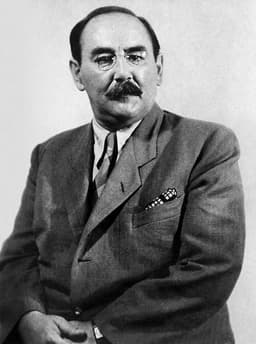
Imre Nagy
Politician · Modern
55.3Total
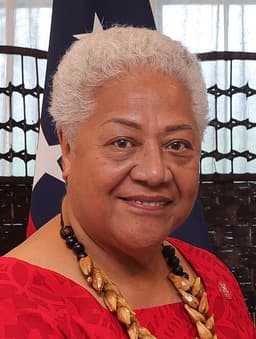
Naomi Mataafa
Politician · Modern
54.8Total
Basic Information
Born
1896
1957
Died
1958
—
Era
Modern
Modern
Nationality
Hungary
Samoa
Occupation
Politician
Politician
Civilization
Western
Other
Score Comparison
Military (10%)
47.7
50.0
Political (20%)
68.0
68.0
Influence (20%)
61.0
55.7
Legacy (20%)
54.0
45.8
Leadership (15%)
48.4
65.0
Strategy (15%)
43.0
44.9
TOTAL
55.3
54.8
Imre Nagy — Complete Timeline
1953 AD
Appointment as Prime Minister of HungaryPolitical Action◆ Major
Nagy was appointed Prime Minister by Stalin, replacing the hardline Matyas Rakosi. He initiated a 'New Course' that relaxed Stalinist policies, released some political prisoners, and allowed limited private enterprise.
Communist leadershipReform
Impact: nationalconstructive
1956 AD
Soviet Invasion of HungaryWar
Soviet forces invaded Hungary to crush the revolution. Nagy's government was overthrown, and he sought refuge in the Yugoslav embassy. The invasion resulted in thousands of deaths and a massive refugee crisis.
Soviet interventionCold War
Impact: globaltragic
Hungarian Revolution of 1956Political Action
Nagy was reinstated as Prime Minister during the Hungarian Revolution. He announced the withdrawal of Hungary from the Warsaw Pact and declared neutrality, seeking a multi-party system. This directly challenged Soviet control.
RevolutionCold War
Impact: global
1958 AD
Execution of Imre NagyPolitical Action◆ Major
Nagy was abducted from the Yugoslav embassy, tried in secret by the Kadar government, and executed by hanging. His death made him a martyr for the Hungarian people and a symbol of resistance to Soviet domination.
Political repressionMartyrdom
Impact: nationaltragic
Naomi Mataafa — Complete Timeline
2021 AD
Became first female Prime Minister of SamoaPolitical Action◆ Major
Mataafa led the FAST party to victory in the general election, becoming Samoa's first female prime minister. Her election ended the 22-year rule of Tuilaepa Malielegaoi and marked a historic shift in Samoan politics.
Prime MinisterGender EqualityHistoric First
Impact: nationalprogressive
Navigated constitutional crisis after electionPolitical Action◆ Major
Following her election victory, Malielegaoi refused to step down, leading to a standoff. Mataafa was sworn in by the Head of State, and the crisis was resolved when the Court of Appeal ruled in her favor, affirming her legitimacy.
Constitutional CrisisPolitical TransitionCourt Ruling
Impact: national
2022 AD
Repealed the Land Titles Registration ActReform◆ Major
Mataafa's government repealed the controversial Land Titles Registration Act, restoring customary land tenure systems. The repeal was seen as a victory for traditional leaders and communities who opposed the previous law.
Land ReformCustomary LandLegislation Repeal
Impact: nationalconstructive
Strengthened ties with China and Pacific neighborsPolitical Action
Mataafa pursued a balanced foreign policy, strengthening diplomatic and economic ties with China while maintaining relations with traditional partners like Australia and New Zealand. She also engaged with Pacific Island Forum initiatives.
Foreign PolicyChina RelationsPacific Diplomacy
Impact: regionalconstructive
Expert Analysis
Origins
Imre Nagy was born in 1896 in Kaposvár, Hungary, into a peasant family. He trained as a locksmith and later joined the Communist Party, spending time in the Soviet Union during the interwar period. His early experiences in the Soviet system shaped his ideological flexibility. Naomi Mataafa, born in 1957 in Samoa, is the daughter of Fiame Mataafa Faumuina Mulinuu II, Samoa's first Prime Minister. She was educated in New Zealand and returned to Samoa to serve in government, inheriting a legacy of political leadership.
Rise to Power
Nagy rose through the Hungarian Communist Party ranks after World War II, serving as Minister of Agriculture and later as Prime Minister from 1953 to 1955. He initiated a 'New Course' that relaxed Stalinist policies, releasing political prisoners and shifting focus to consumer goods. However, hardliners forced him out. During the Hungarian Revolution of 1956, he was reinstated as Prime Minister on October 24, 1956, at the height of the uprising. He announced Hungary's withdrawal from the Warsaw Pact and declared neutrality. Mataafa's rise was more gradual but historic. She served as Minister of Women and Social Development and later as Minister of Justice. In 2021, she led the FAST party to a narrow election victory, ending the 22-year rule of Tuilaepa Sailele Malielegaoi. She became Samoa's first female Prime Minister on May 24, 2021.
Leadership & Governance
Nagy's leadership during the 1956 revolution was decisive but short-lived. He attempted to balance reform with national sovereignty, but his governance was chaotic due to the uprising. His decision to declare neutrality and withdraw from the Warsaw Pact was a direct challenge to Soviet control. In contrast, Mataafa's leadership has been institutional and democratic. She faced a constitutional crisis when Malielegaoi refused to step down, but she navigated it through legal channels and was ultimately sworn in by the Head of State. Her government repealed the Land Titles Registration Act, restoring customary land tenure, and pursued a balanced foreign policy with China and Pacific neighbors.
Triumph & Tragedy
Nagy's greatest triumph was his role in the 1956 revolution, symbolizing Hungary's desire for freedom. His declaration of neutrality was a bold act of defiance. His tragedy was his execution by the Soviet-backed Kadar government on June 16, 1958. He was tried in secret and hanged, becoming a martyr. Mataafa's triumph is her historic election as Samoa's first female PM and her successful navigation of the constitutional crisis. Her tragedy is less dramatic but includes ongoing political tensions and the challenge of governing a small island nation with limited resources. Her legacy score of 45.8 reflects that her impact is still unfolding.
Character & Destiny
Nagy was a pragmatic communist who believed in reform within the system. His character was shaped by his peasant origins and Soviet experience. He was cautious but ultimately took a stand that sealed his fate. His political score of 68.0 and leadership of 48.4 indicate a leader who was more ideologically driven than strategically adept. Mataafa is seen as a steady, principled leader. Her leadership score of 65.0 is higher than Nagy's, reflecting her ability to maintain democratic processes. Her strategy score of 44.9 is lower, possibly due to the challenges of coalition politics. Her destiny is still being written, but she has already broken gender barriers.
Legacy
Nagy's legacy is profound in Hungary and globally. He is remembered as a martyr for freedom and a symbol of resistance against Soviet oppression. His execution galvanized anti-communist movements. His legacy score of 54.0 reflects his enduring symbolic importance. Mataafa's legacy is emerging. She has strengthened democratic institutions in Samoa and advanced women's rights. Her repeal of the Land Titles Act is a significant policy win. However, her influence score of 55.7 is slightly lower than Nagy's 61.0, as her impact is more localized and recent.
Conclusion
Imre Nagy had a greater historical impact than Naomi Mataafa, despite their similar total scores (55.3 vs 54.8). Nagy's actions during the 1956 revolution altered the course of the Cold War and inspired generations of dissidents. His sacrifice made him a universal symbol of the fight for freedom. Mataafa's achievements are important but remain within the context of a small Pacific nation. While she has broken barriers and advanced democracy, her influence is not yet on the same global scale. Nagy's legacy is cemented in history; Mataafa's is still being built.
Rankings
🥇
Imre NagyLeader
Mil: 47.7Pol: 68.0Inf: 61.0
55.3
🥈
Naomi Mataafa
Mil: 50.0Pol: 68.0Inf: 55.7
54.8
+0.5 behind
How This Comparison Works
Algorithm
Each figure is scored on 6 dimensions (0—100 scale) based on structured historical data: Military (10%), Political (20%), Influence (20%), Legacy (20%), Leadership (15%), Strategy (15%). The weighted total produces the final ranking.
Data Sources
Scores are computed from structured sub-indicators in the database. Scale factors adjust for era (Ancient ×0.85, Modern ×1.0) and civilization size (Eastern ×1.05, Other ×0.80) to account for differences in population and military scale.
Maximum 3 Figures
Comparisons are limited to 2—3 figures to ensure readability and statistical meaningfulness.
Error Margins
±5 points per dimension — Sub-scores are derived from historical records with inherent uncertainty. Two figures within 5 points on a dimension should be considered roughly equivalent in that area.
Total Score Accuracy
±3 points overall — The weighted combination of 6 dimensions produces a total score with approximately ±3 points of uncertainty. Differences of less than 3 points are not statistically significant— the figures are effectively tied.
Known Limitations
- Historical records are incomplete and uneven across civilizations
- Figures from oral-tradition societies may be underrepresented
- Occupation labels can misclassify multi-role figures
- Scores measure capability and impact, not moral character
- Quantitative scoring is a comparison tool, not absolute truth
Capability Radar
Military (10%) — Battles & Warfare
Battles
30
24
Win Rate
34
23
Expansion
36
29
Political (20%) — Governance & Reform
Reform
70
45
Diplomacy
40
55
Economy
20
40
Influence (20%) — Cultural & Global Reach
Cultural
40
45
Global
55
30
Legacy (20%) — Historical Impact
Historical
65
40
Longevity
50
35
Leadership (15%) — Power & Stability
Tenure
30
30
Stability
10
50
Strategy (15%) — Tactics & Innovation
Strategy
40
31
Tactics
41
33
Reform
43
35
Similar Comparisons
Comments & Discussion
No comments yet. Be the first to share your thoughts!