Loading...
Imre Nagy vs Salome Zourabichvili
Imre Nagy leads by 4.8 pts · 2 figures compared
…
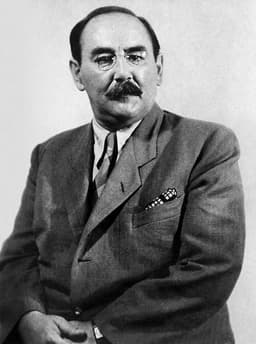
Imre Nagy
Politician · Modern
55.3Total

Salome Zourabichvili
Politician · Modern
50.5Total
Basic Information
Born
1896
1952
Died
1958
—
Era
Modern
Modern
Nationality
Hungary
Georgia
Occupation
Politician
Politician
Civilization
Western
Western
Score Comparison
Military (10%)
47.7
50.0
Political (20%)
68.0
68.0
Influence (20%)
61.0
56.4
Legacy (20%)
54.0
44.2
Leadership (15%)
48.4
40.0
Strategy (15%)
43.0
41.2
TOTAL
55.3
50.5
Imre Nagy — Complete Timeline
1953 AD
Appointment as Prime Minister of HungaryPolitical Action◆ Major
Nagy was appointed Prime Minister by Stalin, replacing the hardline Matyas Rakosi. He initiated a 'New Course' that relaxed Stalinist policies, released some political prisoners, and allowed limited private enterprise.
Communist leadershipReform
Impact: nationalconstructive
1956 AD
Soviet Invasion of HungaryWar
Soviet forces invaded Hungary to crush the revolution. Nagy's government was overthrown, and he sought refuge in the Yugoslav embassy. The invasion resulted in thousands of deaths and a massive refugee crisis.
Soviet interventionCold War
Impact: globaltragic
Hungarian Revolution of 1956Political Action
Nagy was reinstated as Prime Minister during the Hungarian Revolution. He announced the withdrawal of Hungary from the Warsaw Pact and declared neutrality, seeking a multi-party system. This directly challenged Soviet control.
RevolutionCold War
Impact: global
1958 AD
Execution of Imre NagyPolitical Action◆ Major
Nagy was abducted from the Yugoslav embassy, tried in secret by the Kadar government, and executed by hanging. His death made him a martyr for the Hungarian people and a symbol of resistance to Soviet domination.
Political repressionMartyrdom
Impact: nationaltragic
Salome Zourabichvili — Complete Timeline
2004 AD
Appointed Minister of Foreign Affairs of GeorgiaPolitical Action◆ Major
Zourabichvili was appointed Minister of Foreign Affairs under President Mikheil Saakashvili. She was a French-born diplomat who had served as French ambassador to Georgia, and her appointment was seen as a bridge between Georgia and Europe.
Ministerial AppointmentForeign PolicyEuropean Integration
Impact: nationalconstructive
Granted Georgian CitizenshipPolitical Action
Zourabichvili was granted Georgian citizenship by President Saakashvili, allowing her to serve as Foreign Minister. She had previously been a French citizen, and this dual citizenship was a prerequisite for her ministerial role.
CitizenshipNaturalizationPolitical Career
Impact: nationalconstructive
2005 AD
Dismissed as Foreign MinisterPolitical Action
Zourabichvili was dismissed as Foreign Minister after a public dispute with the parliamentary speaker and other officials. She accused the government of authoritarian tendencies, leading to her dismissal and subsequent move into opposition politics.
Political ConflictDismissalOpposition
Impact: nationaldestructive
2006 AD
Founded the Party 'The Way of Georgia'Political Action
After her dismissal, Zourabichvili founded the political party 'The Way of Georgia' (Saqartvelos Gza). The party positioned itself as a centrist, pro-Western alternative to the ruling United National Movement.
Political PartyOppositionCentrism
Impact: nationalconstructive
2018 AD
Elected President of GeorgiaPolitical Action◆ Major
Zourabichvili won the presidential election in a runoff with 59.5% of the vote, becoming the first female president of Georgia. She ran as an independent candidate, backed by the ruling Georgian Dream party.
Presidential ElectionFirst Female PresidentGeorgian Dream
Impact: nationalconstructive
Expert Analysis
Origins
Imre Nagy was born on June 7, 1896, in Kaposvár, Hungary, into a peasant family. He trained as a locksmith and later became a communist activist. Nagy fought in World War I and was captured by the Russians, where he joined the Bolsheviks. He returned to Hungary in 1921 and worked for the Communist Party underground. Salome Zourabichvili was born on March 18, 1952, in Tbilisi, Georgia, into a family of Georgian emigrants in France. Her father was a painter and her mother a pianist. She grew up in France, studied at Sciences Po and Columbia University, and became a French diplomat. She served as French ambassador to Georgia from 2003 to 2004 before switching to Georgian politics.
Rise to Power
Nagy rose within the Hungarian Communist Party after World War II, serving as Minister of Agriculture and later as Prime Minister from 1953 to 1955 under Stalin. He implemented a 'New Course' that relaxed Stalinist policies, releasing political prisoners and reducing collectivization. However, he was removed from power in 1955 due to hardliner opposition. During the Hungarian Revolution of 1956, Nagy was reinstated as Prime Minister on October 24. Zourabichvili's rise was through diplomacy: she served as French ambassador to Georgia and was granted Georgian citizenship in 2004 by President Mikheil Saakashvili, who then appointed her Foreign Minister. She served from March to October 2005, but was dismissed after a public dispute. She then founded the centrist party 'The Way of Georgia' and in 2018 was elected President of Georgia as an independent, winning 59.5% in the runoff.
Leadership & Governance
Nagy's leadership was defined by his reformist agenda during the 1956 revolution. He announced the withdrawal of Hungary from the Warsaw Pact and declared neutrality, seeking a multiparty system. His governance was short-lived and chaotic, as he struggled to control the revolutionary forces and negotiate with the Soviets. In contrast, Zourabichvili's presidency (2018-2024) focused on European integration and democratic reforms. She vetoed legislation seen as anti-democratic, such as the 'foreign agents' law in 2023, but faced a largely ceremonial role as president in Georgia's parliamentary system. Nagy scored 68.0 in political acumen, equal to Zourabichvili's 68.0, but his leadership score of 48.4 is higher than her 40.0, reflecting his decisive actions during crisis.
Triumph & Tragedy
Nagy's greatest triumph was his brief leadership during the 1956 revolution, where he stood for Hungarian sovereignty and reform. His tragedy was his execution on June 16, 1958, after being abducted from the Yugoslav embassy and tried in secret. His death made him a martyr for Hungarian freedom. Zourabichvili's triumph is becoming Georgia's first female president and a symbol of democratic resilience. Her tragedy includes her dismissal as foreign minister and her party's failure to gain significant parliamentary seats. She also faced controversies over her dual citizenship and French background, which critics used to question her loyalty. Nagy's influence score of 61.0 surpasses Zourabichvili's 56.4, as his sacrifice resonated globally during the Cold War.
Character & Destiny
Nagy was a principled reformer who believed in a ‘Hungarian road to socialism.’ His decision to withdraw from the Warsaw Pact was bold but fatal, as it provoked Soviet invasion. He was not a charismatic leader but a determined one. Zourabichvili is pragmatic and diplomatic, leveraging her French connections for Georgia's European aspirations. Her character is marked by resilience: after being dismissed, she built a political career from scratch. However, her aloof style and French accent sometimes alienated voters. Nagy's destiny was sealed by his defiance; Zourabichvili's by her ability to adapt.
Legacy
Nagy is remembered as a martyr for Hungarian independence; his reburial in 1989 became a symbol of the end of communism. He scored 54.0 in legacy. Zourabichvili's legacy is still forming, but she is recognized as a trailblazer for women in Georgian politics. Her score of 44.2 in legacy is lower, partly because her presidency was largely symbolic. Both figures advanced democratic ideals in their contexts, but Nagy's impact was more immediate and dramatic.
Conclusion
Imre Nagy had greater impact than Salome Zourabichvili. His total score of 55.3 versus her 50.5 reflects his higher influence and legacy. Nagy's actions during the 1956 revolution directly challenged Soviet domination and inspired future dissidents. Zourabichvili, while important for Georgia's European path, operated within a less volatile context and with less transformative effect. Nagy's martyrdom cemented his place in history as a symbol of resistance, whereas Zourabichvili's contributions, though significant, are more incremental.
Rankings
🥇
Imre NagyLeader
Mil: 47.7Pol: 68.0Inf: 61.0
55.3
🥈
Salome Zourabichvili
Mil: 50.0Pol: 68.0Inf: 56.4
50.5
+4.8 behind
How This Comparison Works
Algorithm
Each figure is scored on 6 dimensions (0—100 scale) based on structured historical data: Military (10%), Political (20%), Influence (20%), Legacy (20%), Leadership (15%), Strategy (15%). The weighted total produces the final ranking.
Data Sources
Scores are computed from structured sub-indicators in the database. Scale factors adjust for era (Ancient ×0.85, Modern ×1.0) and civilization size (Eastern ×1.05, Other ×0.80) to account for differences in population and military scale.
Maximum 3 Figures
Comparisons are limited to 2—3 figures to ensure readability and statistical meaningfulness.
Error Margins
±5 points per dimension — Sub-scores are derived from historical records with inherent uncertainty. Two figures within 5 points on a dimension should be considered roughly equivalent in that area.
Total Score Accuracy
±3 points overall — The weighted combination of 6 dimensions produces a total score with approximately ±3 points of uncertainty. Differences of less than 3 points are not statistically significant— the figures are effectively tied.
Known Limitations
- Historical records are incomplete and uneven across civilizations
- Figures from oral-tradition societies may be underrepresented
- Occupation labels can misclassify multi-role figures
- Scores measure capability and impact, not moral character
- Quantitative scoring is a comparison tool, not absolute truth
Capability Radar
Military (10%) — Battles & Warfare
Battles
30
28
Win Rate
34
34
Expansion
36
34
Political (20%) — Governance & Reform
Reform
70
45
Diplomacy
40
65
Economy
20
40
Influence (20%) — Cultural & Global Reach
Cultural
40
30
Global
55
40
Legacy (20%) — Historical Impact
Historical
65
35
Longevity
50
20
Leadership (15%) — Power & Stability
Tenure
30
60
Stability
10
35
Strategy (15%) — Tactics & Innovation
Strategy
40
38
Tactics
41
40
Reform
43
41
Similar Comparisons
Comments & Discussion
No comments yet. Be the first to share your thoughts!